

Moose Jaw blends small city ease with an unusually rich mix of prairie history, character-filled streets and one-of-a-kind attractions. With compact, walkable downtown blocks and key sights clustered close together, it is easy to see Moose Jaw’s highlights in one full day, or slow the pace and stretch your visit into a satisfying two-day escape. This itinerary focuses on the city’s most engaging attractions and historic sites, with flexible options depending on how much time you have.
How Many Days in Moose Jaw and Where to Stay
Moose Jaw works well as either a focused day trip or a relaxed overnight stay. If you have one full day, you can comfortably cover the essential downtown attractions, stroll Crescent Park and fit in a soak at the geothermal mineral spa. With two days, you add time for Wakamow Valley, nearby prairie heritage sites and slower exploration of the historic streets and murals that give the city its distinctive character.
Most visitors choose to base themselves downtown or just adjacent to it, where they can walk between the Tunnels of Moose Jaw, Temple Gardens Hotel & Spa, Casino Moose Jaw, Crescent Park and the city’s densest cluster of heritage buildings. Staying within a few blocks of Main Street makes it easy to follow this itinerary without relying heavily on a car, especially in summer when evenings are light and the streets feel lively.
Temple Gardens Hotel & Spa is the best known downtown option and a destination in itself, with direct access to the mineral pool and a pedway connection to Casino Moose Jaw. Several smaller hotels and motels sit within a short drive of the core, often at slightly lower price points, while bed and breakfast style accommodations in heritage homes appear sporadically and should be booked well ahead. If you are traveling with a vehicle and plan to explore beyond downtown, almost any accommodation in Moose Jaw will keep driving times short.
For a one-day visit, consider arriving by midmorning and planning to stay through the evening, so you can experience both daytime walking tours and a night-time soak in the mineral pool. If you have two days, split your time between downtown and the river valley, and consider adding a short drive south to the Sukanen Ship Pioneer Village and Museum when it is in season.
Morning of Day One: Downtown Orientation and Historic Core
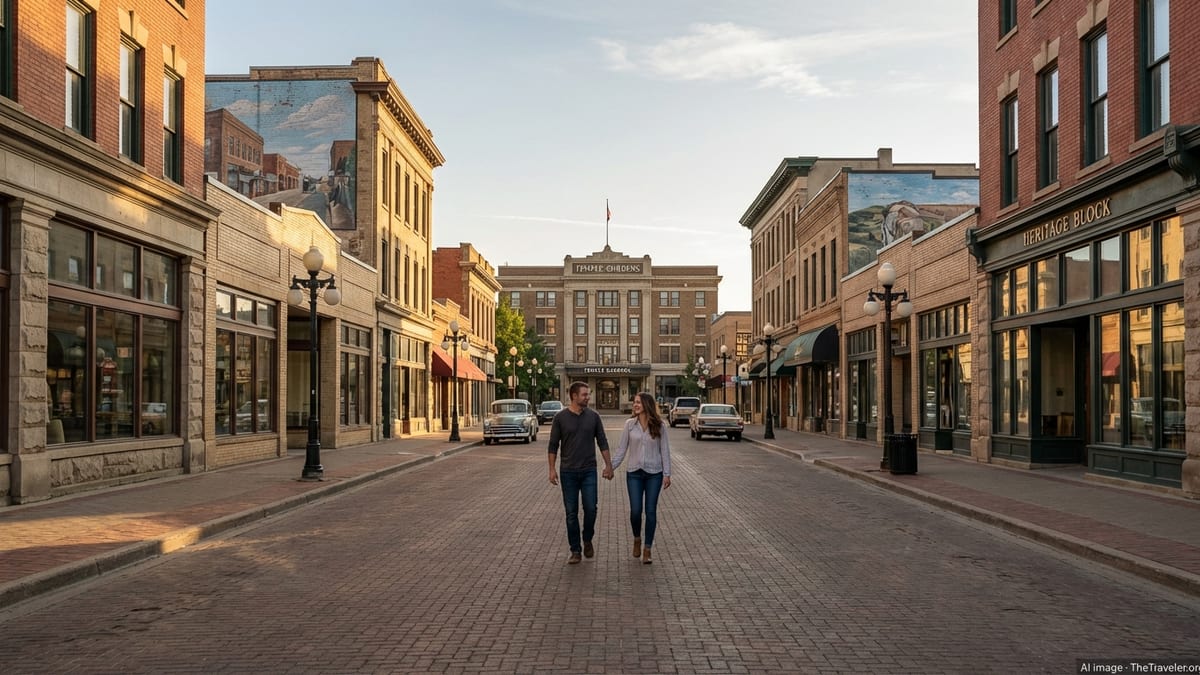
Begin your first morning in Moose Jaw at the heart of the city, around Main Street North and Fairford Street. This compact area contains several of Moose Jaw’s most significant heritage buildings, including the Edwardian Classical city hall and the early twentieth century federal structures that reflect the city’s boom period as a railway and commercial hub. The architecture is not monumental by big city standards, but its brick facades, decorative cornices and intact streetwall offer a strong sense of place.
Give yourself at least an hour simply to walk Main Street and the surrounding blocks with a coffee in hand. Look up as you go; many of the city’s celebrated murals are painted high on building exteriors, depicting scenes from local history, railway days and community life. Tourism Moose Jaw and local visitor centers often provide basic mural maps or brochures, but even without a guide you will spot large, colorful works at multiple corners downtown. This informal art walk doubles as a gentle orientation to the street grid.
As you move through the core, keep an eye out for the Moose Jaw Court House, a Neo Classical structure completed in 1909, and the current city hall, originally built as a federal building in the early 1910s. Both are designated heritage properties and help frame the narrative of Moose Jaw as an important early administrative center in Saskatchewan. Even if they are closed to visitors during your walk, viewing their exteriors and reading any on-site plaques will give helpful context before you head underground later at the tunnels.
If you enjoy historic interiors, consider pausing for a midmorning drink or early lunch in one of the refurbished hotels or brick commercial blocks downtown. Several long-standing establishments occupy buildings that date back to the early twentieth century, and staff are often happy to share brief anecdotes about the city’s more notorious episodes, from railway booms to rumoured bootlegging connections.
Midday Highlight: The Tunnels of Moose Jaw
The Tunnels of Moose Jaw are the city’s signature attraction and deserve a central place in any itinerary. Located just off Main Street, this year-round, theatrically guided experience takes you into a network of underground spaces beneath the historic core. Different tours focus on separate eras, including stories around prohibition and the city’s connections to Al Capone, the experiences of early Chinese immigrants on the Prairies, and Cold War-era fears and preparations.
The tours blend dramatized storytelling with historical themes. Character guides lead you through period sets that evoke backrooms, workspaces and hidden passageways, using dialogue and staging to immerse visitors in the social tensions, discrimination and criminal networks of the time. While the details are dramatized for entertainment, the tours draw on genuine historical currents in Moose Jaw and Western Canada, so it is worth approaching them with both curiosity and a critical eye.
From a practical standpoint, it is wise to reserve tickets in advance, especially during peak summer months and on weekends when tours fill quickly. The attraction typically offers combo tickets if you plan to take more than one tour, which can be an efficient choice if you have a strong interest in history and at least a few spare hours. For a one-day itinerary, most visitors opt for a single tour that best matches their interests, often the prohibition themed Chicago Connection. For two-day stays, consider returning for a second tour that explores a different historical angle.
Allow at least ninety minutes to two hours at the Tunnels of Moose Jaw, including check in, the tour itself and time to browse the small gift shop. If you are traveling with young children or anyone who prefers to avoid confined spaces, note that you will be underground for a significant portion of the visit. The attraction provides information about accessibility and content warnings, so reviewing this ahead of time can help you choose the most suitable tour for your group.
Afternoon in Crescent Park and Cultural Institutions
After a morning immersed in the city’s built history and underground stories, shift gears with an easy stroll to Crescent Park, a 28 acre green space that stretches across several downtown blocks just east of Main Street. Often described by the city as the Jewel of the Prairies, Crescent Park offers shaded walking paths, a central water feature, lawns and mature trees that feel particularly welcome on hot summer afternoons.
At the park’s northern edge you will find the Moose Jaw Public Library and the Moose Jaw Museum and Art Gallery, which share a building complex that anchors the park. The original library, opened in 1912, features a marble clad foyer and a stained glass dome that reward a few quiet minutes of exploration. The attached art gallery, expanded in the early 1990s, hosts rotating exhibitions and a heritage gallery that often highlights regional artists and prairie history. If the weather turns or you simply need a break from walking, this combined library and gallery complex is a comfortable place to linger.
Elsewhere in Crescent Park you can seek out sculptures, monuments and small murals that commemorate local figures and national events, from wartime service to cultural milestones. Families traveling with children may gravitate toward the playground and spray park in warmer months, while swimmers can head for the Phyllis Dewar Outdoor Pool, an Olympic sized facility that incorporates the historic Natatorium building. Operating hours and seasonal dates vary, so it is sensible to check current information with the city or pool operators before planning a dedicated swim stop.
Even without using specific facilities, Crescent Park works well as a simple circuit on foot. A relaxed loop of the main paths takes around half an hour at a gentle pace, more if you stop frequently on benches or wander into side paths. After the structured experience of the tunnels, the park’s open lawns and casual atmosphere provide a complementary view of Moose Jaw as a lived-in community rather than only a backdrop for staged stories.
Evening: Temple Gardens Mineral Spa and Casino Moose Jaw
One of Moose Jaw’s biggest draws is its geothermal mineral pool at Temple Gardens Hotel & Spa, supplied by hot mineral water from a deep artesian well. The water emerges at around 45 degrees Celsius near the wellhead and is piped to the hotel through insulated lines, arriving only slightly cooler. The result is a pair of interconnected indoor and outdoor pools, where guests can soak in warm, mineral rich water even in the depths of winter.
Evening is an especially atmospheric time to visit the pool, when cooler air contrasts with the steam rising off the water. Visitors staying at Temple Gardens typically have ready access to the spa, while public access for day users can be subject to capacity restrictions. It is prudent to confirm current policies, hours and any booking requirements before you arrive, as operations can change with demand and seasonal considerations. Plan for at least an hour or two if you want to unwind properly after a full day of walking and sightseeing.
Across the street from Temple Gardens sits Casino Moose Jaw, a compact Art Deco inspired casino that builds on the city’s Roaring Twenties heritage. Its design and theming reference the same period that made Moose Jaw famous for rumoured bootlegging connections, creating a light thematic link with the tunnel tours earlier in the day. For some visitors, an hour at the gaming tables or slot machines is an entertaining way to extend the evening after a soak, while others may prefer to simply admire the building exterior and continue on to dinner.
For food and drink, look to the surrounding downtown streets, where independent restaurants and bars range from casual diners and coffeehouses to more contemporary Canadian cuisine. Because opening hours can be seasonal and some kitchens close relatively early on weeknights, it is wise to have at least one backup option in mind, especially if you are visiting outside peak summer season. Ending the night with a gentle walk back through the softly lit streets reinforces how compact and manageable the city feels, even at the end of a busy day.
Optional Day Two: Wakamow Valley and Prairie Heritage
If you have a second day in Moose Jaw, start with a change of scenery in Wakamow Valley, a green corridor along the Moose Jaw River just south of downtown. The valley offers walking and cycling paths, picnic sites and river viewpoints that showcase a more natural side of the region. In summer, rental operations sometimes provide canoes or other small craft, though availability fluctuates and is best confirmed close to your travel dates.
Spending a few hours in Wakamow allows you to appreciate how closely the city is tied to its river valley geography. Trails range from flat, family friendly sections near picnic grounds to slightly more rugged paths that climb gently for wider views. In winter, sections of the park can be used for snowshoeing or casual cold weather walks, provided you dress appropriately for prairie conditions. Because the valley sits so close to town, it is easy to adjust your visit according to weather or energy levels without disrupting the rest of your plans.
In the afternoon, dedicate time to exploring the broader story of prairie settlement and ingenuity at the Sukanen Ship Pioneer Village and Museum, located south of Moose Jaw along Highway 2. This volunteer run site features a recreated pioneer village with multiple historic buildings moved from surrounding communities, along with collections of tractors, cars and farm machinery that illustrate how people worked the land from the early 1900s through the interwar years.
The museum’s most unusual feature is the Sukanen ship itself, a large, homemade vessel built by Finnish homesteader Tom Sukanen in the 1930s. He reportedly hoped to sail it downriver and eventually across the ocean back to Finland, a plan that was never realized. The ship, now restored and displayed at the museum, has become an emblem of both the determination and hardship that characterized many early prairie settlers. Because the village is generally open seasonally and often run by volunteers, hours and event schedules can vary, so checking current information before driving out is especially important.
Short Scenic Stops: Murals, Mac the Moose and Aviation Heritage
Whether you are visiting for one or two days, several shorter stops add texture to a Moose Jaw itinerary without requiring large time commitments. Chief among them is Mac the Moose, the towering steel and concrete moose statue that stands near the city’s visitor center along the Trans Canada Highway. At a little over ten metres tall, Mac has long been promoted as one of the world’s largest moose sculptures, and a friendly rivalry with a Norwegian town’s moose statue even prompted the city to extend Mac’s antlers to reclaim the title.
Mac may be whimsical, but the stop works well as a stretch break if you are arriving or departing by highway. The adjacent visitor center can supply maps, current attraction information and local advice, especially around seasonal events and any temporary closures in the region. Taking a few minutes to photograph Mac with the prairie sky as a backdrop is almost a rite of passage for first time visitors and adds a bit of lighthearted contrast to the more serious historic sites on your schedule.
Back in town, continue seeking out Moose Jaw’s outdoor murals, which turn much of the central business district into an open air gallery. Each mural tells a story, from depictions of early railway life and Indigenous history to tributes to local sports teams and notable residents. Because they are integrated into working storefronts and back alleys, viewing them encourages you to wander beyond the main thoroughfares into side streets you might otherwise miss. For photography, early morning and late afternoon often provide the most flattering light on the painted surfaces.
If aviation history interests you and your timing aligns, consider investigating whether public tours or open house events are available at 15 Wing Moose Jaw, the nearby Canadian Forces base that serves as a major training center for military pilots and the home of the Snowbirds aerobatic team. Access can be limited for security and operational reasons, and offerings change from year to year, so this stop should be treated as an optional extra rather than a guaranteed part of your itinerary. When opportunities do arise, they offer a valuable look at another facet of Moose Jaw’s role in national history.
Practical Tips for Visiting Moose Jaw
Moose Jaw sits along the Trans Canada Highway in southern Saskatchewan, making it an easy stop for road trips between Regina and points farther west. The nearest major airport is in Regina, roughly an hour’s drive away, and rental cars are widely used by visitors who wish to explore the region independently. Within the city itself, taxis and local transit can fill gaps, but many key attractions in this itinerary are walkable from a central hotel, particularly in mild weather.
Weather on the Prairies can be highly variable, with hot, dry summers and cold winters that regularly bring subzero temperatures and snow. If you are planning extensive outdoor activities in Wakamow Valley, Crescent Park or at sites like the Sukanen Ship Pioneer Village, pack accordingly and monitor forecasts closely in the days before your trip. Spring and autumn often provide comfortable temperatures for walking tours and outdoor soaking at the mineral pool, though some seasonal attractions may operate on reduced hours in shoulder seasons.
Because Moose Jaw draws a mix of regional visitors, tour groups and spa guests, booking key experiences in advance is advisable. This is especially true for the Tunnels of Moose Jaw, popular spa times at Temple Gardens and any special events at the Sukanen Ship Pioneer Village or local festivals. Accommodation can also tighten during long weekends, major sports tournaments or large conventions hosted in the city, so reserving rooms well ahead can reduce stress and ensure you stay within easy reach of the downtown core.
Finally, remember that Moose Jaw’s charm lies as much in its small, everyday details as in its headline attractions. Allow space in your schedule for unscripted moments: chatting with staff in a long running café, pausing to examine a historic photograph in a shop window, or sitting quietly on a bench in Crescent Park. These interludes knit together the city’s more famous sights into a coherent and memorable experience.
The Takeaway
A well planned one or two day visit to Moose Jaw reveals a city that is more layered than its modest size suggests. Beneath the surface level quirks of giant moose statues and prohibition themed tours lies a genuine story of prairie resilience, migration, boom times and reinvention. The compact downtown serves as an accessible open air museum of early twentieth century Western Canadian architecture, while the tunnels, museums and murals add narrative depth.
Balancing time between the historic core, green spaces like Crescent Park and Wakamow Valley, and outlying heritage sites such as the Sukanen Ship Pioneer Village creates a satisfying rhythm to your stay. Interspersed with soaks in geothermal mineral water and unhurried meals in local restaurants, that rhythm allows you to experience Moose Jaw as both a destination and a lived in community.
Whether you have a single packed day or a leisurely weekend, this itinerary offers a flexible framework rather than a rigid schedule. Use it as a guide, then follow your interests down side streets, into galleries or onto park paths whenever curiosity strikes. In a city that embraces both its notorious legends and its quieter everyday life, leaving room for discovery is often the key to the most memorable moments.
FAQ
Q1. Is one day enough to see the main attractions in Moose Jaw?
One full day is enough to experience the downtown highlights, including the Tunnels of Moose Jaw, a walk through Crescent Park and an evening soak at the mineral spa, though adding a second day allows for a more relaxed pace and extra stops like Wakamow Valley or the Sukanen Ship Pioneer Village.
Q2. When is the best time of year to visit Moose Jaw?
Late spring through early autumn generally offers the most comfortable weather for walking tours and outdoor activities, with summer providing long daylight hours and the fullest range of open attractions, while winter visits can be rewarding if you are prepared for cold temperatures and want to experience the outdoor mineral pool in the snow.
Q3. Do I need to book tickets for the Tunnels of Moose Jaw in advance?
Advance booking is strongly recommended, especially on weekends, holidays and during peak summer months, because tour spaces are limited and popular times can sell out, whereas midweek visits in quieter seasons may offer more flexibility.
Q4. Is the Temple Gardens mineral pool open to visitors who are not hotel guests?
The mineral pool typically offers public access in addition to use by hotel guests, but capacity limits and operating policies can change, so it is sensible to check current information directly with the property and consider reserving a time slot if available.
Q5. How walkable is Moose Jaw’s downtown area?
Downtown Moose Jaw is compact and very walkable, with the tunnels, Crescent Park, Temple Gardens, Casino Moose Jaw and many murals all within a few blocks of one another, making it easy to explore on foot if you choose centrally located accommodation.
Q6. Is the Sukanen Ship Pioneer Village suitable for children?
The Sukanen Ship Pioneer Village can be engaging for children who enjoy historic buildings, old vehicles and open spaces, though younger visitors may need guidance to understand the stories behind the exhibits, and families should plan for some driving time and check seasonal hours before visiting.
Q7. What should I pack for a trip to Moose Jaw?
Pack for variable prairie weather, with layers, sun protection and comfortable walking shoes in warmer months, and insulated clothing, traction friendly footwear and accessories like hats and gloves in winter, plus swimwear if you plan to use the mineral pool.
Q8. Can I visit Moose Jaw without a car?
It is possible to enjoy the main downtown attractions without a car if you arrive by bus or arrange local transport from Regina, but having your own vehicle makes it much easier to reach outlying sites like Wakamow Valley trailheads and the Sukanen Ship Pioneer Village.
Q9. Are there guided city tours available besides the tunnels?
Seasonally, Moose Jaw often offers additional guided experiences such as trolley tours or walking tours that highlight local history and murals, though availability, routes and schedules vary year by year and should be confirmed with Tourism Moose Jaw or the visitor center before your trip.
Q10. Is Moose Jaw a good stop on a longer prairie road trip?
Moose Jaw works very well as a one or two night stop on a broader prairie itinerary because it lies directly on the Trans Canada Highway and combines distinctive attractions, walkable streets and comfortable accommodations in a compact, easy to navigate setting.