

Minnesota stretches from wave-battered Lake Superior cliffs to prairie lakes and energetic cities, offering an unusually wide mix of outdoor adventure, Indigenous and immigrant history, and contemporary culture. Whether you spend your days paddling quiet Boundary Waters lakes, exploring the Mississippi riverfront in Minneapolis, or tasting your way through the Minnesota State Fair, the state rewards travelers who slow down and follow the water. This guide highlights ten of the best things to do in Minnesota today, combining classic experiences with some newer cultural stops worth working into your itinerary.
Explore the North Shore of Lake Superior
For many visitors, the single most memorable place in Minnesota is the North Shore of Lake Superior. Running northeast from Duluth toward the Canadian border, this stretch of Highway 61 hugs a freshwater inland sea that often feels more like an ocean, with cold surf, shingle beaches, and dramatic basalt cliffs. Several state parks cluster along the route, including Gooseberry Falls, Tettegouche, Split Rock Lighthouse, and Temperance River, each with well-marked trails and overlooks that can be enjoyed in anything from a brief roadside stop to a full day of hiking.
Scenery is only half the appeal. Historic harbor towns like Two Harbors and Grand Marais have steadily grown into creative hubs, with small galleries, coffee shops, and seasonal festivals that draw both Twin Cities locals and road-trippers from the Upper Midwest. In summer, outfitters in Grand Marais and farther up the shore offer guided kayak and paddleboard excursions on sheltered bays, along with sailing trips when conditions allow. In winter, that same coastline becomes a vantage point for lake-effect snow squalls, icy sea caves, and, in dark conditions, occasional northern lights displays far from city light pollution.
Because Lake Superior creates its own weather, it pays to check local forecasts and pack layers even in July and August. Spring can be chilly and foggy along the water, while September and early October often bring the clearest skies and the added bonus of fall color. Road conditions are usually good, but during busy holiday weekends parking at the most famous viewpoints, such as Split Rock Lighthouse, can fill early in the day, so an early start or late-afternoon visit is wise if you prefer quieter trails and overlooks.
Paddle and Portage in the Boundary Waters
The Boundary Waters Canoe Area Wilderness, usually shortened to the Boundary Waters, is one of the signature backcountry experiences in the United States. Straddling the Minnesota–Ontario border, this million-acre-plus lake district protects an interconnected web of waterways where canoes still outnumber motorboats by design. Visitors travel between lakes by paddling and portaging, carrying their canoe and gear along signed trails between put-ins. The payoff for this effort is a level of quiet that is increasingly rare, with loons calling at night, dark skies, and long horizons of pine, spruce, and exposed bedrock shaped by glaciers.
Access is tightly managed through a permit quota system that runs from roughly May through the end of the main paddling season, and popular launch points often book out months in advance. Planning with an Ely, Grand Marais, or Gunflint Trail outfitter helps first-time visitors choose a route that matches their skills and time frame, from one or two easy portages to more ambitious loops. These businesses keep close tabs on recent fire activity, campsite conditions, and evolving regulations about food storage and invasive species, and they can rent everything from ultralight canoes to bear-resistant food containers.
Even if you never camp deep in the wilderness, you can sample the region on short day trips and scenic drives. Several lakes on the edge of the Boundary Waters allow motorboats in designated zones, which means pontoon tours and fishing charters are available for families or travelers who prefer a bit more comfort. Late May and June can bring more insects and cooler water, while August and early September are generally warmer and more forgiving to beginners, though sudden storms are possible in any season and good rain gear is essential.
Follow the Chain of Lakes in Minneapolis
Minneapolis is often described as a city built around water, and nowhere is that more obvious than along its Chain of Lakes. Bde Maka Ska, Lake Harriet, Lake of the Isles, Cedar Lake, and Brownie Lake are tied together by paved trails and parkways that make it easy to walk, run, or bike for miles without ever leaving the green corridor. In summer, rentals for kayaks, paddleboards, and bicycles are typically available at several lakes, and you will see locals commuting, picnicking, and swimming after work on any warm evening.
Lake Harriet in southwest Minneapolis is a particularly popular stop, with sandy public beaches, a historic band shell that hosts an extensive schedule of free concerts in summer, and a dedicated pedestrian path separated from the bike trail. To the north, the more formal Lake of the Isles has curving shorelines and small wooded islands, flanked by historic homes that hint at the city’s early wealth. Bde Maka Ska, the largest of the lakes, offers sailing, broader lawns, and views back toward downtown’s skyline, which make it a favorite sunset spot.
One of the strengths of the Chain of Lakes is how accessible it feels to visitors. Parking is pay-as-you-go but generally straightforward outside of the busiest weekends, and public buses run to several of the main access points. In winter, the same parkland shifts to cross-country ski tracks and groomed walking loops, and the lakes often host informal neighborhood hockey games and ice-fishing shacks. While water quality can fluctuate after heavy storms, local authorities monitor conditions closely and post up-to-date swimming advisories at beaches, so it is easy to adjust your plans on the day.
Experience the Twin Cities Arts and Culture Scene
Beyond its parks and rivers, the Minneapolis–Saint Paul metro area has one of the more robust arts ecosystems in the Midwest. The Minneapolis Institute of Art anchors the museum scene with a collection that spans thousands of years and multiple continents, with free general admission and rotating special exhibitions. A short drive away, the Walker Art Center focuses on contemporary work, and its adjacent outdoor sculpture garden has become an unofficial city icon thanks to large-scale installations that are open year-round.
Across the river in Saint Paul, travelers can dive into Minnesota’s layered immigrant and Indigenous histories. Smaller museums and cultural centers highlight the experiences of Dakota and Ojibwe communities as well as more recent arrivals, including Hmong, Somali, and Karen residents who now play a major role in the city’s identity. The Hmong Museum, which opened a permanent gallery space in 2023, offers rotating exhibits and community programs that give national visitors a window into stories that are often underrepresented elsewhere in the United States.
Performance is another strength. The Guthrie Theater in Minneapolis is known nationally for its ambitious staging and bold architecture overlooking the Mississippi River, while orchestras, chamber music groups, and independent theaters keep schedules full throughout the year. Even if you never step into a formal venue, murals and street art brighten entire corridors, particularly in neighborhoods like Northeast Minneapolis and the West Bank, where breweries, coffee shops, and galleries sit side by side. Checking local listings before your trip makes it easier to pair museum visits with live music, readings, or neighborhood festivals.
Walk the Mississippi Riverfront and Historic Mills
The Mississippi River begins in northern Minnesota at Lake Itasca and gains strength as it passes through the state, but one of the easiest places to engage with the river is in downtown Minneapolis. Here, trails follow both banks past Saint Anthony Falls, a natural drop that early industrialists reshaped with dams and channels to power flour and saw mills. The former milling district has been transformed into a riverfront neighborhood of parks, condos, and repurposed brick warehouses, with interpretive signs that explain how the “Mill City” era shaped both Minnesota’s economy and its environment.
Stone Arch Bridge, a former railroad crossing turned pedestrian and bike bridge, offers the best wide-angle views of the falls and skyline. On warm evenings it fills with locals and visitors photographing the sunset and listening to the water thundering through the spillway. Adjacent parks provide grassy lawns and access to walking paths that extend upriver and downriver for anyone who wants a longer stroll or run. The area is busy but generally feels relaxed, and it is simple to cross from one bank to the other using a combination of bridges and riverside trails.
Several attractions cluster nearby, allowing travelers to build a half or full day entirely around the river. Museum exhibits inside restored mill buildings tell the story of the flour trade and its workers, including the labor and safety struggles that eventually transformed local industry. Up the hill, the Guthrie Theater’s cantilevered lobby provides another striking overlook and is open to the public during regular hours, even if you are not attending a performance. Throughout the year, seasonal events and markets often pop up along the riverwalk, so the district rarely feels static.
Swim, Fish, and Ski in Central and Northern Lake Country
Outside the metro area, Minnesota’s nickname as the “Land of 10,000 Lakes” quickly becomes literal. Regions around Brainerd, Alexandria, Detroit Lakes, and Bemidji are dotted with resort-lined shorelines and public access points where travelers can swim, launch a boat, or simply watch the light change over the water. Many lakeside resorts remain family-run, offering simple cabins, shared beaches, and communal fire pits alongside more contemporary amenities like on-site restaurants and spas. This mix makes the area flexible for multigenerational trips where some travelers want to fish at sunrise while others prefer to sleep in and head out only for an afternoon paddle.
Fishing is a major draw in every season, with walleye, northern pike, bass, and panfish among the most sought-after catches. Local guides adapt to current conditions and regulations, which can change as lake levels and water temperatures shift from year to year. Renting a small motorboat or pontoon is easy in most larger destinations, and many marinas will walk beginners through basic navigation and safety checks before they leave the dock. Shoreline access at public landings gives budget-minded travelers an option to fish or swim without booking a full resort stay.
Winter transforms the same lakes into platforms for snowmobiling, cross-country skiing, and ice fishing. When temperatures stay consistently below freezing, communities build temporary ice roads to clusters of fishing houses, and weekend festivals celebrate everything from snow sculptures to polar plunges. Conditions can vary significantly across the state, and early and late winter travel in particular requires caution, so it is important to follow the latest local advisories about ice thickness and trail grooming. Travel distances between lake towns are relatively short, making it easy to base in one place and explore several areas over the course of a week.
Visit Duluth, Canal Park, and the Aerial Lift Bridge
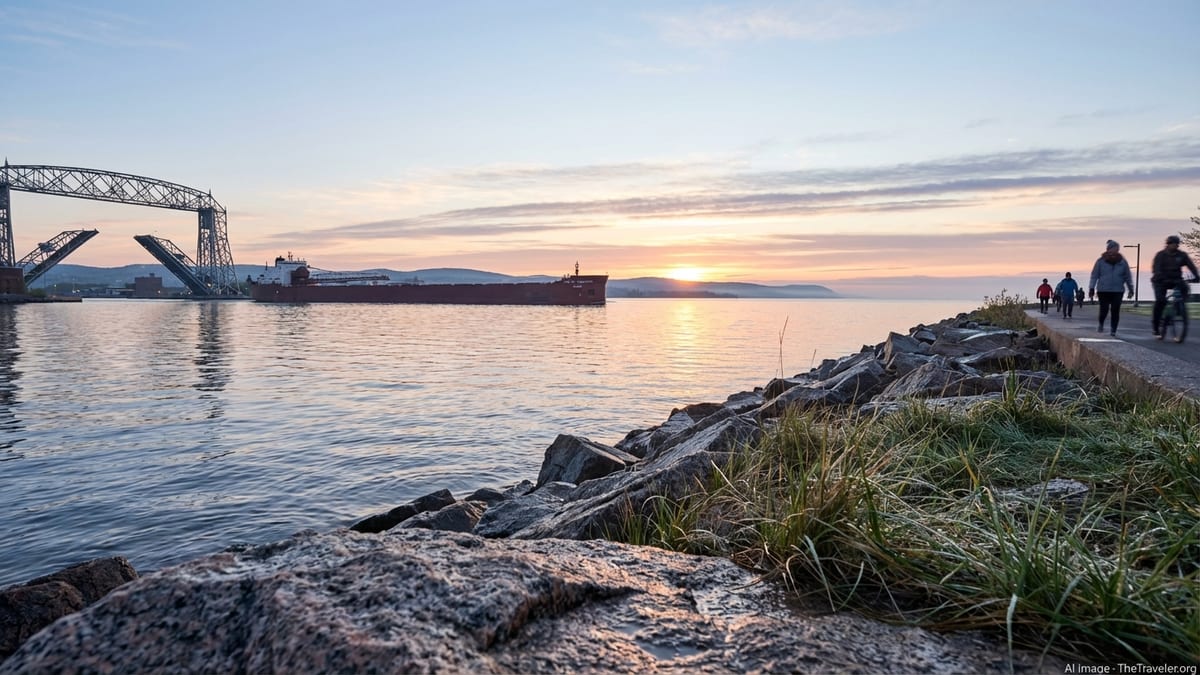
Duluth sits on steep hills that rise from the western tip of Lake Superior, giving the city an almost amphitheater-like view over the water. At its heart, Canal Park has evolved from a warehouse district into a lively waterfront neighborhood filled with hotels, restaurants, and paved paths that follow the harbor. The focal point is the Aerial Lift Bridge, a working piece of early twentieth-century engineering that still raises and lowers for massive ore boats and international freighters. Watching one of these ships pass within arm’s reach of the canal’s stone piers remains a highlight for many first-time visitors.
A lakeside promenade connects Canal Park with a long curving sandbar known as Park Point, which provides one of the region’s best urban beaches. Even in high summer, water temperatures in Lake Superior are brisk, but on a warm day you will see swimmers, kiteboarders, and families picnicking along the dunes. Nearby, the Lakewalk continues northeast, offering views of the lake, access to small pocket parks, and a corridor frequented by cyclists, runners, and birdwatchers. Because Duluth sits at the hinge between shore and inland forest, it also works well as a base for day trips to waterfalls and trailheads up the North Shore.
Duluth’s climate can be more temperate than inland Minnesota in midsummer, with cool evenings even during regional heat waves, which is part of its appeal. Spring and fall can be foggy and windy along the lake, though the same conditions create atmospheric light, dramatic waves, and, on clear nights, stargazing that feels surprisingly remote for a small city. In winter, the waterfront remains open but quiet, with ice ridges forming along the shore and a slower pace that appeals to travelers comfortable with snow and subfreezing temperatures.
Join the Crowd at the Minnesota State Fair
Each late August and early September, the Minnesota State Fair in Falcon Heights draws close to two million visitors over twelve days, making it one of the largest state fairs in the country by daily attendance. The event blends agricultural exhibitions, midway rides, live music, and an ever-changing line-up of foods, many of them served on sticks or built around local ingredients. Recent fairs have seen attendance rebound strongly after the pandemic years, with totals in 2024 and 2025 landing just below the pre-2020 record, a sign of how central the “Great Minnesota Get-Together” remains to local life.
For travelers, the fair offers a concentrated introduction to Minnesota’s diversity. County and 4-H barns showcase livestock raised across the state, while creative competitions celebrate everything from seed art and quilting to baking and craft beer. Free stages spread throughout the grounds host regional bands, dance troupes, and community groups, and a separate grandstand venue sells tickets for national touring acts. Families gravitate toward the Kidway ride area and hands-on exhibits that walk children through farming, gardening, and food production in a format tailored to younger attention spans.
Because the fair routinely fills its parking lots and nearby streets, planning your visit around transit or rideshare can significantly reduce stress. Local media outlets often publish data-driven guides on which days and times are generally less crowded, typically highlighting the opening Thursday and some midweek mornings as comparatively quieter, though weather remains a major factor. Food and admission prices have risen in recent years, so budgeting for your visit is sensible, but many visitors still spend full days on the grounds by balancing high-profile treats and rides with free stages, parades, and people-watching from shaded benches.
Discover Small-Town Main Streets and Scenic Byways
While most visitors focus on the Twin Cities, Duluth, or major lake destinations, much of Minnesota’s character lives in its smaller towns and byways. Places like Stillwater on the St. Croix River, Lanesboro in bluff country, and New Ulm on the prairie each offer distinct histories tied to logging, river trade, or waves of nineteenth-century immigration. Restored main streets often house independent bookstores, cafes, and antique shops, with brick storefronts that have survived cycles of boom and bust. Many of these communities lean into their heritage through weekend festivals, outdoor markets, and seasonal concerts in town parks.
Several designated scenic byways thread these towns together, including routes that follow the Mississippi, wind through the forested Iron Range, or traverse the rolling hills of southeastern Minnesota’s driftless region. Driving them at a relaxed pace allows you to stop for short hikes, river overlooks, and roadside stands selling everything from sweet corn in late summer to apples and cider in early fall. Distances can appear short on a map but expand in practice as you detour into wildlife refuges or historic sites, so allowing extra time in your schedule makes the travel feel less rushed.
Because many rural economies are shifting, hours for individual shops and restaurants can be highly seasonal, and midweek closures are common outside of peak summer and fall color periods. Checking current opening times in advance and having a flexible backup plan, such as a picnic in a nearby state park, will help you enjoy the landscape even if a specific stop is unexpectedly closed. The reward for this extra planning is the chance to experience a slower, more conversational side of Minnesota, where a simple stop for coffee can easily turn into a half-hour chat with locals about fishing spots, weather, or the high school sports season.
The Takeaway
Minnesota’s best experiences are tied together by water, from Lake Superior’s cold surf and the quiet bays of the Boundary Waters to the urban Chain of Lakes and the working Mississippi riverfront. Each region offers its own rhythm and scale, whether you prefer multi-day paddling trips, short hikes between roadside overlooks, or afternoons spent wandering through neighborhoods of galleries and independent shops. The state’s seasonal extremes, with humid summer afternoons, brilliant autumns, snowy winters, and bright, short springs, ensure that the same place can feel entirely different from one visit to the next.
For first-time visitors, combining at least one North Shore or inland lake destination with a couple of days in the Twin Cities offers a balanced introduction to both the natural landscape and contemporary culture. Returning travelers often dig deeper, using Duluth or small towns as bases for exploring specific state parks, bike trails, or cultural festivals that align with their interests. Whatever approach you choose, some of the most memorable moments tend to be unplanned: a loon call echoing across a still lake, a sunset over the Mississippi, or a late-night conversation at a neighborhood bar after a show.
FAQ
Q1. When is the best time of year to visit Minnesota for outdoor activities?
The warmest and most popular months are June through early September, when lakes are open for swimming and paddling and most trails and attractions operate on peak schedules.
Q2. Are winters in Minnesota too harsh for travelers?
Winters are cold and snowy, but with proper clothing many visitors enjoy skiing, snowshoeing, and winter festivals; driving conditions simply require more planning and flexibility.
Q3. Do I need a car to explore Minnesota’s main attractions?
A car is helpful for reaching the North Shore, Boundary Waters, and lake country, while the core of Minneapolis and Saint Paul can be explored using a mix of light rail, buses, rideshare, and walking.
Q4. How far is the North Shore from Minneapolis–Saint Paul?
Duluth, the gateway to the North Shore, is roughly a two-and-a-half-hour drive from the Twin Cities under normal conditions, with additional driving time needed to reach more distant state parks and trailheads.
Q5. Is swimming in Lake Superior safe?
Swimming is common in designated areas during summer, but the water is cold year-round and waves and currents can be strong, so it is important to follow posted advisories and local guidance.
Q6. Do I need permits for the Boundary Waters Canoe Area Wilderness?
Yes, overnight trips in the Boundary Waters require advance permits during the main season, and quotas can fill early, so it is wise to reserve as soon as your travel dates are firm.
Q7. What should I expect to spend at the Minnesota State Fair?
Admission, parking or transit, and food can add up quickly, so many visitors budget for a full-day outing and balance higher-priced treats and rides with free entertainment, exhibits, and people-watching.
Q8. Are Minnesota’s lakes safe for swimming and paddling?
Most popular lakes are regularly monitored, and authorities post alerts when water quality issues arise, so checking current advisories and choosing lifeguarded or well-used access points is a sensible approach.
Q9. Can I see the northern lights in Minnesota?
Northern lights are occasionally visible, especially in far northern areas and along the North Shore under dark, clear skies, but they are unpredictable and no single trip can guarantee a display.
Q10. Is Minnesota a good destination for families with children?
Yes, with kid-friendly museums, beaches, gentle lake paddling, and events like the Minnesota State Fair, families can build itineraries that mix outdoor play with hands-on learning and downtime.