

More news on this day
Across Europe, a new generation of transport is blurring the line between getting there fast and savoring the journey. From record-breaking high-speed trains to revived night sleepers and quietly gliding cable cars, railways, ferries and urban lines are being reimagined as experiences in their own right, not just ways to move from A to B.
Get the latest news straight to your inbox!
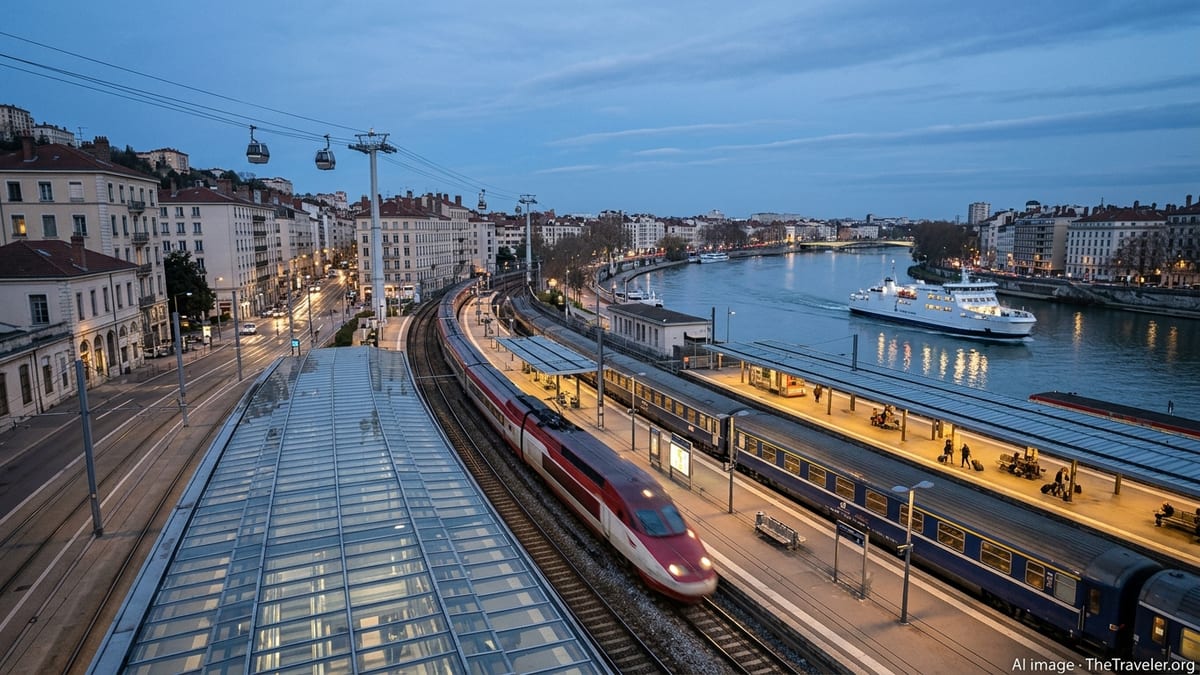
Speed Champions: A New Wave of European High-Speed Trains
Europe’s long-running love affair with fast trains has entered a new phase, with national rail operators rolling out next-generation fleets designed to cut journey times between major cities. Publicly available information from the European Commission highlights a strategy to expand high-speed corridors across the continent, targeting speeds of 200 kilometers per hour and above on more routes and promising shorter trips between capitals such as Sofia and Athens.
In Italy, Trenitalia has begun deploying new high-speed sets as part of a wider fleet update that emphasizes lower emissions and better onboard comfort. Industry reports indicate that more than 80 percent of the company’s trains are now from its latest generation, with additional high-speed units entering service in 2026 to reinforce flagship Frecciarossa routes linking cities such as Milan, Rome and Naples.
France and its neighbors are also preparing for a faster future. Alstom’s Avelia Horizon double-deck trains, ordered in large numbers by SNCF Voyageurs and Eurostar, are billed as very high-speed sets capable of serving cross-border routes while consuming less energy than previous models. According to company releases and coverage in specialist rail media, these trains are designed for long-distance comfort at high speeds, positioning them as central players in Europe’s bid to shift travelers away from short-haul flights.
This expanding high-speed network is being framed not only as a technical upgrade but as a climate policy tool. European policy documents underline the role of fast rail in cutting aviation emissions on routes of under 1,000 kilometers, as more passengers choose trains that can match or beat total door-to-door flight times between city centers.
Night Trains and the Slow Romance Revival
While daytime services focus on sheer speed, night trains have become the emblem of a slower, more romantic way to cross the continent. A wave of new and revived sleeper routes is reshaping Europe’s overnight map, with independent operators and state railways testing whether travelers will trade airport queues for rolling hotel rooms.
The Brussels-based cooperative European Sleeper has emerged as one of the most closely watched players in this space. According to published coverage from European and travel media, the company already runs sleeper services linking Brussels with Berlin and Prague, and is preparing a Paris to Berlin train from March 2026 that will route via Brussels and Hamburg. The new connection is described as both a replacement for a recently cancelled night route and a strategic expansion of a hub-and-spoke network centered on the Belgian capital.
North of the Alps, Scandinavian and central European operators are also investing in overnight services. Specialist travel guides note that Swedish, German and Austrian companies have added or extended night routes linking cities such as Berlin, Stockholm and Vienna, often branding them as low-carbon alternatives to flying. Seasonal trains to the Adriatic coast and Baltic Sea have tested demand for overnight tourism links, with reports indicating that several of these trial services are expected to return in 2026.
At the luxury end of the spectrum, high-end trains such as the Belmond Britannic Explorer in the United Kingdom have attracted attention for multi-night itineraries that combine rail with curated excursions. Introduced in 2025, the train’s early routes through Cornwall, Wales and the Lake District have been described by travel publications as a revival of the golden age of rail touring, aimed at travelers willing to pay five-figure sums for slow, scenery-focused journeys.
Crossing the Water: Ferries and Coastal Links Reimagined
Not all of Europe’s iconic transport moments happen on rails. Ferries continue to form a crucial part of the continent’s mobility network, especially around the Baltic and North seas, and several new or updated vessels have drawn attention for their scale and design. Among them is the MF Varsovia, a roll-on, roll-off passenger ferry delivered in 2024 and now operating on routes between Italy and northern Europe.
Ship registries and maritime news reports describe the MF Varsovia as part of a new generation of large European ferries with expanded cabins and modern public spaces designed to compete with overnight trains and budget airlines. With capacity for both passengers and freight, vessels of this class serve as floating corridors that link national rail and road networks, helping travelers string together rail-and-sea itineraries across borders.
Elsewhere, long-established ferry icons continue to define local travel identities. Venice’s vaporetti, Istanbul’s Bosphorus ferries and the classic white hulls crossing Scandinavia’s fjords all remain fixtures in destination photography and tourism branding. Recent port upgrades and new emissions regulations are pushing operators toward cleaner propulsion systems, with ports in northern Europe in particular investing in shore power and hybrid or fully electric ships to cut emissions in harbor areas.
This blend of tradition and innovation is turning ferries into transport icons in their own right. For many travelers, an overnight crossing on a modern ship or a short hop across a historic harbor has become an experience to seek out, not just a practical necessity between trains.
Urban Icons: Cable Cars, Metros and the View from Above
Within Europe’s cities, transport icons often move more slowly, offering views and atmosphere rather than outright speed. One of the most striking recent additions is the Câble 1 urban cable car in the Paris region, a 4.5 kilometer line that opened in Val-de-Marne in late 2025. Company statements and regional transport briefings present it as the longest urban cable car line in Europe at the time of inauguration, gliding above dense suburbs to connect five stations.
The system has been promoted as a way to bypass road congestion and fill gaps in heavy-rail and metro coverage, with cabins offering panoramic views rather than tunnel walls. Transport analysts have pointed to Câble 1 as part of a broader European turn toward aerial cable systems for short, hilly or hard-to-serve corridors, following earlier projects in cities such as Toulouse, Ajaccio and Koblenz.
Classic metros also retain their iconic status. The Moscow and London systems tend to dominate global imagery, but across the European Union, networks in cities such as Paris, Berlin, Madrid and Lisbon have been engaged in quieter revolutions of their own. Recent years have brought new automatic lines, platform screen doors and expanded cycling and tram connections that allow residents and visitors to mix modes in ways that were rare even a decade ago.
By combining older infrastructure with new lines and technologies, these systems are reshaping how people experience cities. Riders can pair a cable car ride above the rooftops with a high-frequency metro journey beneath the streets, treating daily commutes or sightseeing days as layered urban experiences rather than simple point-to-point transfers.
Rail as Experience: From Eurostar to Scenic Cross-Border Journeys
Among Europe’s most visible railway icons, cross-border services such as Eurostar continue to symbolize a continent linked by steel. Recent rolling stock orders for very high-speed trains, widely reported in rail industry outlets, point to a future in which newer double-deck sets replace older fleets on busy links between France, Belgium, the Netherlands and the United Kingdom.
Beyond headline services under the Channel, a quieter transformation is taking place on scenic routes across the Alps, the Brenner Pass and along Mediterranean and Atlantic coasts. Cooperation agreements between operators in Italy, Germany and Austria, for example, have paved the way for new or upgraded links between cities like Munich and Rome, giving travelers daytime options that combine high-speed stretches with panoramic mountain or coastal sections.
Travel publishers have increasingly framed these journeys as experiences in their own right, highlighting how a fast train out of a capital can feed into a slower regional line to reach wine regions, ski resorts or lesser-known coastal towns. As more operators coordinate timetables and ticketing, passengers are being encouraged to think of cross-border rail not as a single dash between major hubs, but as a chain of connected legs that can be adjusted to balance speed with lingering over landscapes.
Together, these developments illustrate how Europe’s most compelling transport icons now sit along a spectrum. At one end are the speed-focused high-speed trains that turn long distances into day trips. At the other are sleepers, ferries and cable cars that invite travelers to slow down, look out of the window and treat the journey itself as the heart of the adventure.