

Stretching between the United States and Canada, Lake Erie offers far more than a quick day at the beach. Its shores and coastal parks span four U.S. states plus Ontario, creating a patchwork of sandy peninsulas, quiet wetlands, working harbors, and island getaways. Whether you come for bird migration, historic lighthouses, family friendly swimming, or icy winter adventures, there is a stretch of Lake Erie tailor made for your style of travel.
Stroll Classic Sand Beaches and Swim in Freshwater Surf
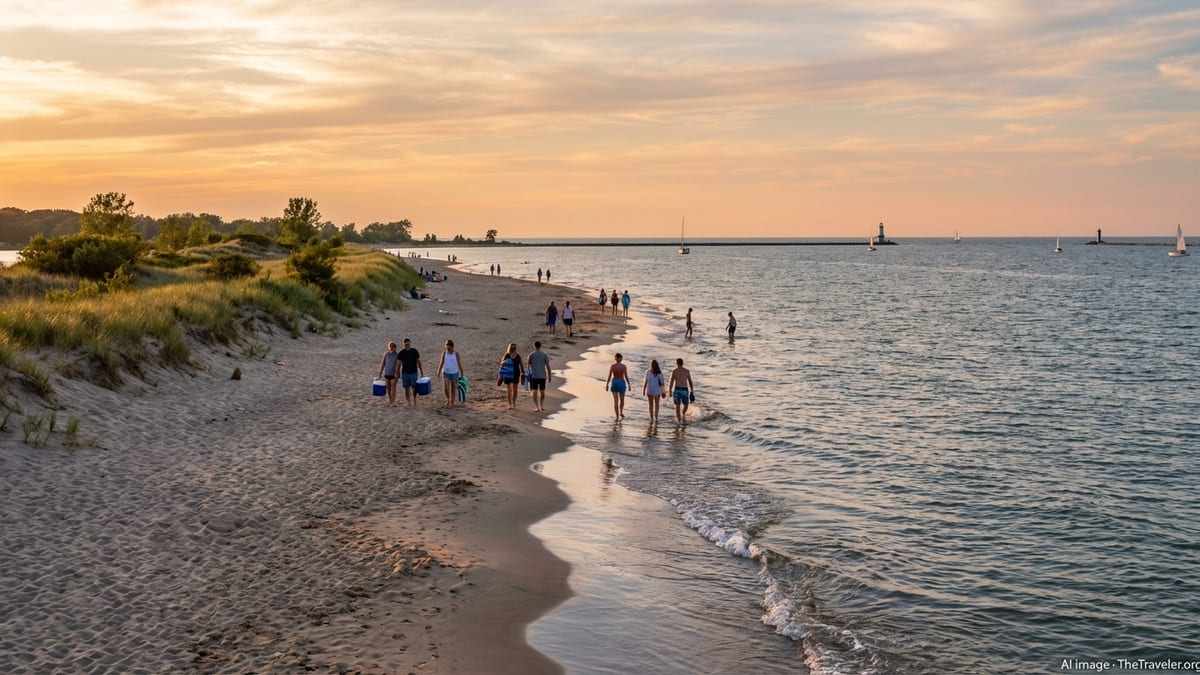
Lake Erie’s broad, shallow basin gives it a character unlike the other Great Lakes, and nowhere is that more apparent than along its beaches. On warm days, waves roll in with enough energy for body surfing yet usually stay gentle enough for family swimming. At Presque Isle State Park in Pennsylvania, a sweeping sand spit curls out into the lake, framing a necklace of guarded swimming beaches backed by dunes and picnic groves. The atmosphere is relaxed and low key, with visitors spreading blankets, wading in the shallows, and watching sailboats tack across the horizon.
On the Ohio shore, Headlands Beach near Cleveland is known for having one of the longest natural sand beaches in the state, drawing both day trippers and vacationers staying in nearby lake towns. Further west, Geneva State Park, East Harbor State Park, and Maumee Bay State Park all offer sandy lake access, changing facilities, and in-season lifeguards or posted swimming zones. On the Canadian side, Ontario provincial parks and conservation areas add wide open strands of sand and pebble, where you can walk for long stretches with few interruptions.
Conditions on Lake Erie can change quickly, so it is wise to check local advisories before entering the water and to swim only where and when lifeguards are on duty. Even on cooler days, a shoreline stroll is rewarding, with the lake’s shifting moods reflected in the color and texture of the waves. In early morning and toward sunset, the beaches tend to be quieter and more atmospheric, ideal for photographers and travelers who prefer a contemplative pace.
To make the most of beach time, pack for flexibility rather than a single activity. A light windbreaker and secure footwear will let you hike the length of a park’s shoreline, while a compact blanket and towel transform any open stretch of sand into a temporary lakefront living room. In many parks, amenities such as restrooms, snack stands, and playgrounds sit just beyond the dunes, making it simple to spend an entire day without moving your car.
Paddle Coastal Wetlands and Lagoons
Behind the beaches, Lake Erie’s shore hides an intricate network of lagoons, marshes, and quiet backwaters that are best appreciated from the seat of a kayak or canoe. At Maumee Bay State Park east of Toledo, a boardwalk and channels wind through emergent wetlands where paddlers can glide past cattails, lily pads, and stands of hardwoods reflected on still water. Early and late in the day, these sheltered areas feel particularly remote, with only the rustle of reeds and calls of marsh birds breaking the silence.
Presque Isle State Park in Pennsylvania includes interior lagoons and ponds that contrast sharply with the open lake just across the dune line. Here, outfitters rent kayaks, canoes, and small motorboats in season, allowing even first time paddlers to explore the protected channels. In Ohio, East Harbor State Park and several smaller coastal preserves also offer launching areas for small craft, where you can trace the edges of bays and inlets that are off limits to larger powerboats.
Because many of these lagoons and marshes serve as important wildlife habitat, speed limits and no wake rules are common. This slower pace invites close observation. In spring and early summer, you may spot nesting waterfowl, turtles sunning on logs, or dragonflies skimming inches above the surface. In autumn, golden grasses and changing leaves add rich color to the scene, especially on clear, crisp days.
For paddlers, preparation is simple but important. Life jackets are typically required by law, and water temperatures can remain surprisingly cool even after the air warms, so dressing for immersion is prudent. If you do not have your own gear, look for park marinas or nearby outfitters that provide rentals and basic instruction. Many visitors combine a morning on the water with an afternoon beach walk or picnic, making the most of the varied shoreline within a single park.
Cycle Lakefront Trails and Park Loops
Along much of Lake Erie, coastal parks and communities are linked by bike friendly roads, lakefront promenades, and multi use paths that invite exploration on two wheels. Presque Isle State Park is especially popular with cyclists, thanks to a paved loop road that roughly follows the peninsula’s shore. With minimal elevation change and sweeping views of the bay on one side and open lake on the other, it appeals to everyone from casual riders to endurance athletes logging training miles.
In Ohio, state parks such as Geneva, East Harbor, and Maumee Bay offer a mix of paved and packed gravel paths, along with lightly traveled park roads that function as informal cycling routes. Riders can move easily between campground areas, marinas, beaches, and nature centers without needing to drive or repeatedly search for parking. Nearby, segments of regional trails and local greenways extend the network, connecting lakefront parks to downtown districts, historic neighborhoods, and inland attractions.
Cycling Lake Erie’s shore is not only about scenery; it also offers a different perspective on the lake’s human story. Passing by marinas, boat ramps, and fishing piers, you get a sense of how closely tied local communities are to seasonal patterns on the water. In some towns, riders can follow lakefront streets lined with cottages, motels, and ice cream stands that recall the mid twentieth century heyday of Great Lakes road trips.
To ride comfortably, consider wind and weather as seriously as distance. Lake breezes can be strong, making one direction of a ride feel significantly easier than the other, and sudden squalls are possible in all seasons. A compact rain shell, visible clothing, and lights for riding near dusk are worth packing even in midsummer. Many coastal communities now offer public bike racks, repair stations, and nearby cafes or breweries, making it easy to turn a ride into a full lakefront outing.
Birdwatch on a Major Migration Flyway
Lake Erie’s coastal wetlands and woodlots sit squarely on a major migration route used by songbirds, raptors, and waterfowl, turning otherwise quiet stretches of shoreline into world class birdwatching arenas during spring and fall. On the U.S. side, the western basin is particularly renowned, with parks and refuges around Maumee Bay drawing visitors for concentrated waves of warblers and other neotropical migrants. Boardwalks and observation decks allow even beginners to encounter a surprising variety of species at close range.
Across the lake in Ontario, Long Point and other peninsulas host an equally impressive movement of birds, with sandy spits and marshes acting as staging areas where migrants rest and feed before crossing large stretches of open water. Closer to the central and eastern basins, preserves surrounding state and provincial parks provide critical stopover habitat. Even in more urbanized areas, pockets of trees and wetland can be unexpectedly productive during peak migration days.
Birding along Lake Erie is as much about timing as location. Early May often brings a surge of spring migrants, while late August through October can deliver a steady stream of southbound travelers, from shorebirds patrolling mudflats to hawks riding thermals along the bluffs. Many visitors plan travel around loosely predictable windows rather than specific dates, allowing for the weather driven nature of migration.
For travelers new to birding, the coastal parks are welcoming places to start. Many host seasonal festivals, guided walks, and educational programs that introduce identification, binocular use, and ethical field practices such as keeping a respectful distance from nests and roosts. Bringing a compact field guide or bird identification app, plus a small notebook, helps turn observations into lasting memories and encourages kids and adults alike to slow down and really look.
Explore Lighthouses, Maritime History, and Working Harbors
Maritime heritage is woven into nearly every bend of the Lake Erie shoreline. Historic lighthouses guard headlands and sandbars, while harborfront districts tell stories of shipbuilding, fishing, and trade. Near many coastal parks, short drives or bike rides lead to towers that once guided Great Lakes freighters through treacherous shoals. Some lighthouses now serve as museums or offer seasonal tours, allowing visitors to climb internal stairways for commanding views of water and town.
Presque Isle Light and the Erie Harbor North Pier Light stand as prominent examples near Pennsylvania’s Presque Isle State Park, where they continue to mark hazards for commercial and recreational vessels entering Presque Isle Bay. Along the Ohio shore, smaller harbor lights and decorative replicas dot breakwalls and marina entrances at state parks such as Geneva and East Harbor. Although not all structures are open for interior visits, many can be viewed up close from publicly accessible piers or shorelines.
Harbors surrounding Lake Erie parks also remain working landscapes. Fishing charters, tour boats, and marina services operate alongside recreational docks, illustrating the economic role the lake still plays for local communities. Strolling a waterfront boardwalk at dawn or dusk, you may watch crews readying boats, hear the clank of rigging against masts, and smell fresh catch being unloaded or prepared at small restaurants.
Visitors interested in maritime history can deepen their understanding through local museums and interpretive signs, which often explain how shifting sandbars, storms, and changing water levels have shaped navigation. Combined with a climb to a lighthouse gallery or a leisurely walk along a breakwall, these experiences round out a visit focused not only on scenery but also on the people who have long worked and lived by the lake.
Island Hop for Coastal Trails and Glacial Landscapes
While much of Lake Erie’s shoreline is easily reached by car, some of its most intriguing landscapes lie just offshore on accessible islands. In Ohio, Kelleys Island stands out for its combination of low key village life and significant natural features protected within Kelleys Island State Park. Here, trails wind past cliffs and former quarries, quiet coves, and a sandy swimming beach, offering frequent lookouts over the open lake.
One of the island’s most striking attractions is a set of prominent glacial grooves carved into limestone bedrock. Preserved as a separate memorial area adjacent to the park, these channels record the movement of ice that once filled the Great Lakes basin. Nearby, rare alvar habitat and shallow embayments showcase specialized plants and subtle shoreline ecosystems not often seen on the mainland. Together, these features make the island a compelling destination for travelers who enjoy geology and botany alongside traditional vacation pursuits.
Reaching the islands typically involves a ferry crossing from mainland ports, where parking and ticketing facilities accommodate both day visitors and overnight guests. The short boat trip itself becomes part of the experience, with views back toward headlands and out toward other islands and distant shorelines. In season, bicycles and sometimes small vehicles can be transported, giving travelers flexibility once ashore.
Because island services and schedules vary by time of year, it is wise to confirm operating seasons for ferries, campgrounds, and visitor centers before building an itinerary around an offshore stay. Packing with a degree of self sufficiency, including layers for cooler lake breezes and provisions for quieter evenings, helps ensure a relaxed experience that matches the slower pace of island life.
Fish, Boat, and Embrace Four Season Lake Life
Fishing and boating are central to Lake Erie culture, and coastal parks make it straightforward for travelers to experience both at a level that feels comfortable. Many state and provincial parks provide launch ramps, marinas, and fishing piers, along with basic information about licensing requirements and seasonal regulations. Anglers target a variety of species that change with location and time of year, from warm season bass and panfish in sheltered bays to seasonal runs of trout and other game fish in open water and tributary streams.
Charter operators based near popular parks offer guided trips for visitors who prefer to leave navigating and gear to local professionals. These outings range from short introductory excursions suited to families to full day ventures focused on catching specific target species. For casual visitors, simply walking out on a public pier at sunset offers a taste of the atmosphere, with the silhouette of anglers against the water and the murmur of conversations about weather and fish behavior.
Lake Erie’s shallow depth and location also create distinct seasonal rhythms. In summer, boat traffic peaks, and marinas buzz with activity as powerboats and sailboats take advantage of long daylight hours. Autumn brings clearer air and often more variable weather, along with vivid shoreline foliage. In winter, when conditions allow, parts of the lake and adjoining bays see ice fishing and other cold weather activities such as cross country skiing and snowshoeing within adjacent parks.
Travelers can embrace this four season character by tailoring activities to the time of their visit rather than viewing Lake Erie solely as a summer destination. A brisk winter hike along a frozen shore, a spring birding weekend in quiet campgrounds, or a late season paddle among changing leaves each reveal different facets of the same landscape. Checking seasonal services in advance, such as which campgrounds or lodges operate year round, helps align expectations with what is realistically available.
The Takeaway
Lake Erie’s shores and coastal parks reward travelers who look beyond a single postcard view. From sandy peninsulas and sheltered lagoons to island cliffs and working harbors, the lake presents a mosaic of experiences that can fill a long weekend or an extended road trip. The ten must do activities highlighted here overlap and intersect, allowing you to shape a trip around swimming and cycling, birding and lighthouses, or paddling and island hikes without ever straying far from the water.
Because the lake straddles international and state borders, planning even a simple itinerary encourages you to think in terms of regions rather than individual towns. Western, central, and eastern basins each have their own personality, influenced by prevailing winds, surrounding land use, and the histories of nearby communities. As you move from one stretch of shore to another, you gain a broader sense of how this single body of water connects diverse landscapes and cultures.
Most of all, the Lake Erie coast is accessible. Extensive public parklands, modest entrance fees where they exist, and a range of lodging options keep it within reach for many types of travelers. Whether you prefer a tent under lakeside trees, a room at a harborfront inn, or rental cottages in a state park, you can pair your chosen base with close at hand outdoor experiences suited to nearly any level of adventure.
By approaching the lake with flexibility and curiosity, you can assemble your own set of must do moments, from a first glimpse of sunrise over calm water to the sound of waves under a star filled sky. Lake Erie’s shores invite repeat visits, each shaped by season, weather, and the particular combination of beaches, trails, and small towns you choose to explore.
FAQ
Q1. When is the best time of year to visit Lake Erie’s coastal parks?
The most popular months are late spring through early fall, when swimming, boating, and most park services are in full swing, but shoulder seasons offer quieter experiences.
Q2. Are Lake Erie beaches suitable for families with young children?
Many parks have gently sloping sand, designated swimming areas, and seasonal lifeguards, making them appealing for families who remain attentive to changing lake conditions.
Q3. Do I need my own kayak or bike to enjoy paddling and cycling?
No. Around several major parks, seasonal outfitters and marinas rent kayaks, canoes, and bicycles, though availability and hours vary by location and time of year.
Q4. Is it possible to visit Lake Erie islands on a day trip?
Yes. Ferries from mainland ports serve popular islands, and many visitors make a day trip for hiking, beach time, and village exploring before returning to shore in the evening.
Q5. How unpredictable is Lake Erie weather for outdoor activities?
Conditions can shift quickly, especially with passing fronts, so checking local forecasts, heeding park advisories, and packing layers is important even in midsummer.
Q6. Are there good options for travelers who prefer not to camp?
Coastal regions offer lakeside lodges, small inns, rental cottages, and chain hotels, along with some state park lodges that provide comfortable non camping stays.
Q7. Can beginners enjoy birdwatching along Lake Erie?
Yes. Boardwalks, observation decks, and guided walks at certain parks make it easy for newcomers to see a variety of species without specialized skills or equipment.
Q8. What should I know about fishing regulations around the lake?
Fishing rules, seasons, and licenses differ between states and Ontario, so anglers should review current regulations for the specific waters they plan to fish.
Q9. Are Lake Erie coastal parks accessible in winter?
Many remain open year round, though some roads, facilities, and services may be limited; winter visitors often come for quiet hikes, wildlife viewing, and snow based activities.
Q10. How can I minimize my environmental impact when visiting the shoreline?
Staying on marked trails, packing out trash, respecting wildlife, and following local guidelines for fires and boating help protect sensitive coastal ecosystems.