

Sailing through the Panama Canal is one of the world’s great maritime experiences, blending monumental engineering, tropical scenery, and a unique sense of passage between oceans.
Whether you are booking your first canal cruise or adding it to a round-the-world voyage, understanding how this waterway works will help you appreciate every lock, lake, and shoreline village along the way. These 10 must know facts will prepare you for the transit and help you make the most of your time on board and ashore.
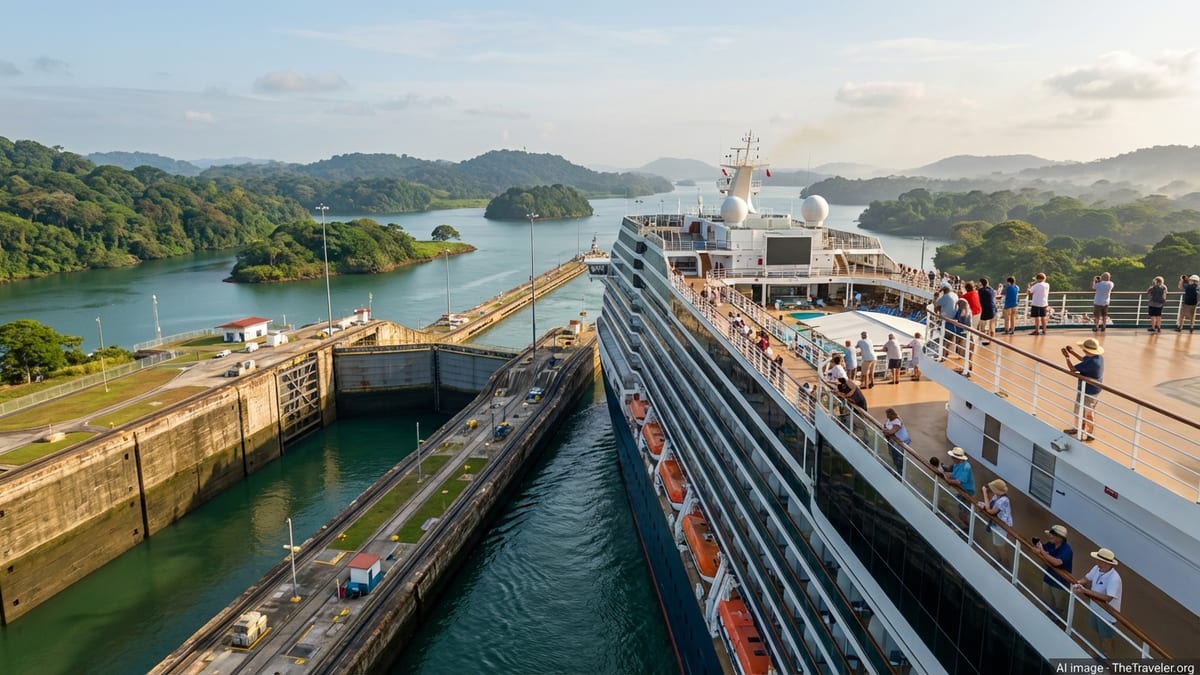
1. The Canal Is Short in Distance but Huge in Global Importance
The Panama Canal may look like a narrow line on the map, but its impact on global trade and travel is immense. For passengers, that means you are not just on a scenic cruise, you are sailing along one of the world’s most strategic corridors.
From 82 Kilometers of Jungle to a World Trade Artery
The canal stretches roughly 82 kilometers across the Isthmus of Panama, linking the Caribbean Sea on the Atlantic side with the Pacific Ocean. Instead of rounding the southern tip of South America, ships can cut thousands of nautical miles from their journeys by crossing this slender strip of land by water.
For cruise travelers, this translates into a rare opportunity: to watch in real time as container ships, tankers, car carriers, and passenger vessels all converge on the same narrow waterway. Your ship will likely wait in a queue or arrive with a pre-booked time slot, joining a carefully choreographed flow of traffic that keeps global commerce moving.
A Crucial Link for Cruise Itineraries
Because the canal connects two oceans so efficiently, it is central to many seasonal repositioning cruises, especially when ships move between Alaska, the Caribbean, and South America. The Panama Canal Authority has forecast hundreds of cruise transits across the 2024 to 2025 season as lines respond to strong passenger demand.
For you, this means the canal is not an isolated sightseeing detour, but a major connector in the global cruise network. Understanding its role explains why some itineraries run only at certain times of year and why a canal transit is often marketed as the star attraction of a longer voyage.
2. The Locks Lift You Over a Man-Made Lake, Not Through a Sea-Level Channel
Many first-time visitors imagine the Panama Canal as a simple sea-level passage. In reality, your ship will be lifted high above sea level, cross a vast artificial lake, and then be lowered down again. Understanding this basic design helps you follow what is happening on deck during each stage of the day.
Gatun Lake: The Canal’s Elevated Highway
The canal’s heart is Gatun Lake, an artificial freshwater lake roughly 26 meters above sea level. It was created in the early 20th century by damming the Chagres River, flooding valleys and forest to form a wide inland waterway. Your ship’s journey will include a long, scenic crossing of this lake, flanked by lush green hills and fragments of former mountaintops rising like islands.
This elevated lake is what makes the canal possible. Instead of digging a deep trench at sea level across rugged terrain, engineers opted to raise ships up to this higher level, then lower them again at the far end. As a passenger, you are effectively taking an inland mountain lake shortcut between oceans.
How the Lock Chambers Do the Heavy Lifting
At each end of the canal, tiered locks act like water elevators, lifting or lowering ships in steps between sea level and Gatun Lake. The original locks at Gatun, Pedro Miguel, and Miraflores are composed of concrete chambers and giant steel gates. Your ship will move in, the gates will close, and gravity-fed water will flow in or out to change the water level.
From the open decks, you can watch water swirling into the chamber, see the ship rise or sink relative to the lock walls, and feel the subtle shift as it comes to level with the next stretch of channel. Understanding that each movement is powered by gravity-fed freshwater, not pumping systems, adds to the appreciation of how efficient and elegant this century-old technology remains.
3. There Are Now Two “Sizes” of Canal Experience: Panamax and Neopanamax
Not all canal transits are identical. Since 2016, the Panama Canal has had two main sets of locks, each designed for different sizes of ships. Knowing whether your voyage uses the original locks, the newer ones, or both can shape what you see and how it feels on board.
Classic Panamax Locks: Narrow Walls and Intimate Views
The original lock chambers define the “Panamax” vessel size. Ships built to these dimensions just fit inside the chambers with very little clearance on either side. Many mid-sized cruise ships still use these locks, which makes for dramatic viewing. You can stand on the open decks and watch the lock walls glide past mere meters away, with canal staff walking along the edges almost at arm’s reach.
The intimacy of this experience is part of the classic charm of a Panama Canal transit. You will see the legendary “mules,” small locomotives on tracks alongside the locks that help keep large vessels centered and carefully controlled as they move through each step.
Neopanamax Locks: Wider, Deeper, and Designed for Giants
The expansion project that opened to commercial traffic in 2016 added a third lane with larger lock complexes on both the Atlantic and Pacific sides. These “Neopanamax” locks are wider, deeper, and equipped with modern sliding gates and water-saving basins that reuse a significant portion of the freshwater needed per transit.
Many of today’s bigger cruise ships are built to take advantage of these dimensions, meaning your vessel may glide through the more spacious new locks. The feel is different: there is more room between the hull and the walls, and tugboats, rather than locomotives, assist with maneuvering. You will still see the intricate choreography of gates, chambers, and water levels, but on a broader, more modern stage.
Before your trip, check your ship’s specifications or ask your cruise line which locks you are scheduled to use. Some itineraries feature a full transit mixing old and new locks, while partial transits may focus on specific sections.
4. Canal Operations Depend on Rainfall and Water Levels
The Panama Canal is not only a feat of engineering, it is also deeply dependent on natural conditions. Recent years have highlighted how rainfall patterns and lake levels can affect schedules, capacity, and even the type of ships that get priority.
Freshwater, Drought, and Daily Transit Limits
Each time a ship transits the canal, a large volume of freshwater from Gatun Lake is released to move it up or down through the locks. In seasons of generous rainfall, the system can support a typical schedule of more than 30 transits per day. During periods of drought, however, the Panama Canal Authority often reduces the number of daily slots and may impose draft limits that affect how heavily loaded ships can be.
In the last several years, fluctuating rainfall and historically low water levels in Gatun Lake have led to repeated adjustments in capacity. At times, daily crossings have been cut back significantly, with a gradual easing of restrictions when wetter conditions returned. These changes have been closely watched by global shipping and cruise operators alike.
What Water Management Means for Cruise Passengers
For travelers, variable water levels can translate into schedule tweaks, revised itineraries, or changes in the time of day your ship enters the locks. In seasons when capacity is tight, some cruise lines secure premium booking slots well in advance, while others may adjust by shifting departure dates or ports.
While it is rare for a booked canal cruise to be canceled solely due to water constraints, you should be prepared for possible timing changes. This might mean your transit takes place in early morning instead of midday, or that you spend longer waiting at anchor before entering the locks. Staying flexible and viewing any delay as extra time to enjoy the ship’s vantage points will help you make the best of changing conditions.
5. A Full Transit Is Very Different From a Partial Transit
“Panama Canal cruise” can describe a range of experiences. Understanding the difference between a full and partial transit will help you choose the itinerary that matches your expectations and budget.
Full Transit: Ocean to Ocean in One Epic Day
A full transit takes your ship all the way from one ocean to the other, typically over the course of a single, long day. You will enter the canal early in the morning, spend several hours passing through each flight of locks, cross Gatun Lake and the narrow Culebra Cut, and exit into the opposite ocean by evening.
This is the most comprehensive experience, allowing you to see every element of the canal’s operation, from the approach channels and iconic bridges to the midsection of the route where the engineering challenges were greatest. Because it covers a longer distance and uses more canal resources, a full transit cruise often involves a longer overall itinerary and can be higher in price.
Partial Transit: A Taste of the Locks and Gatun Lake
Partial transits are usually offered on shorter cruises that begin and end in the same ocean, often from Caribbean ports. In a typical scenario, your ship will enter the canal from the Atlantic, pass through the Gatun locks into Gatun Lake, anchor or turn around, and then exit back toward the Caribbean later in the day.
You still get to experience the drama of the locks and the scenic lake crossing, but you miss the Pacific-side locks and the full sense of traveling from one ocean to another. On the plus side, partial transits are often more affordable, require fewer vacation days, and may include additional Caribbean ports. If your primary goal is to see the lock operation up close rather than to change oceans, a partial transit can be an excellent choice.
6. Timing, Weather, and Season Shape Your Experience
Panama sits near the equator, so temperatures stay warm year-round, but there are distinct dry and rainy seasons. Cruise lines plan canal itineraries accordingly, and your experience on deck will feel quite different depending on when you sail.
Dry Season: Clear Skies and High Demand
The dry season generally runs from about December through April, with less rainfall, more sunshine, and slightly lower humidity. Many travelers find these months more comfortable for spending long stretches on open decks watching the transit. Because weather is favorable in both the Caribbean and Pacific, this is peak time for full canal crossings tied to broader regional itineraries.
High demand in the dry season can mean higher fares and more crowded popular viewing areas on board. If you are sailing then, plan to arrive early to stake out a railing spot, and rotate between forward, aft, and side decks so you see the operation from different angles.
Rainy Season: Lush Landscapes and Fewer Crowds
The rainy season typically runs from about May to November, with frequent showers or storms, especially in the afternoon. While this might sound less appealing, there are distinct advantages. The surrounding hills and forests are at their greenest, clouds can create dramatic skies, and passenger loads on some itineraries may be lighter.
Showers can pass quickly, so a good strategy is to have light rain gear handy and accept that part of the magic of the canal is seeing it at work in the elements. Because the canal depends heavily on rainfall to maintain water levels, wetter seasons can sometimes ease operational pressures, benefiting both cargo and cruise traffic.
7. Life Onboard During Transit Is an All-Day Spectator Event
Your day in the Panama Canal will likely be unlike any other day of your cruise. From early morning announcements to evening sail-away shots, the ship becomes a moving grandstand overlooking one of the world’s great engineering shows.
Where to Stand and What to Watch
Different vantage points reveal different aspects of the transit. Forward decks offer classic, postcard-style views of the gates opening and closing ahead. Side decks and promenades let you see the precise clearances between hull and lock wall and watch canal workers handling lines. Aft decks frame the receding lock chambers and the narrow waterway behind you.
If your ship has a bow observation platform or accessible front viewing lounge, these can be prime spots early in the day. As the hours pass, you may prefer shadier areas or higher decks with seating. Rotating your location periodically will give you a more complete sense of how the ship moves through each stage.
Enrichment Talks, Commentary, and Canal Pilots
Most major cruise lines treat Panama Canal day as a signature event. Expect live commentary over the public address system or on closed-circuit television, explaining upcoming locks, landmarks, and technical details. Many voyages also feature guest lecturers who give history and engineering presentations before or after transit day.
Behind the scenes, specially trained canal pilots and tug crews join your ship to handle the actual navigation. Their presence is mandatory under Panamanian regulations and ensures that every transit, from small expedition vessels to the largest cruise ships, is guided by experts deeply familiar with local currents, winds, and lock procedures.
Practical Tips for Comfort and Photography
Because the transit can last eight to ten hours, think of it as a full outdoor event. Wear light, breathable clothing, a hat, and sunscreen, and drink plenty of water. Comfortable shoes make it easier to move between decks. If you are sensitive to heat, plan periodic breaks indoors in air-conditioned lounges while still keeping an eye on the passing scenery.
For photos, a mid-range zoom lens or smartphone with optical zoom is ideal. Early morning and late afternoon offer softer light, while midday sun can be harsh but reveals crisp details of the lock machinery. Try switching between wide shots that capture the ship inside the locks and close-ups of gates, cables, and canal personnel at work.
8. Shore Excursions Reveal the Human and Natural Stories Behind the Canal
A canal transit is primarily about what you see from the ship, but time ashore can deepen your understanding of the region’s history, cultures, and ecosystems. Many itineraries pair the transit with port calls where canal-themed excursions are highlights.
Visitor Centers, Museums, and Lock Overlooks
On the Pacific side, the Miraflores Visitor Center offers multi-level viewing platforms where you can watch ships pass through the locks from land, along with exhibits and films about canal construction and operation. Similar facilities exist near other key sites, giving you different perspectives from what you see onboard.
Guided tours often include background on the French attempt to build a sea-level canal in the late 19th century, the subsequent United States-led lock canal that opened in 1914, and the handover of control to Panama at the end of the 20th century. Understanding the political and social dimensions of this history adds depth to what, from the deck, might otherwise feel like a purely technical spectacle.
Rainforests, Lakes, and Indigenous Communities
Excursions also frequently highlight the natural environment that surrounds the canal. Small-boat tours on sections of Gatun Lake and neighboring waterways may bring you close to islands rich in birdlife, monkeys, and reptiles. Visiting protected areas can illustrate how canal authorities and conservation groups work to balance shipping demands with watershed protection.
In some ports, cultural visits to local and indigenous communities introduce travelers to the people whose lives are intertwined with the canal corridor. These encounters remind you that beyond the statistics of tonnage and transits, the canal is part of a living landscape where decisions about water use, land management, and development directly impact residents.
9. Practical Booking and Packing Tips Specific to the Canal
While general cruise preparation advice applies, there are a few Panama Canal-specific considerations to keep in mind when choosing your cabin, packing your bag, and finalizing your plans.
Choosing the Right Cabin and Side of the Ship
Every side of the ship offers interesting views during a canal transit, but if you plan to watch much of the day from your own balcony, consider your itinerary. On a typical full eastbound transit from the Pacific to the Caribbean, for example, the sun’s position and the orientation of the locks may make one side slightly shadier in the morning or afternoon. Travel forums and cruise line guidance can provide hints based on your specific route and season.
If your budget allows, a balcony cabin is a comfortable way to experience long stretches of the lake and channels in privacy. However, some of the most dynamic views of the locks themselves are often from open decks, where you can move from side to side and forward to aft. Do not feel that a balcony is mandatory to enjoy the transit; many travelers in interior or ocean-view cabins report equally memorable experiences by spending most of the day on shared decks.
Documents, Health Considerations, and Safety Awareness
Your cruise line will advise on passport validity, visas, and any health or vaccination recommendations relevant to Panama and other ports on your itinerary. Make sure your travel insurance covers medical care ashore and potential trip disruption, and register your trip with your home country’s traveler enrollment program if available, so you can receive official updates in case of regional events.
On board, follow safety briefings and stay aware of your surroundings, particularly in crowded viewing areas on deck. Use common sense with valuables, and secure cameras, phones, and binoculars with straps when leaning over railings. On shore excursions, stick with reputable operators, remain with your group, and follow local guidance about neighborhoods, wildlife, and weather conditions.
10. The Canal Is Still Evolving, With Sustainability in the Spotlight
The Panama Canal you sail through today is not a static monument. It is a living infrastructure system that continues to adapt to climate realities, environmental expectations, and changing patterns in global shipping and tourism.
Balancing Capacity With Environmental Realities
Canal authorities face the ongoing challenge of managing finite freshwater resources in the face of variable rainfall, urban growth, and global demand for transits. Adjusting the number of daily passages, experimenting with water-saving technologies, and optimizing traffic between the original and expanded locks are all part of this balancing act.
The Neopanamax locks’ water reuse basins and continuing efforts to monitor and manage lake levels reflect a broader shift toward efficiency. While you may notice constraints on traffic during certain seasons, those same constraints are part of attempts to keep the canal viable as climate patterns evolve.
Cruise lines, for their part, are gradually introducing more fuel-efficient ships, onboard waste management systems, and shore excursion policies that take fragile ecosystems into account. As a traveler, you can contribute by choosing operators with clear environmental commitments and by being mindful of your own footprint in port and on board.
Experiencing a Century of History and a Window on the Future
From its dramatic construction period in the early 1900s to its 21st-century expansion, the Panama Canal has always symbolized both human ingenuity and the complexities of reshaping landscapes. As you watch your ship rise in its first lock or glide under one of the great canal bridges, you are seeing history in motion.
At the same time, the adjustments you may notice in schedules, capacity, and environmental messaging are signs that the canal is still evolving. Your voyage is part of an ongoing story in which engineering, ecology, and global trade intersect. Knowing these broader dynamics will help you see your canal transit not just as a bucket-list item, but as a window into the challenges and possibilities of modern maritime travel.
The Takeaway
Sailing through the Panama Canal is more than a scenic cruise day. It is a deep dive into how geography, engineering, climate, and commerce intersect at one of the world’s most important crossroads. By understanding the canal’s basic design, the difference between old and new locks, the role of rainfall and seasons, and the options for full or partial transits, you can choose the right itinerary and appreciate every hour of the passage.
From early-morning approaches to the first lock gates to late-afternoon vistas over Gatun Lake, this is an experience that rewards curiosity and attention to detail. Arrive prepared, stay flexible about timing, and take advantage of both onboard commentary and shore excursions. You will leave not only with photos of towering lock walls and distant rainforests, but with a richer sense of how this narrow strip of water continues to shape the movement of people and goods around the world.
FAQ
Q1. How long does it take to cruise through the entire Panama Canal?
Most full transits take about eight to ten hours from the first lock entry to the final exit, depending on traffic, scheduling, and operational conditions on the day of your sailing.
Q2. What is the best time of year to book a Panama Canal cruise?
Many travelers prefer the drier months from roughly December to April for sunnier conditions, though the greener rainy season can be less crowded and equally rewarding.
Q3. Do cruise ships always use the new, larger locks?
No. Mid-sized ships often use the original Panamax locks, while larger vessels use the expanded Neopanamax locks. Your ship’s design and itinerary determine which set is used.
Q4. Will drought or low water levels cancel my Panama Canal cruise?
While low water can lead to reduced daily transits or schedule changes, outright cancellations for cruise passengers are uncommon. It is more likely your timing or routing will be adjusted.
Q5. Is a partial transit worth it, or should I hold out for a full crossing?
Partial transits still include lock operations and Gatun Lake, delivering the signature canal experience. Full crossings add the sense of traveling from one ocean to another, but require more time and usually higher fares.
Q6. Which side of the ship is better for viewing the locks?
Both port and starboard sides offer excellent views at different moments. Many travelers move between open decks rather than relying on one balcony, ensuring they see action on both sides.
Q7. Do I need special documents or visas just to transit the canal?
Your requirements depend on your nationality and the ports your cruise visits, not the canal transit itself. Follow your cruise line’s documentation guidance well before departure.
Q8. Is it safe to cruise through the Panama Canal region?
The canal itself is a heavily regulated, secure waterway. Standard travel precautions apply on shore excursions, where you should stick with reputable operators and follow local advice.
Q9. What should I pack specifically for canal transit day?
Light clothing, a hat, sunscreen, sunglasses, and comfortable shoes are essential, along with a camera or smartphone, a reusable water bottle, and light rain gear in wetter months.
Q10. Can I visit the Panama Canal without taking a full cruise?
Yes. Many travelers visit Panama City and nearby areas by air, then book day tours to canal locks, visitor centers, or short boat trips on sections of Gatun Lake without joining an extended sea voyage.