

More news on this day
Thousands of air travelers across North America faced an unexpectedly difficult day as 109 U.S. flights were canceled and 709 delayed, with major disruptions radiating through Atlanta, Newark, San Francisco and Toronto.
Get the latest news straight to your inbox!
Flight-Tracking Data Reveal Widespread Disruption
Publicly available dashboards from flight-tracking services on April 5 indicate that at least 109 flights touching U.S. airports were canceled and 709 delayed, creating a patchwork of disruption across the domestic and transborder network. While the totals are modest compared with the worst holiday meltdowns of recent years, the concentration of problems at several key hubs magnified the impact on travelers.
The pattern that emerged showed clusters of cancellations and lengthy delays at Hartsfield-Jackson Atlanta International Airport, Newark Liberty International Airport, San Francisco International Airport and Toronto Pearson International Airport. These airports serve as vital nodes for major carriers, which meant that interruptions on a relatively small number of departures and arrivals quickly cascaded through connecting itineraries.
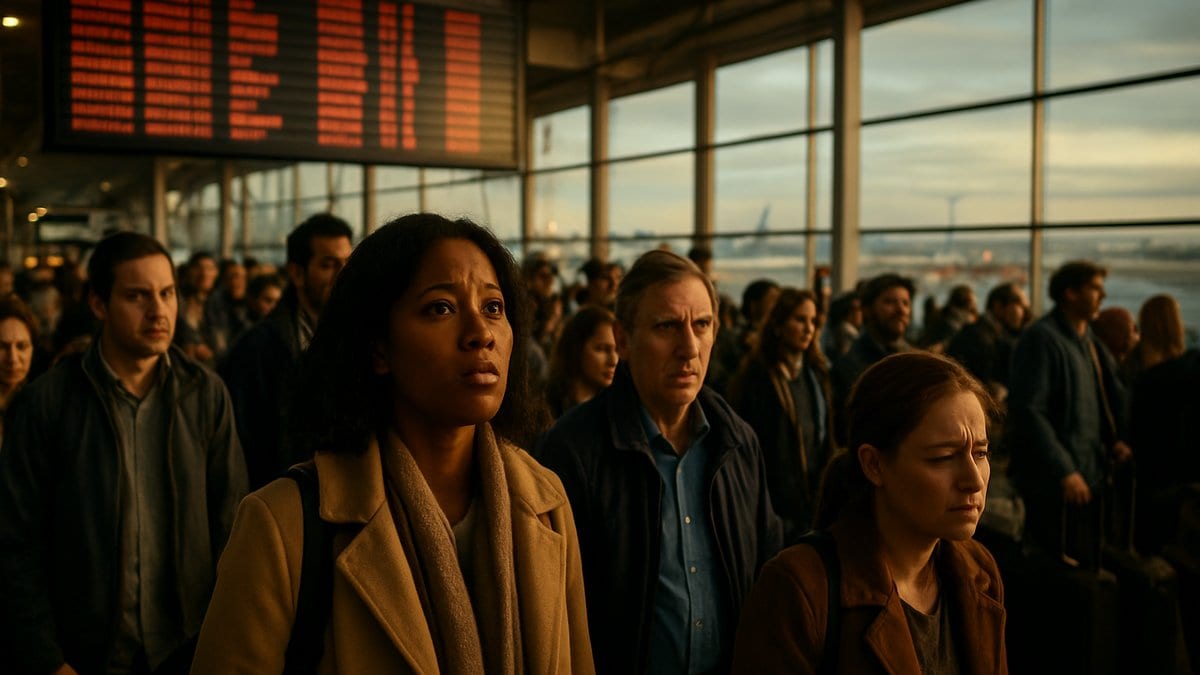
Flight status boards at these hubs reflected the strain, with long strings of red "canceled" and "delayed" indicators beside flights operated by large U.S. network carriers and regional affiliates. Passengers arriving to find their flights scrubbed or pushed back faced mounting queues at customer service desks and limited same-day rebooking options as aircraft and crews fell out of position.
Available data suggest that the disruption was not confined to a single airline or route but instead was spread across multiple carriers and markets, reflecting the tightly interconnected nature of North American aviation scheduling.
Atlanta, Newark, San Francisco and Toronto Emerge as Pressure Points
Atlanta’s role as one of the world’s busiest airports meant that even a relatively small number of cancellations there had outsized consequences. Publicly reported figures indicate that scores of departures and arrivals were affected, forcing some passengers onto later flights and others to attempt rerouting through alternate hubs. Because Atlanta functions as a primary connection point for large swaths of the southeastern United States, disrupted schedules there reverberated into smaller regional airports.
In the Northeast, Newark served as another focal point of delays. The airport’s already congested airspace and history of weather- and staffing-related slowdowns made it particularly vulnerable once today’s irregular operations began to compound. Ground-delay programs and reduced arrival rates limited the number of aircraft that could be accommodated in a given hour, prompting rolling delays on inbound flights and knock-on effects for outbound services.
On the West Coast, San Francisco International experienced notable schedule slippage against a backdrop of ongoing operational constraints. Recent reductions in permitted arrival rates related to runway work and safety protocols have given the airport less margin to absorb disruptions, and today’s conditions resulted in a higher-than-normal share of flights arriving or departing behind schedule. For travelers connecting through San Francisco to Asia-Pacific destinations or other West Coast cities, missed connections became a growing concern as the day wore on.
Toronto Pearson, while outside the United States, played a significant role in the overall picture because of its extensive links to U.S. hubs. Disruptions on cross-border routes between Toronto and cities such as New York, Boston, Chicago and Atlanta added further complexity. Travelers reported extended waits at departure gates, as aircraft arriving late from U.S. cities could not turn quickly enough to operate their next scheduled flights.
Weather, Congestion and Crew Positioning Drive the Chaos
Operational summaries and published coverage point to a familiar combination of factors behind the latest round of travel chaos: unsettled spring weather, saturated schedules and the ongoing challenge of keeping crews and aircraft in the right place at the right time. Even localized thunderstorms, low clouds or gusty winds can force air-traffic managers to slow the rate of arrivals and departures at major hubs, which in turn pushes back planned takeoff times across the network.
Once early flights begin to run late, the tightly choreographed rotation of aircraft and crews quickly comes under strain. A jet that arrives an hour or two behind schedule often cannot depart on its next leg without bumping up against mandatory crew duty limits or airport curfews. Airlines then face a choice between operating a flight very late or canceling it altogether to reset the sequence, a decision that typically results in stranded passengers and crowded standby lists.
Industry analyses published in recent months have highlighted how thin many airlines’ operating margins remain despite a strong rebound in demand. Shortages of pilots, flight attendants, maintenance workers and air-traffic controllers mean there is little spare capacity available when weather or technical issues arise. As seen today, this can translate into widespread cancellations and delays even on days that do not feature large-scale storms or national ground stops.
The four hubs affected in this latest episode also illustrate how disruptions at one airport can propagate into others. A delayed departure from San Francisco may cause a late arrival in Newark, which then prevents that aircraft from operating a planned evening flight to Atlanta, ultimately leaving travelers at all three airports scrambling for alternatives.
Passengers Face Long Lines and Limited Options
For travelers, the numbers behind today’s disruptions translated into missed weddings, business meetings and long-planned vacations. Social posts and local media coverage from airports in Atlanta, Newark, the Bay Area and the Toronto region described concourses filled with passengers seeking information, with some reporting multi-hour waits just to speak with airline representatives about rebooking options.
As is common in such events, many travelers tried to take matters into their own hands by using airline mobile apps, customer-service hotlines and self-service kiosks. However, when cancellation counts rise into triple digits nationally, available seats on later flights quickly dwindle, especially on popular trunk routes and evening departures. Travelers with checked baggage also faced the additional complication of trying to retrieve suitcases that had already been loaded onto aircraft that ultimately never departed.
Hotel availability near major hubs became an increasing concern as the day progressed, with stranded passengers competing for a limited number of nearby rooms. Some airlines provided overnight accommodations or meal vouchers according to their publicly posted customer-service policies, while others focused primarily on rebooking travelers onto the next available flights.
Meanwhile, airport operations teams and ground handlers confronted their own logistical challenges. Overflowing gate areas, crowded jet bridges and the need to rapidly reassign aircraft to different stands all contributed to a stop-and-go rhythm on the airfield, prolonging the time it took to recover normal operations.
What Travelers Can Learn for the Peak Summer Season
Today’s figures, while relatively moderate when compared with historic multi-day meltdowns, serve as a reminder that the air travel system remains vulnerable as the busy summer season approaches. Analysts note that even a single day with around one hundred cancellations and several hundred delays can ripple into subsequent schedules, especially if aircraft and crews begin the following morning out of position.
Travel experts frequently recommend that passengers build more slack into their itineraries when connecting through known congestion points such as Atlanta, Newark and San Francisco, and when using Toronto as a gateway for cross-border trips. Early-morning departures generally offer better odds of operating on time, because aircraft are already at the gate and crews are starting fresh duty periods.
Consumer advocates also encourage travelers to familiarize themselves with airline policies and transportation rules covering cancellations and significant delays. Published guidance typically outlines when passengers may request refunds instead of credits, what forms of accommodation or meal assistance are offered in different circumstances, and how to document expenses for potential reimbursement.
With today’s cancellations and delays once again stranding thousands of people in terminals across North America, attention is likely to remain focused on whether carriers and aviation authorities can bolster resilience before peak summer demand fully arrives. For now, travelers moving through Atlanta, Newark, San Francisco and Toronto are confronting a reality in which even routine spring weather and modest operational challenges can quickly unravel carefully laid plans.