

Few countries celebrate quite as wholeheartedly as Mexico. Across the year, the calendar is filled with festivals that blend Indigenous heritage, Catholic traditions and contemporary culture. From candlelit cemeteries during Day of the Dead to thunderous parades at Carnival, these events offer an unforgettable window into Mexican life. Whether you plan to visit for a specific fiesta or simply want to understand the country more deeply, these 12 major festivals are essential touchpoints for any traveler.
1. Día de los Muertos: Honoring the Dead, Celebrating Life
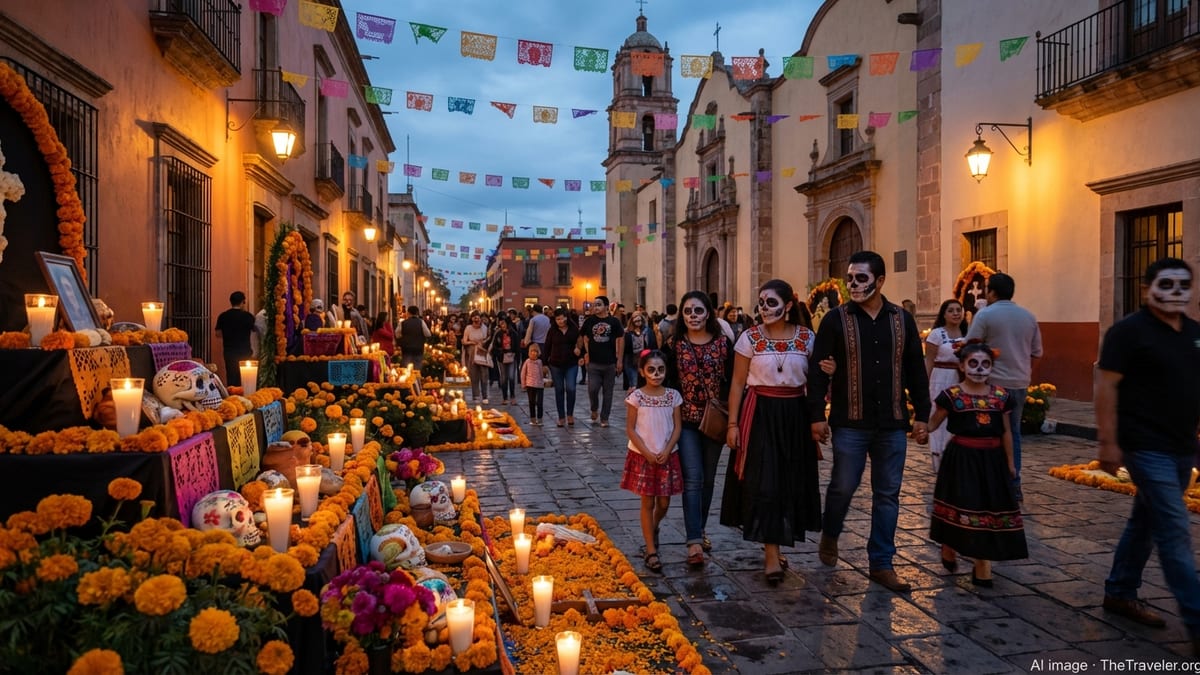
Día de los Muertos, or Day of the Dead, is Mexico’s most emblematic festival. Celebrated nationwide on November 1 and 2, it is a time when families honor deceased relatives with ofrendas, or altars, laden with candles, marigolds, food and photographs. Rather than a somber mourning period, the mood is reflective but joyful, rooted in the belief that the dead briefly return to share in the offerings. The marigold petals, aromatic copal incense and flickering candlelight are said to guide the spirits home.
Travelers will find some of the most striking observances in Oaxaca, Mexico City, Pátzcuaro in Michoacán and smaller towns across central and southern Mexico. Streets fill with comparsas, or processions, featuring people with intricately painted skull faces, papier-mâché figures and brass bands that play deep into the night. Cemeteries become social spaces, illuminated by thousands of candles as families clean and decorate graves, share food and tell stories about those who have passed.
In recent years, Day of the Dead has gained global attention, especially after high profile film appearances inspired large scale parades in Mexico City. Despite its growing popularity, at heart it remains an intimate, family centered ritual. Respectful visitors are generally welcome, especially where communities have embraced tourism, but it is important to follow local guidance, avoid intrusive photography in cemeteries and remember that you are witnessing a deeply personal act of remembrance.
2. Carnaval: Coastal Parades and Pre Lenten Revelry
In the week before Lent, cities across Mexico mark Carnaval with music filled street parties, colorful parades and costume contests. The most famous celebration takes place in Veracruz, on the Gulf Coast, where several days of festivities are billed as one of the country’s biggest parties. Brass bands, comparsas and dance troupes move along the seafront esplanade, while fireworks, concerts and late night street food stalls keep the energy high.
Other notable Carnival celebrations unfold in Mazatlán on the Pacific coast, where bandas play into the small hours, and in smaller towns with their own distinct customs. One of the most singular versions is the Carnival of Huejotzingo in Puebla state, known for its mock battles, historical reenactments and costumed participants firing black powder muskets in coordinated volleys. The result is a noisy, smoke filled spectacle that blends pre Hispanic themes with colonial history and Catholic ritual.
For visitors, Carnival offers a chance to experience Mexico’s exuberant side before the more reflective period of Lent and Holy Week. Accommodation in major Carnival cities can book up months in advance, and street closures are common. Comfortable shoes, ear protection for children, and an openness to late nights and spontaneous dancing will go a long way toward enjoying the celebrations.
3. Semana Santa: Mexico’s Most Intense Holy Week
Semana Santa, or Holy Week, is among the most important religious observances in Mexico. Taking place from Palm Sunday through Easter Sunday, typically between late March and April depending on the liturgical calendar, it blends solemn processions, passion plays and traditional holidays from school and work. For many Mexicans, it is both a time of spiritual reflection and the centerpiece of the spring vacation period.
Some of the most impactful Holy Week events occur in Taxco, San Luis Potosí, San Miguel de Allende and in the Mexico City borough of Iztapalapa, which stages a large scale reenactment of the Passion of Christ. In these towns, streets fill with hooded penitents, heavy religious floats carried on the shoulders of volunteers and barefoot participants fulfilling personal vows. Incense hangs in the air and church bells punctuate the long, slow moving processions that can stretch late into the night.
Because Semana Santa coincides with a nationwide holiday period, beaches and colonial towns can be particularly busy. Travelers seeking a more contemplative experience may prefer smaller communities where the rituals remain highly local. Those wishing to witness major processions should prepare for large crowds, heat, and limited mobility through narrow streets. Modest dress, a patient pace and a quiet demeanor are essential signs of respect.
4. Guelaguetza: Indigenous Culture on the Hills of Oaxaca
Each July, the city of Oaxaca hosts the Guelaguetza, one of Mexico’s most important celebrations of Indigenous culture. Rooted in pre Hispanic traditions of reciprocal exchange between communities, the modern festival brings together dance troupes, musicians and artisans from the state’s diverse regions. They gather on the Cerro del Fortín hillside auditorium overlooking the city to perform traditional dances in elaborate, hand embroidered costumes.
Audiences witness everything from the swirling skirts of the Isthmus of Tehuantepec to the gravity defying pineapple balancing dance of the women of Tuxtepec. Between performances, participants distribute regional products such as coffee, mezcal, fruit and woven goods to the crowd, echoing age old practices of sharing the harvest. Throughout the city, related events fill museums, markets and streets, including artisan fairs, food festivals and smaller concerts.
The Guelaguetza has grown into a major tourism draw, which brings both economic benefits and concerns over commercialization. For travelers, it offers rare insight into the cultural richness of Oaxaca’s Indigenous communities in one concentrated moment. Booking tickets and rooms well in advance is crucial, as demand is high. To deepen understanding, consider arriving early to explore villages in the surrounding valleys, where many of the dances and costumes originate.
5. Festival Internacional Cervantino: Guanajuato’s Global Stage
Every October, the colonial city of Guanajuato becomes a sprawling stage for the Festival Internacional Cervantino, commonly known as El Cervantino. What began in the 20th century as performances of short Miguel de Cervantes plays in local plazas has evolved into one of Latin America’s leading arts festivals. For several weeks, the city’s theaters, churches, tunnels and open squares host a packed program of music, theater, dance, opera and visual arts from Mexico and around the world.
Walking through Guanajuato during the festival, you might encounter a chamber orchestra rehearsing in a Baroque church, a contemporary dance piece unfolding in a small plaza or a late night jazz ensemble improvising in an old mine. Each edition highlights a guest country and Mexican state, fostering cultural exchanges that extend far beyond the performances themselves. Street performers, student troubadours and informal gatherings spill out after official events, giving the festival an energetic, improvisational feel.
El Cervantino attracts a large number of Mexican and international visitors, and the city’s already narrow alleys can become exceptionally crowded. Accommodation in the historic center is in high demand. Still, the combination of world class performances and the atmospheric setting of Guanajuato’s pastel colored hillsides makes this one of the country’s most rewarding cultural experiences, especially for travelers interested in the arts.
6. Independence Day: Noche del Grito Across the Nation
On the night of September 15, Mexico erupts in patriotic celebration as the country marks the start of its war of independence from Spain. Known as Noche del Grito, the evening centers on a reenactment of the call to arms attributed to priest Miguel Hidalgo in 1810. In plazas large and small, local officials step onto balconies to ring a bell, wave the national flag and lead crowds in chants of “Viva México” before fireworks light the sky.
The largest and most televised ceremony takes place in Mexico City’s Zócalo, where the president delivers the Grito from the National Palace. Yet some of the most atmospheric commemorations are in smaller colonial cities tied to the independence struggle, such as Dolores Hidalgo and Guanajuato. Streets fill with green, white and red decorations, food stalls selling antojitos and families gathering to watch fireworks displays that stretch late into the night.
For travelers, Independence Day offers a lively introduction to Mexican civic pride, but it also requires some planning. Hotels in central locations often set minimum stays around the holiday, and intense crowds in major plazas may not be suitable for everyone. It is wise to keep valuables secure, arrange transport in advance where possible and be prepared for loud fireworks, especially around midnight.
7. Feast of Our Lady of Guadalupe: A National Pilgrimage
On December 12, millions of people across Mexico honor Our Lady of Guadalupe, the country’s patron saint and one of its most powerful symbols of faith and identity. The epicenter of the celebration is the Basilica of Our Lady of Guadalupe in northern Mexico City, built near the site where the Virgin is believed to have appeared to the Indigenous peasant Juan Diego in the 16th century. In the days leading up to the feast, pilgrims arrive from all over the country, many walking long distances or approaching the basilica on their knees as acts of devotion.
Inside and around the sanctuary, Masses, songs and dance performances continue almost without pause. Traditional conchero and matachín dancers, often wearing feathered headdresses and carrying drums, perform in the plaza, blending pre Hispanic elements with Catholic veneration. Smaller scale but fervent celebrations also take place in churches and neighborhoods nationwide, where images of the Virgin are adorned with flowers and serenaded with the traditional birthday song “Las Mañanitas.”
Visiting the basilica during this period can be intense, especially for those unused to large religious crowds. Security is heightened, and movement may be slow. For many travelers, however, witnessing the devotion surrounding the Virgin of Guadalupe provides powerful insight into Mexican spirituality and national identity. A respectful distance, modest dress and patience are key.
8. Feria de San Marcos: Aguascalientes’ Giant Spring Fair
Each spring, usually from mid April to early May, the city of Aguascalientes hosts the Feria Nacional de San Marcos, widely considered one of Mexico’s largest and most famous fairs. What began centuries ago as a regional livestock and agricultural fair has expanded into a citywide celebration combining concerts, bullfights, mechanical rides, gastronomy, cockfights, exhibitions and cultural events. The fairgrounds and surrounding streets stay busy for weeks, attracting visitors from across Mexico.
Music is central to the Feria de San Marcos. Multiple stages host performances ranging from popular regional acts and norteño bands to pop stars and up and coming artists. Food stalls offer everything from roasted meats and traditional sweets to contemporary street food trends, while artisan markets showcase crafts from Aguascalientes and beyond. Families wander the fair during the day, and the atmosphere becomes more party oriented at night.
Because of its scale and duration, the Feria de San Marcos has a significant impact on the city’s rhythm. Accommodation prices often rise during the event, and central streets can be crowded late into the evening. Travelers intrigued by large fairs and Mexican popular culture will find plenty to experience, but those seeking a quiet stay may prefer to schedule their visit outside the main fair dates.
9. Festival de Calaveras: Aguascalientes and the Art of Skeletons
Aguascalientes is also home to the Festival de Calaveras, held around the last week of October and the first days of November to coincide with Day of the Dead. Created in the 1990s to honor local printmaker José Guadalupe Posada, whose satirical skeletal figures and the iconic Catrina have become global symbols of Mexican identity, the festival mixes remembrance, art and popular culture. Its aim is to preserve Day of the Dead traditions while celebrating Posada’s legacy.
During the festival, the city hosts parades of costumed skeletons, exhibitions of prints and engravings, craft markets and food fairs. One of the distinctive features is the Tianguis de las Calaveras, a large temporary market selling everything from sugar skulls and pan de muerto to toys, T shirts and collectible artworks featuring skeletal themes. Temporary altars and an “altar viviente,” or living altar, turn city spaces into immersive installations.
The Festival de Calaveras offers an accessible introduction to Day of the Dead imagery in a setting that is more playful and urban than many cemetery based observances. For visitors, it can be a good way to engage with the holiday’s symbols, especially when combined with quieter cemetery visits elsewhere. As always, keeping in mind the festival’s roots in remembrance will help balance the festive mood with appropriate respect.
10. Vive Latino: Mexico City’s Landmark Music Festival
Vive Latino, officially known as Festival Iberoamericano de Cultura Musical, is one of Mexico’s premier music festivals. Held annually in March at Mexico City’s Foro Sol, it focuses on rock, alternative and indie music from across Latin America and beyond, while also featuring established international acts. Since its first edition in the late 1990s, Vive Latino has become a rite of passage for many Mexican music fans and a showcase for emerging bands.
The festival typically runs across a weekend, with multiple stages hosting back to back performances. Between sets, attendees wander through food courts, merchandise stalls and art installations that reflect urban and youth culture. The crowd is diverse in age but united by an enthusiasm for live music, singing along to anthems in Spanish and English alike.
For visitors, Vive Latino offers a window into contemporary Mexico City, far removed from colonial plazas and traditional fiestas. It is also a practical event to attend, with public transport links to the venue and accommodation options across the city. As with any large festival, planning ahead for tickets, hydration and sun protection is advisable, especially given the city’s altitude and potentially intense March sun.
11. Morelos and Puebla’s Independence Era Fiestas Patrias
While Independence Day in mid September is celebrated across Mexico, certain regions in the central highlands stand out for their historical ties to the independence and revolutionary movements. Towns in the present day states of Guanajuato, Puebla and Morelos host particularly evocative fiestas patrias that combine official ceremonies with local traditions, folk dances and culinary specialties. In these places, civic pride and historical memory intertwine in powerful ways.
In smaller cities and towns, the celebrations may begin days before September 15, with torchlight relays, school parades and community theater pieces dramatizing episodes from the independence era. Markets and street stalls sell themed sweets, traditional drinks and flags of all sizes, while central kiosks become stages for mariachi, ballet folklórico and regional bands. On the night of the Grito, the scale is smaller than in the capital, but the sense of community can feel even stronger.
Travelers who prefer a more intimate atmosphere than Mexico City’s Zócalo may find these regional fiestas patrias particularly rewarding. They provide opportunities to talk with locals, learn about specific historical events tied to each town and sample regional versions of classic dishes like chiles en nogada, which is closely associated with Puebla. As with all major holidays in Mexico, advance reservations and flexible schedules help navigate the busy period.
The Takeaway
From sacred rituals in candlelit cemeteries to high decibel music festivals and patriotic fireworks, Mexico’s major celebrations reveal a country where tradition, faith and festivity are tightly woven together. Each of the festivals above offers a different lens on Mexican life, whether through Indigenous dance, Catholic ceremony, popular entertainment or national history. Together, they show how the calendar of fiestas shapes the rhythm of the year across regions and generations.
For travelers, choosing a festival to anchor a trip can transform a standard itinerary into a much deeper cultural experience. Doing so requires forethought: events often attract large crowds, and accommodation and transport can sell out well in advance. It is also crucial to approach these celebrations with sensitivity, remembering that many have profound spiritual or emotional significance for participants.
With respectful curiosity, basic Spanish phrases and a willingness to adapt to local customs, visitors can share in some of Mexico’s most memorable moments. Whether you find yourself dancing through Carnival confetti, listening to a string quartet in a Guanajuato church or watching marigold petals glow under November candles, these festivals offer lasting insight into the soul of Mexico.
FAQ
Q1. When is the best time of year to visit Mexico for festivals?
It depends on your interests. November is ideal for Day of the Dead, March and April for Carnival and Holy Week, July for the Guelaguetza and September for Independence Day celebrations.
Q2. Do I need to buy tickets in advance for major Mexican festivals?
For large events with seated performances, such as the Guelaguetza or Vive Latino, advance tickets are strongly recommended. For street based festivals like Day of the Dead or Independence Day, access is usually free, but accommodation should be booked early.
Q3. Is it respectful for tourists to attend Day of the Dead ceremonies?
Yes, as long as visitors behave respectfully. Avoid intrusive photography in cemeteries, give families space at graves and follow local guidance or signage. Many communities welcome visitors who approach with sensitivity.
Q4. How far in advance should I book hotels for big festivals?
For major events in popular destinations, booking several months ahead is prudent. In places like Oaxaca for Day of the Dead or Guanajuato for El Cervantino, some travelers reserve rooms close to a year in advance.
Q5. Are Mexican festivals suitable for children?
Many festivals are family friendly, especially daytime events and parades. However, large crowds, late nights, fireworks and loud music can be overwhelming, so choosing quieter vantage points and keeping flexible schedules is wise.
Q6. What should I wear to religious festivals like Semana Santa or the Feast of Our Lady of Guadalupe?
Opt for modest, comfortable clothing that covers shoulders and knees, along with sturdy shoes. In churches and near altars, behave as you would in any place of worship, speaking softly and avoiding flash photography.
Q7. Is it safe to travel during big festivals in Mexico?
Festivals attract crowds, which can increase the risk of petty crime. Using common sense precautions such as keeping valuables secure, staying aware of your surroundings and following local advice generally makes travel manageable.
Q8. How can I experience festivals without feeling like I am intruding?
Choose public events, arrive early to observe the atmosphere, ask local hosts or guides about appropriate behavior and prioritize watching rather than getting in the middle of ceremonies. Supporting local businesses and artisans is another respectful way to participate.
Q9. Do festivals affect transportation and business hours?
Yes. Streets may close for parades, public transport can be crowded and some businesses alter hours or close entirely. Checking schedules locally and allowing extra travel time is important during major celebrations.
Q10. Can I take part in parades or dances as a visitor?
In some popular events, such as certain Carnival or music festival activities, visitors can join public dancing or street parties. In more structured religious or community processions, participation is usually reserved for locals, so it is best to observe unless explicitly invited.