

More news on this day
Hundreds of passengers were left stranded at Ben Gurion International Airport on March 9 as at least 119 flights were canceled or grounded, with carriers including El Al, KlasJet, United Airlines, Israir and Aegean Airlines curtailing services on major routes linking Tel Aviv with Paris, Newark, London, New York and other global hubs amid ongoing regional security tensions.
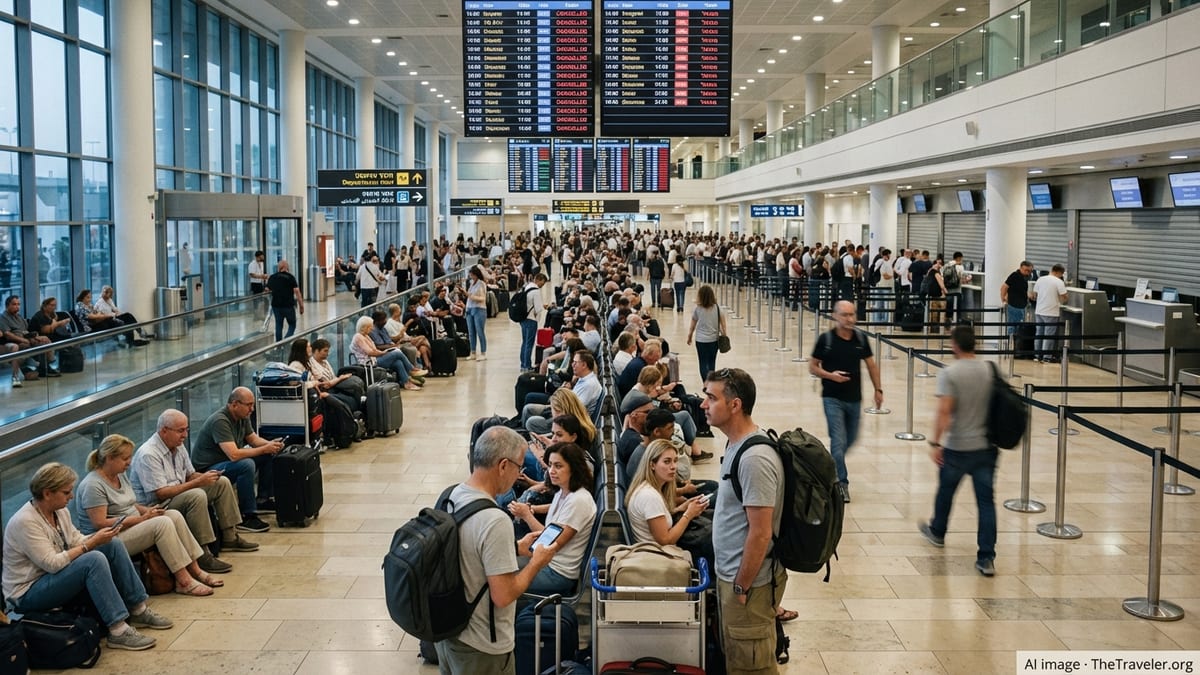
Security Crisis Freezes Traffic Through Israel’s Main Gateway
The latest wave of cancellations followed days of severe disruption triggered by airspace closures across Israel and parts of the wider Middle East, imposed in response to escalating military activity and missile threats in the region. Israeli authorities have intermittently limited civilian departures and arrivals at Ben Gurion, creating rolling knock-on effects for airlines and passengers worldwide.
Ben Gurion, Israel’s primary international gateway, has operated on a sharply reduced schedule since the start of March, with windows of partial reopening allowing only a fraction of normal traffic to depart. While some outbound flights have resumed in recent days, intermittent restrictions, security reviews and crew positioning issues have left carriers unable to operate full schedules, pushing cancellation totals sharply higher.
Airport officials and airline spokespeople described the operating environment as highly fluid, with approvals for specific flights often coming only hours before scheduled departure. That uncertainty has forced many airlines to preemptively cancel rotations to avoid aircraft and crew being stranded, further compounding the disruption for travelers across Europe, North America and the Middle East.
Industry analysts say the uneven restart at Ben Gurion highlights how quickly regional security crises can reverberate through global aviation networks. Even as some airspace corridors reopen, lingering risk assessments, insurance conditions and crew safety protocols continue to limit how many flights can realistically operate each day.
El Al, Israir and KlasJet Slash Schedules as Repatriation Focus Grows
El Al, Israel’s flag carrier, has borne the brunt of the upheaval. After initially preparing a series of recovery flights to bring home stranded citizens and ticketed passengers from more than 20 overseas cities, the airline moved this week to cancel a large portion of its regular passenger schedule from Tel Aviv through at least March 14. The decision affects popular routes to major European capitals as well as long-haul services to North America.
El Al has prioritized rescue and essential flights over standard commercial operations, focusing on high‑demand links such as New York, Miami, Los Angeles, London and Paris. Seats on these limited services have been heavily oversubscribed, with many itineraries zeroed out in booking systems as the carrier works through a backlog of earlier cancellations and attempts to rebook existing customers before selling new tickets.
Fellow Israeli carrier Israir has also trimmed its operations at Ben Gurion, keeping only a skeletal schedule of departures and leaning on shuttle-style links via nearby gateways such as Taba in Egypt and Aqaba in Jordan. These alternate routes are being used to funnel passengers closer to Israel by land where possible, adding extra complexity and travel time to journeys that would normally be nonstop into Tel Aviv.
Charter and ACMI operator KlasJet has been listed among the airlines experiencing significant disruption, particularly on European sectors that would usually support tour and corporate traffic into Israel. Travel agents reported that ad hoc charter schedules arranged to help evacuate or reposition groups have been repeatedly revised or canceled as security conditions and available slots at Ben Gurion change, contributing to the day’s tally of 119 canceled flights.
United and Aegean Halt Tel Aviv Links Amid Wider Middle East Disruptions
International carriers have largely maintained a cautious stance on Israel routes. United Airlines, one of the key North American operators serving Tel Aviv, has extended its blanket cancellation of flights to the city from Newark and other hubs under a standing travel waiver covering Middle East unrest. Prospective departures in early to mid‑March have been proactively removed from schedules, leaving few or no same‑day rebooking options for affected customers.
Passengers holding United tickets on flagship routes such as Newark to Tel Aviv and connecting itineraries via Europe reported receiving short-notice cancellation notices, often accompanied by limited rebooking choices on alternative carriers. The airline has been steering customers toward departures later in March, or to completely different routings that avoid Israeli airspace, reflecting the open‑ended nature of the current security concerns.
In Europe, Aegean Airlines has issued a series of updates extending the suspension of flights to and from Tel Aviv, along with other Middle Eastern destinations including Iraq, Lebanon, the United Arab Emirates and Saudi Arabia. The Greek carrier has now canceled its Israel services into the second half of March, taking Athens to Tel Aviv and other regional links out of play for travelers trying to piece together alternate connections.
These cancellations intersect with a broader pattern of disruption across European air travel, where hubs such as London, Paris, Frankfurt and Amsterdam are managing ripple effects from diverted aircraft, crew rest issues and lost rotations. Data from flight-tracking and passenger-rights services indicate that a significant share of Europe’s daily cancellations in recent days is tied directly or indirectly to the instability in Middle Eastern airspace.
Paris, London, Newark and New York Routes Hit Hard
Some of the most heavily affected routes on March 9 were marquee city pairs that ordinarily offer high frequencies and strong year‑round demand. Services linking Tel Aviv to Paris and London, operated by a mix of Israeli and European carriers, accounted for a notable slice of the 119 cancellations, according to schedule snapshots compiled from airport monitors and airline advisories.
On the transatlantic side, flights between Tel Aviv and New York area airports, particularly Newark and John F. Kennedy, remained largely suspended or reduced to a patchwork of special operations. El Al’s limited long‑haul departures and the full cancellation of United’s Tel Aviv program left many passengers facing multi‑day delays, forced stopovers in third countries or outright trip cancellations.
Travel consultants reported that some stranded travelers are resorting to complex workarounds, such as flying into nearby European capitals like Athens, Larnaca or Bucharest, then making overland or regional hops to alternative border crossings. However, those options depend on quickly shifting security advisories and open land routes, leaving many passengers reluctant to embark on improvised itineraries without clear assurances.
The impact stretches beyond leisure tourism. Business travelers, students and people flying for family emergencies have all been caught in the disruption. For many, the sudden unavailability of otherwise routine connections to Tel Aviv, Paris, London and New York underscores the vulnerability of global mobility to regional flashpoints that can close or constrain key aviation corridors overnight.
Stranded Travelers Face Uncertainty as Airlines Adjust Policies
For passengers on the ground at Ben Gurion, the immediate reality on March 9 was one of long lines, busy airline counters and limited clarity about when regular flying might resume. Displays listing rows of canceled flights reflected a mix of outright suspensions and last‑minute operational decisions, with occasional departures still appearing for select Israeli carriers under strict caps on passenger numbers.
Airlines across the affected network have activated special waiver policies that relax change fees and, in some cases, fare differences for rebooked travel. Yet stranded travelers say the effectiveness of those waivers is constrained by the lack of available seats on any route into or out of Israel in the coming days, making it difficult to turn theoretical flexibility into confirmed new bookings.
Consumer advocates are urging passengers to document all communications with airlines and travel agencies, keep receipts for additional accommodation and subsistence costs, and monitor evolving guidance from national regulators on compensation rights. Because many carriers classify the current disruptions as the result of extraordinary circumstances tied to security and airspace closures, standard passenger-compensation rules in some jurisdictions may only partially apply.
With regional tensions still high and aviation authorities signaling a cautious, stepwise approach to reopening airspace, airlines are planning their schedules on short horizons of only a few days at a time. Travelers booked through mid‑March on routes touching Tel Aviv, particularly to and from Paris, London, Newark and New York, are being advised to check their flight status frequently, remain flexible with dates and routings, and be prepared for further changes as the situation at Ben Gurion continues to evolve.