

La Jolla Cove is the kind of place that reshapes your idea of a beach. Carved into sandstone cliffs and framed by jewel-toned water, this compact curve of coastline concentrates many of San Diego’s best experiences into a single, walkable pocket: wildlife encounters, snorkeling, coastal walks, galleries, and oceanfront dining. Here are 12 reasons this small cove deserves a big spot on your San Diego itinerary.
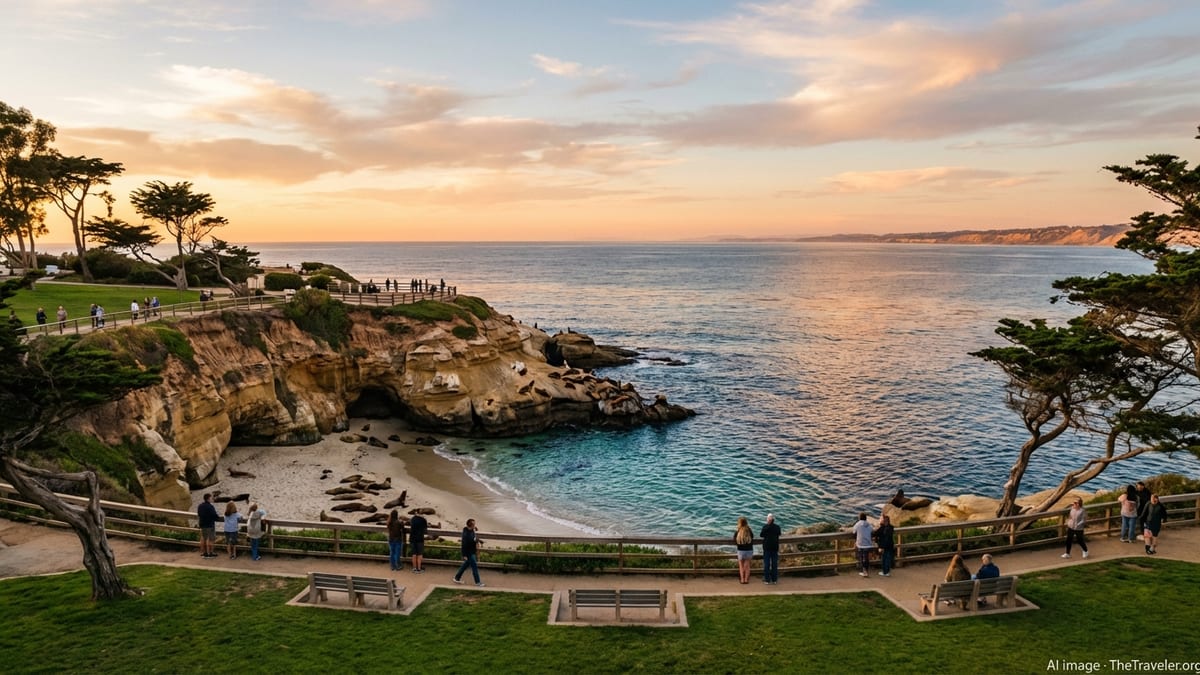
La Jolla Cove’s Dramatic Setting Feels Straight Out of a Postcard
Part of what makes La Jolla Cove unforgettable is how compressed the drama is: sheer sandstone bluffs, a tiny scallop of sand, and the open Pacific all squeezed into a surprisingly intimate space. Even on a busy afternoon, it still manages to feel like a natural amphitheater where the ocean is the main performer.
1. A Natural Cliffside Amphitheater Above the Pacific
La Jolla Cove is tucked into rugged sandstone cliffs that rise directly from the water, giving visitors instant elevation and sweeping sightlines. From the green lawns of Ellen Browning Scripps Memorial Park just above the beach, you can look north toward Torrey Pines and south toward Point La Jolla while pelicans cruise past at eye level and waves detonate against the rocks below.
The Cove’s north-facing orientation gives it a slightly sheltered, tucked-away feel. When summer swells are rolling into other San Diego beaches, the water here is often comparatively calm, which only heightens the contrast between the glassy shallows near shore and the darker, deeper blue of the open ocean beyond the rocky headlands.
2. One of the Most Photographed Spots on the California Coast
Local tourism boards and guidebooks consistently spotlight La Jolla Cove as one of the most photographed places in San Diego, and it becomes obvious why within minutes of arrival. Paths weave along the bluff edge, offering natural vantage points framed by windswept cypress, flowering ice plant, and the occasional historic belvedere overlooking the waves.
Early morning and late afternoon are especially rewarding for photographers. Low angle light rakes across the sandstone, revealing intricate textures and honeycomb patterns in the cliffs. On clear days, the ocean shifts from turquoise near shore to deep cobalt, and in winter you may even frame a breaching gray whale far offshore between the silhouettes of kayakers and paddleboarders.
It Is a Window Into a Protected Underwater World
For a small beach, La Jolla Cove opens onto a remarkably rich marine environment. The cove sits inside the San Diego La Jolla Underwater Park Ecological Reserve and adjacent marine protected areas, turning its clear shallows into a living aquarium where fish, invertebrates, and kelp forests are largely left undisturbed.
3. Exceptional Snorkeling in a No-Take Marine Reserve
Because fishing and collecting are prohibited in the reserve, marine life here is noticeably more abundant than at many urban beaches. In calm conditions, visibility in the cove can reach impressive depths, allowing snorkelers to drift above rocky reefs and beds of sea grass while watching Garibaldi, bat rays, and schools of silvery baitfish move through shafts of light.
The sandy entry at the cove’s small beach, combined with lifeguard staffing and typically modest surf during summer, makes this an approachable place for beginners to try snorkeling. More experienced swimmers can venture farther toward the buoy line marking the protected zone, where the bottom drops away into deeper water and the contours of submerged canyons become more pronounced beneath the shifting surface.
4. A Gateway to Kelp Forests and Sea Caves for Divers and Kayakers
Just beyond the immediate cove, the seafloor slopes into submarine canyons and forests of giant kelp. Certified scuba divers often use the cove as a starting point to reach walls, reefs, and kelp stands that feel far removed from the busy streets above. Descending through towering fronds, you may see harbor seals or sea lions arc through the columns of kelp, along with sheephead, bass, and nudibranchs clinging to the rocks.
For those who prefer to stay at the surface, guided kayak tours launch nearby and skirt the cliffs, often entering a series of sea caves in calm conditions. From the waterline, you can look back at the Cove’s green slopes and terraced village, getting a sense of how tightly the town and the ocean knit together here.
Up-Close Encounters With Coastal Wildlife
La Jolla Cove’s most charismatic regulars are not human. California sea lions, seabirds, and seasonal visitors like migrating whales turn the area into a constantly shifting wildlife theater. Their presence is a major part of the Cove’s appeal, and also a reminder that this is a working habitat as much as a tourist draw.
5. California Sea Lions Hauling Out on the Rocks
Sea lions have effectively claimed the rocky ledges around La Jolla Cove as a year-round lounge, barking, dozing, and occasionally shuffling into the surf with impressive speed. In peak breeding season, particularly from late spring through summer, the rocks can seem carpeted with animals, including pups learning to navigate both water and shore.
In recent years, the city has taken steps to balance public access with wildlife protection, including closing nearby Point La Jolla to people while leaving the Cove beach itself open. Visitors now find additional signage, ranger presence, and occasional barriers that help keep a safer buffer between humans and resting animals, especially during sensitive pupping months.
For your own safety and the sea lions’ well-being, it is important to admire them from a respectful distance rather than attempting to get close for selfies or to touch them. Quiet observation from the bluff paths and designated viewing areas still offers dramatic views of their social interactions without disturbing them.
6. Birdlife, Dolphins, and Seasonal Whale Sightings
Sea lions may steal the show, but they share the stage with a variety of seabirds and marine mammals. Brown pelicans skim the surface in single file, occasionally plunging into the water with explosive dives. Cormorants cluster on guano-whitened rocks, spreading their wings to dry. In the shallows, egrets and herons sometimes stalk small fish along the tide line when the crowds thin out.
Farther offshore, pods of common dolphins may appear, racing along boat wakes or slicing through glassy water at sunrise. From late fall into early spring, travelers get the added possibility of spotting migrating gray whales passing by offshore. On calm days, a patient observer with binoculars can often see distant spouts, flukes, or even breaching behavior, all while standing within a few minutes’ walk of cafes and galleries.
A Compact Beach With Big Personality
La Jolla Cove itself is only a small sliver of sand compared with San Diego’s sprawling surf beaches, but that is part of its charm. The cove feels like a pocket beach carved exclusively for swimmers, snorkelers, and sightseers rather than surfers, which gives it a distinctive atmosphere among Southern California’s many stretches of shore.
7. Calm Summer Waters and Lifeguard Presence
In summer, La Jolla Cove is known for relatively gentle surf compared to more exposed coastlines nearby. The beach is flanked by clifftop walkways and watched over by a permanent lifeguard station, which adds a layer of reassurance for families and less experienced swimmers. Access is via stairways that descend from Scripps Park, creating the feeling of stepping down into a natural bowl of stone and water.
Even though the beach is small, the tone is active rather than purely sunbathing oriented. You will see swimmers doing laps parallel to the buoy line, snorkelers finning across the shallows, and scuba divers shuffling carefully through the sand with tanks and fins in hand. The result is a lively but contained energy that feels very different from the rolling surf culture of broader beaches like Pacific Beach or Ocean Beach.
8. Scripps Park: A Front-Row Lawn to the Ocean
Just above the sand, Ellen Browning Scripps Memorial Park offers a broad, grassy terrace ideal for picnics, impromptu frisbee games, or simply lying back to watch the changing sky. The park’s heritage plantings, including sculptural Monterey cypress and exotic specimen trees, frame views along the coast and create pockets of shade that are welcomed on bright afternoons.
Because car traffic is limited to the road that curves just inland of the park, the bluff-top lawn can feel refreshingly insulated from urban noise. Families spread blankets within earshot of the surf, and couples linger on benches as the sun angles lower toward the horizon. It is easy to spend several hours here drifting between the park, the viewing rails, and quick descents to the sand.
San Diego’s Signature Sunsets and Coastal Walks
San Diego is frequently celebrated for its sunsets, and La Jolla Cove is one of the region’s prime stages for the nightly performance. The combination of west-facing water, textured cliffs, and open sky means even an unremarkable day can end with a surprising burst of color.
9. Sunset Vistas From Clifftop Paths and Overlooks
As afternoon tilts toward evening, the cove’s atmosphere shifts from beach outing to communal lookout. Visitors line the low walls and railings along Coast Boulevard, cameras and phones ready. On many evenings, the sky cycles through soft pastels before catching fire in bands of orange and crimson that reflect in the water and rim the clouds in gold.
New viewpoints continue to enhance the broader La Jolla area’s reputation for sunset watching, including university overlooks with west-facing decks and benches that frame the Pacific. From the Cove, you can watch the light catch distant headlands, silhouetting kayakers and stand-up paddleboarders against the glittering surface as the sun sinks behind the horizon.
10. Scenic Walks Linking Coves, Caves, and Village Streets
One of the pleasures of basing yourself at La Jolla Cove is how easily you can explore on foot. Walking paths trace the coastline south and north, passing small inlets, tide-swept rocks, and additional viewpoints. Along the way, you can peer into shallow caves carved at the waterline and, in low tide conditions, observe tide pools filled with anemones and crabs.
A short stroll inland leads into La Jolla Village proper, where boutiques, art galleries, and restaurants cluster on walkable streets. This seamless connection between a wild-feeling shoreline and an urbane village core allows you to move from photographing sea lions to browsing local art to enjoying a glass of wine on a terrace without ever needing to drive.
History, Culture, and Hidden Corners
La Jolla Cove is more than a pretty view. It is also surrounded by layers of local history and pockets of culture that reward visitors who linger and explore beyond the most obvious overlooks.
11. From Artist Enclaves to Historic Caves
Above the cove and along Prospect Street, the site of the former Green Dragon Colony hints at a time when La Jolla was a bohemian enclave attracting musicians, painters, and writers drawn to its light and seascapes. While the original cottages are gone, the area’s role in nurturing a creative community lives on in the concentration of galleries and public art throughout the village.
Just a short walk from the Cove, a century-old tunnel leads down to a sea cave popularly known as Sunny Jim’s, accessed through a small cliff-top shop. The hand-carved tunnel descends well over a hundred steps to a platform overlooking the cave’s ocean opening, where swells roll in and echoes amplify the surf. Visiting this cave adds a literal underground dimension to any exploration of the cove’s geology and maritime history.
12. Nearby Attractions That Extend Your Visit
Within a short drive of La Jolla Cove, you will find additional stops that turn a simple beach visit into a full day or weekend. On the slopes above La Jolla Shores, a hilltop public aquarium associated with a major oceanographic institution offers interactive exhibits, research-focused displays, and expansive terraces overlooking the Pacific. It provides a scientific counterpoint to the more spontaneous wildlife encounters along the shore.
Farther inland, the summit of Mount Soledad delivers panoramic views in all directions across San Diego, the coastline, and, on especially clear days, even the distant outline of Baja California. Visiting the memorial at the top provides a sense of geographic context, helping you appreciate how the narrow shelf of La Jolla’s coastline fits into the wider sweep of Southern California.
The Takeaway
La Jolla Cove manages to be many things at once: a pocket beach for swimmers, a marine reserve for snorkelers and divers, a staging ground for sea lion and seabird encounters, and a front-row seat to some of San Diego’s most memorable sunsets. Its scale is intimate, but its experiences are outsized, especially when you layer in nearby caves, parks, overlooks, and cultural stops.
For travelers planning time in San Diego, it is worth setting aside more than just a quick photo stop at the railing. Arrive early or stay late, walk the bluff paths, duck into the village streets, and watch the light change over the cliffs and kelp beds. You will come away with a deeper appreciation of how this small cove captures the essence of California’s coast in a single, unforgettable curve of shore.
FAQ
Q1. Is La Jolla Cove free to visit?
Yes. There is no admission fee to access La Jolla Cove, its beach, or the surrounding public park areas, although parking, tours, and nearby attractions may charge their own fees.
Q2. When is the best time of year to visit La Jolla Cove?
Late spring through early fall generally offers the warmest air and water temperatures and calmer seas, while winter and early spring can bring fewer crowds, migrating whales offshore, and more dramatic surf.
Q3. Can you swim at La Jolla Cove?
Yes. Swimming is popular at La Jolla Cove, particularly in summer when surf is typically smaller. Lifeguards staff a permanent tower, but conditions can change, so always check posted warnings and speak with lifeguards before entering the water.
Q4. How close can visitors get to the sea lions?
Visitors should maintain a respectful buffer and avoid approaching, touching, or surrounding sea lions. Experts recommend staying well back and using zoom lenses or binoculars for photos, following signs and ranger guidance on site.
Q5. Is La Jolla Cove good for snorkeling beginners?
In calm conditions, La Jolla Cove can be a good introduction to snorkeling because of its sandy entry, relatively protected position, and clear water. Beginners should stay close to shore, wear flotation if needed, and avoid venturing past their comfort level.
Q6. What should I know about parking near La Jolla Cove?
Parking can be challenging, especially on weekends and during peak season. There is limited street parking along Coast Boulevard and nearby streets, often with time limits or meters, along with paid lots and garages within walking distance.
Q7. Does La Jolla Cove smell bad because of the wildlife?
At times, visitors notice a strong odor from accumulated bird guano and sea lion waste on the rocks. Conditions vary with weather and wind, and while some find the smell surprising, most still consider the views and wildlife encounters worth the visit.
Q8. Are there restrooms and showers at La Jolla Cove?
Yes. Public restrooms and outdoor showers are available near the cove, typically located close to the beach access points and within easy reach of Scripps Park and the surrounding walkways.
Q9. Can I surf at La Jolla Cove?
The small, protected beach at La Jolla Cove is not known as a surf spot and is instead focused on swimming, snorkeling, and diving. Surfers typically head to nearby beaches with more consistent waves, such as La Jolla Shores or other breaks along the coast.
Q10. How much time should I plan to spend at La Jolla Cove?
If you only want to enjoy the views and watch sea lions, one to two hours can suffice. To swim, snorkel, explore the park and village, and perhaps visit nearby attractions, many travelers find that a half day to a full day allows a more relaxed experience.