

More news on this day
Flight operations at Hartsfield-Jackson Atlanta International Airport have been hit by 129 delays and 23 cancellations, underscoring how even relatively contained disruption at the world’s busiest hub can reverberate across domestic and international networks.
Get the latest news straight to your inbox!
Atlanta’s Status as World’s Busiest Hub Magnifies Impact
Hartsfield-Jackson Atlanta International Airport consistently ranks among the world’s busiest airports by passenger traffic, processing tens of millions of travelers each year and serving as a linchpin for U.S. domestic connectivity and global connections. Recent traffic data from industry groups and airport statistics continues to place Atlanta at the top of global rankings, ahead of other major hubs in the United States, Europe and the Middle East.
This scale is central to understanding the latest disruption. With 129 flights delayed and 23 cancelled in a short window, operational challenges in Atlanta do not remain local. The airport’s role as a key transfer point means that even a few dozen affected departures and arrivals can cascade into missed connections, equipment reassignments and schedule reshuffles across multiple regions.
Publicly available analyses of recent U.S. disruption patterns highlight that Atlanta frequently appears among the most affected airports when nationwide delays spike. Industry reporting ties these recurrent strains to a combination of heavy banked schedules, concentrated hub operations and the airport’s exposure to weather patterns that can slow or halt traffic flows through the Southeast.
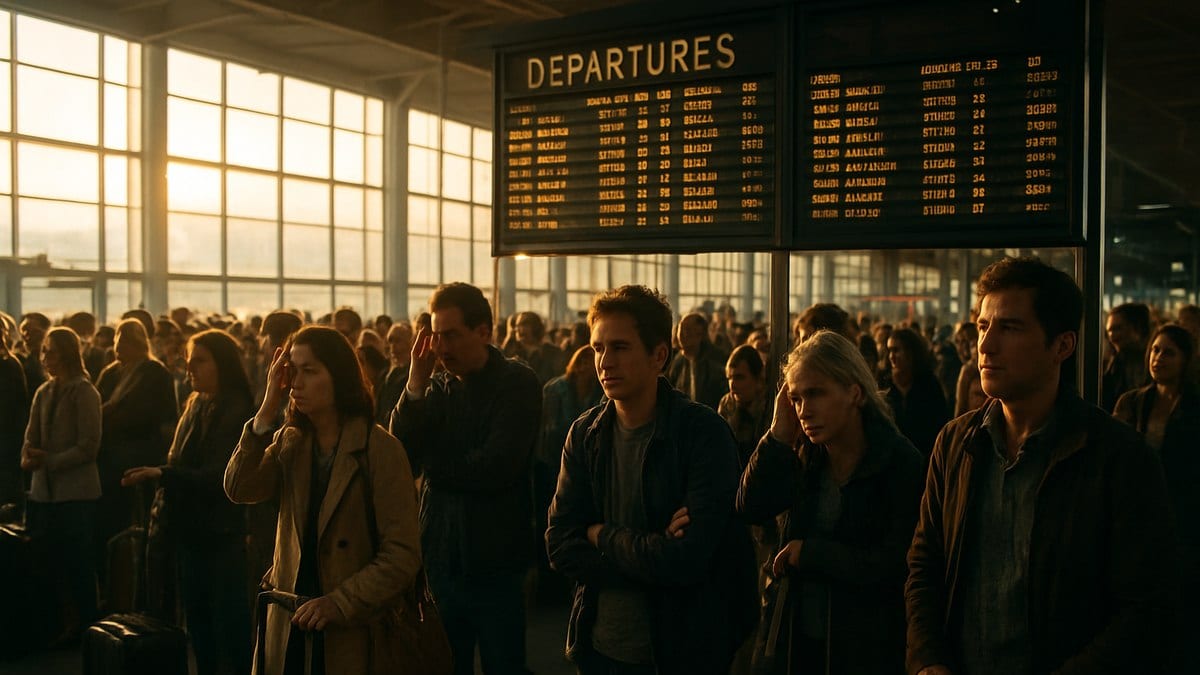
While the current tally of 129 delays is far from the worst day Atlanta has ever experienced, aviation data indicates it is sufficient to create visible congestion in terminals, longer lines at customer service counters and mounting pressure on airline operations centers working to re-time aircraft and crews.
Multiple Carriers Affected Across Domestic and International Routes
According to published coverage focused on the latest disruptions in Atlanta, the irregular operations have affected a mix of U.S. mainline, regional and international carriers. Delta Air Lines, which maintains its largest hub at Hartsfield-Jackson, features prominently among the delayed flights, alongside regional partners such as SkyWest and Endeavor Air. International airlines including Air Canada also appear in delay tallies, reflecting Atlanta’s role in North American and transborder traffic flows.
Reports indicate that services to and from a wide range of destinations have been caught up in the disruption. Domestic routes to leisure-focused markets such as Fort Lauderdale and Aspen, key mainland connections into and out of Puerto Rico, and business and industrial centers such as Lexington and Querétaro have all seen schedules pushed back or cut. This breadth of impact highlights how a single hub event can touch everything from short-haul feeder services to longer-haul cross-border flights.
Aviation analytics reviewed by travel publications describe this pattern as typical of hub disruptions. When a central node like Atlanta experiences irregular operations, airlines are often forced to prioritize aircraft and crews for trunk routes with the greatest passenger loads or strategic significance. This can leave thinner routes particularly vulnerable to late departures, rolling delays and same-day cancellations.
The presence of multiple carriers in the disruption data also underlines the shared dependencies at large hubs. While each airline manages its own schedule, all rely on the same runways, taxiways, terminal infrastructure and air traffic control environment. When conditions tighten, these shared constraints can produce similar outcomes across competing networks.
Operational and Weather Factors Behind the Latest Wave
Publicly available information about the current episode in Atlanta points to a familiar blend of contributing factors. Reports from aviation-focused outlets note that localized weather in parts of the Southeast has periodically forced traffic management initiatives, such as arrival spacing and ground delays, that slow the flow of aircraft into and out of the airport. Even short-lived thunderstorms or low visibility periods can require rerouted arrival streams and more conservative spacing between flights.
At the same time, industry commentary has increasingly highlighted staffing and equipment sensitivities that leave airlines and airports with less margin to absorb disruption. Pilot and cabin crew scheduling rules, which limit duty hours for safety reasons, can lead to crews timing out when delays accumulate earlier in the day. When this occurs at a hub like Atlanta, where dozens of flights may rely on tightly choreographed rotations of aircraft and personnel, a single prolonged delay can force downstream cancellations.
Longer term data compiled by passenger rights organizations and transportation agencies shows that nearly one in four U.S. flights has been disrupted in recent years, with major hubs frequently bearing the brunt of cascading delays. Within that context, the latest Atlanta event fits a broader pattern in which storms, air traffic flow constraints and resource bottlenecks align to create pockets of intense disruption, even on days when most flights nationwide remain on schedule.
Analysts quoted in recent disruption reports argue that while technology and forecasting have improved, the sheer density of schedules at top hubs means there are limited buffers when anything goes wrong. Atlanta’s prominence, they note, makes it especially vulnerable to such pressure points.
Knock-On Effects for Travelers Across the Network
For travelers, the headline figure of 129 delayed flights only partially captures the experience on the ground. Because Atlanta serves as a connecting point for journeys spanning multiple legs, delays on one segment can quickly propagate into missed onward flights, overnight stays and significant itinerary changes, even for passengers whose trips neither originate nor terminate in Georgia.
Recent traveler accounts shared through public forums and social platforms illustrate how modest-sounding delays can translate into hours spent waiting for rebooking, extended lines at customer service, and difficulty securing hotel rooms near the airport when evening cancellations cluster. In some cases, passengers with missed connections have reported opting for long-haul ground transportation rather than waiting for limited re-accommodation options on later flights.
Hub disruptions also tend to reshape seat availability far beyond the immediate event. When aircraft are out of position after a day of irregular operations, airlines may consolidate lightly booked services, reduce frequencies on certain routes or substitute smaller aircraft on near-term flights. This can make it harder for affected passengers to find alternative options at their preferred times, particularly on busy business corridors and popular leisure routes.
Travel industry observers point out that these ripple effects can persist for a day or more after the headline disruption appears to have passed. Schedules may look normal on departure boards, but residual crew and aircraft imbalances can still trigger isolated delays and last-minute changes across the network.
What Passengers Can Do as Disruptions Continue
In light of the latest Atlanta delays, consumer advocates and aviation analysts emphasize a series of practical steps for travelers using major hubs during periods of heightened disruption. Public guidance commonly stresses the importance of monitoring flight status regularly through airline apps and text alerts, rather than relying solely on static departure boards, as schedule adjustments can occur repeatedly throughout the day.
Travel experts frequently recommend building extra connection time into itineraries that pass through Atlanta and other high-traffic hubs, especially during peak travel seasons or when forecasts indicate the potential for storms. A slightly longer layover can provide crucial buffer room if inbound flights depart late or if aircraft are rerouted to avoid congested airspace.
Passenger rights resources published by government agencies and consumer groups also encourage travelers to familiarize themselves with airline policies on rebooking, meal vouchers and hotel accommodations during significant delays or cancellations. Understanding what airlines are obligated to provide, and what they may offer as a goodwill measure, can help travelers make quicker decisions at the airport and reduce time spent in customer service lines.
For those with tightly timed commitments, some analysts suggest considering early morning departures, which are statistically more likely to depart on time than flights later in the day that depend on repeatedly reused aircraft and crews. While no strategy can fully eliminate the risk of disruption, these measures can help reduce exposure when operational strains at Atlanta and other major hubs translate into another day of crowded gates and reshuffled schedules.