

Victoria, British Columbia’s capital on Vancouver Island, blends Indigenous history, colonial architecture, maritime scenery, and a surprisingly cosmopolitan food and arts scene.
For visitors, a handful of signature landmarks and cultural experiences help make sense of the city’s layered identity, from Lekwungen territories and Chinatown alleyways to manicured gardens and a busy working harbour.
This guide highlights 14 places and experiences that capture the spirit of Victoria today, combining long-loved icons with newer, Indigenous-led perspectives shaping how the city welcomes the world.
Understanding Victoria Through Place and Indigenous Perspectives
Any visit to Victoria begins with place. Long before Parliament Buildings and grand hotels framed the Inner Harbour, this was the homeland of the Lekwungen-speaking peoples, known today as the Songhees and Esquimalt Nations. Increasingly, visitors are invited to experience the city through those original stories, languages, and relationships to the land and water. These perspectives ground many of Victoria’s most meaningful cultural experiences, from guided walks to annual powwows.
1. Songhees Indigenous Canoe Tours on the Inner Harbour
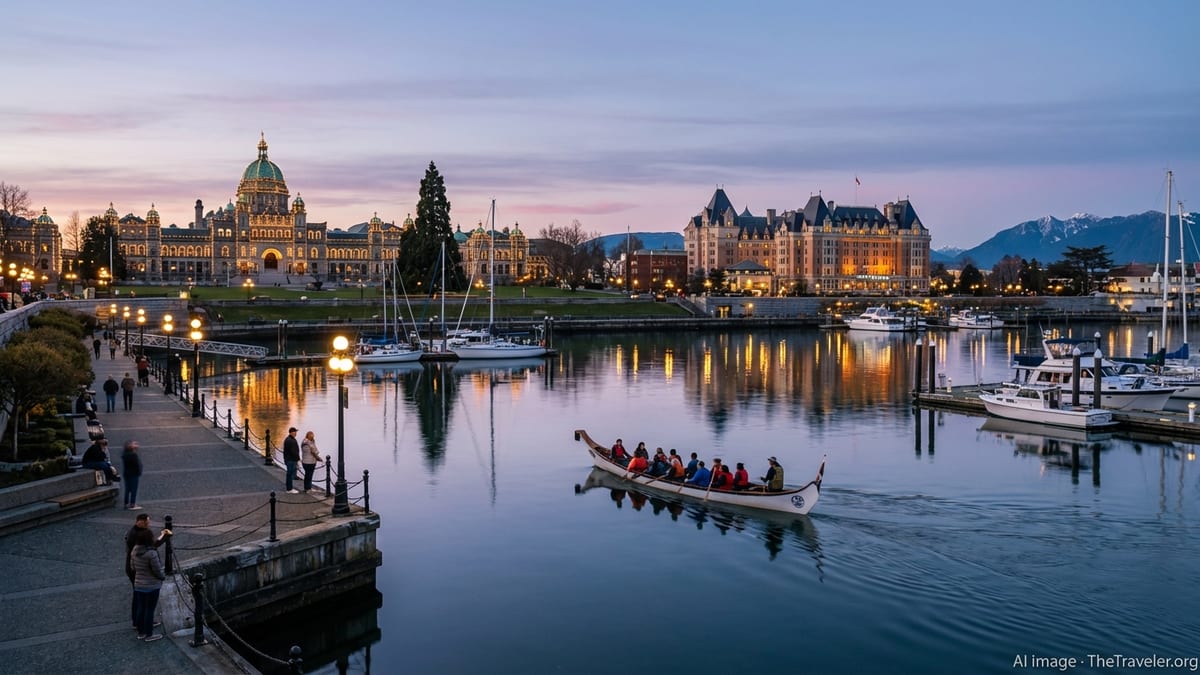
Songhees Tours operates Indigenous-owned and led canoe experiences on the waters surrounding Victoria’s Inner Harbour. Guests step into replica traditional canoes and paddle along ancestral routes with cultural ambassadors who share stories, songs, and teachings tied to this coastline. It is a rare opportunity to see the same harbourfront views that define so many postcards, yet understand them in the context of thousands of years of Indigenous presence.
On the water, guides introduce cultural protocols, paddling techniques, and historic village sites, but they also speak to contemporary Songhees life and ongoing stewardship of the territory. The result feels less like a recreational outing and more like a moving outdoor classroom, where the rhythm of paddles and the calls of seabirds punctuate hard truths and hopeful futures.
Because the tours run seasonally, mainly from early spring through the warmer months, planning ahead is essential. The experience is intimate in scale and often sells out, particularly around weekends and holidays, making advance booking a wise choice for anyone prioritizing Indigenous-led tourism.
2. Walking the 7 Signs of Lekwungen
On land, the Songhees-led walking tour follows the 7 Signs of Lekwungen, a series of carved markers installed around downtown and the Inner Harbour. Each sign represents a place of cultural significance, from former village sites to traditional resource-gathering areas, and is paired with stories that connect the present-day waterfront promenade to its much older history.
Guides describe how colonization reshaped the shoreline, but they also point out subtle details visitors might otherwise miss: a place name embedded in street signage, a sculpture referencing a longhouse, or an overlooked green space that once hosted ceremony. This reframing encourages travelers to rethink “sightseeing” as an exercise in listening and respect.
The route is accessible and suited to most fitness levels, making it a strong introduction for first-time visitors and families. It is also a powerful complement to better-known downtown landmarks, offering context that deepens every subsequent stop on a Victoria itinerary.
3. South Island Powwow on the National Day for Truth and Reconciliation
Each year on September 30, the National Day for Truth and Reconciliation, the Songhees Nation hosts the South Island Powwow at Victoria’s Royal Athletic Park. The free, public event has quickly become one of the region’s most important cultural gatherings, drawing participants and spectators from across Vancouver Island and beyond.
Grand Entry, typically held at midday, is a highlight as dancers in regalia, drummers, elders, and families enter the arena in a powerful display of continuity and resilience. Throughout the day, competitive and exhibition dances, songs, and announcements reflect traditions from many First Nations, while food vendors and information booths offer everything from frybread to educational resources.
For visitors, the powwow is both a celebration and a solemn reminder of the impacts of residential schools and ongoing efforts toward reconciliation. Respectful attendance means following the emcee’s directions, asking permission before taking photographs, and arriving with the mindset of a learner rather than a spectator.
Harbour Icons and the Historic Heart of the City
Victoria’s compact downtown gathers many of its most recognizable landmarks around the Inner Harbour. Here, seaplanes skim the water, ferries arrive from Washington State, and heritage buildings glow at sunset. Experiencing these icons on foot, and at different times of day, is one of the best ways to feel the city’s rhythm.
4. The Parliament Buildings and Illuminated Inner Harbour
The British Columbia Parliament Buildings anchor the south side of the Inner Harbour, their domes and stonework forming the city’s most photographed backdrop. Constructed in the late 19th century and framed by lawns, totem poles, and seasonal flower beds, the complex is both a functioning seat of government and a symbolic stage for public life.
Guided and self-guided tours introduce visitors to the building’s architecture, legislative chambers, and historical murals, while also touching on evolving understandings of representation and reconciliation within provincial politics. Even if you do not enter, walking the grounds offers sweeping views across the harbour toward Old Town and the Johnson Street Bridge.
After dark, thousands of white bulbs outline the Parliament Buildings, transforming the harbour into a softly lit amphitheatre. This nightly illumination, mirrored in the water alongside bobbing boats and floating homes, gives downtown Victoria an unexpectedly romantic, almost European ambience.
5. The Fairmont Empress and Afternoon Tea Tradition
Facing the Parliament Buildings across the Inner Harbour, the Fairmont Empress Hotel is another defining silhouette. Its ivy-clad facade and chateau-style architecture speak to the city’s Edwardian-era ambitions as a rail-and-steamship resort for wealthy travelers. Today, it remains one of Victoria’s most prominent gathering places, with public spaces that invite lingering even if you are not a guest.
Inside, the famed afternoon tea experience channels British colonial rituals with local touches. Servers pour loose-leaf blends sourced from around the world while three-tiered stands showcase pastries, scones, and finger sandwiches that highlight Vancouver Island ingredients. The setting, with harbour views and high ceilings, feels timeless, yet the menu and tea list have evolved to reflect contemporary palates and dietary preferences.
For many visitors, sharing afternoon tea at the Empress is less about indulgence than about stepping into Victoria’s early tourism history. Reservations are highly recommended, especially during peak summer months and holiday periods.
6. Victoria’s Inner Harbour Walkways and Working Waterfront
Beyond specific buildings, the network of walkways circling the Inner Harbour is a cultural experience in its own right. From the Lower Causeway below the Empress to the David Foster Harbour Pathway extending toward Fisherman’s Wharf, the promenade hosts buskers, artisans, and food vendors during the warmer months, creating an open-air festival atmosphere.
Harbourfront plaques and public art installations highlight themes from marine ecology to early settlement, while floatplanes and whale-watching boats underscore Victoria’s ongoing reliance on the sea. At certain times of year, visiting tall ships or naval vessels dock alongside the usual mix of sailboats and water taxis, adding to the sense of a living port.
Walking the harbour at sunrise or dusk reveals different facets of the city’s character, from morning commuters and joggers to couples strolling after dinner. It is also the most memorable way to connect major landmarks without ever needing a vehicle.
Gardens, Green Spaces, and Coastal Landscapes
Victoria’s reputation as the “Garden City” is more than a marketing slogan. The region’s mild maritime climate allows for year-round greenery, with spring flowers, summer borders, and winter evergreens shaping both public parks and private front yards. Several standout landscapes help define the destination for nature lovers and casual strollers alike.
7. The Butchart Gardens: A Century of Garden Artistry
Located just north of Victoria in Brentwood Bay, the Butchart Gardens are among Canada’s most famous horticultural attractions. Once a limestone quarry, the site was transformed beginning in the early 20th century into an intricate series of gardens, including the dramatic Sunken Garden, Rose Garden, and Japanese Garden.
Across roughly 22 hectares, visitors wander looping paths past seasonal plantings that change dramatically throughout the year. Spring brings tulips and cherry blossoms, summer is all about roses and lush borders, autumn highlights foliage and late perennials, while the holiday season introduces twinkling lights and themed displays. The careful layering of color, texture, and elevation has made the gardens a global benchmark for ornamental design.
Beyond their botanical appeal, the gardens also function as a cultural venue, with live music, local food, and occasional fireworks nights in summer. For many travelers, a visit to Butchart is the defining visual memory of a trip to Victoria, especially if timed for the golden hour of late afternoon light.
8. Beacon Hill Park and the Mile Zero of the Trans-Canada Highway
Closer to downtown, Beacon Hill Park stretches from inner neighbourhoods to the cliffs above the Strait of Juan de Fuca. This expansive green space blends manicured lawns, ponds, and flowerbeds with wilder Garry oak meadows and craggy outcrops, offering a microcosm of southern Vancouver Island’s natural diversity.
The park is also home to key cultural markers. Near Dallas Road sits the Mile Zero monument of the Trans-Canada Highway, symbolically linking Victoria to the country-spanning road network that ends thousands of kilometres away in Newfoundland. Nearby, totem poles and interpretive signs acknowledge Indigenous histories connected to this coastal bluff and the rich marine environment just offshore.
Families gravitate to the petting zoo and playgrounds, while walkers trace shaded paths between ornamental bridges and lookouts. In spring, the explosion of daffodils and camas flowers underscores why locals flock here for weekend picnics and sunrise yoga sessions all year long.
9. Dallas Road Waterfront and the Strait of Juan de Fuca
South of Beacon Hill Park, Dallas Road runs along the edge of Victoria’s oceanfront, offering uninterrupted views across the Strait of Juan de Fuca to the Olympic Mountains in Washington State. This windswept promenade is a favorite with locals for its off-leash dog areas, bluff-top paths, and staircases leading down to pebble beaches.
The area’s cultural significance lies partly in its role as an everyday gathering space. On any given day you might see kite surfers harnessing the afternoon breeze, elders walking slowly between benches, or students perched on driftwood with takeaway coffee. Seasonal storms, fog banks, and sunsets each give the coastline a different mood, making repeat visits feel fresh.
Interpretive signage and memorials dot the waterfront, reminding visitors of shipwrecks, coastal defense history, and long-standing Indigenous use of these shores for fishing, harvesting, and travel. For a city known for manicured gardens, this rawer edge of nature is an essential counterpoint.
Historic Districts and Architectural Landmarks
Victoria’s built environment tells a story of boomtown fortunes, maritime trade, and waves of immigration, particularly from China and the United Kingdom. Exploring the city’s historic districts on foot reveals ornate brick warehouses, narrow passageways, and repurposed industrial buildings now filled with cafes, boutiques, and galleries.
10. Old Town and Market Square
North of the Inner Harbour, Victoria’s Old Town district encompasses some of the best-preserved 19th-century commercial streetscapes in western Canada. Many buildings date back to the gold rush era, when the city served as a staging point for miners bound for the interior and Alaska. Today, their brick facades, arched windows, and cast-iron details frame a lively mix of independent shops and restaurants.
Market Square, a courtyard surrounded by restored heritage buildings, functions as Old Town’s social hub. Outdoor staircases and balconies connect multiple levels of boutiques and cafes, while live music and small festivals sometimes animate the space in summer. Wandering the nearby alleys and side streets reveals ghost signs, vintage neon, and other fragments of the city’s commercial past.
For visitors, Old Town offers an approachable way to engage with heritage architecture while also sampling local food, craft beer, and design-forward boutiques. It is a district where preservation and contemporary creativity sit comfortably side by side.
11. Chinatown and the Gate of Harmonious Interest
Victoria’s Chinatown is the oldest in Canada and one of the oldest continuously inhabited Chinatowns in North America. Established in the mid-19th century by Chinese immigrants drawn by mining and railway work, the neighbourhood once extended across a large swath of downtown. Today, a more compact but vibrant core remains, centred along Fisgard Street and its side lanes.
The Gate of Harmonious Interest, completed in 1981, marks the main entrance to Chinatown. The ornate structure, adorned with traditional red and gold detailing and flanked by stone lions, symbolizes cooperation between Chinese and non-Chinese communities. Recent restoration work has focused on preserving its design while upgrading roofing and lighting so the gate can continue to welcome residents and visitors for decades to come.
Inside Chinatown, narrow Fan Tan Alley and surrounding passages house a mix of boutiques, studios, and eateries. Heritage plaques introduce stories of community institutions, benevolent societies, and early businesses that shaped Chinese Canadian life in Victoria. Visiting during festivals such as Lunar New Year reveals an especially vibrant atmosphere, with lion dances, lanterns, and street performances.
12. The McPherson Playhouse and Centennial Square
On the northern edge of downtown, the McPherson Playhouse, affectionately known as “the Mac,” is a jewel-box theatre dating to 1914. Originally built as a Pantages Vaudeville house and later incorporated into the Centennial Square redevelopment, its Neo-Baroque auditorium has been meticulously preserved even as technical systems and the lobby were modernized in the mid-20th century.
Inside, ornate plasterwork, a sweeping balcony, and intimate sightlines create a classic theatre-going experience. The venue hosts everything from touring musicians and dance companies to community productions, reflecting Victoria’s strong support for live performing arts. Attending a show here provides insight into the city’s cultural priorities, where heritage venues remain central gathering spaces.
Outside, Centennial Square functions as a civic plaza used for markets, outdoor concerts, and seasonal events. It bridges the historic fabric of Old Town with newer municipal buildings, highlighting how Victoria has layered modern infrastructure onto its early 20th-century core.
Museums, Festivals, and Contemporary Culture
Beyond bricks and gardens, Victoria’s character emerges through its museums, festivals, and year-round arts programming. Some institutions are in periods of transformation, while others are reintroducing beloved events in refreshed formats. Together, they showcase a city that values both preservation and reinvention.
13. The Evolving Royal BC Museum
The Royal BC Museum has long served as the province’s flagship museum, combining natural history, human history, and archives under one roof. In recent years, the institution has embarked on an ambitious modernization process, including the closure and reimagining of core galleries and plans for a new main building in the years ahead.
During this transition, the museum continues to mount major temporary exhibitions, host the Wildlife Photographer of the Year showcase, and present travelling shows on topics ranging from migration stories to the role of music in social movements. IMAX Victoria, located on the same site, offers large-format films that often complement current exhibitions, from dinosaur reconstructions to documentary storytelling.
Visiting the Royal BC Museum today offers a snapshot of an institution in motion, grappling with questions of representation, repatriation, and climate change in real time. Exhibits increasingly foreground Indigenous voices and contemporary issues, making the museum a meaningful stop for travelers interested in British Columbia’s past, present, and future.
14. Victoria Symphony Splash and the City’s Festival Spirit
Victoria’s festival calendar is dense for a city of its size, but few events capture its waterfront character quite like Victoria Symphony Splash. Traditionally held on the Sunday before British Columbia Day, the event features the Victoria Symphony performing from a barge moored in the Inner Harbour, with thousands of spectators gathered along the shores, on lawns, and in small boats and kayaks.
After several years of pandemic-related adaptations, Symphony Splash is returning in full form, reaffirming its place as one of North America’s largest outdoor symphonic events. The program typically culminates in a rousing rendition of Tchaikovsky’s 1812 Overture, complete with cannon fire and fireworks that echo off the harbour walls.
Beyond Splash, the city hosts a wide range of cultural festivals, from food and drink celebrations to literary and film events. Together with recurring markets and outdoor performances, they give Victoria a year-round festival energy that belies its reputation as a quiet government town.
The Takeaway
Victoria rewards visitors who look beyond postcard views to seek deeper stories in its landscapes, streets, and shorelines. The 14 landmarks and cultural experiences highlighted here span Indigenous-led tours, historic neighbourhoods, architectural icons, gardens, and major events, offering multiple entry points into the city’s identity. Whether you arrive for afternoon tea, a harbour stroll, a powwow, or a night at the theatre, you will find that Victoria’s most defining features are not just pretty facades but living places where communities continue to gather, remember, and imagine what comes next.
FAQ
Q1. How many days do I need to experience Victoria’s main landmarks?
Most visitors can see a core selection of Victoria’s landmarks in two to three full days, though adding an extra day allows time for side trips to gardens and more relaxed exploration.
Q2. Is Victoria a walkable city for visiting these cultural sites?
Yes. Many of the key cultural sites, including the Inner Harbour, Parliament Buildings, Old Town, and Chinatown, are within an easy walking radius of downtown hotels and ferry terminals.
Q3. When is the best time of year to visit Victoria for gardens and outdoor experiences?
Late spring through early fall offers the most reliable weather and peak blooms in places like Butchart Gardens and Beacon Hill Park, though Victoria’s mild climate keeps it appealing year-round.
Q4. How can I respectfully take part in Indigenous cultural experiences in Victoria?
Book with Indigenous-owned operators, follow your host’s guidance, ask before taking photos, and approach each experience with an open mind and willingness to listen.
Q5. Are the major landmarks suitable for families with children?
Most are very family-friendly. The Inner Harbour, Beacon Hill Park, Royal BC Museum, and Dallas Road waterfront all offer space for kids to explore, with varying levels of stroller accessibility.
Q6. Do I need a car to visit Butchart Gardens and other attractions outside downtown?
You do not strictly need a car. Shuttle services, public transit, taxis, and organized tours connect downtown Victoria with Butchart Gardens and other nearby attractions.
Q7. Is Victoria an expensive destination compared with other Canadian cities?
Accommodation and dining in peak season can be relatively costly, but free public parks, harbourfront walks, festivals, and window-shopping in historic districts help balance budgets.
Q8. How accessible are Victoria’s cultural sites for visitors with mobility challenges?
Major landmarks such as the Parliament Buildings, Royal BC Museum, Inner Harbour walkways, and Butchart Gardens offer varying levels of accessibility, with ramps, paved paths, and accessible washrooms.
Q9. What should I pack for Victoria’s coastal climate?
Layered clothing, a light waterproof jacket, and comfortable walking shoes are essential, as coastal weather can shift quickly between sun, cloud, wind, and light rain.
Q10. Can I visit Victoria as a day trip from Vancouver or Seattle?
Day trips are possible using ferries or seaplanes, but an overnight stay or longer is recommended to fully enjoy the city’s cultural experiences without rushing.