

More news on this day
Hundreds of passengers across Asia faced missed connections, abandoned itineraries and crowded terminals this week as a fresh wave of disruptions involving at least 182 flights operated by Batik Air, China Eastern, Malindo Air and other regional carriers rippled across major hubs in Indonesia, Malaysia, China, India and Nepal.
Get the latest news straight to your inbox!
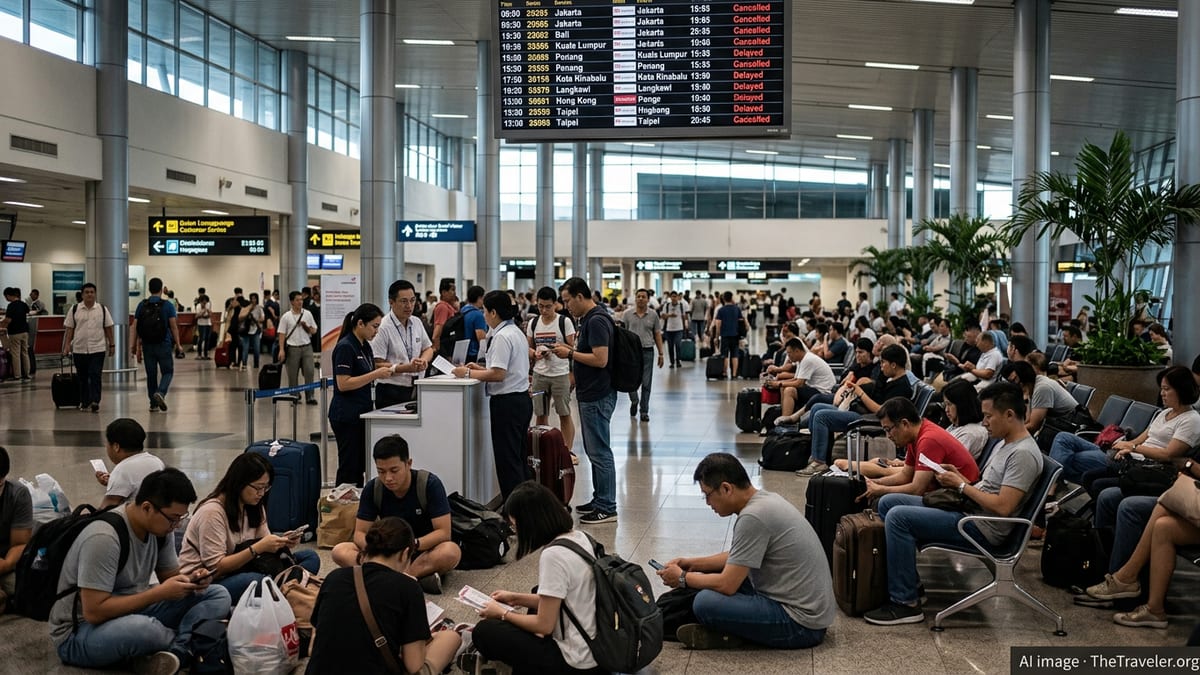
Disruptions Mount Across Key Asian Hubs
Regional aviation data and local media reports indicate that a cluster of cancellations and long delays has hit services linking Southeast and South Asia with China since late March, with Jakarta, Kuala Lumpur, Beijing and other busy gateways bearing the brunt. While Asia’s airlines have been operating under sustained pressure from rerouted Middle East traffic and volatile demand patterns, the latest figures point to a sharper short-term spike, with at least 182 flights disrupted across multiple days and airports.
Jakarta’s Soekarno Hatta International Airport has reported dozens of cancellations in recent weeks, many of them linked to services operating to or over Middle Eastern airspace, compounding routine weather and congestion-related delays. Publicly available information from Indonesia-focused business coverage shows that more than 60 flights at the Jakarta hub alone were cancelled in early March as regional operations came under strain.
In Malaysia, Kuala Lumpur International Airport has seen a similar pattern, with published reports describing rolling waves of disruptions affecting both domestic and international routes. These cancellations and delays have often struck during evening peaks, leaving passengers queuing at service counters and competing for limited hotel rooms around the airport.
China’s major hubs, including Beijing Capital and Shanghai’s airports, have recorded persistent timetable stress as well, as carriers juggle rescheduled long-haul operations and dense regional networks. Services linking China with India and Southeast Asia have proved especially vulnerable, with some flights operating many hours late and others removed from schedules at short notice.
Batik Air and Malindo Air Under Operational Pressure
Batik Air and Malindo Air, sister brands within the Lion Air Group that connect Indonesia, Malaysia, India and other regional markets, have featured prominently in the latest disruption cycle. Malaysian regulatory consumer data from 2025 already highlighted Batik Air Indonesia’s relatively low on-time performance compared with regional peers, and the current operational environment appears to have magnified those punctuality challenges.
Recent advisories issued by Batik Air signal an elevated risk of last-minute schedule changes on routes that interact with Middle Eastern airspace, where ongoing geopolitical tensions and airspace restrictions have complicated flight planning. The airline has urged passengers in public notices to monitor flight-status updates closely and to allow additional time at the airport, especially when connecting onward to India or onward Southeast Asian destinations via Kuala Lumpur or Jakarta.
Malindo Air, which operates key trunk routes between Kuala Lumpur and Indonesian cities as well as services to India and beyond, has also been cited in regional travel coverage for a notable share of cancellations and delays in Malaysia and China over recent days. Reports summarising airport operations in Kuala Lumpur and several Chinese hubs describe Malindo flights among those grounded or significantly delayed, contributing to the broader tally of at least 182 affected services across the region.
For passengers, the practical impact has been acute on routes where Batik Air and Malindo Air provide the primary or only non-stop option. Travellers connecting from secondary Indonesian cities via Kuala Lumpur to South Asia, or from Indian metros to leisure destinations in Indonesia, have faced missed connections, unplanned overnights and, in some cases, the need to purchase new tickets on competing carriers when rebooking options proved limited.
China Eastern and Regional Carriers Reshuffle Networks
China Eastern has been in the spotlight as it rebuilds its international network, including relatively recent resumptions of services linking China and India. As routes between Shanghai, Beijing and Indian gateways such as Delhi and Mumbai have returned, they have done so in an environment where Chinese and Indian carriers alike are dealing with longer routings around restricted airspace and intermittent congestion at busy hubs.
According to publicly available flight-tracking summaries and regional aviation reports, China Eastern services touching India and Southeast Asia have experienced periodic delays and selected cancellations, particularly on days when weather or airspace issues elsewhere in the network cascade into Asia’s evening departure banks. When these disruptions interact with already tight connection windows in Beijing, Shanghai and Kunming, even a short delay can leave passengers bound for South or Southeast Asia stranded overnight.
Other Chinese and regional airlines have faced comparable challenges. Travel-industry roundups from late March detail days when thousands of flights across Asia were delayed or cancelled within a 24-hour window, with Beijing, Shanghai, Kuala Lumpur and other hubs struggling to absorb the schedule volatility. As carriers adjust timetables, swap aircraft and consolidate lightly booked services, passengers have been confronted with revised departure times, downgauged cabins and, in some cases, outright flight withdrawals.
For China Eastern and its regional competitors, the operational reshuffle has required balancing the reinstatement of profitable international routes with the need to maintain resilience in domestic and short-haul networks. Industry commentary suggests that high load factors on core trunk routes may be limiting flexibility, leaving airlines with fewer spare aircraft and crews to deploy when unforeseen disruptions occur.
India and Nepal Feel Knock-On Effects
In India, the broader turbulence in Asian airspace has intersected with existing pressures on the country’s fast-growing aviation market. Reports from Indian media describe instances where cancellations linked to Middle East unrest and altered overflight permissions have combined with local weather and airport constraints, leading to snarled operations at major hubs such as Delhi and Mumbai.
The cumulative effect has spilled over to regional connections involving Nepal, particularly Kathmandu’s Tribhuvan International Airport, which relies heavily on links to Indian metros and select Southeast Asian hubs. Aviation data and local travel coverage indicate that a portion of the 182 affected flights includes services either originating in, destined for, or connecting through India and Nepal, complicating travel plans for labour migrants, religious pilgrims and leisure travellers alike.
As Indian airlines adjust flight paths around restricted or sensitive airspace, block times on some international routes have increased, narrowing turnaround buffers and raising the likelihood that a delay on one leg will propagate through an entire day’s schedule. When these knock-on disruptions meet already constrained slot availability at airports such as Delhi and Kathmandu, recovering to normal operations can take several days.
Travel advisers across South Asia have therefore been encouraging passengers, based on recent patterns reported in the media, to build longer connection times into multi-sector trips and to stay alert for schedule changes on routes touching the Middle East, China or major Southeast Asian hubs.
Passengers Face Crowded Terminals and Limited Options
For travellers caught up in the latest round of cancellations and delays, the experience has often been one of uncertainty and limited alternatives. News and social media accounts from Jakarta, Kuala Lumpur, Beijing and Indian airports describe long queues at airline counters, busy call centres and difficulty securing prompt rebooking when multiple carriers experience disruption simultaneously.
With at least 182 flights affected across Indonesia, Malaysia, China, India and Nepal in recent days, the number of displaced passengers has quickly exceeded the spare capacity available on near-term departures. In some cases, travellers reported being offered rerouting via secondary hubs or multi-stop itineraries, adding hours or even a full day to journeys that were originally scheduled as short, non-stop or one-stop trips.
Accommodation has been another flashpoint. When last-minute cancellations occur late in the evening, airport-area hotels in Jakarta, Kuala Lumpur and Beijing can fill rapidly, forcing some passengers to remain in terminals overnight. Published advice from consumer advocates in the region has urged travellers to keep digital copies of their booking confirmations and to document expenses, noting that reimbursement policies can vary significantly between airlines such as Batik Air, Malindo Air, China Eastern and other carriers involved in the disruptions.
Despite the frustration, aviation analysts quoted in regional coverage suggest that the current wave of disruptions is symptomatic of a wider rebalancing of Asia’s air traffic flows as airlines adapt to shifting geopolitical and operational realities. While punctuality metrics may improve as schedules are adjusted and contingency plans refined, travellers planning itineraries through Jakarta, Kuala Lumpur, Beijing, Delhi, Kathmandu and other key hubs are being advised to anticipate continued volatility in the near term.