

More news on this day
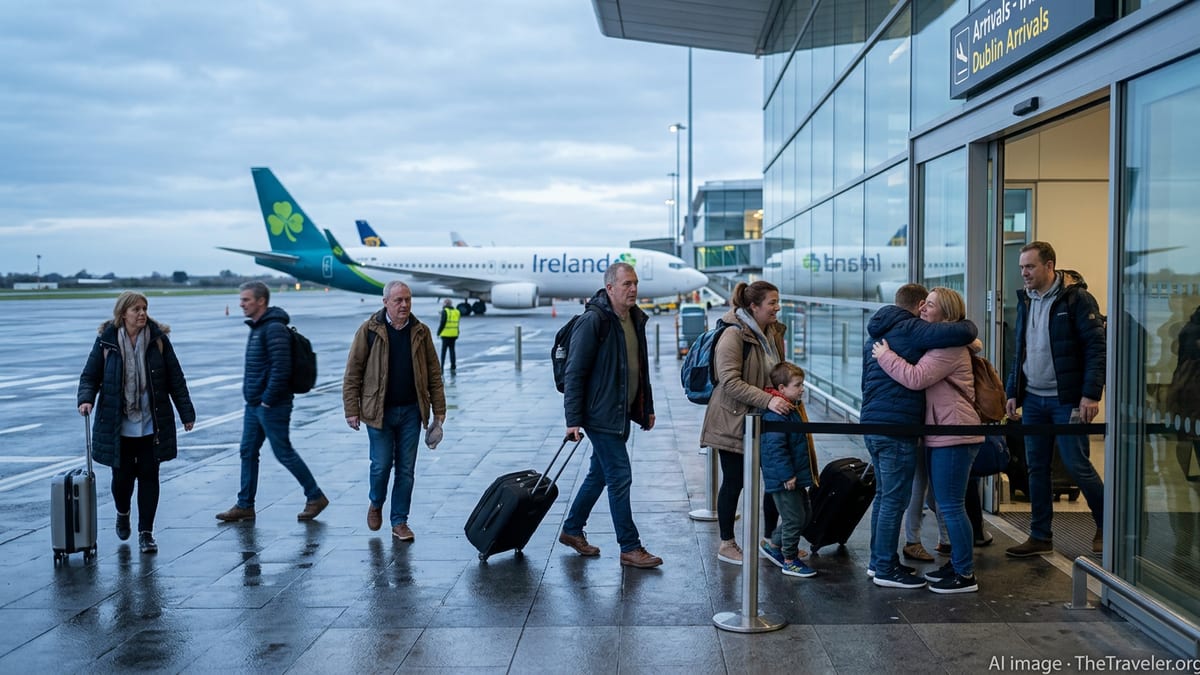
After days of fear, uncertainty and forced detours across the Gulf, 189 Irish citizens and residents touched down in Dublin on an Irish government charter flight from Muscat via Cairo in the early hours of Sunday, ending a harrowing escape from the United Arab Emirates and neighbouring states.
Emergency Charter Marks Climax of High-Stakes Evacuation
The flight, arranged by the Department of Foreign Affairs as regional tensions escalated and airspace restrictions widened across the Gulf, departed Muscat on Saturday evening before making a scheduled stop in Cairo and continuing to Dublin. Officials confirmed that the Airbus aircraft carried 189 passengers, most of them Irish nationals who had been stranded as regular services were cancelled or severely curtailed.
Speaking in Dublin, Minister for Foreign Affairs Helen McEntee welcomed the arrival, describing the past week as “incredibly distressing” for citizens scattered across the United Arab Emirates, Oman, Qatar and Saudi Arabia. She said several hundred people had been contacted directly by the department’s Consular Crisis Team in recent days, with priority given to those who had flagged vulnerabilities or urgent medical or family needs.
The flight is the first dedicated Irish government charter from the Middle East since the current round of hostilities disrupted civilian air traffic in late February. It follows several days in which Emirates and other carriers operated only limited services into Dublin, leaving thousands of Irish passport holders scrambling for scarce seats or forced to shelter in place while the situation remained uncertain.
Officials stressed that the charter is intended as assisted departure for those with no safe commercial options, rather than a mass evacuation of all Irish passport holders in the region. The department believes tens of thousands of Irish citizens remain in Gulf states, many of whom are long-term residents who have opted to stay put for now.
From Dubai Motorways to Muscat Runway
For many on board, the journey home began not at an airport but on the highways of the United Arab Emirates. With flight schedules slashed and debris having previously struck infrastructure at Dubai International Airport, the Irish government coordinated free buses to move citizens out of the UAE and across the desert frontier into Oman, a journey that took many hours before reaching Muscat.
Passengers reported overnight drives through military checkpoints, delays at borders and frequent checks of documentation as authorities in multiple jurisdictions tightened security. Among those boarding the buses were families with young children, tourists whose itineraries had suddenly collapsed, and contract workers facing expiring visas and job uncertainty as the crisis deepened.
Some evacuees said they had already endured several nights on airport floors or in crowded hotels in Dubai and Abu Dhabi before deciding to take the overland route. Others travelled from Qatar and Saudi Arabia into Oman on a patchwork of regional connections, often securing the final legs of their journeys only hours before departure as news of the Irish charter spread through consular channels and social media groups.
By the time check-in opened in Muscat, roughly 180 of the pre-registered passengers had managed to complete the land leg and reach the airport. Remaining seats were then offered to additional Irish citizens who had independently made their way to Oman and were in urgent need of a route back to Ireland.
Relief and Reunions at a Tense Dublin Airport
At Dublin Airport on Sunday morning, the mood among arriving passengers and waiting relatives mixed visible exhaustion with palpable relief. Many travellers emerged from the terminal clutching only carry-on bags, having been forced to prioritise essential documents and medications over everything else when they left apartments and hotel rooms behind in the Gulf.
Family members had gathered from the early hours in the arrivals hall, scanning information screens for confirmation that the charter had landed and watching the doors for the first glimpse of loved ones. Some had travelled from rural counties in the dead of night, fearful that further deterioration in the regional security picture might yet jeopardise the final stage of the journey.
Airport authorities said that while the arrival took place against the backdrop of ongoing disruption to Middle East services, operations in Dublin remained stable. The charter joined a small number of commercial flights from Dubai that have resumed on a reduced schedule in recent days, even as airlines and passengers continue to navigate shifting airspace restrictions and insurance considerations.
For those stepping onto Irish soil after days on the road and in the air, the immediate focus was rest and reconnection. Several passengers spoke of plans to visit elderly parents, to resume postponed medical appointments, or simply to sleep in their own beds after what one described as “a week of never knowing if the next flight would actually take off.”
Cost, Capacity and Questions for Those Still in the Gulf
The charter has also highlighted the difficult balance governments face between rapidly escalating demand for assisted departures and the high cost of securing aircraft willing to fly into a volatile region. Passengers on the Muscat flight were charged a contribution of around 800 euro per adult seat, a figure that sparked debate at home but which officials and aviation analysts say reflects the realities of chartering a long-haul aircraft that must often operate one leg empty.
The government has defended the fee structure, arguing that it ensures scarce seats are targeted at those most determined to leave while still representing only a portion of the full charter cost. Means-tested support and waivers have reportedly been available for citizens unable to afford the contribution, though officials have not yet detailed how many passengers were granted reduced fares.
For now, the Department of Foreign Affairs is urging Irish citizens who remain in the Gulf and who may wish to leave to formally register their details through its online system. More than 18,000 have already done so in the past week, providing the basis for further planning as officials monitor both the security situation and the commercial aviation picture.
Ministers have stopped short of confirming additional Irish-operated charters, emphasising that the return of limited scheduled services from Dubai and other hubs will, where possible, form the primary route home for most citizens. However, they have left open the possibility of further assisted departures should conditions deteriorate or commercial options again evaporate at short notice.
A Region on Edge and a Diaspora in Motion
The arrival of the Muscat flight in Dublin caps a week in which Irish citizens found themselves unexpectedly on the front line of a rapidly evolving regional crisis. The Gulf, and in particular Dubai and Abu Dhabi, has long been a major transit corridor for Irish travellers and a key base for an estimated tens of thousands of Irish professionals working in aviation, construction, healthcare and finance.
When airspace closures and missile incidents began to ripple across the region, many of those travellers were caught mid-journey, waking up to notifications of cancelled onward flights or instructions from airlines to remain in hotels while options were reassessed. Travel agents in Ireland and the UK reported frantic calls from families seeking alternative routes via Europe or Asia, often at short notice and high cost.
The Irish government is now conducting a review of consular readiness and communication protocols in high-traffic hubs such as Dubai, Abu Dhabi and Doha. Officials are expected to examine how quickly they can pivot from routine travel advice to active crisis response in regions where large numbers of Irish citizens may be transiting on any given day.
For the 189 people who stepped off the Muscat charter into the cool Irish air on Sunday, those policy questions will be for another time. After days on uncertain roads and in crowded departure lounges from the UAE to Oman and Egypt, the sight of Dublin’s grey skies and waiting relatives was, for now, all that mattered.