

Spain has never exactly been a secret. Its cities fill global “best of” lists, its islands dominate summer plans and its villages appear on countless wish lists. Yet beyond the familiar postcard views, the country still manages to surprise. From whitewashed hamlets in high sierras to Atlantic islands shaped by wind and volcanoes, a new wave of destinations is earning attention not for novelty’s sake but because they capture what makes Spain so compelling right now: layered history, confident regional cultures and a slower way of life that feels increasingly rare. These 20 places across the country genuinely deserve their hype, whether you are planning a first visit or returning to dig deeper.
Big-Hitting Cities That Keep Reinventing Themselves
Madrid and Barcelona dominate visitor numbers, but the real story is how both cities have spent the past decade rebalancing mass tourism with livability. Madrid has leaned into its strengths as a walkable, green capital, with revitalised neighbourhoods like Lavapiés and Chueca showcasing galleries, independent shops and a confident culinary scene. Major museums continue to refresh their collections and programming, while a new generation of small theatres, wine bars and food markets ensure the city feels more lived-in than theme-park.
Barcelona, meanwhile, has responded to overtourism by recalibrating how visitors experience the city. Timed entries and new crowd-management measures at icons such as the Sagrada Família and Park Güell have pushed travellers to explore beyond the old town and waterfront. Districts like Gràcia, Poblenou and Sant Andreu now feature more prominently on itineraries, with former industrial zones converted into design hubs and co-working spaces. Both cities still draw vast numbers of international arrivals, yet they increasingly reward travellers who linger and look past the obvious sights.
What makes these capitals worthy of continuing hype is not just their museums, restaurants or nightlife but their capacity for reinvention. In Madrid, new pedestrianised streets and expanded bike lanes make it easier to traverse neighbourhoods on foot or two wheels. In Barcelona, ongoing work on urban beaches, community parks and tram links is reshaping how locals move and relax. For visitors, the result is access to major-city energy that still feels human-scaled and surprisingly accessible.
Coastal Icons That Live Up To Their Postcards
Spain’s Mediterranean and Atlantic coasts have long defined the country’s tourism image, yet some of their most hyped spots continue to earn their reputations. On Andalusia’s eastern stretch of the Costa del Sol, Nerja has transitioned from under-the-radar resort to sought-after seaside town. Its appeal lies in the combination of rugged cliffs, small sandy coves and the balconied viewpoint that looks out over the Mediterranean. Well-known caves in the hills above town add geological drama to the classic beach holiday, while the compact old centre retains a lived-in feel outside peak season.
Farther north on the Costa Brava, Tossa de Mar’s profile has quietly risen as travellers search for coastal towns with more substance than nightlife. The walled medieval quarter that climbs up from the main beach provides a rare sense of historical depth so close to the sea. Inland paths lead to smaller coves and pine-edged viewpoints, allowing visitors to escape the busiest stretches of sand. It is this mix of accessible beaches and preserved heritage that keeps the town in the spotlight.
Across on the Bay of Biscay, San Sebastián continues to justify its acclaim as a culinary and coastal heavyweight. Urban beaches curve around the bay within walking distance of pintxo bars, while hikes on Monte Urgull and Monte Igueldo provide expansive views of both the city and open sea. The destination has worked hard to maintain its reputation for quality rather than quantity, particularly when it comes to food. For travellers, the result is a rare blend of swim-friendly city beaches, refined gastronomy and manageable size.
Islands Where Nature Still Sets The Pace
Spain’s island chains remain magnets for beach-seekers, but the places currently generating the most interest do so because of their landscapes rather than their nightlife. In the Canary Islands, Lanzarote and its neighbours continue to attract attention for volcanic scenery, protected biosphere reserves and a focus on slow, rural tourism away from the big resort strips. Beyond the famous black-sand beaches, travellers are discovering vineyard-covered lava fields, small whitewashed villages and architectural projects that integrate viewpoints and public art into the island’s geology.
On the Balearic side, Menorca has emerged as the quieter counterpoint to party-focused islands. Designated a UNESCO Biosphere Reserve, it offers a more low-key mix of turquoise coves, dry-stone walls, rolling farmland and coastal trails. Interest is growing in agritourism stays, local cheese-making and boutique wineries, alongside established draws such as the island’s Camí de Cavalls coastal path. The result is an island break where beach days can sit comfortably alongside walks, farm visits and slow evenings in harbour towns.
Elsewhere in the archipelagos, smaller islands and less-developed coastal corners are gaining steady recognition. While ferry-linked spots remain seasonal, they offer a sense of space and relative quiet that contrasts starkly with busier mainland strips. For travellers willing to plan around limited services, these islands reward with star-filled nights, clear waters and the slow rhythms of traditional fishing communities that have not yet given way entirely to tourism.
Underrated Cultural Cities Stepping Into The Spotlight
Beyond Madrid and Barcelona, several mid-sized Spanish cities are finally receiving broader recognition for their cultural weight. Bilbao, once known primarily for industry, has matured into a complete city break destination, its famous contemporary art museum now just one element in a wider cultural ecosystem of galleries, design shops and new hotels. Waterfront promenades and cable cars frame views of green hills surrounding the city, reminding visitors that nature is never far away.
Seville, meanwhile, has shifted from springtime favourite to year-round contender. Its gothic cathedral, palaces and narrow streets have long attracted visitors, but recent years have seen renewed interest in its contemporary side: new boutique accommodation in once-neglected barrios, updated market halls, and a thriving bar and restaurant scene that extends beyond the historic core. The city’s effort to manage crowds during peak festival periods has encouraged more travellers to consider autumn and winter visits, when soft light and cooler temperatures make wandering its plazas especially appealing.
Other regional capitals are steadily climbing wish lists. Valencia offers a striking juxtaposition of medieval lanes, modern architecture in its cultural complex and expanses of urban beach and wetland reserve. Málaga has repositioned itself from gateway airport city to culture-forward destination in its own right, with a concentration of museums, galleries and revitalised port areas. These cities deserve their growing hype because they combine strong transport links with enough depth to fill several days, all without overwhelming first-time visitors.
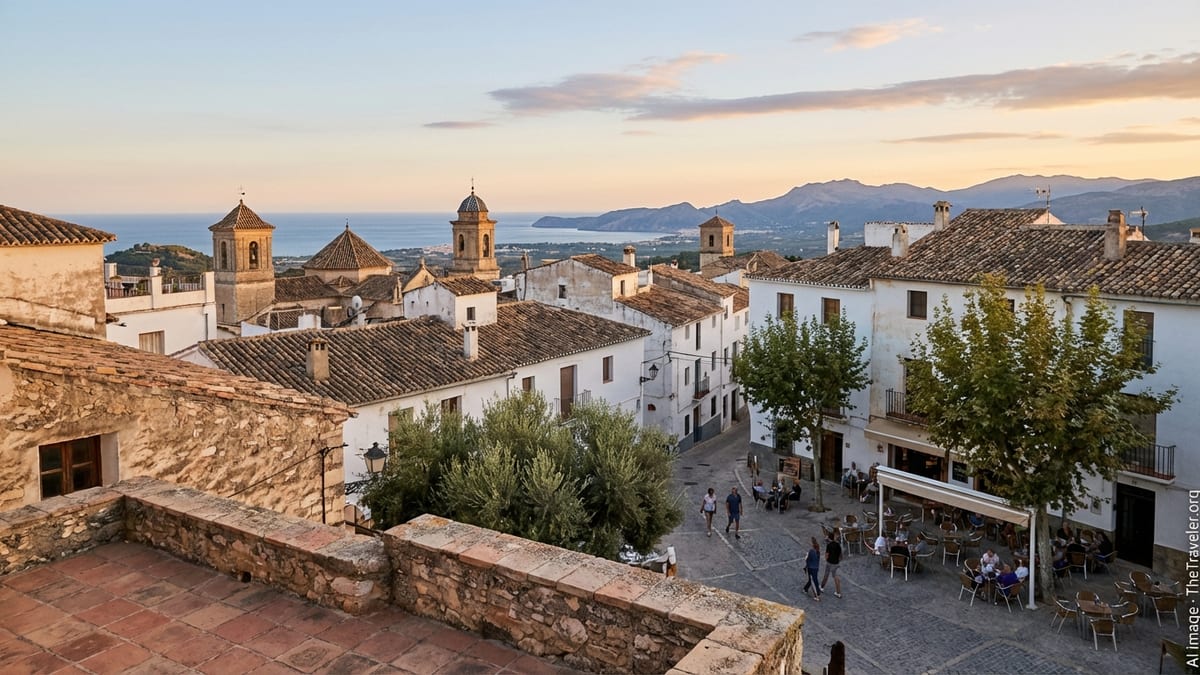
White Villages and Hill Towns With Storybook Views
Spain’s smaller towns and villages are quietly reshaping how people think about travel in the country. Associations that highlight “the most beautiful villages” have brought renewed attention to communities that were once overlooked on the way between major sights. In Andalusia, classic white villages perched on crags or tucked into sierras continue to enchant, not because they are undiscovered but because they have resisted overdevelopment. Narrow streets, tiled fountains and small family-run guesthouses set the tone.
Ronda, sitting dramatically above a deep ravine linked by its famed stone bridge, remains one of the most talked-about of these towns. The old quarter offers panoramic views over rolling countryside, while cliff-hugging paths reveal the scale of the gorge. Despite increasing visitor numbers, the town retains corners where local life unfolds at its own pace: early-morning markets, quiet side streets and small wineries in the surrounding hills. It is this dual identity, at once iconic and lived-in, that keeps Ronda firmly in the spotlight.
Elsewhere, highland villages in regions such as Aragón, Castilla y León and Asturias are gaining recognition for their stone architecture, mountain backdrops and traditional festivals. Many of these places now appear on official lists of especially beautiful towns, yet they remain unhurried and, outside holidays, remarkably tranquil. Visitors who time their stays for shoulder seasons often find themselves wandering nearly empty streets lined with centuries-old houses, with only the sound of church bells and distant livestock for company.
Atlantic Green Spain: Cliffs, Cider and Fishing Harbours
Spain’s northern coast, stretching across the regions of Galicia, Asturias, Cantabria and the Basque Country, has seen growing interest from travellers seeking cooler summers and greener landscapes. Here, the hype revolves less around individual monument-packed cities and more around a chain of fishing villages, surf towns and inland valleys. Rugged cliffs drop to wild beaches, while inland slopes are dotted with forests and orchards. For visitors accustomed to the dry heat of the south, this mix of Atlantic weather and Spanish culture feels refreshingly different.
Cantabria’s and Asturias’s coastal villages illustrate why this part of the country is attracting more attention. Stone-built harbours open onto small bays, with houses climbing the hills behind in tight terraces. Some of these villages, protected for their historical character, have carefully restored centres where painted wooden balconies and tiled roofs dominate the skyline. Local gastronomy leans toward seafood, dairy and hearty stews, often accompanied by regional ciders poured in dramatic arcs.
Further west, Galicia’s rías and headlands host a patchwork of towns where traditional fishing economies meet new waves of visitors. Pilgrimage routes have long brought travellers into the region’s inland cities, but coastal communities are now seeing more people arrive specifically for their landscapes and food. Fresh shellfish, Atlantic views and a more temperate climate combine to create a very different Spanish seaside experience from the Mediterranean. Yet despite slowly rising visitor numbers, many of these towns still feel resolutely local in rhythm and outlook.
Nature Reserves, Trails and Wild Landscapes
One of the quieter stories behind Spain’s tourism boom is the rise of nature-focused travel. The country’s varied geography, from alpine peaks to semi-deserts and marine reserves, is increasingly central to its appeal. National parks in the Pyrenees and Picos de Europa offer serious hiking and wildlife watching, yet also provide well-marked trails suitable for casual walkers. In the south, protected wetlands and mountain ranges host migratory birds, endemic plants and traditional transhumance routes that connect valleys.
Interior provinces that once saw limited tourism are now appearing in hiking and cycling itineraries. Former mining routes and railway lines have been converted into greenways suitable for bikes and family walks, passing through tunnels, over viaducts and between small villages. These routes invite visitors to move at a slower pace, stopping at rural bars and guesthouses rather than rushing between headline cities. They also distribute tourism more evenly, which has become a priority in regions that previously saw only transient through-traffic.
Coastal reserves play their part too. Sections of shoreline are now tightly protected, with boardwalks and signed paths guiding visitors while safeguarding dunes, wetlands and nesting sites. While this sometimes means more structured access, it has also preserved some of the most striking stretches of coast from uncontrolled development. For travellers who want their Spanish holiday to include time in genuine nature, these parks and reserves demonstrate why the country’s wild side deserves far more of the spotlight.
The Takeaway
If Spain once meant a handful of familiar cities and crowded beaches, today it describes a far more complex map of possibilities. The places drawing attention now span metropolitan capitals, mid-sized cultural cities, whitewashed hill towns, Atlantic fishing villages, volcanic islands and mountain reserves. What they share is not just beauty or Instagram potential but a sense of identity rooted in landscape, language and local traditions. Travellers are rewarding destinations that protect this character rather than smoothing it out.
For anyone planning a trip, the message is clear: Spain’s hype is justified, but it is also evolving. Spending time in a mix of widely known and lesser-publicised places reveals a country that is constantly renegotiating the balance between visitors and residents, innovation and inheritance. Choose a couple of marquee cities, add one or two quieter villages, allow time for a coastal stop and a day or two in protected nature, and the result is a journey that does justice to the country’s breadth. In an age of fast-travel checklists, these 20 places stand out precisely because they reward those willing to slow down.
FAQ
Q1. When is the best time of year to visit Spain’s most popular destinations?
The most comfortable periods are typically spring and autumn, when temperatures are milder, crowds thinner than in peak summer and prices often more manageable.
Q2. How many places should I realistically combine in a two-week trip?
For a balanced itinerary, aim for two cities, one coastal stop and one or two smaller inland towns or villages rather than trying to cover the entire country.
Q3. Do I need to rent a car to explore villages and nature reserves?
Major cities and islands can be visited without a car, but a rental is useful for reaching remote villages, rural guesthouses and trailheads with limited public transport.
Q4. Are Spain’s hyped coastal spots still suitable for a quiet beach holiday?
Yes, but focus on shoulder seasons, choose smaller coves or nearby villages and consider early-morning or late-afternoon beach time to avoid the busiest hours.
Q5. How expensive are food and drink in Spain’s most talked-about cities?
Prices have risen in recent years, especially in historic centres, but tapas bars, set lunch menus and markets still offer comparatively good value in most cities.
Q6. Is it necessary to book major attractions in advance?
For headline sights such as major cathedrals, palaces and iconic museums, advance online reservations are strongly recommended, especially in high season and on weekends.
Q7. What should I wear when visiting churches and religious sites?
Dress codes are generally relaxed, but covering shoulders and avoiding beachwear in churches, monasteries and small village chapels is considered respectful.
Q8. Are Spain’s smaller towns and villages accessible by public transport?
Many are linked by regional buses or occasional trains, but timetables can be limited, so it is wise to check schedules carefully or consider hiring a car.
Q9. How can I travel more sustainably in Spain?
Favour trains over short flights where possible, travel outside peak periods, support locally owned businesses and respect protected areas by following marked paths.
Q10. Is English widely spoken in the destinations mentioned?
English is common in major cities and resort areas; in smaller towns, basic Spanish phrases and patience go a long way and are appreciated by residents.