

More news on this day
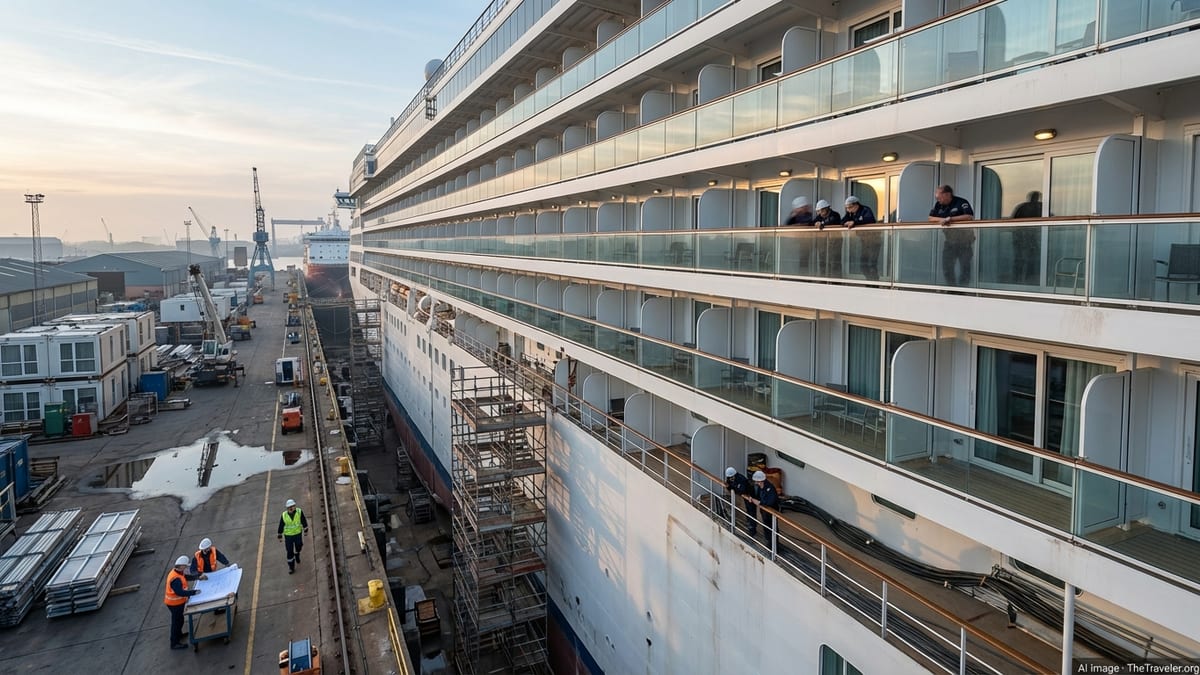
Cruise lines are accelerating a quiet but powerful shift in how they add capacity to their fleets, increasingly turning to drydock upgrades in 2026 to carve out extra staterooms from existing ships instead of relying solely on newbuilds.
From mainstream mega-ships to upscale and premium brands, operators are reconfiguring underused public spaces, stretching vessels, and densifying accommodation decks to meet surging demand, while trying to protect the onboard experience that keeps passengers coming back.
More News
- Hilton Accelerates Türkiye Expansion With Five New Hotels in Antalya, Istanbul and Kocaeli
- Caribbean Travel to U.S. Upended by New Visa Freezes and Expanded Bans
- Mexico Restores E-Visas for Brazilians, Paving the Way for Borderless Tourism
2026 Shapes Up As A Breakout Year For Capacity-Boosting Drydocks
Industry data and recent refurbishment announcements show that 2026 is set to be one of the most active years yet for cabin-adding drydocks. A new drydock report from specialist publications highlights a growing roster of ships scheduled for major refits that go beyond routine maintenance to include new staterooms, redesigned suites, and in some cases entirely new premium enclaves.
Rather than focusing solely on new features such as restaurants or waterparks, many of these projects are squarely aimed at adding sellable berths. That means converting parts of observation lounges, entertainment spaces, and even youth areas into revenue-generating cabins. For cruise companies, each additional stateroom can represent thousands of dollars in incremental revenue per voyage, with minimal impact on fuel and operating costs compared with deploying a new ship.
The trend also reflects the realities of shipyard capacity and long orderbooks. With dozens of new vessels already on order through the late 2020s, major yards are heavily booked, making deep refits an attractive parallel strategy. By investing in existing tonnage, lines can bring capacity to market faster than waiting years for newbuilds to be delivered.
Analysts say this dual-track growth strategy is particularly important in popular regions such as the Caribbean, Mediterranean, and Alaska, where demand has bounced back strongly and new itineraries and homeports compete for limited ship days. Adding cabins midlife allows brands to up-gauge capacity on proven itineraries without a wholesale deployment shake-up.
Royal Caribbean Pushes The Envelope With Large-Scale Additions
Royal Caribbean International is at the forefront of this cabin-focused refit wave in 2026, with several marquee ships slated for meaningful capacity increases. Industry reports note that Ovation of the Seas, built in 2016, is scheduled to enter drydock to gain around 40 new staterooms, largely through the repurposing of low-utilization public areas. The project builds on a pattern already seen across the Quantum and Oasis classes, where lounges and secondary venues have been progressively trimmed or relocated.
Harmony of the Seas, one of the line’s high-profile Oasis-class vessels, is set for an even more ambitious refit in 2026. The ship is expected to enter drydock in April for a modernization program that will create approximately 91 additional staterooms. That expansion, one of the largest single-ship cabin additions currently on the books for 2026, underscores how confident Royal Caribbean is in sustained demand for large-ship cruising on its established Caribbean and Mediterranean routes.
Liberty of the Seas is another Royal Caribbean vessel set to benefit from capacity-focused work, with around 68 new staterooms planned as part of an upcoming refit. Collectively, these projects will add hundreds of cabins across the fleet without requiring new hulls, giving the brand more flexibility to respond to strong booking trends on both short and longer itineraries.
The strategy does raise questions about crowding, but Royal Caribbean has consistently argued that its large vessels were designed with excess public space that can be rationalized as cruising patterns evolve. In practice, the line has often paired cabin additions with targeted enhancements to high-traffic venues, such as expanded dining options and refreshed pool decks, to keep the guest experience in balance.
Norwegian Cruise Line Builds On 2025 Cabin Gains
Norwegian Cruise Line spent much of 2024 and 2025 testing how far it could go in retrofitting extra accommodations into existing tonnage, and those projects set the stage for more targeted upgrades heading into 2026. In 2025 alone, Norwegian added nearly 50 cabins across ships including Norwegian Bliss, Norwegian Epic, and Pride of America, following similar work on Norwegian Joy and Norwegian Encore in 2024.
On Norwegian Bliss, refit teams carved new cabins out of the ship’s expansive Observation Lounge, creating two dozen balcony cabins and additional club balcony staterooms while also unveiling refreshed suites in The Haven, the brand’s exclusive ship-within-a-ship enclave. Norwegian Epic saw eight new cabins introduced by downsizing certain fitness and youth spaces, while Pride of America gained new balcony suites and interior staterooms by relocating its kids’ facilities.
The experience gained from those complex refits is feeding directly into the line’s 2026 planning. Executives have signaled that future drydocks will continue to prioritize higher-yield accommodations, particularly balcony and premium-level cabins that appeal to guests willing to pay more for space and perks without stepping up to full suite pricing.
At the same time, Norwegian has been careful to frame these changes as part of a broader rethink of how space is used on board, not simply a matter of squeezing in more passengers. New outdoor gathering zones, reworked observation areas, and updated dining concepts have been rolled out in parallel to the cabin additions to ensure that public areas still feel generous and contemporary.
Premium And Luxury Brands Carefully Add Berths
The capacity play is not confined to mainstream lines. Premium and luxury operators, which traditionally emphasize space per guest, are also selectively increasing cabin counts through drydocks, although often in more modest numbers and with a sharper focus on preserving brand positioning.
Silversea’s Silver Muse, for example, underwent a major refit in late 2025 that increased capacity by about 7 percent. Eighteen smaller staterooms were created by reconfiguring what were previously larger suites, a move that allowed the line to welcome more guests while maintaining an all-suite product. For a brand that trades on high service levels and culinary experiences, the project was a test of how far it can gently densify without diluting its ultra-luxury credentials.
Other upscale players are approaching the capacity question through lengthening projects and targeted suite expansions scheduled to complete before or during 2026. AIDA Cruises is in the midst of its Evolution Program, which will see at least three ships, including AIDAdiva, undergo extensive drydocks through 2026, adding new suites and refreshed staterooms alongside family and dining enhancements. While not all of these upgrades translate into a huge jump in berths, they do tilt the mix toward categories that deliver higher revenue per passenger.
Residential and hybrid residential-cruise concepts that plan launches from 2026 onward are also reshaping accommodation strategies. While some repurposed ships will operate outside the traditional cruise sector, the way they reconfigure cabins and public areas is being closely watched by mainstream and luxury operators looking for new ways to segment their onboard real estate.
MSC And Celebrity Prepare Significant 2026 Transformations
Among the headline projects set for completion around 2026, MSC Cruises and Celebrity Cruises stand out with ambitious plans that combine large-scale refits with notable accommodation enhancements. MSC Magnifica is slated for a substantial drydock refurbishment before the summer 2026 season that revisits an earlier plan to significantly expand the ship’s capacity.
MSC had previously examined lengthening Magnifica by around 75 feet to add more than 200 cabins, and while the exact final configuration for 2026 is still being refined, the company has confirmed that the ship will receive one of its most extensive overhauls to date. A core element of that refit is the first-ever retrofit of MSC’s Yacht Club, the line’s popular suite enclave concept, onto an existing vessel, creating a new high-yield accommodation tier and associated amenities.
Celebrity Solstice, meanwhile, is scheduled for an extensive drydock in early 2026, with the rejuvenated ship expected to debut new features and refreshed accommodations by March. All 1,479 staterooms and suites are due for upgrades, and the project adds new entertainment venues, a reimagined sports bar, and updated specialty dining, alongside redesigned outdoor spaces.
Although Celebrity’s Solstice-class refit program focuses primarily on modernization rather than pure cabin count, the line is reshaping its accommodation mix to align more closely with current demand for balcony cabins and suite categories. The result is likely to be a modest increase in practical berths and a noticeable shift toward premium accommodations that command higher fares on popular itineraries in Australia, Asia, and Alaska.
Engineering, Guest Experience, And Operational Trade-Offs
Adding cabins to ships that are already in service is a complex balancing act, involving engineering, regulatory compliance, and careful attention to guest flow. Every new stateroom needs to be integrated into the vessel’s existing systems, from plumbing and fire safety to ventilation and digital connectivity, while still satisfying class society standards and flag-state regulations.
Engineers and refit specialists say that the most common targets for conversion into accommodation include oversized or underutilized lounges, card rooms, some retail footprints, parts of observation decks, and multi-function spaces that see limited use outside sea days. In family-focused ships, youth areas are sometimes resized or relocated to free up space for new cabins, as seen on Pride of America and Norwegian Epic.
For guests, the success of these projects is measured less in cabin counts and more in how the ship feels after the refit. Cruise lines are sensitive to concerns about crowding at pools, buffets, and theaters, and often pair cabin increases with targeted capacity upgrades, such as expanded outdoor decks, new grab-and-go dining options, and more flexible entertainment programming that spreads crowds across multiple venues and time slots.
Operationally, more cabins also mean more crew and increased demands on logistics, provisioning, and housekeeping. Many of the 2026 drydock plans include behind-the-scenes improvements, such as upgraded galleys, expanded laundry areas, and improved waste-handling facilities, to support the higher headcount without straining day-to-day operations.
Passenger Impact: What Travelers Can Expect In 2026
For travelers booking 2026 sailings, these capacity-focused drydocks will be most visible in the form of new cabin categories and revised deck plans on familiar ships. Guests may find that favorite lounges have been reduced in size or relocated, while new balcony and club-level accommodations appear in prime positions with updated décor and amenities.
On Royal Caribbean’s Harmony of the Seas and Ovation of the Seas, the added staterooms will likely translate into greater availability on high-demand departures and a broader range of price points, particularly for balcony and ocean-view cabins. Norwegian guests can expect expanded Haven suites and more club balcony options on ships that have already undergone partial transformations, with additional tweaks following as the fleet cycles through drydock slots.
Some cruisers may notice fuller ships on peak-season voyages, especially on vessels that have gained dozens of cabins in one refit. Lines are betting that refreshed interiors, upgraded tech, and new social spaces will offset any perception of crowding. For value-seeking travelers, incremental capacity can sometimes lead to more competitive pricing on select sailings, even as premium cabin categories secure higher yields for the lines.
Travel agents and advisors will play a key role in helping passengers understand how specific ships are changing. Detailed deck plans, cabin diagrams, and updated photography are expected to roll out over the course of 2025 and early 2026 as each refit is completed, giving would-be cruisers a clearer picture of where new staterooms are located and which public areas have been reimagined.
FAQ
Q1: Why are cruise lines adding new staterooms during drydock instead of just building more ships?
Many major cruise lines already have extensive newbuild programs stretching into the late 2020s, and large shipyards have limited capacity. Adding staterooms during scheduled drydocks allows operators to boost capacity on a shorter timeline and at a lower cost than commissioning an entirely new vessel, while also refreshing the look and feel of existing ships.
Q2: Which cruise lines are leading the way with cabin additions in 2026?
Royal Caribbean is among the most active, with Ovation of the Seas, Harmony of the Seas, and Liberty of the Seas all slated to gain significant numbers of new staterooms. Norwegian Cruise Line, MSC Cruises, Celebrity Cruises, and several premium and luxury brands are also pursuing cabin increases or suite expansions tied to their 2025 and 2026 drydock plans.
Q3: Will adding more cabins make ships feel overcrowded?
Lines insist that they are targeting spaces that have been underused or can be efficiently redesigned, and that they are pairing cabin additions with public-area upgrades. However, passengers may notice busier pools, restaurants, and entertainment venues on peak sailings. The impact will vary by ship and itinerary, and some travelers may prefer to book shoulder-season dates if they are sensitive to crowds.
Q4: What kinds of spaces are being converted into new staterooms?
Common targets include parts of large observation lounges, card and game rooms, certain retail zones, and in some cases oversize youth or fitness areas that can be relocated or downsized. On a few ships, elements of spa complexes or underused specialty venues have been repurposed to make room for additional cabins.
Q5: Are the new cabins mostly inside rooms or higher-end accommodations?
Most projects emphasize balcony and premium categories, such as club balcony staterooms and suites, because these deliver higher revenue and are in strong demand on many routes. Some ships are also gaining standard inside or ocean-view cabins to maintain a range of price points, but the trend in 2026 is clearly toward more balcony and suite inventory.
Q6: How do these drydock upgrades affect existing bookings?
When a ship is scheduled for a major refit, cruises may be canceled or adjusted to free up time in the shipyard. Guests booked on affected sailings are typically offered alternative dates, rebookings on other ships, or refunds, often with additional credits. Once the ship returns to service, existing bookings generally remain valid, though cabin numbers and locations can occasionally shift if deck plans are significantly revised.
Q7: Will ticket prices go up because of these new staterooms?
Prices depend on demand, itinerary, and cabin type rather than refits alone. In many cases, adding cabins gives lines more flexibility to offer a range of fares, with entry-level staterooms sometimes remaining competitive while new premium categories command higher prices. Over time, increased capacity on popular ships can help moderate price spikes on peak departures, but strong demand can still keep fares elevated.
Q8: How long do these cabin-adding drydocks usually last?
Large-scale refits that include new staterooms typically run from several weeks to around two months, depending on the scope of work, the size of the ship, and yard availability. Some highly complex projects, such as lengthening or adding new suite enclaves, can take longer, but lines try to minimize downtime to keep ships earning revenue.
Q9: Are there environmental impacts from adding more passengers to existing ships?
More guests mean higher consumables and waste volumes, but cruise lines point out that incremental passengers on an existing hull are generally more fuel-efficient per person than deploying additional ships. Many 2025 and 2026 refits also incorporate energy-efficiency upgrades, shore power connections, and waste-handling improvements that partially offset the extra load from additional cabins.
Q10: How can travelers find out if their 2026 cruise ship has been recently refurbished or had cabins added?
Travelers can check the latest ship descriptions and deck plans provided by cruise lines and travel advisors, which usually note major refits and the year they took place. Cruise news outlets and enthusiast forums also track drydock schedules and post-refit changes, giving prospective guests a detailed look at what has been added or altered before they book their 2026 sailing.