

More news on this day
Passengers travelling through Bahrain International Airport in Muharraq on March 6 are facing extensive disruption after at least 23 flights were cancelled or heavily delayed, as regional airspace closures linked to the escalating Middle East conflict continue to paralyse major Gulf aviation hubs.
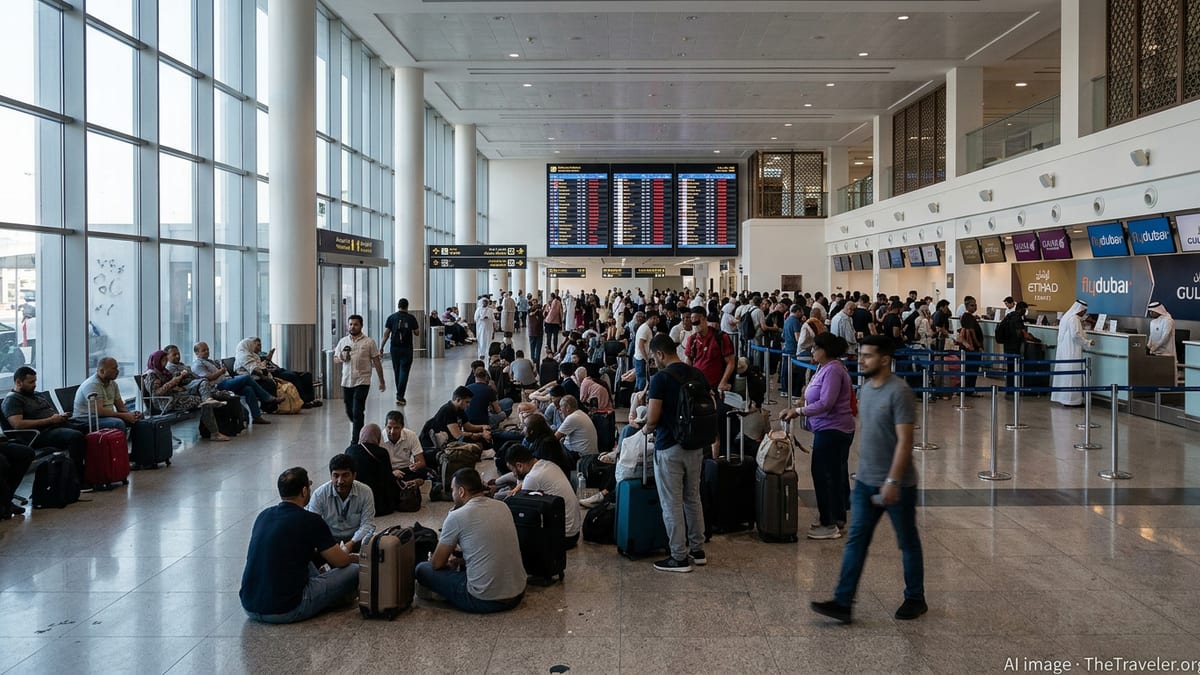
Passengers Stranded in Muharraq as Cancellations Mount
Check-in halls and departure lounges at Bahrain International Airport remained crowded on Friday as travellers grappled with rolling cancellations affecting services operated by Etihad Airways, Qatar Airways, Flydubai, Gulf Air and several other carriers. Airport staff fielded a constant stream of queries from passengers seeking clarity on whether they would be able to leave the country, as departures boards filled with notices of cancelled and retimed flights.
Ground handlers reported that 23 scheduled services were pulled from Friday’s roster alone, reflecting the depth of the shock still rippling through regional aviation nearly a week after multiple Middle Eastern states closed their airspace in response to the widening conflict. The cancellations affect both outbound and inbound flights, severely limiting options for transit passengers who would normally use Muharraq as a connecting point between Europe, Asia and the Indian subcontinent.
Local residents returning from business trips and holidays found themselves unexpectedly marooned, while tourists transiting through Bahrain spoke of scrambling to secure hotel rooms and alternative routings at short notice. With many neighbouring hubs suffering similar shutdowns or operating only limited emergency schedules, the usual strategy of simply rerouting via another Gulf city has become far harder to execute.
Airport authorities reiterated that safety considerations and compliance with national airspace restrictions remain paramount, and that airlines are individually responsible for deciding whether flights can operate under the current conditions. Information desks urged passengers not to travel to the airport without a confirmed, operating booking, warning that space on remaining services would be extremely limited in the coming days.
Airspace Closures Cascade Across the Gulf
The disruption in Muharraq is part of a much wider aviation shock triggered when Iran, Iraq, Kuwait, the United Arab Emirates, Bahrain, Qatar and several other states either closed their airspace entirely or imposed severe restrictions following strikes and heightened military activity beginning on 28 February. The closures have fractured some of the world’s busiest long-haul corridors that typically funnel traffic between Europe, Africa and Asia via Gulf hubs.
With Bahrain’s airspace largely unavailable to civilian traffic, airlines that rely heavily on overflight rights in the region have been forced to cancel or radically reconfigure services. Flight tracking data in recent days has shown a sharp reduction in movements at Bahrain International Airport, alongside near-paralysis at Doha’s Hamad International Airport and sharply curtailed operations at Dubai and Abu Dhabi.
Aviation analysts note that the airspace restrictions do not only affect flights to and from the Gulf, but also many journeys that would ordinarily pass overhead without landing. Rerouting wide-bodied jets around the affected zones adds significant time, fuel burn and operational complexity, prompting some carriers to cancel services outright where detours are judged uneconomical or where insurance coverage is in question.
Industry observers say the current wave of cancellations is likely to continue as long as the conflict remains unpredictable and airspace permissions change with little notice. Even if some corridors reopen, airlines may opt for a cautious, phased return to normal schedules rather than an immediate restoration of pre-crisis capacity.
Etihad, Qatar Airways, Flydubai and Gulf Air Adjust Operations
Etihad Airways, which had suspended most regular services earlier in the week, began moving towards a limited restart of its network on Friday, with a very small number of flights operating on adjusted routings. However, services linking Abu Dhabi with Bahrain remained among those affected, and passengers holding tickets to or from Muharraq were advised to check their status frequently as schedules continue to evolve by the hour.
Qatar Airways is operating under even tighter constraints as Qatari airspace remains effectively closed to normal commercial traffic. The Doha-based carrier has announced that only select rescue and repositioning flights will run in the short term, using aircraft that had been outside the country when the closures took effect. Scheduled services to Bahrain are among those suspended, leaving travellers who rely on the Doha–Muharraq link facing few immediate alternatives.
Flydubai continues to feel the impact of the partial shutdown at Dubai International Airport and the complex web of airspace restrictions surrounding the United Arab Emirates. The low-cost carrier has cancelled multiple flights into Bahrain while it prioritises limited operations on routes that can be flown within revised safety and insurance parameters. Gulf Air, Bahrain’s national airline, has also trimmed its timetable, focusing on essential connections and advising affected passengers that they may rebook at no additional charge within specified travel windows.
Other international airlines that normally serve Bahrain are adopting a similar stance, publishing rolling updates as they weigh the feasibility of operating through or around the restricted zones. For many carriers, the decision to cancel is shaped not only by security assessments, but also by crew duty-time limits, aircraft positioning challenges and uncertainty over ground handling capacity at alternative diversion airports.
Travellers Face Difficult Choices and Limited Options
For passengers caught in the middle of the disruption, the immediate concern is simply how and when they will be able to reach their destinations. Many have already endured days of waiting in hotels or with relatives in Bahrain and neighbouring countries, checking airline apps and social media feeds for any sign of reopened routes or extra sections.
Travel agents in Manama reported a surge in demand for convoluted itineraries that avoid the Gulf entirely, such as routings via Istanbul, Cairo or European hubs, even if that means significantly longer journeys and higher fares. Some travellers with urgent commitments are opting to purchase entirely new tickets with carriers whose routes currently skirt the closed airspace, while others are choosing to delay trips indefinitely until the situation stabilises.
Consumer advocates are reminding passengers to familiarise themselves with the rebooking and refund policies of their airlines, which vary by carrier and by the original date of travel. Many Gulf-based airlines have introduced temporary waivers allowing free date changes or full refunds for tickets issued before the crisis escalated, but these policies often come with cut-off dates and conditions that can be confusing in the fast-moving environment.
In the terminal itself, volunteers and airline staff have been assisting vulnerable travellers, including families with small children and elderly passengers, to access accommodation, food vouchers and medical support where necessary. Despite the efforts, many stranded flyers expressed frustration with long call-centre waits, limited real-time information and the emotional strain of being separated from homes or workplaces with no clear timeframe for return.
Outlook for Bahrain International Airport and Regional Travel
Aviation officials caution that the path to normality at Bahrain International Airport will depend heavily on broader geopolitical developments and coordinated decisions on airspace reopening among Gulf states. Even a partial relaxation of restrictions would likely result in a phased reintroduction of flights rather than an immediate return to full schedules, as airlines gradually reposition aircraft and crews and test revised routings.
Industry experts say the current episode underscores the strategic vulnerability of the Gulf’s hub-and-spoke model to sudden geopolitical shocks. With Dubai, Abu Dhabi, Doha and Bahrain all simultaneously affected, the redundancy that normally helps global networks absorb localised disruptions has been significantly reduced, amplifying the impact on travellers far beyond the region.
In the near term, passengers planning to travel to, from or through Muharraq are being urged to maintain flexible plans, monitor airline communications closely and consider alternative routings that avoid the most volatile areas. Travel insurers are also reviewing policy wordings and coverage triggers as claims linked to cancellations, delays and forced itinerary changes begin to rise.
For now, the departure boards at Bahrain International Airport tell the story most starkly: a patchwork of operating flights surrounded by a growing list of cancellations. Until the conflict eases and airspace corridors reopen with confidence, Bahrain’s role as a key Gulf gateway will remain constrained, and passengers can expect continued uncertainty every time they approach the check-in desk.