

More news on this day
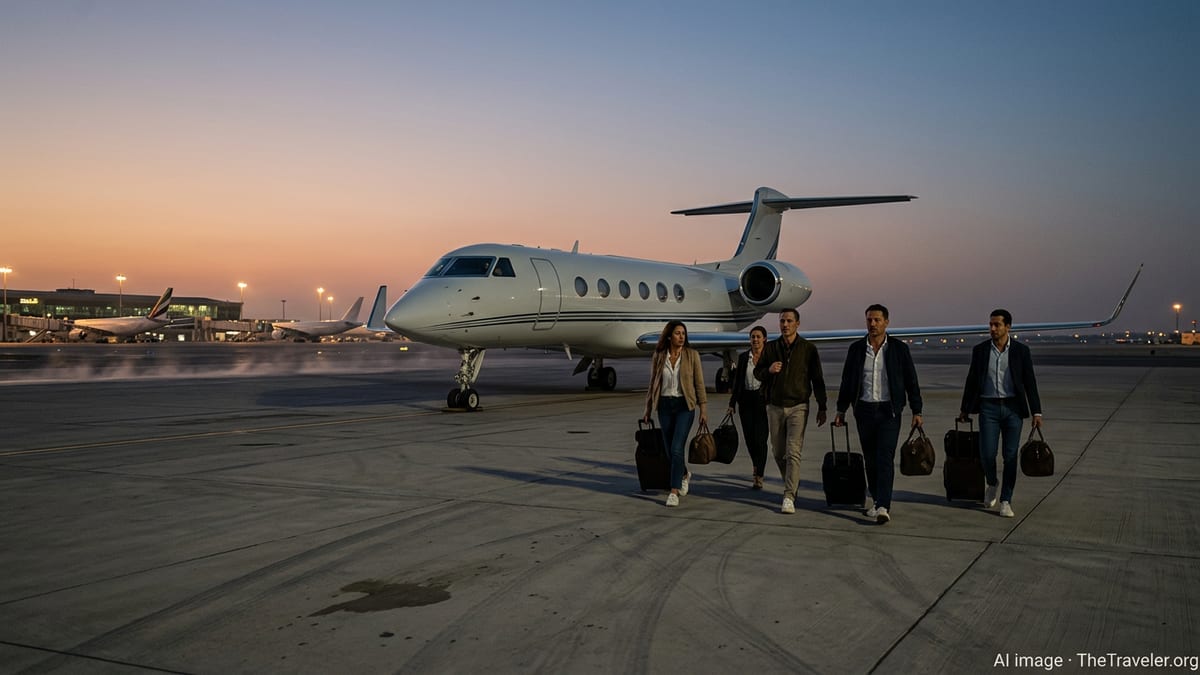
As commercial aviation across the Gulf grinds to a halt amid escalating war in the Middle East, a parallel airlift is taking shape in the skies above: ultra-wealthy travelers paying up to $232,000 for one-way private jet escapes from a region gripped by closures, cancellations and fear.
Grounded Hubs, Sky-High Prices
Major Gulf carriers have suspended most scheduled services as airspace closures and missile strikes ripple across the region, turning once-reliable hubs in Dubai, Abu Dhabi and Doha into holding pens for stranded travelers. Airlines including Emirates, Etihad and Qatar Airways have halted regular passenger flights until at least later this week, following strikes on airports and mounting security concerns.
The shutdown has stranded hundreds of thousands of passengers who had relied on the Gulf’s mega-hubs as waypoints between Europe, Asia, Africa and North America. Repatriation flights and limited cargo operations continue in places, but seat availability has shrunk dramatically and rebooking options are scarce.
Into this vacuum has stepped the private charter market. Brokers and operators report an unprecedented surge in demand from executives, expatriate families and tourists desperate to get out of the region. Charter quotes that would once have raised eyebrows are now being accepted in minutes, as clients compete for a shrinking pool of available aircraft and safe routes.
One Europe-bound itinerary that would typically cost around 100,000 euros on a long-range business jet is now being sold for up to 200,000 euros, or roughly 232,000 dollars, according to charter firms fielding nonstop requests from the Gulf. Capacity constraints and higher risk premiums, rather than pure profiteering, are driving much of the spike, brokers say, but the result is the same: a de facto luxury escape route that only the wealthiest can afford.
The $232,000 Escape Route
The most eye-catching fares are emerging on long-haul charters out of the Arabian Peninsula to Western Europe. With Dubai and Abu Dhabi airports heavily disrupted and Qatar’s airspace constrained, operators are repositioning aircraft to less affected cities and charging accordingly for the additional time, fuel and complexity.
On a typical day before the current crisis, a private jet capable of seating a dozen or more passengers might fly a standard routing from Riyadh to Lisbon or Porto for a six-figure sum. Now, charter companies report those prices have doubled in a matter of days, as travelers scramble for any way out and operators factor in war-risk insurance surcharges, circuitous routings and tight crew duty limits.
For those who can pay, the equation is simple: spread a 200,000-euro fare across 10 or 12 travelers and the cost per person rivals or slightly exceeds last-minute first-class tickets on commercial airlines during peak holidays. For everyone else, the prospect of such sums underscores a widening gulf between those with the means to buy certainty and those stuck in terminal queues.
Brokers describe scenes of hurried group formation in hotel lobbies and airport lounges, with strangers pooling funds to charter an aircraft together. Some clients are wiring deposits within minutes of receiving quotes, aware that delays can mean losing a hard-won departure slot or aircraft to a faster bidder. Others are leaning on corporate travel departments and insurance policies, though many standard policies do not fully cover war-related disruptions or charter upgrades.
Detours by Road and Air
With primary hubs compromised, the journey to a private jet often begins on the ground. Travelers are hiring drivers or private security escorts to reach secondary airports in neighboring countries, often covering hundreds of kilometers by road before ever boarding an aircraft. Routes to Muscat in Oman and Riyadh in Saudi Arabia have become particularly busy, according to regional operators.
The overland legs can be grueling. Border crossings are clogged with buses, shuttles and private cars as visitors and residents alike seek exit routes away from the worst-affected cities. Checkpoints, occasional road closures and curfews add hours to journeys that, in peacetime, would be routine weekend drives to beach resorts or mountain escapes.
Upon arrival at less congested airports, travelers face a second bottleneck: limited apron space and crew availability for private operations. Many charter companies are already stretched, with aircraft committed to multiple back-to-back evacuations and crews approaching regulatory duty limits. Turnarounds that might normally take an hour can extend far longer as ground handlers juggle a crush of last-minute demands.
Even once airborne, flights are not exempt from the broader disruption. Pilots are filing elongated routes to skirt closed airspace and potential conflict areas, adding flight time and fuel costs. In several cases, aircraft have been required to hold while overburdened destination airports manage surges in diverted commercial traffic and incoming charters.
Risks, Ethics and a Two-Tiered Exodus
The boom in high-end charters has prompted an uncomfortable question: who gets to leave, and on what terms, when a region’s aviation lifelines are severed? While governments are organizing limited evacuation flights for citizens and residents, these operations are heavily oversubscribed. For many, especially migrant workers and lower-income residents, the cost of a single commercial ticket is already prohibitive, let alone a seat on a private jet.
Humanitarian organizations and aviation analysts note that the optics of luxury jets whisking some travelers to safety while others bed down on terminal floors echo past crises, from pandemics to political coups. Yet charter operators argue that their services help relieve pressure on strained commercial systems by providing additional capacity for those willing and able to pay.
Insurance and security concerns add another layer of complexity. Underwriters are reassessing war-risk coverage in real time, and some operators have temporarily blacklisted specific destinations or overflight routes. That has led to frustration among would-be clients who, even with funds available, cannot secure flights to their preferred endpoints.
For charter companies, the moral calculus is intertwined with operational risk assessments. Many insist they will not operate into or over areas flagged as high risk by international aviation authorities, regardless of the fee on offer. Others are more flexible, as long as they can secure necessary clearances and insurance. The result is a patchwork of availability that changes by the hour, reinforcing the sense of a fragmented, two-tiered exodus from the region.
What It Means for Future Travel
The current surge in charter demand comes atop a broader global trend of steady growth in private aviation, which accelerated during the pandemic and continued through years of geopolitical tension. Recent data from industry trackers shows private flying setting or approaching record highs in North America and gaining ground in emerging markets, including parts of the Middle East, even before the latest conflict.
For Gulf states that have invested heavily in aviation-led tourism and global connectivity, the sight of grounded superjumbos and crowded charter ramps is a jarring reminder of how quickly conflict can unravel years of brand building. The region’s flagship carriers had enjoyed strong profits and rising passenger numbers, positioning themselves as essential bridges between continents. Now, their short-term fortunes are tied to the pace of de-escalation and the reopening of key air corridors.
In the longer term, analysts expect the crisis to reinforce a familiar lesson for both travelers and corporations: flexibility carries a premium. Companies with existing relationships with charter providers and fractional ownership programs are drawing on them to move staff and families, while high-net-worth individuals are reassessing how much they are willing to spend for the option to leave on short notice.
For now, the $232,000 escape has become a stark symbol of travel in wartime: a price tag that captures both the extremes of demand at the top of the market and the profound vulnerability of a region whose prosperity is built, in no small part, on the freedom to move swiftly through its skies.