

Iowa is often reduced to cornfields and flyover-country clichés, but travelers who linger quickly find a state rich in river bluffs, polished cultural attractions, inventive food, and quietly spectacular small towns. From Mississippi River overlooks and glow-in-the-dark bike bridges to subterranean cave trails and Dutch tulip festivals, Iowa rewards curiosity. This guide brings together 25 of the best things to do across the state, including headline attractions, iconic trails, and under-the-radar gems that locals love to share with visitors.
Iconic Iowa Experiences You Can’t Miss
No visit to Iowa feels complete without a few truly signature experiences. At the top of many lists is the Iowa State Fair in Des Moines, widely considered the state’s biggest annual event and one of the premier fairs in the country. Held each August, it draws well over a million visitors in a typical year to see the famous butter cow, prize livestock, big-name concerts, and an almost unbelievable array of foods on a stick. It is busy, boisterous, and unapologetically Iowa, from its agricultural roots to its modern midway thrills.
Des Moines itself has become a destination in its own right, and exploring downtown belongs on any Iowa itinerary. Travelers can wander between the gold-domed State Capitol, the John and Mary Pappajohn Sculpture Park with its large-scale contemporary works, and the Des Moines Art Center’s free galleries. The Des Moines Riverfront, with walking paths, seasonal festivals, and a growing skyline, offers a softer side of the city, especially at sunset.
Another defining Iowa experience is stepping into the rolling countryside that has inspired so much regional art and literature. Touring the covered bridges of Madison County near Winterset combines that pastoral scenery with a slice of Americana. Many visitors pair bridge-hopping with a stop at the home of John Wayne, who was born in Winterset, or with tastings at local wineries that take advantage of the gentle hills and long summer days.
Even if your trip is short, seek out a classic small-town main street. Places like Pella, Decorah, McGregor, and Elkader showcase brick storefronts, independent shops, and relaxed cafes that capture the slower, sociable pace that defines much of the state beyond its urban centers.
Best Outdoor Adventures, Parks, and Trails
Iowa’s soft contours hide a surprising range of outdoor adventures. Maquoketa Caves State Park in eastern Iowa is a standout, home to more caves than any other state park in Iowa and a six-mile trail system that links cave entrances, natural bridges, and forested overlooks. Well-known features like Dancehall Cave offer tall, walkable passages, while smaller caverns and side trails appeal to more adventurous hikers. A flashlight, sturdy shoes, and a sense of curiosity are essential here.
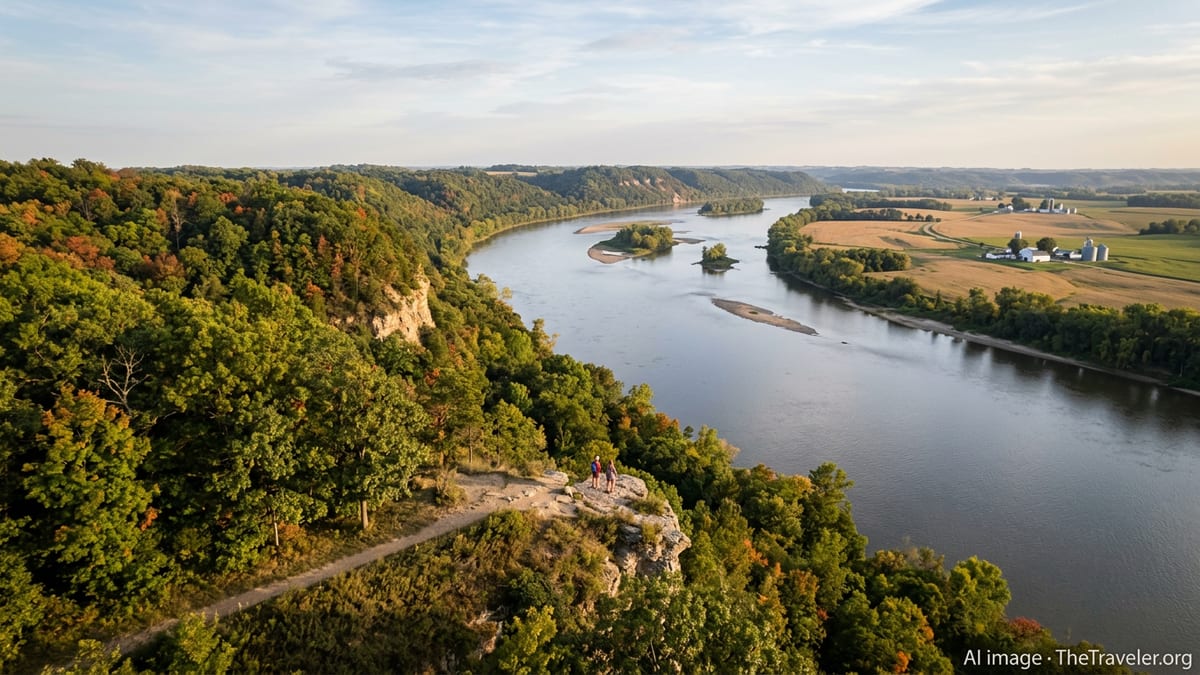
For sweeping views of the Upper Mississippi River, Pikes Peak State Park near McGregor is a must. Trails lead through hardwood forests to the Point Ann and main overlooks, where the Mississippi and Wisconsin rivers meet in a broad, island-studded valley. On clear mornings, low fog often hugs the water, making sunrise and early light particularly dramatic. Visitors commonly combine a stop here with nearby Effigy Mounds National Monument or a stroll in McGregor’s historic riverfront district.
Northeast Iowa also hosts Yellow River State Forest, one of the state’s wildest-feeling landscapes. Steep, wooded ridges and deep ravines have earned the region the nickname “Iowa’s Little Switzerland.” Hikers can tackle loop trails that climb to bluff-top vistas, follow trout streams, and pass through quiet pine plantations. Camping here offers dark skies and a sense of remoteness rare in the Midwest, especially on weekdays or outside peak summer season.
Elsewhere, state parks like Lacey-Keosauqua along the Des Moines River and Nine Eagles in southern Iowa reward visitors with lakeside trails, shaded campgrounds, and good birdwatching. While they lack the crowds and name recognition of Maquoketa Caves or Pikes Peak, they deliver exactly what many travelers come to Iowa to find: peaceful, uncrowded woods and water, punctuated by picnic tables and the occasional call of a barred owl at dusk.
Scenic Bike Routes, Rail Trails, and Waterways
Iowa is one of the Midwest’s most bike-friendly states, and its network of rail trails makes it easy to explore quiet countryside on two wheels. The Wabash Trace Nature Trail in southwest Iowa runs for about 63 miles between Council Bluffs and the Missouri state line near Blanchard, following a former railroad corridor through farm fields, prairie remnants, and small towns. Bridges, tree tunnels, and occasional art installations add visual interest, while trailhead communities offer cafes, ice cream stands, and simple campgrounds geared toward riders.
In central Iowa, the High Trestle Trail has become an attraction in its own right thanks to the High Trestle Bridge. Spanning the Des Moines River between Madrid and Woodward, the bridge features striking steel frames and nighttime LED lighting that create a tunnel-like effect. Many visitors walk or bike just the section leading to the bridge for sunset, then linger as the lights come on and the sky darkens over the river valley. Nearby, local breweries and farm-to-table eateries have embraced the trail culture, giving riders tempting reasons to stop.
Water-based adventures are equally compelling. The Upper Iowa River near Decorah is frequently cited as one of the most scenic paddling routes in the region, with limestone bluffs, wooded banks, and occasional eagles overhead. Outfitters in and around Decorah provide canoe and kayak rentals, shuttles, and advice geared to changing water levels. Elsewhere in the state, segments of the Cedar, Des Moines, and Mississippi rivers offer everything from relaxed half-day floats to multi-day camping trips on sandbars and in riverside parks.
Families and casual cyclists will find options too. Many Iowa communities maintain paved loop trails around lakes, through parks, or along former rail corridors. These local systems, often linking neighborhoods with downtowns and waterfronts, provide low-stress ways to experience Iowa’s outdoors without committing to a long-distance ride. Even a brief evening pedal or waterfront stroll can deliver big-sky sunsets and the kind of quiet that lingers in memory long after a trip ends.
Charming Towns, Culture, and Small-City Surprises
Iowa’s appeal often crystallizes in its smaller cities and towns, where cultural institutions, festivals, and everyday life blend seamlessly. Decorah, in the northeast, is a prime example. Anchored by Luther College, the town celebrates its Norwegian heritage with the Vesterheim Norwegian-American Museum and a popular Nordic festival each summer. Beyond the cultural draw, Decorah offers trout streams, a beloved waterfall hike at Dunning’s Spring Park, craft breweries, and bike routes that wind through the hilly countryside.
Farther south along the Mississippi, communities like Dubuque and Bettendorf showcase the river in different ways. In Dubuque, visitors can ride a historic elevator railway, explore a modern river museum and aquarium, and stroll a redeveloped port district filled with public art and riverfront paths. In the Quad Cities area, Mississippi riverfront trails, festivals, and minor league sports blend with museums and performing arts venues that punch above their weight for a metro of this size.
Among Iowa’s most distinctive cultural enclaves is the Amana Colonies, a cluster of seven villages settled in the 19th century by a religious communal society. Today, visitors come for traditional German-inspired food, locally made wine and beer, woodworking shops, and seasonal festivals that highlight everything from holiday traditions to craft beer and bluegrass. Historic buildings, tidy gardens, and tree-lined streets give the colonies a timeless feel, particularly on quiet weekday mornings.
Smaller towns across the state add their own flavor. Pella leans into its Dutch roots with tulip-lined streets in spring, Dutch architecture, and bakeries famous for almond-filled pastries. In northwest Iowa, Le Mars promotes itself as the “Ice Cream Capital of the World,” thanks to a major ice cream producer based there and a downtown dotted with whimsical ice cream cone sculptures. These communities may be off most interstate routes, but for travelers willing to detour, they offer some of the state’s most memorable moments.
Family Fun, Museums, and Year-Round Attractions
Families will find plenty to do in Iowa beyond parks and festivals. In Des Moines, the Science Center of Iowa blends hands-on exhibits with live demonstrations, making it a staple for local and visiting families. A recently refreshed early-childhood gallery focuses on play-based discovery, while rotating programs introduce topics from space exploration to robotics. Nearby, the Blank Park Zoo on the city’s south side features animals from around the world, seasonal events, and a strong conservation message tailored to younger visitors.
Cedar Rapids and Iowa City, less than an hour apart, complement each other well for culture-focused trips. Cedar Rapids hosts a notable art museum with a strong regional collection and maintains Brucemore, a historic estate with tours and outdoor concerts. Iowa City, a UNESCO City of Literature, offers independent bookstores, readings, and literary festivals anchored by the University of Iowa’s famed writing programs. Between the two, families can mix museum visits with hikes along the Cedar River and Coralville Lake, plus meals at locally owned restaurants that spotlight Iowa ingredients.
In Waterloo, the John Deere Tractor & Engine Museum traces the evolution of farm machinery and its role in changing rural life. Interactive exhibits and vintage equipment appeal to both agriculture enthusiasts and kids who love big machines. Elsewhere, smaller museums across the state highlight everything from Czech and Slovak heritage in Cedar Rapids to Danish history in Elk Horn and Kimballton, giving travelers opportunities to trace the waves of immigration that shaped Iowa’s communities.
When the weather turns cold, Iowa does not shut down. Indoor water parks, regional children’s museums, university sports, and winter festivals keep energy high. Many communities light up their downtowns with holiday displays, and some state parks groom trails for cross-country skiing and snowshoeing when conditions allow. Travelers willing to bundle up will find fewer crowds, clear night skies, and a relaxed, locals-only feel in many destinations.
Hidden Gems and Off-the-Beaten-Path Escapes
Beyond the headline attractions, Iowa hides dozens of lesser-known places that quickly become personal favorites. One such gem is the Loess Hills region along the state’s western edge. Formed by windblown silt, the hills create steep, ridge-like formations that feel surprisingly rugged for Iowa. Loess Hills State Forest and nearby preserves near towns like Pisgah and Moorhead offer hiking trails, scenic overlooks, and prairie remnants that are especially striking at sunrise or sunset when the light rakes across the hillsides.
Near Sioux City, Stone State Park combines Missouri River bluffs, wooded ravines, and open prairie. Overlooks reveal long views into South Dakota and Nebraska, while trails loop through habitats that support deer, turkeys, and a variety of birdlife. Because it sits on the edge of a mid-sized city, the park is easy to reach yet often quiet on weekdays, making it a convenient nature escape for road trippers heading west or north.
Smaller, more intimate preserves and county parks also reward curiosity. Wildcat Den State Park near Muscatine is frequently described by locals as a hidden treasure, with sandstone formations, a historic mill, and shady trails that follow a rocky creek. In central and eastern Iowa, county conservation areas around towns like Tiffin, Brighton, and Glenwood maintain networks of woodland and prairie trails that see far fewer visitors than the major state parks, yet often deliver comparable scenery.
Even in and around cities, surprising pockets of nature appear. In the Des Moines area, local nature centers and forested parks maintain singletrack paths that feel far removed from traffic and offices. For visitors, joining a local hike, checking community trail maps, or simply asking at a coffee shop for a favorite nearby loop can uncover places that rarely make official tourism brochures but leave a lasting impression.
The Takeaway
Iowa rewards travelers who look beyond the clichés and give the state enough time to reveal its layers. Its best-known attractions, from the Iowa State Fair to Maquoketa Caves and the High Trestle Trail, deliver exactly the sort of memorable experiences that anchor a vacation. Yet the true character of the state often emerges in quieter moments: a sunset over the Loess Hills, an unhurried lunch on a small-town main street, or a bike ride through fields where the horizon seems to stretch forever.
Whether you come for river bluffs, bike bridges, art museums, or simply to see what lies between the coasts, Iowa offers more variety than its modest profile suggests. Mix a few iconic stops with smaller parks, local festivals, and unscripted detours, and you will likely leave with a new appreciation for this understated corner of the Midwest.
With thoughtful planning and a willingness to explore side roads as well as interstate exits, you can turn a short visit or a long road trip into a rich encounter with Iowa’s landscapes, communities, and culture. From trailheads and river overlooks to galleries and county fairs, the state invites you to slow down, look closer, and discover just how much there is to do between the cornrows.
FAQ
Q1. What is the best time of year to visit Iowa for outdoor activities?
The most reliable months for hiking, biking, and paddling are typically May through October, when trails are open, days are longer, and temperatures are comfortable. Spring and fall often provide cooler weather, fewer insects, and colorful scenery, while midsummer offers the fullest calendar of festivals and events.
Q2. Are Iowa’s state parks crowded, and how can I avoid the busiest times?
Popular parks like Maquoketa Caves, Pikes Peak, and some beach areas can be busy on peak summer weekends and holidays. To find more solitude, aim for weekday visits, arrive early in the morning or late in the afternoon, or explore smaller parks and county conservation areas that see fewer visitors but offer similar landscapes.
Q3. Do I need special gear to explore caves and trails in Iowa?
For most visitors, sturdy walking shoes, a basic flashlight or headlamp, and weather-appropriate clothing are sufficient for well-marked cave trails and day hikes. Those venturing into more rugged areas or longer routes may want trekking poles, extra layers, and a detailed map or downloaded trail app, especially in regions with spotty mobile service.
Q4. Is Iowa a good destination for family travel with young children?
Yes, Iowa works well for families thanks to short driving distances, affordable attractions, and a mix of interactive museums, zoos, parks, and seasonal festivals. Many destinations offer playgrounds, gentle walking paths, and kid-friendly dining, making it easy to balance sightseeing with downtime for younger travelers.
Q5. How accessible are Iowa’s major attractions for people with limited mobility?
Accessibility varies, but many larger attractions, museums, and some state park overlooks provide paved paths, ramps, and accessible facilities. Before visiting, travelers with mobility concerns should check current information from individual sites and, when possible, call ahead to ask about parking, trail surfaces, and any available accommodations.
Q6. Can I explore Iowa without renting a car?
Public transportation options exist within cities like Des Moines, Cedar Rapids, and Iowa City, but connections between towns and rural attractions are limited. Travelers who want to visit multiple parks, trails, and small communities will find a car the most practical option, whether it is their own vehicle or a rental.
Q7. What should I know about weather and safety when planning outdoor activities?
Iowa’s weather can change quickly, with summer thunderstorms and variable spring and fall temperatures. Checking forecasts frequently, carrying water and sun protection, and turning back if trails are muddy, flooded, or poorly marked are sensible precautions. During severe weather alerts, it is wise to seek shelter and wait for conditions to improve.
Q8. Are there camping and lodging options close to popular trails and parks?
Most major state parks offer campgrounds with a mix of electric and non-electric sites, and many allow reservations during the main season. Nearby towns typically provide motels, independent inns, or vacation rentals, giving travelers options that range from rustic tent sites to comfortable hotel stays within a short drive of trailheads.
Q9. How can I find lesser-known trails and hidden gems in Iowa?
In addition to official tourism and state park information, local conservation boards, nature centers, and hiking or cycling groups often highlight smaller parks and off-the-radar routes. Asking residents in cafes or visitor centers about their favorite nearby walks or viewpoints can quickly reveal places that do not show up on standard top-ten lists.
Q10. Is it realistic to see Iowa’s top attractions on a short road trip?
In a few days, you can comfortably explore one or two regions, such as Des Moines and central Iowa trails or the northeast river bluff country around Decorah, McGregor, and Dubuque. For a broader loop that includes multiple corners of the state, a week or more allows a more relaxed pace and time for spontaneous stops in small towns and parks along the way.