

Hong Kong rewards visitors who plan smartly. Compact yet intensely layered, it can feel overwhelming on a short trip. This three day itinerary is designed to give first time visitors a balanced introduction to Hong Kong Island, Kowloon and Lantau, with realistic timings, simple transport choices and room for the city’s spontaneous discoveries.
How to Use This 3 Day Hong Kong Itinerary
This itinerary focuses on three core areas: Hong Kong Island on day one, Kowloon on day two and Lantau Island on day three. It keeps travel times reasonable while still fitting in classic sights such as Victoria Peak, Tsim Sha Tsui’s harbourfront and the Big Buddha on Lantau.
The plan assumes you are staying near an MTR station in either Central, Tsim Sha Tsui or Mong Kok. These locations make it easier to move between the island, Kowloon and Lantau using public transport, particularly the MTR, Star Ferry and airport rail connections.
Arrival and departure timings vary widely, so treat the structure as a framework rather than a rigid timetable. If your flight lands early, you might start with a lighter walk and harbour views. If you arrive late, simply shift the first evening’s activities to another night and use your first morning to get oriented.
Throughout the itinerary you will see references to the Octopus stored value card, Hong Kong’s tap in, tap out payment card that works on most public transport and many shops. Having an Octopus card before you board your first train or bus saves time and simplifies every journey across these three days.
Day 1: Hong Kong Island’s Skyline, Streets and Peak Views
Begin on Hong Kong Island to get your bearings among the towers that define the city’s skyline. Central, Sheung Wan and the Mid-Levels form a compact area that blends finance, colonial history and steep local streets packed with cafes and small shops. Start mid morning, once rush hour crowds have eased, and work uphill gradually rather than racing straight to the Peak.
Spend a few hours exploring Central on foot. The shaded public spaces around Statue Square and the Court of Final Appeal offer an architectural contrast to the nearby glass towers. From here it is an easy walk toward the historic Central–Mid-Levels Escalator system, the long outdoor escalator that carries commuters uphill toward Soho and the Mid-Levels. Riding it one or two sections saves your legs and lets you look down into alleys, wet markets and side streets that would otherwise be hard work to reach.
For lunch, look for casual noodle shops or dim sum places close to the escalator or in nearby Sheung Wan. Central’s dining scene changes quickly, so it is safer to choose by what looks busy and local rather than chasing a specific name. Plan about an hour for a relaxed meal, especially if you are adjusting to jet lag and Hong Kong’s humidity.
In the afternoon, turn your attention to Victoria Peak. The historic Peak Tram remains a memorable way to reach the top, running from early morning to late evening most days, with the steep ascent framed by dense greenery and vertical city views. Queues can build in the late afternoon and on weekends, so travelling a bit earlier or later than sunset peak hours can reduce waiting. At the upper terminus, viewing terraces and the short Lugard Road circuit walk reveal some of the city’s most dramatic panoramas, particularly as the lights begin to glow across Victoria Harbour.
Evening on the Harbour: Trams, Star Ferry and City Lights
As the sky darkens, shift your focus back down toward the water. One satisfying sequence is to take a double decker tram along the north coast of Hong Kong Island, then connect to the Star Ferry across the harbour. The tram network, running between Kennedy Town and Shau Kei Wan with a loop around Happy Valley, is slow but atmospheric, and services are frequent through the evening.
Riding on the upper deck of a tram as it clatters through Wan Chai and Admiralty gives a street level sense of the city that you miss when travelling solely by underground rail. The short distances, changing neon and occasional sea glimpse between towers add to the impression that the city is constantly in motion. You can tap an Octopus card as you board and ride until you are near the Central piers.
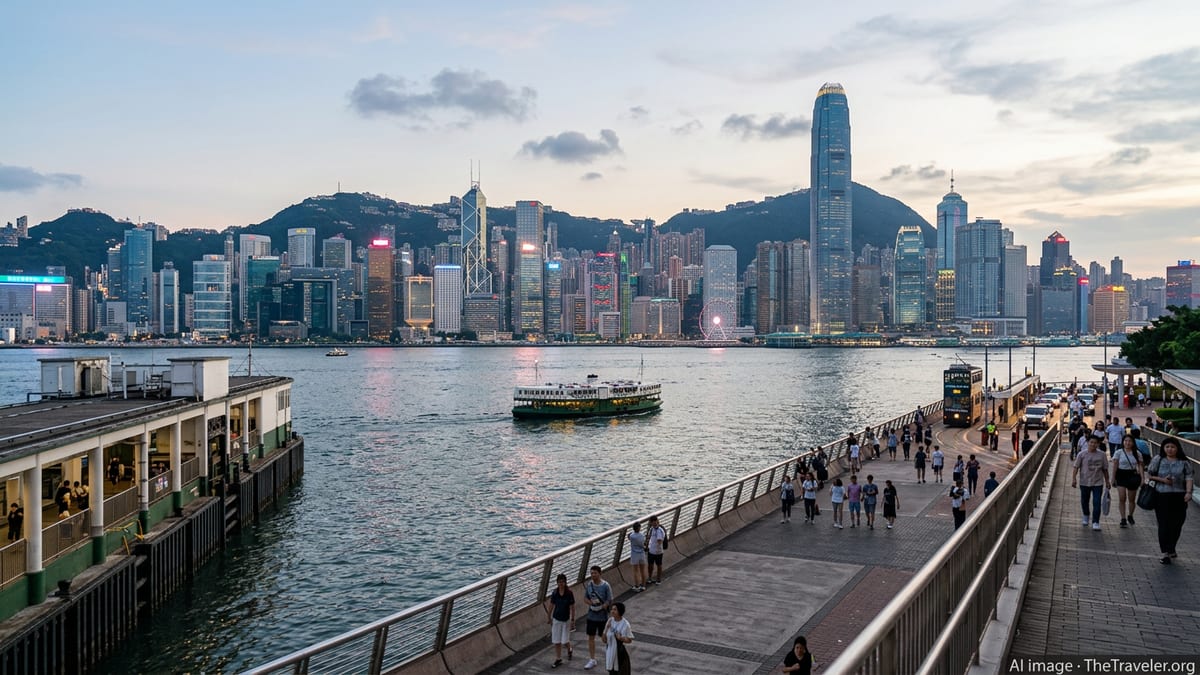
From the Central side, the Star Ferry connects Hong Kong Island with Tsim Sha Tsui in Kowloon. The crossing is brief but iconic, particularly after dark when office lights reflect off the water. Services typically run from early morning into late evening, and fares remain low compared with harbour cruises. Crossing at this time also previews the Kowloon skyline that you will explore more fully on day two.
End your first evening either on the Tsim Sha Tsui promenade or back on the island, depending on where you are staying. The promenade, stretching roughly from the Clock Tower area toward the Avenue of Stars, offers open views across the harbour to Central, Wan Chai and the Peak. It is a gentle, level walk suitable for recovering from a long flight, and you can easily find late opening cafes and dessert shops nearby before heading back to your hotel.
Day 2: Kowloon’s Neighbourhoods, Gardens and Night Markets
Day two concentrates on Kowloon, the densely populated peninsula facing Hong Kong Island. While the harbourfront areas of Tsim Sha Tsui are polished and filled with shopping malls, a few stops inland by MTR reveal older districts, quieter temples and classic residential streets. Plan to spend the morning around the eastern side of Kowloon before returning to the busier markets in the late afternoon and evening.
Many visitors start with a visit to Nan Lian Garden and Chi Lin Nunnery in Diamond Hill, roughly 20 to 30 minutes by MTR from Tsim Sha Tsui depending on connections. This classical style garden and temple complex provides a calm contrast to Central’s steel and glass. The manicured trees, ponds and timber halls are carefully maintained, and the site is popular without feeling rushed if you arrive earlier in the day.
From there, you can continue to Wong Tai Sin Temple, one of Kowloon’s most visited Taoist temples, or head back toward the centre for lunch. Local eateries around Mong Kok and Yau Ma Tei offer everything from wonton noodles to Hong Kong style cafes known as cha chaan teng. Allow a little extra time if you are visiting on a weekend, as popular spots fill up quickly with local families.
In the afternoon, explore Mong Kok’s markets and side streets at an easy pace. The area is known for its mix of speciality shopping streets, such as those focusing on sneakers or electronics, and more traditional market lanes. Even if you are not planning to buy much, wandering through these neighbourhoods reveals a different, more compressed sense of city life compared with the island’s business districts.
Kowloon by Night: Harbourfront, Views and Markets
As evening approaches, loop back toward the water. The Tsim Sha Tsui harbourfront remains one of the best places to take in the skyline of Hong Kong Island. On clear days, sunset can paint the office towers in warm tones, followed by the gradual appearance of thousands of individual lights. On humid or hazy days, the scene softens, but the contrast between sea and city remains impressive.
Near the waterfront, cultural venues host rotating exhibitions and performances, and the surrounding streets are home to both international brands and long running local shops. The area can be crowded in high season, especially around major holidays and during large events, so it is wise to keep valuable items secure and allow extra time to move between landmarks.
Later in the evening, you may want to sample one of Kowloon’s night markets, such as those in Yau Ma Tei or Mong Kok. These markets have evolved over time but still offer the experience of browsing stalls selling clothing, souvenirs, small electronics and street snacks under bright lights and temporary awnings. While some items are clearly tourist focused, the broader atmosphere of bargaining, people watching and casual eating is part of the city’s character.
End the night with a simple dessert, perhaps a bowl of tofu pudding or fruit based sweets, at a local dessert shop. By this stage of the itinerary you will have seen Hong Kong from above on the Peak and from across the harbour in Kowloon, setting the stage for day three’s journey out to Lantau Island and its more open landscapes.
Day 3: Lantau Island, Ngong Ping and the Big Buddha
Lantau Island, to the west of the main urban core, provides a change of pace without being difficult to reach. Most visitors travel to Tung Chung by MTR on the Tung Chung Line, a route that also serves the airport area. From there, the Ngong Ping 360 cable car is a popular way to climb up toward Ngong Ping Village, the Big Buddha and Po Lin Monastery, with cabins typically taking around 25 minutes to cover the journey.
The cable car’s schedule is subject to periodic maintenance closures, so it is important to confirm operating days and hours close to your travel dates using official information. When running normally, first departures tend to be in the later morning, and queues are longest in the middle of the day and during peak holiday periods. Travelling earlier in the morning or later in the afternoon can reduce waiting times and the intensity of the midday sun.
At Ngong Ping, a short walk through the village area leads you toward the steps ascending to the Big Buddha, one of the most recognisable landmarks on Lantau. The statue itself is visible from various angles across the plateau, but climbing the steps provides closer views of the bronze detailing and the surrounding mountains. Allow time at the top for photographs and quiet appreciation of the panoramic setting, especially if low cloud is drifting through the nearby ridges.
Nearby Po Lin Monastery remains an active religious site, with richly decorated halls, incense coils and landscaped courtyards. Entry to the monastery grounds is usually free, though certain halls or vegetarian meal offerings may carry a separate charge. Respectful dress and behaviour are expected, as with temples elsewhere in the region. Together, the Big Buddha and the monastery can easily occupy two to three hours once you account for walking, photography and short rest breaks.
Exploring More of Lantau: Villages, Coast and Return
If you have additional time and energy on your third day, consider extending your Lantau visit beyond Ngong Ping. One classic option is to continue by local bus to Tai O, a historic fishing village known for its stilt houses along the tidal inlet. The village is compact, and wandering its lanes reveals seafood stalls, simple temples and quieter residential corners than you will find in the central city.
Boat tours in Tai O operate subject to weather and demand, offering short rides through the harbour and out toward open water. While sightings of marine life are never guaranteed, the boat approach offers a different angle on the stilt houses and low lying village buildings against the backdrop of Lantau’s hills. Even without a boat ride, taking time to photograph the timber and concrete structures over the water provides a textured counterpoint to the high rises you saw on days one and two.
Later in the afternoon, make your way back toward Tung Chung either via bus to Ngong Ping and then by cable car, or by direct bus routes that descend through the island’s interior roads. Traffic can be heavier in the late afternoon and early evening, particularly on weekends and public holidays, so allow a comfortable margin if you have an evening flight or dinner reservation back in the city.
Tung Chung itself has grown into a substantial residential and shopping district close to the airport. If you are returning to the city rather than heading straight to a flight, you may wish to pause here for an early dinner or a short break before boarding the MTR back toward your hotel. By the time you complete this loop you will have experienced Hong Kong’s urban centre, historic quarters and a taste of its surrounding islands within a concise three day window.
Practical Tips for Getting Around Hong Kong
Across all three days of this itinerary, efficient transport is the key to making the most of limited time. The MTR network is extensive, air conditioned and generally reliable, with frequent trains from early morning until late at night. Loading sufficient credit onto an Octopus card early in your stay reduces the need to queue for individual tickets and allows for quick transfers between lines.
Public buses and trams fill in the gaps where the MTR does not reach directly. On Hong Kong Island, trams provide a slow but scenic east west connection, while buses link Central to the Peak and various outlying districts. In Kowloon and the New Territories, buses reach residential areas, temples and parks that are not immediately beside train stations. Route information is widely available, but services can be busy around commuting hours, so it is often more pleasant to travel slightly off peak.
Taxis are widely available and operate in different colours for different regions, with red taxis serving most urban areas including Hong Kong Island and Kowloon. Fares remain metered, and drivers are accustomed to taking visitors to major sights, though it helps to have addresses written down in Chinese characters for less familiar locations. For airport transfers, dedicated rail services and buses offer predictable journey times, which can be reassuring if you are catching an early morning or late night flight.
Weather and air quality can influence how you experience the city. Summers are hot and humid with frequent rain showers, while winters are generally milder but can still feel cool in the wind on higher viewpoints such as the Peak and Lantau’s ridges. Carrying water, sunscreen and a light layer for air conditioned interiors makes walking and sightseeing more comfortable across all seasons.
The Takeaway
Three days in Hong Kong is enough to form a clear first impression of its contrasts: vertical skylines and quiet temples, compact markets and open harbours, busy transport hubs and mountain edged islands. By dedicating one day each to Hong Kong Island, Kowloon and Lantau, this itinerary offers a structured yet flexible route through the city’s most accessible highlights.
Focusing on a few key neighbourhoods rather than chasing every possible landmark leaves room for unplanned discoveries, whether that is a small cafe on a steep side street, an impromptu market performance or a quiet moment in a hilltop garden. Efficient use of the MTR, trams, ferries and cable cars ties these experiences together into a coherent journey rather than a checklist.
Every visitor’s priorities will differ, and Hong Kong rewards repeat visits with new layers of detail. Treat this three day plan as a foundation: an organised first encounter with a city that you can later revisit in more depth, exploring additional islands, hiking routes or cultural districts that caught your eye the first time around.
FAQ
Q1. Is three days really enough time to see Hong Kong properly?
Three days is short but workable for a first visit if you focus on a few core areas. This itinerary gives you a representative mix of urban sights and landscapes without spreading yourself too thin.
Q2. Which area should I stay in for this 3 day itinerary?
Staying in Central or nearby districts on Hong Kong Island, or in Tsim Sha Tsui or Mong Kok in Kowloon, keeps you close to MTR stations and simplifies moving between the three main areas in this plan.
Q3. Do I need to buy Peak Tram and Ngong Ping cable car tickets in advance?
Buying in advance is not always essential but can save queueing time in busy seasons. At minimum, check current operating hours and any scheduled maintenance before you plan your day around either service.
Q4. Is the Octopus card still the best way to pay for transport?
The Octopus card remains one of the most convenient ways to pay for public transport and small purchases, and it is widely accepted across trains, buses, trams and many shops.
Q5. How should I adjust the itinerary if it rains heavily?
On very wet days, shift more time indoors by focusing on museums, shopping centres connected to MTR stations and covered markets, then save outdoor viewpoints like the Peak and Lantau for clearer periods.
Q6. Can I combine Lantau with the airport on arrival or departure day?
If flight times allow, some travellers visit Ngong Ping and Lantau on the way to or from the airport, as Tung Chung and the cable car terminal are close to the airport area. Allow generous time margins if you try this.
Q7. Is Hong Kong easy to navigate for first time visitors who do not speak Chinese?
Yes, the city is generally straightforward for English speaking visitors. Signage on public transport and in major areas is in both Chinese and English, and many residents in service roles speak at least basic English.
Q8. What is the best season to follow this itinerary?
Autumn and early winter often bring more comfortable temperatures and clearer skies, which help with outdoor sightseeing and long views from the Peak and Lantau, though the city remains visitable year round.
Q9. Are night markets in Kowloon suitable for families?
Many families do visit night markets, but they can be crowded and noisy. Keep an eye on children in busy sections, visit slightly earlier in the evening and be selective about street food if anyone has a sensitive stomach.
Q10. How much walking does this 3 day Hong Kong itinerary involve?
You should expect a substantial amount of walking each day, often on slopes and stairs. Comfortable footwear and regular short breaks make the experience more enjoyable, especially in humid weather.