

Hudson Bay’s western shore is one of the most remote, wildlife-rich coastlines on the planet, where subarctic forest gives way to open tundra and the rocky rim of the Arctic Ocean. A short escape here, centered on Churchill and the northern Manitoba coast, delivers encounters with polar bears, beluga whales, migrating caribou and vast, treeless horizons that feel far from the rest of North America. With careful planning, you can experience this Arctic gateway in as little as three days, or slow down over five days to reach farther along the bay toward historic trading posts and coastal Inuit and Cree communities.
Choosing When to Go and How Long to Stay
Before you sketch out a Hudson Bay itinerary, it is worth understanding how dramatically the seasons shape northern Manitoba and the Arctic coast. Wildlife, daylight, sea ice and even basic transport schedules all hinge on the time of year. Polar bear viewing around Churchill is strongest from roughly mid October to mid November, when bears gather along the coast waiting for the sea ice to form. In contrast, beluga whales fill the Churchill River estuary from roughly mid July through mid August, coinciding with milder temperatures and long daylight hours. Northern lights are most visible on clear, dark nights from late August through March, though cloud cover and solar activity vary from year to year.
For most travelers planning a three to five day itinerary, late July through mid August or late October into November offer the best balance of wildlife and reliability of tours. Summer itineraries emphasize boat trips among beluga whales, guided hikes on the coastal tundra and visits to historic sites such as Prince of Wales Fort. Autumn trips focus on day-long tundra vehicle excursions and lodge-based safaris to seek out polar bears and other Arctic wildlife along the shore. Travel deeper along Hudson Bay toward York Factory or Nunavut communities is more logistically complex and is typically added as a chartered extension during the brief ice-free period of summer.
With only three days, it makes sense to focus almost entirely on Churchill and the immediate coast, pairing a dedicated wildlife day with cultural and historic touring. A four-day itinerary allows time for both polar bear and beluga-focused activities in season, or a full-day foray farther down the coast by boat or helicopter. At five days, you can add a serious wilderness element, whether by overnighting at a remote coastal lodge, flying out toward York Factory National Historic Site, or connecting by air to a Nunavut community that shares the same Hudson Bay shoreline.
Whatever the length, build flexibility into your plans. Weather on Hudson Bay can disrupt flights, trains and boat tours, particularly in shoulder seasons. Leaving a buffer night in Winnipeg at the beginning and end of your trip, and understanding that the itinerary may shift by a day due to fog, wind or sea ice, will make the entire experience feel more relaxed.
Getting to Churchill and the Northern Hudson Bay Coast
Nearly every short Hudson Bay itinerary starts and ends in Churchill, a small coastal town on the western shore of the bay. There are no roads connecting Churchill to the southern highway network, so access is primarily by air from Winnipeg or Thompson, or by periodic rail service that links Churchill with communities farther south in Manitoba. Flight schedules vary by season, but most visitors fly into Churchill, with some adventurous travelers adding the long train journey in one direction for its gradual transition from prairie to boreal forest to tundra.
If you are planning a three-day visit, the most time-efficient option is to fly from Winnipeg to Churchill, then overnight in Churchill all three nights. Those with four or five days can consider flying one way and taking the train the other, though the rail journey adds significant travel time and may be vulnerable to weather-related delays in winter. Because Churchill is remote and experiences severe weather at times, it is wise to carry travel insurance, pack essential medications in your hand luggage and build some flexibility into any onward connections after your return.
From Churchill, access along the coast and into the surrounding tundra is by specialized vehicles and boats operated by licensed outfitters. During the open-water season, tour companies use shallow-draft vessels and Zodiacs to explore the Churchill River and nearshore Hudson Bay, often combining wildlife viewing with landings at historic sites such as Prince of Wales Fort. In late fall, custom-designed tundra vehicles or smaller, track-equipped buggies traverse the frozen ground to vantage points overlooking the coast, while some lodge-based safaris use modified off-road vehicles and guided hikes within designated viewing areas.
Reaching farther along the coast toward York Factory National Historic Site, about 200 kilometres south-southeast of Churchill, requires charter air or boat arrangements. Parks Canada notes that York Factory is most commonly accessed via charter aircraft or seasonal boat expeditions, sometimes combined with longer paddling trips on the Hayes River. Similar charter flights connect Churchill with small Kivalliq region communities in Nunavut along the western shore of Hudson Bay, though these are generally used by residents rather than visitors and require advance coordination. For a three to five day trip, most travelers will find that guided day or overnight trips run by established Churchill-based operators provide the most practical way to sample the wider Arctic coast.
A Three-Day Churchill and Hudson Bay Highlights Itinerary
With three days on the ground, you can focus on the essential experiences that make Churchill and the northern Manitoba coast so compelling: marine wildlife, tundra landscapes and Arctic heritage. The following outline assumes a summer visit during beluga season, but a similar framework works in autumn with activities adjusted toward polar bear viewing.
On Day 1, aim to arrive in Churchill by midday if possible. After checking into your lodge or guesthouse, join an introductory town and area tour. These short excursions typically include stops at viewpoints over Hudson Bay, the inukshuk and shoreline near town, and sometimes the stone walls of Miss Piggy, a plane wreck that has become a local landmark. It is also a good day to visit the local interpretive centers and museums, which trace the region’s natural history, the legacy of the Hudson’s Bay Company and the cultures of the Cree, Inuit and Dene who have long lived along the bay. Evening walks along the gravel foreshore give a first sense of the scale of Hudson Bay and, in late summer, long northern twilight over the water.
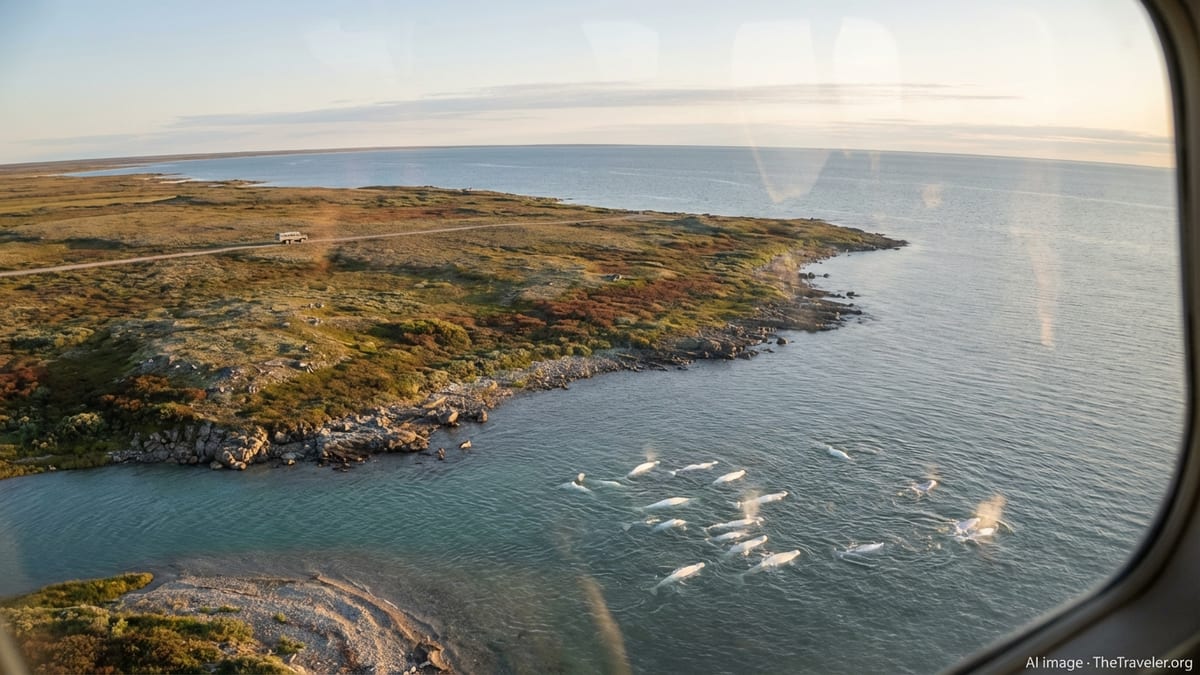
Day 2 is best reserved for a full-day marine and historic outing on the water. In summer, this typically means a guided beluga whale tour by Zodiac or larger vessel, with time spent drifting in the Churchill River estuary as curious belugas surface nearby. Some operators add the option to kayak or use floating platforms for closer but still regulated encounters. Many trips combine time with the whales and a landing at Prince of Wales Fort, an 18th-century stone fortress that once protected the Hudson’s Bay Company’s interests at the mouth of the river. Walking among its massive walls with the wind coming off Hudson Bay creates a vivid sense of how difficult life was for early arrivals to this coast.
On Day 3, shift the focus inland to the tundra. Board a tundra vehicle or join a small-group tour using specialized off-road vehicles to traverse the low, rolling terrain west of town. Even in summer, you may see evidence of polar bears moving through the area, though bear viewing is more predictable in late autumn. Depending on the season, wildlife may include Arctic and red foxes, nesting shorebirds, migrating geese, and in late summer the first hints of autumn colour in the dwarf shrubs and lichens. Guides also interpret permafrost features, glacial erratics and the plant communities that survive in this harsh climate. After a final evening in Churchill, overnight in town and depart the following morning, or catch a late-day flight if schedules allow.
Extending to a Four or Five Day Arctic Coast Adventure
Adding a fourth or fifth day opens up possibilities that reveal more of Hudson Bay’s breadth. With four days, you can slow the pace and build in weather flexibility. One approach is to use Day 4 as a reserve day to repeat whichever experience most captivates you: perhaps a second beluga outing under different light, a return to the tundra for more hiking and photography, or an alternate excursion such as coastal birdwatching or a dog cart ride on the tundra. This extra day is particularly valuable if heavy winds or fog disrupt boating on your main marine wildlife day.
For a more ambitious four-day plan, you could devote Day 4 to a longer coastal boat tour. Some outfitters run full-day Hudson Bay coastal expeditions during the open-water season, traveling well beyond the Churchill River mouth in search of polar bears resting on rocky points, hauled-out seals and bird colonies on offshore islands. These trips can last six to eight hours and may include landings on remote beaches, always with bear monitors on watch. The experience of being far from town, with nothing but low tundra and the grey arc of the bay on the horizon, gives a real sense of the Arctic coast as a working landscape for wildlife.
With five days, the options expand further, and you can realistically include an overnight at a remote coastal lodge or a charter flight toward York Factory and the lower Hayes River area. Lodge-based safaris typically combine walking or vehicle-based polar bear viewing with time on tidal flats, exploring transition zones where boreal forest, tundra and marine habitats overlap. A night or two in such a lodge provides long, unrushed hours to observe wildlife behaviour and changing light on the bay, and eliminates the daily travel time between Churchill and the main viewing areas.
Alternatively, a five-day itinerary could feature a dedicated day trip or overnight outing toward York Factory National Historic Site. This former Hudson’s Bay Company depot, set near the mouth of the Hayes River on the southwestern shore of Hudson Bay, can be reached by seasonal boat tours or charter aircraft from northern Manitoba communities. The journey itself is part of the adventure, moving along river channels and low, marshy coastlines where water levels and tides dictate timing. Once on site, visitors encounter one of the oldest surviving wooden structures built on permafrost in Canada and a landscape that still bears traces of centuries of fur trade activity on the bay.
Linking Northern Manitoba with Nunavut’s Western Hudson Bay
Travelers with five days and a strong desire to see a broader sweep of Hudson Bay’s shoreline sometimes pair Churchill with a brief visit to a Nunavut community along the western coast. This kind of linkage is logistically demanding and increases costs, but it does underline how the bay connects rather than divides northern communities. The Kivalliq Region of Nunavut, immediately north of Manitoba, includes hamlets such as Arviat and Whale Cove, both set directly on the Hudson Bay coast and home to predominantly Inuit populations with deep ties to marine hunting and seasonal migrations of caribou and beluga whales.
Arviat, south of Rankin Inlet, is the southernmost community on the Nunavut mainland and is known for bowhead whale history, active hunting and fishing, and a strong carving and music tradition. It has scheduled air links to other Nunavut settlements and to Churchill and Manitoba communities at certain times of year, though routes and frequencies change and must be checked ahead. Residents of Arviat and neighboring hamlets often travel overland or by sea to Churchill for supplies during the ice-free season, underlining the practical connections along this coast. However, visitor-oriented tours remain limited, and any visit should be planned with sensitivity to local priorities and available services.
Whale Cove, another small hamlet on the western shore of Hudson Bay, sits on the migration route of polar bears and near seasonal aggregations of beluga whales. It is smaller and more traditional in many respects, with a strong focus on subsistence activities. Given the short timeframe of a three to five day itinerary, incorporating these communities typically means a focused overnight visit, flying from Churchill to a Kivalliq hub and onward by regional carrier. Such add-ons work best for travelers who prioritize cultural exchange and are willing to accept the possibility of weather-related delays and schedule changes. When done responsibly, this kind of extension deepens understanding of how Hudson Bay shapes daily life for people as well as wildlife.
Because regular tourism infrastructure remains limited in many Arctic communities, travelers should approach these add-ons through reputable operators or with direct community consultation. That may involve homestays, guided walks with local hosts, or participation in cultural demonstrations, always on local terms. For many visitors, even a short stay offers valuable insight into language, traditional knowledge and the modern realities of climate change and economic transition along the bay.
Wildlife, Climate and Safety Considerations
Whether you stay close to Churchill or venture farther along the Arctic coast, this region demands respect for both climate and wildlife. Temperatures in Churchill can hover just above freezing even in summer, and strong winds off Hudson Bay make it feel colder. In autumn polar bear season, windchill can push perceived temperatures well below freezing, especially on open tundra vehicles. Dressing in layers of moisture-wicking base garments, insulating mid-layers and windproof, waterproof outer shells is essential. Hats, gloves and sturdy, insulated footwear will help you stay comfortable during long hours outside on boats or viewing platforms.
Wildlife viewing is conducted under strict safety protocols, largely because Churchill and the wider Hudson Bay coast sit within the range of one of the world’s largest land predators. Tour operators are licensed and trained to manage polar bear encounters at appropriate distances, using vehicles, guides and, in some cases, designated safety personnel to ensure that neither visitors nor animals are placed at risk. On walking excursions near the coast, it is standard for guides to carry deterrents and to maintain clear lines of sight in all directions. Visitors should follow instructions carefully, keep noise and sudden movements to a minimum around wildlife, and never attempt to feed or approach any animal.
Climate change is already reshaping the Hudson Bay ecosystem, with sea ice forming later in autumn and melting earlier in spring than in previous decades. This affects the timing and behaviour of polar bears, seals and other species, as well as local travel patterns over ice. As a result, on-the-ground knowledge from guides and community members becomes even more valuable. They can interpret subtle changes, explain how seasons are shifting compared with their own childhoods, and adjust routes day by day for safety. Many operators now emphasize low-impact practices, such as limiting group sizes, using fuel-efficient vessels where possible and concentrating disturbances in well-established viewing zones rather than dispersing pressure across untouched areas.
Travelers can contribute by choosing operators with clear environmental commitments, minimizing waste, and respecting wildlife distances with binoculars and long camera lenses instead of pushing closer for a photograph. In remote areas with limited medical facilities, it is sensible to travel with basic first aid supplies, to disclose any health conditions to your guide in advance, and to ensure that your travel insurance covers emergency evacuation from northern communities. Although serious incidents are rare, the remoteness of the Hudson Bay coast means that even a minor injury or illness can be complicated by weather and distance.
Practical Planning Tips for a Short Hudson Bay Escape
Strong logistics make a short three to five day itinerary feel expansive rather than rushed. Start by confirming flights between Winnipeg and Churchill that align with your desired season, then select a locally based operator whose focus matches your priorities: some specialize in lodge-based walking safaris, others in classic tundra vehicle tours, while summer-focused companies may emphasize boating and beluga encounters. Booking a package that includes accommodation, most meals and key excursions often simplifies planning, particularly during peak seasons when demand for limited hotel rooms and tour seats is intense.
Given the remoteness of Churchill and the variability of northern weather, many organizations that operate field courses and guided trips in the region recommend building at least one buffer night in Winnipeg at both the beginning and end of the journey. This approach reduces the stress of potential delays, whether due to low visibility, strong winds or frozen infrastructure. When packing, prioritize flexible layers, a good windproof jacket, waterproof pants and footwear with decent traction. Bug protection such as head nets and repellent can be important in midsummer when mosquitoes and blackflies are active.
Financially, a Hudson Bay trip is a major investment, reflecting the cost of flying or running trains to a tiny, isolated community and operating specialized vehicles and vessels in harsh conditions. To keep costs manageable, consider traveling in the shoulder weeks of the main seasons, when prices may be slightly lower while wildlife viewing remains strong, or opt for shorter, three-day packages rather than longer lodge-based safaris. Being clear about your main goals helps too: if your priority is to see polar bears on the tundra, focus your time and budget on late autumn; if you dream of beluga whales swirling around your boat under a low Arctic sun, commit to midsummer and let other experiences be bonuses rather than expectations.
Finally, approach the Hudson Bay coast with patience and curiosity. Weather may close in, animals may remain distant on some days and schedules can shift with little notice. Yet these same uncertainties are part of what makes a short journey here feel like a true expedition. When the clouds lift to reveal a halo of northern lights over the bay, or a polar bear silhouettes itself against the horizon, or a beluga surfaces near your boat exhaling into the cold air, the effort to reach this edge of the Arctic is amply repaid.
FAQ
Q1. How many days do I really need for a first visit to Hudson Bay and Churchill?
Most travelers find that three full days on the ground in Churchill is the minimum for a satisfying experience, while four or five days provide time for weather delays, repeat outings with wildlife and optional extensions farther along the Hudson Bay coast.
Q2. When is the best time to see polar bears near Hudson Bay in northern Manitoba?
The most reliable polar bear viewing around Churchill typically occurs from about mid October to mid November, when bears gather along the coast waiting for sea ice to form, though exact timing varies year by year with ice conditions.
Q3. When is the best time to see beluga whales in the Churchill River and Hudson Bay?
Beluga whales usually concentrate in the Churchill River estuary and adjacent Hudson Bay waters from roughly mid July through mid August, with tour operators timing their main boat and kayak departures around this seasonal presence.
Q4. Can I visit York Factory National Historic Site on a short 3 to 5 day itinerary?
It is possible but logistically complex; access to York Factory is by charter aircraft or seasonal boat trips from northern Manitoba communities, so including it in a short itinerary generally requires advance coordination with specialized operators and flexible timing.
Q5. Is it realistic to combine Churchill with a Nunavut community like Arviat or Whale Cove?
Combining Churchill with a Nunavut community along the western Hudson Bay coast is feasible in five days for determined travelers, but it adds cost and schedule complexity and works best as a focused overnight cultural visit arranged through local authorities or experienced outfitters.
Q6. Do I need previous Arctic travel experience to join a Hudson Bay wildlife tour?
No previous Arctic experience is necessary; reputable operators design trips for first-time visitors, provide detailed packing guidance and manage safety around wildlife, though comfort with cold, wind and flexible schedules is important.
Q7. How should I dress for summer versus autumn on the Hudson Bay coast?
In both seasons, dress in layers with moisture-wicking base garments, warm mid-layers and windproof, waterproof outer shells; in summer you may shed layers during milder afternoons, while in autumn you will rely more heavily on insulated jackets, hats, gloves and warm footwear.
Q8. Are northern lights guaranteed on a 3 to 5 day trip?
Northern lights are never guaranteed, but if you visit between late August and March, stay up on clear nights and have at least three or four evenings in the region, your chances of seeing a display are reasonable when solar activity cooperates.
Q9. How far in advance should I book accommodation and tours in Churchill?
Because Churchill has a limited number of hotel rooms and tour seats, it is wise to book several months in advance for peak polar bear and beluga seasons, especially if you have fixed travel dates or specific lodges and excursions in mind.
Q10. Is independent exploration safe, or should I always join guided trips?
Within Churchill itself it is generally safe to walk in town and along well-used paths, but because polar bears can move through the area, any travel beyond the community limits or along remote stretches of the coast is safest with a qualified local guide or organized tour.