

Manitoba rewards curious travelers with a mix of creative prairie city life, easy-to-access wilderness, and some of Canada’s most memorable northern experiences. With smart planning, you can see a surprising amount in just a few days. This itinerary is designed to help you shape a flexible 3 to 5 day journey, beginning in Winnipeg and expanding outward to lakes, forests, and, if time and budget allow, the remote frontier town of Churchill on Hudson Bay.
How to Use This 3 to 5 Day Manitoba Itinerary
This itinerary is built in layers so you can adjust it to your timing. If you have three days, focus on Winnipeg and one easy nature escape just outside the city. With four days, add an overnight in a lakeside or national park setting. With five days or more, consider flying north to Churchill for a taste of Manitoba’s Arctic gateway, timed to northern lights, beluga whales, or polar bear season.
Distances are manageable but Manitoba’s size still surprises many visitors. Flights into Winnipeg’s international airport are the best starting point, with rental cars widely available. Churchill, in contrast, is fly-in or train-in only; most short trips use scheduled flights paired with locally organized packages that include activities, transfers and guiding.
Seasonality matters more here than in many destinations. Winnipeg’s festivals and riverfront trails peak in summer, foliage and wildlife-watching shine in fall, northern lights are strongest on clear late winter nights, and frozen-river dining and outdoor spa experiences give winter real personality. Rather than prescribing a single “best” season, this guide highlights what shifts with the calendar so you can match the trip to your interests.
Where specific festivals, events and wildlife encounters are mentioned, treat them as planning anchors rather than guarantees. Dates and operations can change, and nature is never fully predictable. Use them as inspiration, then confirm details directly with operators when you are ready to book.
Day 1: First Impressions of Winnipeg
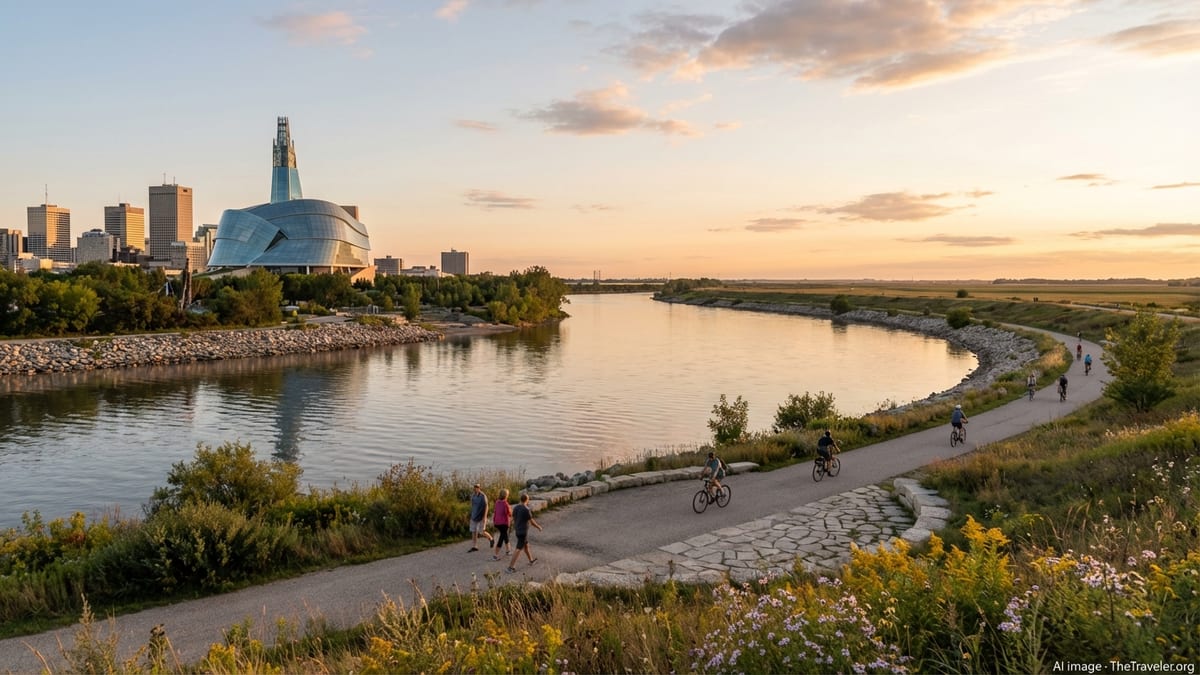
Begin in Winnipeg’s compact downtown, where historic stone warehouses, riverside paths and contemporary architecture sit within easy walking distance. A natural starting point is the junction of the Red and Assiniboine rivers, long a meeting place for Indigenous peoples and later fur traders and settlers. Today the area has been redeveloped as a cultural and culinary gathering spot, with a mix of local restaurants, seasonal outdoor events and access to the river trails that define much of Winnipeg’s warm-weather life.
From here, it is an easy walk to the Canadian Museum for Human Rights, whose striking glass tower has become one of the city’s most recognizable landmarks. Inside, multi-level galleries use interactive exhibits, personal stories and immersive design to explore human rights movements in Canada and around the world. Expect to spend at least two to three hours; more if you linger at the observation level for wide views over the prairie horizon.
Later in the day, turn your attention to the Exchange District, a historic warehouse quarter just north of downtown that has evolved into Winnipeg’s creative heart. Early-20th-century brick and stone buildings now house independent boutiques, galleries, bars and restaurants, while summertime brings outdoor theatre, live music and patio culture to the streets and central square. Guided walking tours are a practical way to understand how the district’s architecture and commerce shaped the city; self-guided wandering is equally rewarding if you prefer to explore at your own pace.
Cap your first day with a relaxed dinner in the Exchange or back along the river. In winter, some evenings in late January and February see pop-up events on the frozen river, from informal skating to architect-designed dining structures that have attracted national attention. In summer, patio tables and riverside lawns fill with locals enjoying long prairie evenings that can stretch well past 10 p.m. daylight.
Day 2: Arts, Culture and Urban Nature in Winnipeg
Devote your second day to Winnipeg’s broader cultural scene and its surprisingly varied green spaces. Start with the Winnipeg Art Gallery and Qaumajuq, home to one of the world’s largest public collections of contemporary Inuit art. The light-filled galleries showcase stone carvings, prints and multimedia works that provide a nuanced look at Arctic life and creativity. Even if you are not an art specialist, the combination of architecture and storytelling makes this an approachable and memorable stop.
From here, it is a short drive or transit ride to Assiniboine Park, a sprawling green space on the city’s west side. The park’s walking trails, English-style gardens, duck ponds and tall trees offer a quick reset from downtown energy. The Leaf, a large horticultural attraction with biomes and outdoor gardens, adds a more structured botanical experience. Families often pair the park with a visit to the nearby zoo, which includes northern species in large, immersive enclosures designed to evoke tundra and boreal landscapes.
In the afternoon, consider exploring FortWhyte Alive on the city’s edge, where prairie, forest and small lakes are protected as an urban nature reserve. Walking trails pass through aspen stands and open prairie, with viewing platforms and interpretive signage that introduce local ecology. Depending on season and programming, visitors can join guided bison walks, birding outings, or hands-on experiences that interpret the region’s history and Indigenous connections to the land.
Evenings in Winnipeg are shaped by the calendar. In June and July, the Exchange District’s outdoor stages and nearby venues host major theatre and music festivals, adding a festival buzz to the streets. In August, the city’s long-running multicultural event invites visitors to sample food, dance and cultural displays across numerous pavilions spread through the city. In colder months, the focus shifts indoors to theatre, symphony performances and cozy neighborhood restaurants, with occasional special events that showcase local chefs and designers in temporary spaces.
Day 3: Day Trip for Lakes, Prairies and Forests
With the city’s main highlights under your belt, day three is ideal for a nature-focused excursion beyond Winnipeg. The province’s geography changes quickly once you leave the urban area, moving from flat prairie to forested escarpments, glacial lakes and small towns that serve as gateways to outdoor adventure. A rental car offers the most flexibility, though organized day trips for certain wildlife and nature experiences operate in peak seasons.
One popular direction is northwest toward Riding Mountain National Park, roughly a three-hour drive from Winnipeg. While it is ambitious as a full day trip, an early start allows time for a scenic drive, a few short hikes and a relaxed lakeside meal in the park’s main resort village. Riding Mountain’s appeal lies in its mixture of boreal forest, aspen parkland and remnant fescue prairie, all compressed into a relatively compact plateau. Moose, black bears and large herds of elk and deer inhabit the area, though wildlife sightings can never be guaranteed.
If you prefer a shorter outing, look to beaches and small parks closer to Winnipeg. Several lakes north and east of the city offer broad sandy shorelines that become lively in summer, with small communities providing basic services and a classic prairie beach-town atmosphere. To the south, agricultural landscapes give way to river bends and regional parks where walking paths, picnic areas and birdlife make for gentle, low-key days outdoors.
Return to Winnipeg in the evening and treat your final night of a three-day itinerary as a celebration of what you have seen so far. Seek out a restaurant that highlights regional ingredients, whether through bison, pickerel, wild berries or grains from Manitoba farms. If your timing overlaps with a downtown or riverside festival, spend a final hour simply people-watching and absorbing how locals use their public spaces across the seasons.
Extending to Four Days: An Overnight Nature Escape
If your schedule allows a fourth day, consider turning that simple day trip into an overnight stay surrounded by nature. The extra time transforms your experience from a quick look to a more relaxed immersion, especially in a national park setting or at a lakeside lodge where night skies and early-morning calm are part of the appeal.
Riding Mountain National Park is a logical candidate for an overnight extension. Its main village offers a modest selection of lodges, cabins and small inns that often sit within walking distance of the lakefront, trails and park facilities. Spending the night here lets you sample sunrise paddleboarding or canoeing, mid-day hikes through mixed forest and prairie, and an evening drive or bike ride at dusk when wildlife is most active. In shoulder seasons, visitor numbers drop and the atmosphere turns quiet and contemplative, though some services may reduce hours.
Closer to Winnipeg, smaller lakeside communities and provincial parks can also serve as restful overnight bases. Modest hotels, motels, cabins and campgrounds cluster near the water’s edge, and many visitors plan their stays around beach time, fishing, or simply sitting by a fire under clear prairie skies. Winter visitors might swap swimming for snowshoeing, cross-country skiing or ice fishing, with lakeside accommodations providing warm refuges between outings.
Whether you choose the national park or a nearer lake, building in an overnight stay outside Winnipeg adds variety to a Manitoba itinerary. It also provides a useful pause before a northern extension to Churchill, letting you reset your pace and packing before boarding a flight to the subarctic coast.
Adding Churchill: Northern Lights, Belugas or Polar Bears
For travelers with five or more days and a higher budget, a side trip to Churchill is one of Canada’s great northern experiences. Perched on the southwest shore of Hudson Bay and well above the treeline, Churchill combines tundra, boreal forest fragments and marine environments in a compact area that supports notable wildlife and dramatic skies. Despite its remote feel, the town is linked to Winnipeg by scheduled flights, with many visitors booking multi-day packages that include accommodation, guiding and key activities.
Churchill’s tourism rhythm is highly seasonal. In February and March, visitors come for aurora borealis under clear, cold skies, often staying at lodges or research centers that sit outside town to minimize light pollution. Some properties offer domed viewing structures or rooftop platforms where guests can watch the northern lights in comfort between forays into the cold night air. In July and August, the focus shifts to beluga whales as thousands gather in the Churchill River estuary, with boat tours, zodiacs and even kayaking options providing close yet respectful encounters with these social, vocal animals.
October and November bring polar bear season, when bears moving along the coast and across the frozen tundra draw travelers from around the world. Specialized tundra vehicles with raised, fenced viewing platforms allow visitors to observe bears and other wildlife at a safe distance, often spending full days on the land as weather allows. Helicopter tours, dog sledding outings and guided visits to historic sites and interpretive centers round out the experience, though conditions can be harsh and plans must remain flexible in response to wind, snow and ice.
Because Churchill packages typically span at least three nights, adding them to a short Manitoba itinerary requires advance planning. Travelers flying from Winnipeg often spend a night in the city on either side of their northern trip to buffer against potential delays. For a five-day total, that may mean trimming city and southern nature time; with a full week, you can comfortably combine Winnipeg, a national park stay and a Churchill package without feeling rushed.
Seasonal Considerations and Practical Planning Tips
Manitoba’s climate shapes every aspect of this itinerary, so honest preparation is important. Winters are long and can be extremely cold, with windchills that reward layered clothing, insulated boots, face protection and a willingness to take frequent warm-up breaks. The payoff is access to snow-covered forests, frozen rivers and bright winter skies, as well as unique events that embrace the season. Spring arrives gradually and can feel muddy and unpredictable, but it also brings migrating birds and the first hints of green on the prairie.
Summer, from roughly late June through August, offers warm days and long evenings ideal for patios, lake trips and outdoor festivals. This is peak season for Winnipeg events, lakeside beach towns and beluga tours in Churchill. Accommodation in popular areas can book up quickly on key weekends, so reserving early is sensible if your dates are fixed. Autumn brings crisp air, colorful foliage and good wildlife-watching conditions, particularly in forested areas and along migration routes. It is also shoulder season for some tourism services, with fewer crowds but more variable opening hours.
On the practical side, renting a car is the simplest way to connect Winnipeg with parks and lakes beyond the city, allowing spontaneous stops in small towns and viewpoints along the way. Within Winnipeg, many visitors mix walking, rideshare, and public transit, especially when staying downtown or near the river. For Churchill, most travelers rely on packaged arrangements that bundle flights, accommodations, activities and some meals, simplifying logistics in an environment where independent options are limited.
Finally, keep expectations flexible. Weather can alter river and lake conditions, wildlife can be elusive, and occasional transportation delays are a reality in northern travel. Building buffer time into your schedule, particularly around flights to and from Churchill, reduces stress and lets you enjoy the moments you do have, whether that means a last-minute detour to a prairie viewpoint or an extra hour under a sky filled with shifting northern lights.
Sample 3, 4 and 5 Day Manitoba Itineraries
To translate the building blocks of this guide into concrete plans, it helps to look at sample outlines. A three-day itinerary might focus entirely on Winnipeg and nearby nature. Day one would cover the riverside district, the human rights museum and an evening in the Exchange. Day two could combine the art gallery, Assiniboine Park and a performance or festival if one aligns with your visit. Day three would be your nature gateway, either as a long day trip toward Riding Mountain National Park or a shorter excursion to closer lakes and regional parks before a final dinner in the city.
With four days, you can slow the pace and add an overnight in a quieter natural setting. One approach is to dedicate days one and two to Winnipeg’s core sights and neighborhoods, then drive out early on day three to your chosen park or lakeside town. Spend that night under dark skies and return to Winnipeg late on day four, stopping in small towns or viewpoints along the way. This structure balances city culture and fresh air, giving you both urban meals and firelit evenings by the water.
A five-day plan aimed at Churchill requires more focus. One option is to spend day one in Winnipeg, then fly to Churchill for days two through four on a northern lights, beluga or polar bear program, and return to Winnipeg late on day four or early on day five. Use your final hours in the city for a museum you missed at the start or a final walk along the river. Alternatively, if Churchill is not in your budget this time, a five-day trip could expand the national park or lakeside portion to two or three nights, allowing for unhurried hiking, paddling and wildlife watching in Manitoba’s southern wilds.
These outlines are intentionally flexible rather than prescriptive. Your own interests, whether focused on museums, festivals, hiking, photography, wildlife or food, will shape which elements to emphasize. The important thing is to recognize that even a short stay can offer a meaningful cross-section of Manitoba life when planned with geography, seasons and realistic travel times in mind.
The Takeaway
A three to five day visit to Manitoba is less about ticking off a checklist of sights and more about sampling distinct layers of place. Winnipeg offers a compact introduction to prairie city life, where human rights education, Indigenous and Inuit art, and lively festivals animate historic streets and modern riverside spaces. Within a few hours’ drive, lakes, forests and prairies open up opportunities for hiking, paddling and stargazing that feel a world away from downtown but remain easily accessible.
For those able to add Churchill, Manitoba’s story stretches all the way to the subarctic coast, where beluga whales, polar bears and auroras draw travelers into an environment that is both fragile and resilient. Even if your first trip stays closer to Winnipeg, knowing that this northern frontier exists within the same province adds depth to your understanding of the region’s scale and diversity.
Whatever shape your itinerary takes, approaching Manitoba with curiosity and respect for its climate, cultures and ecosystems will make the experience more rewarding. Layer city, nature and, if possible, northern adventure into your plans, and you will leave with a richer sense of how life unfolds along these rivers, lakes, forests and tundra edges in every season of the year.
FAQ
Q1. Is three days enough to experience Manitoba?
Three days is enough to see central Winnipeg and make one foray into nearby nature, but you will only sample a small slice of what the province offers.
Q2. How many days do I need if I want to include Churchill?
To include even a short Churchill package, plan for at least five to seven days total so you can buffer for flights and fully enjoy northern activities.
Q3. What is the best season for this 3 to 5 day itinerary?
Summer offers festivals, lakes and belugas, late winter favors northern lights, and autumn combines comfortable temperatures with good chances for wildlife viewing.
Q4. Do I need a rental car to follow this itinerary?
You can explore central Winnipeg without a car, but a rental vehicle is very helpful for reaching national parks, lakes and smaller communities beyond the city.
Q5. How far is Riding Mountain National Park from Winnipeg?
Driving time is typically around three hours one way, so it works best as an overnight trip, though determined visitors sometimes attempt it as a long day outing.
Q6. Is Churchill safe to visit in winter for northern lights?
Yes, visitors routinely travel in winter with experienced local operators, but conditions are cold and can be harsh, so proper clothing and flexibility are essential.
Q7. Can I see polar bears on a quick trip without booking a package?
In practice, most polar bear viewing is arranged through licensed operators using specialized vehicles, and demand is high, so advance package bookings are strongly recommended.
Q8. Are Manitoba’s festivals family-friendly?
Many major events in Winnipeg, including cultural and theatre festivals, welcome families, though some evening performances and venues may be better suited to adults.
Q9. What should I pack for a shoulder-season visit?
Layered clothing, a waterproof outer shell, sturdy walking shoes, and a warm hat and gloves are wise, as temperatures and conditions can shift quickly.
Q10. How expensive is it to add Churchill compared with staying around Winnipeg?
Flying to Churchill and joining wildlife or northern lights programs is significantly more costly than remaining in Winnipeg and nearby parks, so it is often treated as a special-occasion extension.