

Wisconsin is a state built around water and woods, with lively college towns, reborn industrial cities, and peninsulas that reach deep into Lake Michigan. If you have three to five days, you can craft a compact road trip that samples urban culture in Madison and Milwaukee, then heads north to Door County for small-town harbors, state parks, and star-filled nights. This itinerary is designed for first-time visitors who want a balanced mix of cities, lakes, and nature without spending every moment in the car.
How to Use This 3 to 5 Day Wisconsin Itinerary
This route assumes you arrive and depart from either Madison or Milwaukee, both of which have airports and good highway connections. The core plan outlines a three day circuit that can be comfortably extended to four or five days by adding nights in Door County or more time in the cities. Distances are manageable, but it is wise to keep driving days clustered in the morning so your afternoons and evenings are free for walks, museums, and lakefront sunsets.
At a relaxed pace, plan on one overnight in Madison, one overnight in Milwaukee, and one or two overnights in Door County if you have three or four days. With five days, you can add a second night to either Madison or Milwaukee or stretch Door County to a full three night stay, which gives you room for longer hikes or a detour to a quieter lakeside town. The itinerary is flexible enough that you can rearrange the order if your flights favor one city over the other.
Wisconsin’s weather swings with the seasons. Summer brings warm days, busy festivals, and full services at marinas and lakefront parks. Fall offers cooler hiking temperatures, fewer crowds, and vivid foliage along the Door Peninsula and around Madison’s lakes. Spring can be damp and cool but is peaceful, while winter travel demands snow-ready driving and a focus on indoor attractions in Madison and Milwaukee.
For this itinerary, a rental car is the most practical choice. Public transit works well within Madison and Milwaukee, but there is limited intercity service and almost none to the state parks of Door County. Highways are straightforward, and driving times between each major leg typically fall in the two to three hour range under normal conditions.
Day 1: Madison’s Lakes, Capitol, and Neighborhoods
Start your Wisconsin journey in Madison, the state capital and home to the University of Wisconsin. The city sits on an isthmus between Lake Mendota and Lake Monona, which gives its compact downtown a surprisingly expansive waterfront feel. The State Capitol building and university campus anchor the skyline, with bike paths and lakeside parks wrapping around the water. Even in a short visit, you can experience both the civic core and the quieter shores.
Begin your day at the Capitol Square, where the ornate Wisconsin State Capitol opens its marble halls to visitors on most days. From the steps you can see the lakes at both ends of the isthmus, a reminder of how tightly the city is tied to its natural setting. If your visit falls on a Saturday in the warmer months, the square fills with a large farmers market featuring seasonal produce, cheese curds, and baked goods, making it an ideal place to grab breakfast and a sense of local life.
From the Capitol, wander down State Street, a pedestrian-friendly spine that runs toward the university campus. Cafes, bookstores, and casual restaurants line the route, and you will often share the sidewalk with students and office workers. At the campus end, the Memorial Union Terrace sits directly on Lake Mendota, with colorful chairs facing the water. On warm evenings, this is one of the best casual spots in the state to watch the light fade over the lake.
To incorporate more nature into your first day, spend time at one of the city parks along the shoreline. James Madison Park touches Lake Mendota just a short walk from downtown and offers open lawns and waterfront views. On the south side of the isthmus, the Lake Monona bike path provides a paved route for walking or cycling with frequent glimpses of the skyline and the water. If you prefer a quieter escape, Olbrich Botanical Gardens on the east side showcases landscaped grounds and a glass conservatory, especially welcoming in the shoulder seasons.
Day 2: Milwaukee’s Lakefront, Culture, and Neighborhoods
On the morning of your second day, drive from Madison to Milwaukee. The route along Interstate 94 usually takes around one and a half hours, passing rolling farmland before dropping into Wisconsin’s largest city on the shore of Lake Michigan. Milwaukee blends brewery heritage with a growing arts and dining scene, and its lakefront parks create a broad green ribbon between downtown and the water.
Start at the Milwaukee Art Museum, a striking complex whose lakefront pavilion sports dramatic, winglike structures that open and close during the day. Behind the distinctive exterior is one of the region’s most significant art collections, with thousands of works spanning decorative arts, paintings, and photography. Even if you only have a few hours, a walk through the galleries and an exploration of the glassy public spaces gives a sense of the city’s cultural ambitions.
Afterward, step outside onto the paved paths that trace Milwaukee’s shoreline. To the north, the route passes Veterans Park’s open lawns and continues toward Bradford Beach, a broad stretch of sand at the foot of tree-covered bluffs where locals gather on summer days. The lakefront here can feel almost coastal, with waves rolling in and sailboats moving across the horizon. To the south of downtown, the shoreline bends around Henry Maier Festival Park, home to major music and ethnic festivals in the warm months, including the large Summerfest music event.
In the afternoon, explore one of Milwaukee’s historic neighborhoods. The Third Ward, just south of downtown, has brick warehouses converted into galleries, restaurants, and lofts. RiverWalk segments connect parts of the city along the Milwaukee River, with bridges and riverfront patios catching the afternoon light. If you are interested in the city’s brewing story, consider a tour at one of the established craft breweries, or simply visit a taproom to sample local styles. End your day with dinner in the city center, where menus lean heavily on Midwestern comfort dishes and fresh takes on classics.
Day 3: Driving to Door County and Exploring Peninsula State Park
On your third day, make the longer drive north to Door County, the narrow peninsula that separates Green Bay from Lake Michigan. From Milwaukee, it is typically around two and a half to three hours by car to Fish Creek, one of the key gateway towns to Peninsula State Park. The route passes near Green Bay and then follows quieter highways lined with farms, orchards, and roadside markets that sell seasonal cherries and apples in summer and fall.
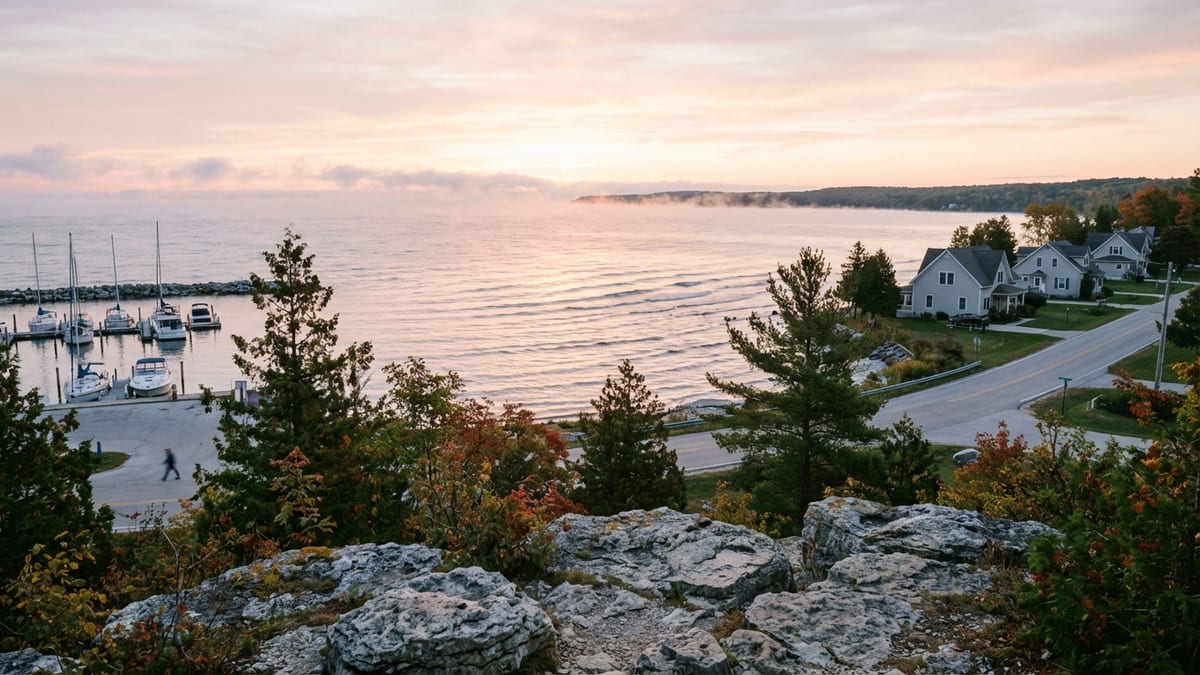
Base yourself in a harbor town such as Fish Creek, Ephraim, or Sister Bay. These communities provide easy access to Door County’s two signature elements: small marinas tucked into bays on the Green Bay side and state parks that protect cliffs and shoreline along both coasts of the peninsula. Lodging ranges from small inns and motels to vacation rentals and lakeside resorts. Reservations are strongly recommended in peak summer and on fall foliage weekends, when the area is especially popular.
Once settled, spend the afternoon in Peninsula State Park. Often described as one of Wisconsin’s most complete parks, it packs several of the state’s defining landscapes into a single large parcel along Green Bay. Within its boundaries you will find forested bluffs, eight miles of shoreline, a sandy swimming beach, bike trails, an 18 hole golf course, campgrounds, and scenic viewpoints. A paved loop road and additional interior routes lead to pullouts and trailheads, making it straightforward to tailor your visit to the amount of time and energy you have.
Take one of the clifftop overlooks for a first orientation, then choose a shorter hike to stretch your legs. Trails drop from the bluffs down toward rocky beaches or follow the edge of the escarpment with broad views across the bay. In recent years, the park has upgraded some of its facilities and maintained extended hours, typically opening from early morning into the late evening, allowing for sunset visits. If you are staying nearby, consider returning after dinner to watch the sky change above the water and the lights of villages across the bay flicker on.
Extending to 4 or 5 Days: Door County’s Quiet Shores and Dark Skies
If you have a fourth day, devote it entirely to exploring more of Door County’s coastline and additional parks. On the Lake Michigan side, Whitefish Dunes State Park protects high sand formations and a long sandy shoreline, with trails that weave between wooded sections and open stretches near the water. Adjacent county parks such as Cave Point are known for rocky cliffs and inlets where waves have carved shallow caves into the limestone. Together, these areas offer a very different feel from the sheltered harbors of Green Bay, with a more exposed, wind-driven character.
Further north, Newport State Park occupies a quiet stretch near the tip of the peninsula. It has no interior roads beyond basic access, which helps keep the atmosphere low key and undeveloped. Trails wind through forest and periodically emerge at the shoreline, where the lake feels wide and wild. Newport has been recognized for exceptional night sky conditions, and on moonless nights the stars can be intense. This makes it an appealing choice for travelers interested in stargazing, as long as they are prepared with warm layers and red-light flashlights for safety on dark paths.
Use the extra time of a four or five day trip to slow your pace. Start your morning with a walk through a harbor town to watch fishing boats and kayaks heading out, then linger over coffee at a local café. In the afternoon, pick one park or shoreline region to focus on rather than trying to string several together. Door County also has a longstanding tradition of fish boils and supper clubs, many of which have lake views or wooded settings that fit the relaxed, nostalgic mood of the peninsula.
With a fifth day, you can add a side trip to one of the smaller communities or islands in the upper peninsula region, time permitting. Boat trips to outer islands and additional state parks may operate on seasonal schedules and are subject to lake conditions, so it is best to confirm details shortly before your trip and carry a flexible mindset. Alternatively, you can use your fifth day for a leisurely return drive to Milwaukee or Madison, stopping at farm stands and small towns as you go.
Practical Tips for Seasons, Packing, and Driving
Weather is one of the key variables that will shape your experience on this itinerary. Summer from roughly June through August usually brings warm days, cooler evenings, and the most activity on the lakes and at the lakefront parks. However, this is also the busiest season, particularly on Door County weekends, so expect higher room rates and more competition for campsite and hotel reservations. Late May and early September often offer many of the same outdoor opportunities with slightly fewer people, though some seasonal operations may shift to reduced hours.
Fall, typically late September into October, is prized for foliage. The bluffs and forests of Peninsula State Park and the back roads of Door County can turn vivid shades of red, orange, and gold. Madison and Milwaukee also showcase fall color along lakeside parks and tree lined neighborhoods. Temperatures cool quickly as autumn progresses, so packing layers is crucial. Spring is more changeable, with a mix of mild days and lingering chill, but it rewards visitors with quieter trails and the chance to see early wildflowers in the parks.
Regardless of season, pack for flexibility. A light rain jacket, warm fleece, and a hat and gloves can be useful even on a trip that is not centered on winter, especially around Lake Michigan where winds can make the air feel cooler. Comfortable walking shoes are essential in Madison and Milwaukee, where you will likely spend hours on foot, and on Door County trails that range from packed dirt to rocky sections near the water. For lakefront walks and boat tours, consider quick drying layers and a small daypack to carry snacks, water, and an extra layer.
On the driving side, Wisconsin’s main highways are generally straightforward. From Madison to Milwaukee you will mostly travel on a multi lane interstate, while the segment from Milwaukee to Door County uses a mix of divided highways and two lane roads. In winter or during heavy rain, build extra time into your schedule and check regional forecasts and advisories. Fuel and basic services are widely available along the route, but it can still be wise to top off your tank before heading deeper into the peninsula, especially if you plan to spend most of a day within the state parks.
Shortening or Modifying the Route
Not every traveler will have five days to commit, and in some cases you may want to adapt the itinerary to focus on one theme. With only three days, a sensible approach is to dedicate one day to Madison, one day to Milwaukee, and one full day in Door County, using the evenings for driving segments as needed. This will result in a more active schedule, but it still allows for a taste of the Capitol, Milwaukee’s lakefront, and at least one Door County park.
If your interest leans more toward cities and culture than nature, consider reducing Door County to a single overnight or skipping it in favor of additional time in Milwaukee and Madison. This version might include extra museum visits, more time exploring neighborhoods such as Milwaukee’s East Side or Madison’s Near East Side, and additional brewery or dining experiences. Conversely, nature-focused travelers can flip the balance, using only brief stops in the cities before devoting the bulk of their nights to Door County and its parks.
Families traveling with children may want to limit daily drive times and choose lodging that reduces packing and unpacking. In that case, pick a single base in Door County and use it for at least two nights, with simple day trips to nearby state parks and villages. In Madison and Milwaukee, look for accommodations near the lakefront or key walking districts so you can take breaks during the day without long transfers. The core idea is to match the pace of the trip to the pace of your travel companions.
Special interests can also shape modifications. Cyclists may plan a route that emphasizes dedicated bike trails and quiet roads around Madison and the back roads of Door County. History enthusiasts could allocate more time to historic house museums, breweries with deep local roots, and walking tours that trace the evolution of each city. Whatever your focus, this general framework offers a backbone that can be adapted without losing the satisfying contrast between cities, lakes, and wild shorelines.
The Takeaway
A three to five day trip through Wisconsin can encompass far more variety than the map might suggest. By linking Madison, Milwaukee, and Door County, you move from a lakeside capital city to a reinvented industrial hub and finally to a peninsula where orchards, bluffs, and dark skies dominate the view. The distances are short enough that you spend more time walking along waterfronts and forest trails than staring through a windshield.
Perhaps the greatest strength of this itinerary is its flexibility. It works as a long weekend focused on highlights or as the foundation for a weeklong exploration with added detours into smaller towns and quieter parks. You can travel in high summer to catch outdoor festivals and full marina scenes, or aim for shoulder seasons to trade higher temperatures for calmer paths and clearer night skies. In any season, Wisconsin rewards travelers who combine curiosity about its cities with a willingness to follow roads that end where land meets water.
FAQ
Q1. How many days do I really need for this Wisconsin itinerary?
Three days are enough for a fast circuit through Madison, Milwaukee, and Door County, but four or five days provide a more comfortable pace and extra time for hiking and lakefront walks.
Q2. Is it better to start in Madison or Milwaukee?
Either direction works. Many travelers start where flights are cheapest, but beginning in Madison can feel gentler before stepping into the larger, busier streets of Milwaukee.
Q3. Do I need a rental car, or can I rely on public transit?
You will need a car for this itinerary. Public transit is useful within Madison and Milwaukee, but Door County’s parks and smaller towns are not well served by buses or trains.
Q4. What is the best time of year to visit Door County on this route?
Late June through early October usually offers the most enjoyable mix of open services and mild weather, from summer beach days to fall foliage along the bluffs and back roads.
Q5. Are the hikes in Peninsula State Park suitable for beginners?
Yes. While some trails include hills and rocky sections, many routes are short and moderate, with clear signage and options to turn around when you have had enough.
Q6. Can I swim in the lakes on this itinerary?
In summer, swimming is common at designated beaches on Lake Mendota, Lake Michigan, and within Door County’s parks, though water temperatures can feel brisk even on warm days.
Q7. How far is the drive from Milwaukee to Door County?
Under typical conditions, it takes about two and a half to three hours by car from Milwaukee to central Door County towns such as Fish Creek, not counting stops along the way.
Q8. Is this trip manageable with children?
Yes, if you limit daily drive times, build in park visits and playground stops, and choose centrally located lodging so you can easily return to your room for downtime.
Q9. What should I pack for a shoulder season visit?
Bring layers including a light rain jacket, warm fleece, hat, and gloves, along with sturdy walking shoes and a small daypack for water and snacks on trails and lakefront walks.
Q10. Do I need to reserve accommodations in advance?
Advance reservations are strongly recommended in Door County for summer and fall weekends, and helpful in Madison and Milwaukee during major events or university move in periods.