

More news on this day
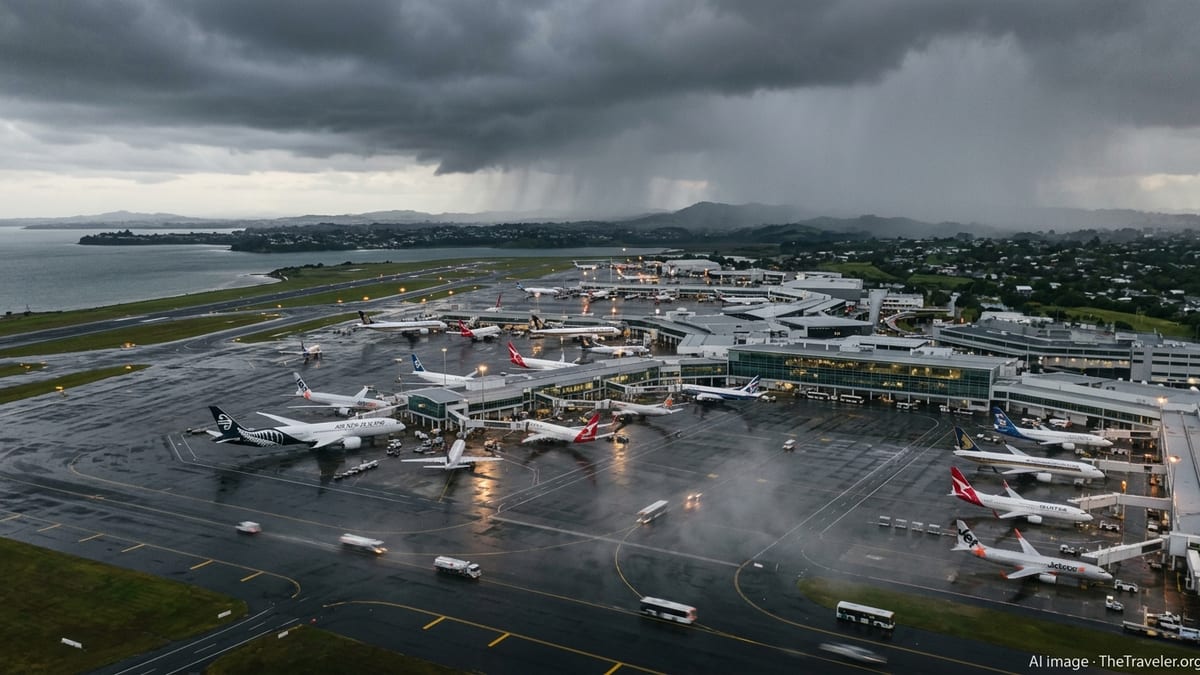
A powerful multi day rain system forecast to dump up to 320 millimetres of rain on parts of northern New Zealand later this week is poised to disrupt international flights and trigger a new wave of hotel cancellations, with airlines and tourism businesses closely watching conditions across key gateways including Auckland.
Get the latest news straight to your inbox!
Red Level Rain Forecast Raises Fresh Travel Concerns
Publicly available forecasts from New Zealand’s MetService and independent weather analysts indicate a high likelihood of a red level heavy rain event for sections of Northland and potentially Auckland from late Thursday 26 March into Friday 27 March, with model guidance pointing to localised totals in the 270 to 320 millimetre range over roughly 24 to 36 hours. Commentary circulating among forecasters and travellers describes the system as a multi hazard event, combining intense rain with strong winds, low cloud and the risk of slips and surface flooding across key road and rail corridors.
The projected rainfall would come only weeks after a series of severe storms in January and February brought flooding, landslides and widespread transport disruption to multiple regions across both of New Zealand’s main islands, highlighting growing sensitivity to extreme weather during the Southern Hemisphere summer and early autumn travel window. That earlier pattern saw states of emergency declared in several districts and significant interruptions to domestic and trans Tasman connectivity as airlines adjusted schedules around closed roads and compromised airport operations.
Although the precise track and intensity of the new system remain subject to short term changes, the prospect of another high impact rain event so soon after previous storms is already being factored into travel plans for the coming weekend and the lead up to the Easter holiday period, traditionally one of the busiest times for both domestic and international tourism flows.
Major Global Airlines Face Fresh Operational Test
Auckland and other New Zealand gateways function as critical nodes for a network of long haul routes operated by carriers such as Air New Zealand, Qantas, Emirates, Singapore Airlines, Cathay Pacific and American Airlines. These airlines funnel visitors from Australia, North America, Europe, the Middle East and wider Asia, often through overnight flights that are particularly sensitive to low cloud, crosswinds and runway conditions associated with intense rain bands.
Published coverage following earlier storms this year documented dozens of domestic and international cancellations, aircraft diversions and extended delays, as ground handling teams worked around waterlogged aprons and shifting safety thresholds. Aviation analysts note that when rainfall approaches several hundred millimetres within a single event, the risk profile for airport access roads, staff commuting and supporting infrastructure rises sharply, compounding the direct challenges for aircraft operations.
Flight tracking and airline advisory channels commonly show that carriers adopt a cautious stance in such situations, pre emptively trimming schedules, upgauging select services to accommodate displaced travellers or encouraging voluntary rebooking before a system peaks. With forecasts again signalling the potential for extreme cumulative rainfall, industry observers expect airlines serving New Zealand to monitor forecast cycles closely over the next 24 to 48 hours and adjust capacity on trans Tasman and long haul sectors if model confidence strengthens.
Key Visitor Markets From Four Continents in the Firing Line
The looming weather disruption comes at a sensitive moment for New Zealand’s tourism recovery, which has been relying heavily on strong demand from Australia, the United States, China and the United Kingdom. Government statistics and industry reports list these four countries among the top sources of international arrivals, particularly for high value trip types that combine city stays with regional touring and nature based experiences.
For Australian visitors, many of whom depend on short trans Tasman hops operated by Air New Zealand and Qantas, any prolonged weather related disruption can quickly cascade across weekend escapes, ski planning and family visits, given the high frequency but relatively tight scheduling of flights into northern New Zealand. For US travellers, long haul itineraries often involve connections through key hubs such as Los Angeles, San Francisco or Dallas before crossing the Pacific, amplifying the knock on impact if a single weather event alters arrivals or departures in Auckland.
Chinese and UK markets, frequently served through intermediate hubs in Asia and the Middle East, are similarly exposed when storms coincide with peak travel windows or school holiday periods. Travel agents and booking platforms typically see a surge in schedule change requests when forecasts highlight the potential for several hundred millimetres of rain, especially among travellers unfamiliar with New Zealand’s rugged topography and the speed with which localised flooding can affect transport corridors.
New Zealand Hotels Brace for Cancellations and Late Changes
New Zealand’s hotel sector, which has been working to consolidate gains in occupancy and room rates following the pandemic period, is now bracing for a possible upswing in weather related cancellations and last minute rebookings. Industry analyses released over the past year have already highlighted how extreme weather and infrastructure interruptions can swing occupancy by several percentage points in key centres, particularly Auckland, Rotorua and popular coastal regions that depend on stable summer and autumn conditions.
Past storms have shown that travellers faced with red or high end orange rain warnings often choose to cut trips short, skip regional side excursions or postpone arrivals entirely, leading to a complex mix of no shows, date changes and shortened stays. Urban hotels may experience a temporary lift in walk in demand from stranded passengers if flights are disrupted, but that benefit can be offset by groups abandoning regional touring plans or cruise connections that feed into pre and post stay bookings.
Hotel revenue managers in affected regions are expected to keep a close watch on airline schedule adjustments, travel insurance conditions and evolving weather advisories as the system approaches. Flexible cancellation policies introduced in recent years may soften the financial impact for travellers, but they also mean property level performance can shift rapidly as booking patterns respond to each new forecast update.
Travel Advisories Emphasise Flexibility and Real Time Monitoring
Travel advisory services and tourism organisations are encouraging visitors to treat the coming week as a period requiring heightened flexibility, particularly for self drive itineraries across Northland and the upper North Island. Publicly available guidance stresses the importance of monitoring official weather warnings, allowing extra time for airport transfers and considering alternative indoor activities in major centres such as Auckland if outdoor excursions become unsafe or impractical during peak rainfall.
Analysts suggest that travellers who have yet to depart may wish to review fare rules, change fees and travel insurance coverage in light of the evolving forecasts, particularly when itineraries involve tight connections or same day transfers between long haul arrivals and regional flights. Those already in New Zealand are being advised in public messaging to avoid driving through flooded roads, to stay alert for slips on rural routes and to maintain direct contact with accommodation providers regarding any changes in arrival times.
With climate variability contributing to more frequent high impact weather systems in and around New Zealand, the latest 320 millimetre rain forecast highlights how quickly a single multi day event can ripple through global aviation networks and on the ground tourism operations. For airlines, hotels and travellers alike, the coming days will be a fresh test of how well the sector adapts to increasingly volatile conditions at the edge of the South Pacific.