

More news on this day
Thousands of air travelers across Europe faced another bruising day of disruption as more than 332 flights were canceled at major hubs including Amsterdam Schiphol, Barcelona, Moscow Sheremetyevo, Zurich, Manchester and Brussels, the latest wave in a winter of weather-related chaos and rolling airspace restrictions.
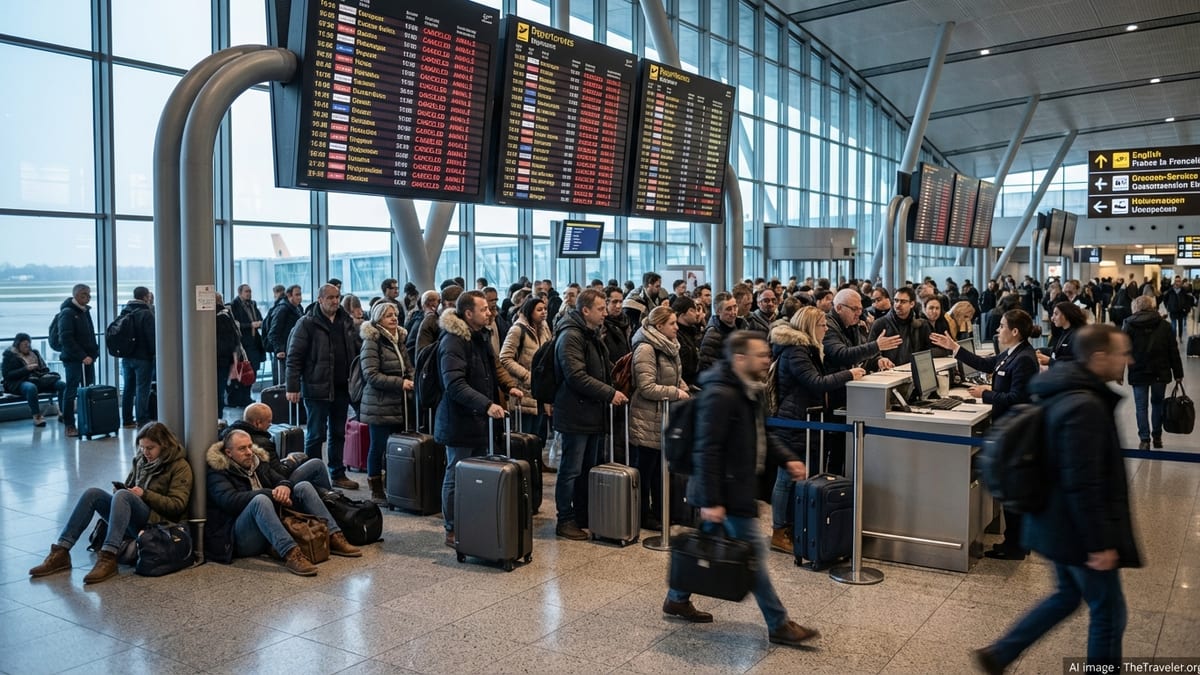
Storm Systems and Winter Chaos Hit Amsterdam and Barcelona
Amsterdam Schiphol once again emerged as one of the worst affected airports, with a fresh round of cancellations layered on top of a season already marred by severe winter storms. Earlier in January, Storm Anna forced the scrapping of more than 325 flights and delayed hundreds more as snow and powerful crosswinds overwhelmed runway capacity. That bout of weather left airlines such as KLM and easyJet cutting large portions of their schedules as ground handling and de-icing were periodically halted for safety reasons.
The latest cancellations at Schiphol are tied to the same unstable weather pattern that has continued to move across northwestern Europe, bringing bursts of snow, sleet and high winds that periodically push conditions beyond safe operating limits. Airlines have responded with rolling schedule cuts to avoid last-minute chaos, but the cumulative toll continues to mount for passengers who find themselves rebooked, rerouted or forced to abandon travel altogether.
Barcelona El Prat has also seen a spike in scrubbed services as Atlantic storm systems collide with milder Mediterranean air, producing episodes of heavy rain and crosswinds. While the disruptions in Barcelona have not reached the scale seen in Amsterdam, they have nonetheless contributed to the pan-European total of more than 332 canceled flights, particularly on short-haul routes linking Spain with the Netherlands, France, Germany and the United Kingdom.
For travelers, the pattern has been painfully familiar: early-morning messages advising of operational “adjustments,” followed by long queues at service desks and overloaded airline apps as thousands scramble to secure scarce alternative seats.
Sheremetyevo’s Stop-Start Operations Add to Passenger Uncertainty
In Moscow, Sheremetyevo International Airport has spent much of this winter navigating temporary airspace restrictions that have repeatedly forced abrupt suspensions and partial resumptions of service. On several occasions, flights were halted or sharply curtailed while authorities adjusted airspace corridors and implemented stricter safety protocols, before allowing tightly coordinated operations to resume.
A recent episode saw Sheremetyevo suspend arrivals and departures overnight before partially reopening with flights permitted only by prior agreement. Although the pause was relatively brief, it added dozens of cancellations to an already stretched network and underscored the fragility of flight schedules in a region where security-driven airspace changes can materialize with little warning.
These interruptions feed directly into wider European disruption. Sheremetyevo connects into hubs such as Amsterdam, Zurich and major cities in Germany and Turkey, so each cancellation can ripple outward, forcing aircraft and crews out of position and triggering knock-on cancellations at airports far beyond Moscow.
Even as carriers announce new or resumed routes into Sheremetyevo, they are doing so against a backdrop of heightened operational risk, where any tightening of restrictions can swiftly erase large chunks of a day’s schedule.
Zurich, Manchester and Brussels Struggle With Knock-On Effects
Zurich Airport, traditionally one of Europe’s more resilient hubs in winter, has nonetheless been hit hard by the combination of snow, low visibility and strong winds that have swept across central Europe. As conditions deteriorate, capacity is reduced and runways must be cleared more frequently, forcing airlines to trim operations. Swiss-based and partner carriers have prioritized long-haul services and essential connections, leaving many regional flights among the first to be canceled.
Manchester has contended with its own cocktail of winter weather and cascading disruption from elsewhere in the network. When aircraft fail to arrive from Amsterdam, Barcelona or central European hubs, departures from Manchester are often canceled outright rather than heavily delayed, adding to the local tally of scrapped flights. Passengers booked on leisure routes to Spain and city-break destinations in northern Europe have been particularly exposed.
Brussels, which sits at the heart of many multi-leg itineraries, has functioned as both a pressure valve and a bottleneck. As airlines attempt to re-route stranded passengers via Belgium, the airport has seen waves of irregular operations, with sudden surges in rebooked travelers, long lines at transfer desks and ground handling strained by banks of delayed arrivals. When inbound cancellations stack up, outbound services are then culled to re-balance aircraft and crews, entrenching the cycle of disruption.
Across Zurich, Manchester and Brussels, airport operators have urged passengers to arrive early, travel with hand luggage where possible and monitor airline channels closely, signaling that the situation may remain volatile even on days when local skies appear relatively calm.
Airlines Juggle Weather, Security and Network Strain
For Europe’s major airlines, the latest 332-plus cancellations are not an isolated incident but part of a season marked by extreme weather and fast-changing operating constraints. Carriers including KLM, British Airways, Lufthansa, Swiss, Vueling and low-cost operators have all faced days where dozens of flights had to be wiped from schedules to preserve safety margins and keep a core network functioning.
Winter storms across the continent have battered key hubs from Amsterdam and London to Zurich and Frankfurt, forcing airlines to deal simultaneously with runway closures, de-icing backlogs and crew duty-time limits. At the same time, airspace and security considerations, particularly in parts of Eastern Europe and the eastern Mediterranean, have compelled some airlines to reroute or suspend services entirely, reshaping traditional flight paths and reducing flexibility when irregular events occur.
Network planners have increasingly resorted to preemptive cancellations when severe weather is forecast, viewing early, controlled cuts as preferable to a chaotic day of rolling delays. Yet for travelers caught in the middle, that strategy still means canceled holidays, missed business meetings and long waits for refunds or compensation, even when airlines argue that storms and security decisions fall under extraordinary circumstances.
The financial strain is mounting as well. Each canceled flight can cost an airline hundreds of thousands of dollars once lost revenue, crew repositioning, aircraft parking, passenger care and potential compensation are factored in, raising concerns that persistent disruption may eventually filter through into ticket prices.
Passengers Face Rebookings, Compensation Battles and Uncertain Timelines
For the thousands of passengers left flabbergasted at check-in halls and boarding gates, the immediate priority has been simply finding a way to reach their destinations. With so many flights canceled across multiple hubs on the same day, rebooking options have quickly become scarce, especially on popular intra-European routes and long-haul connections that operate only once daily.
Travelers stranded at Amsterdam, Barcelona, Sheremetyevo, Zurich, Manchester and Brussels have reported long waits to speak with airline staff, overloaded call centers and airline apps that intermittently fail under the weight of rebooking requests. Hotel rooms near major airports have been snapped up within hours on peak disruption days, leaving some passengers to spend the night in terminal seating or on thin camp beds provided by local authorities and airport operators.
The question of compensation has become another flashpoint. Under European passenger-rights regulations, travelers whose flights are canceled or heavily delayed may be entitled to reimbursement and care in many circumstances, but airlines can decline payouts for weather or security-related events considered beyond their control. That gray zone has led to mounting frustration among passengers who see dozens of cancellations around them but are told that compensation is not guaranteed.
With further unsettled weather forecast across parts of Europe and airspace conditions in some regions still fluid, aviation analysts warn that the latest count of more than 332 cancellations may not be the last major spike this season. For now, passengers are being urged to keep a close eye on flight status updates, build extra time into itineraries and, where possible, hold flexible tickets that can be more easily adjusted when the next round of turbulence hits the continent’s skies.