

More news on this day
Ben Gurion Airport in Tel Aviv has been thrust back into crisis as at least 49 flights were cancelled in a single day, compounding disruption for passengers already reeling from the wider Middle East conflict and tightening operational caps on Israeli airspace.
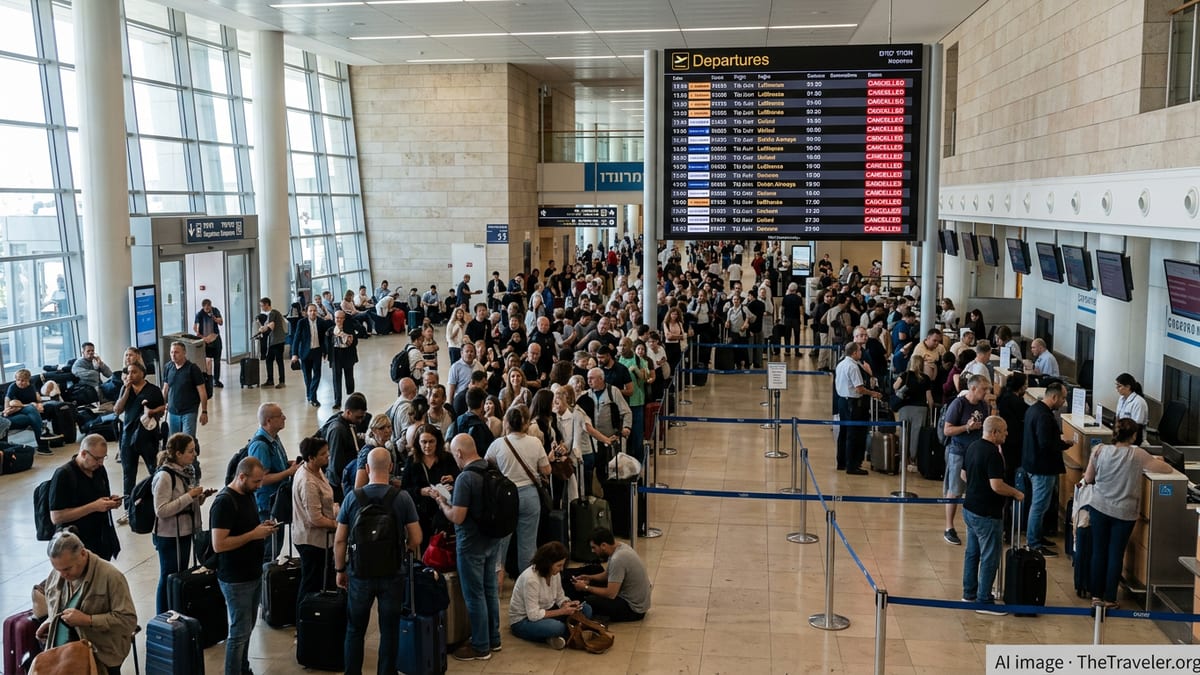
Fresh Wave of Cancellations Hits Ben Gurion
The latest disruption at Israel’s main international gateway comes just days after authorities began a cautious, phased reopening of the country’s skies following an unprecedented shutdown triggered by the escalating Iran war and a nationwide state of emergency. While officials had hoped that a gradual expansion of operations would ease pressure on stranded travelers, the new wave of cancellations has underscored how fragile the recovery remains.
Airport data and airline statements on Saturday indicated that 49 scheduled services were withdrawn from Ben Gurion’s departure and arrival boards over a 24-hour period. The cancellations cut across short- and long-haul routes and affected both Israeli and foreign carriers, from regional shuttles to key North American and European links.
For passengers on the ground, the numbers translated into long queues at customer service desks, last-minute itinerary changes and renewed uncertainty over when they would be able to leave or return to Israel. Many had already been rebooked multiple times since the airspace closure at the start of March.
El Al and Israir Struggle to Balance Recovery and Security
Israel’s flag carrier El Al has been at the center of efforts to restore limited connectivity, operating special recovery flights and preparing to resume outbound services with tight caps on passenger numbers per aircraft. Under state-approved guidelines, the airline has been permitted to carry only a fraction of normal loads while prioritizing travelers whose earlier flights were cancelled.
The new round of cancellations, however, has forced El Al to reshuffle its already constrained schedule. Several departures were pulled or re-timed as the carrier adjusted to updated security directives and slot limits at Ben Gurion. Passengers reported receiving late-night notifications of scrapped flights alongside offers to move to future recovery services, often days later than originally planned.
Israir, which had initially halted all services to and from Israel at the height of the airspace closure, has also been grappling with the stop-start nature of the reopening. Its attempts to reintroduce select regional routes from Ben Gurion have repeatedly collided with changing risk assessments and air traffic control restrictions, contributing to the tally of 49 cancellations and leaving domestic and leisure travelers with few alternatives.
United Airlines and Other Foreign Carriers Reassess Tel Aviv Plans
The disruption has extended well beyond Israeli operators. United Airlines, which had already suspended flights from the United States to Tel Aviv through much of the first week of March under a Middle East unrest travel waiver, again saw its restart timetable complicated by the renewed instability in Israeli airspace.
Industry sources said United was forced to cancel additional rotations to and from Ben Gurion as it weighed updated security guidance, overflight bans and insurance conditions linked to the regional conflict. The carrier has offered fee-free rebooking and refunds for affected customers, but many transatlantic passengers have been left searching for scarce seats via European hubs or postponing travel altogether.
Other international airlines, including several European and Gulf carriers that had previously pulled back from Israel, have likewise delayed or trimmed planned resumptions to Tel Aviv. Some have opted to maintain outright suspensions into the second half of March, citing the combination of airspace closures in neighboring countries, the risk of missile or drone activity and constraints on ground handling capacity at Ben Gurion.
Passengers Caught Between Security Directives and Limited Capacity
The renewed cancellations highlight the tension between security imperatives and the urgent demand for mobility in and out of Israel. Authorities continue to prioritize protection of the home front under the national emergency framework, imposing strict limits on the number of hourly movements, the types of flights permitted and the routes used to access Israeli airspace.
For travelers, the practical impact is acute. With many daily departures still scrubbed and those that do operate capped at sharply reduced passenger loads, available seats are far below pre-crisis levels. Travelers report that rebooking options often involve days-long waits, complex multi-stop routings and uncertain connections through hubs also affected by the wider Middle East shutdown.
Lines at Ben Gurion’s check-in halls and service counters have swelled as passengers try to secure scarce seats or clarify the status of upcoming flights. Airline staff, working under rapidly changing operational guidance, have struggled to provide firm answers, heightening frustration and anxiety for families, tourists and business travelers alike.
Uncertain Outlook for Israel’s Air Connectivity
While aviation analysts note that overall cancellation rates across the Middle East have begun to ease from their peak in the early days of the Iran conflict, they caution that Israel’s situation remains especially volatile. Ben Gurion’s role as both a civilian hub and a symbolically sensitive target means that any shift in the security picture can quickly translate into new movement caps or temporary suspensions.
Israeli officials have signaled that they intend to continue the phased expansion of operations as conditions permit, with an emphasis on repatriation and essential travel. El Al and other local carriers are preparing additional recovery flights and building contingency plans that can be activated if restrictions loosen further.
For now, however, the 49 fresh cancellations at Ben Gurion underline how precarious the path back to normality remains. Travelers planning to fly to or from Tel Aviv in the coming days are being urged to monitor their flight status closely, maintain flexible itineraries and prepare for the possibility of last-minute changes as Israel navigates one of the most challenging periods for its aviation sector in recent memory.