

More news on this day
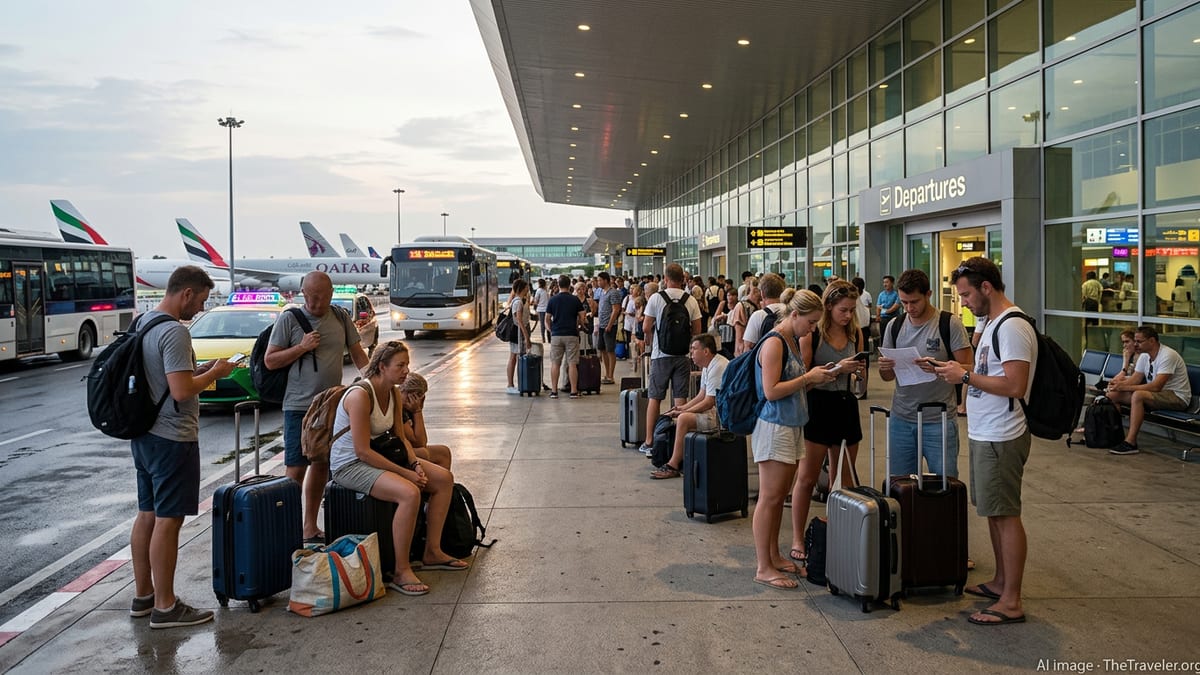
Thousands of holidaymakers in Phuket have seen their beach break abruptly extended, as more than 30 flights linking the Thai island to Europe and the Middle East were grounded amid a rapidly escalating regional conflict, leaving an estimated 5,000 travelers stranded and scrambling for new routes home.
Middle East Conflict Ripples Into Thailand’s Holiday Hub
The shutdown of key air corridors across the Middle East since February 28 has cascaded across global aviation, hitting Thailand’s resort island of Phuket just as peak high season crowds fill its hotels and beaches. With airspace closed or heavily restricted in countries including Iran, Iraq, Qatar and the United Arab Emirates, long‑haul services that normally funnel through Gulf hubs have been suspended or severely curtailed.
Phuket International Airport officials report that more than 30 flights serving the island have now been canceled or heavily disrupted in connection with the crisis, affecting routes to and from major transit points such as Dubai, Doha and Abu Dhabi. Local tourism sources say that in Phuket alone, over 5,000 visitors are now effectively marooned, many of them European holidaymakers whose itineraries relied on Middle Eastern connections.
The disruption comes against a backdrop of what aviation analysts describe as the worst global travel upheaval since the COVID‑19 pandemic, with thousands of flights canceled worldwide and key Gulf hubs operating at a fraction of normal capacity. For Phuket, whose international market has increasingly leaned on Gulf carriers to feed long‑haul arrivals, the sudden break in connectivity has immediate and visible consequences in the departure halls.
Airlines Grounded, Detours Lengthen the Journey Home
At Phuket International Airport, the impact is most acute on services operated by Middle Eastern and connecting carriers. Flights by Qatar Airways, Etihad Airways, Air Arabia and regional operators have been among those canceled or turned back in recent days, with aircraft and crew stranded out of position as the situation in the Gulf remains volatile.
In one widely discussed incident, an Abu Dhabi‑bound flight that had already departed Phuket was forced to return to the island after the airline reassessed the security outlook along its intended route. The aircraft landed safely back in Phuket, but the diversion underscored the level of operational uncertainty airlines now face when attempting to traverse or skirt the affected airspace.
Carriers that continue to serve Europe and other long‑haul destinations from Bangkok are relying on lengthier detours, routing wide‑body jets via southern corridors to avoid conflict zones. Industry briefings indicate that these workarounds add significant flight time and operating cost, and cannot easily be extended to all routes or regional airports such as Phuket. As a result, airlines have focused limited capacity on main gateways, leaving secondary leisure destinations to absorb the cancellations.
Stranded Tourists Turn to Emergency Support and Local Goodwill
Inside Phuket’s terminals, the immediate priority has been to prevent scenes of chaos familiar from previous global disruptions. Airport management has set up additional waiting areas, hydration points and information desks to guide confused travelers through rebooking procedures and to coordinate with airline ground agents on hotel and transport arrangements.
Local tourism groups say that while the number of people affected across the island is now in the low to mid‑thousands, the mood so far has been one of resigned frustration rather than panic. Many stranded tourists have been offered temporary accommodation by their airlines, while others are turning to online booking platforms or contacting tour operators in search of alternative ways out via Bangkok, Singapore or other Asian hubs.
The Thai government has moved quickly to frame the response as an exercise in “hospitality in crisis.” The Ministry of Tourism and Sports has announced a package of financial assistance worth up to 2,000 baht per person per day, capped at 20,000 baht, for travelers who can demonstrate that they are stuck in the country because of the airspace closures. Immigration authorities have confirmed that genuine tourists unable to depart will be granted visa relief and protected from overstay penalties while disruption continues.
Provincial officials in Phuket have also appealed to local hotels and guesthouses to show flexibility on rebookings, late check‑outs and cancellation fees for guests whose flights have been scrapped at short notice. Industry representatives say many properties are agreeing to discounted extension rates or waiving penalties for those forced to change plans.
Tourism Industry Braces for a Wider Shock
Beyond the immediate challenge of caring for stranded visitors, Thailand’s tourism industry is beginning to assess the medium‑term fallout from a crisis that could last several weeks. Travel trade bodies report that inbound tour groups from Europe and other long‑haul markets, particularly those routed through the Gulf, are already canceling March itineraries to avoid the risk of becoming stuck.
Phuket, Koh Samui and Bangkok are highlighted as the main pressure points, hosting both visitors who cannot yet leave and would‑be arrivals who no longer have flights. On the Andaman coast, some hotels are now juggling extended stays from guests with canceled departures alongside empty rooms left by travelers who never made it to Thailand. Travel agents warn that if the disruption extends into the Easter holiday period, the economic impact on local businesses could be significant.
Analysts note that Thailand has been actively courting Middle Eastern carriers and travelers in recent years to diversify away from its traditional reliance on East Asia and Europe. The current standstill lays bare the vulnerability that comes with such dependence on a handful of major hubs. Some operators are now urging the government to accelerate efforts to broaden air links via other regions and to strengthen contingency planning for future geopolitical shocks.
Uncertain Timeline Keeps “Paradise on Pause”
For now, officials in Bangkok and Phuket can offer little clarity on when full services might resume. Early hopes that Gulf carriers would restart regular operations within days have faded as the conflict has intensified, and aviation authorities in Europe and Asia continue to advise extreme caution over large swathes of Middle Eastern airspace.
Airlines say they are reviewing schedules day by day, reopening individual routes only when they are satisfied that safety can be maintained and viable alternative flight paths are available. Even once airspace restrictions are eased, they warn, it will take time to return aircraft and crews to normal rotations, clear backlogs of displaced passengers and rebuild confidence in affected corridors.
On Phuket’s beaches, that uncertainty translates into limbo for thousands of travelers who arrived for a short break in the tropics and now find themselves living out an extended stay. Some have embraced the unexpected extra days of sunshine, while others watch flight‑tracking apps and airline notifications with increasing impatience, waiting for confirmation that their route home has finally reopened.
Local authorities, mindful of the island’s image as a welcoming destination, insist that no visitor will be left without support. But with the crisis in the Middle East still unfolding and aviation planners warning of a protracted, uneven recovery, the message to anyone currently in Phuket is clear: paradise is temporarily on pause, and the journey home may be longer and more complicated than expected.