

More news on this day
A shallow magnitude 5.9 earthquake has struck Indonesia’s West Papua region, sending fresh tremors through coastal communities and prompting renewed concern over seismic safety in one of the world’s most active tectonic zones.
Get the latest news straight to your inbox!
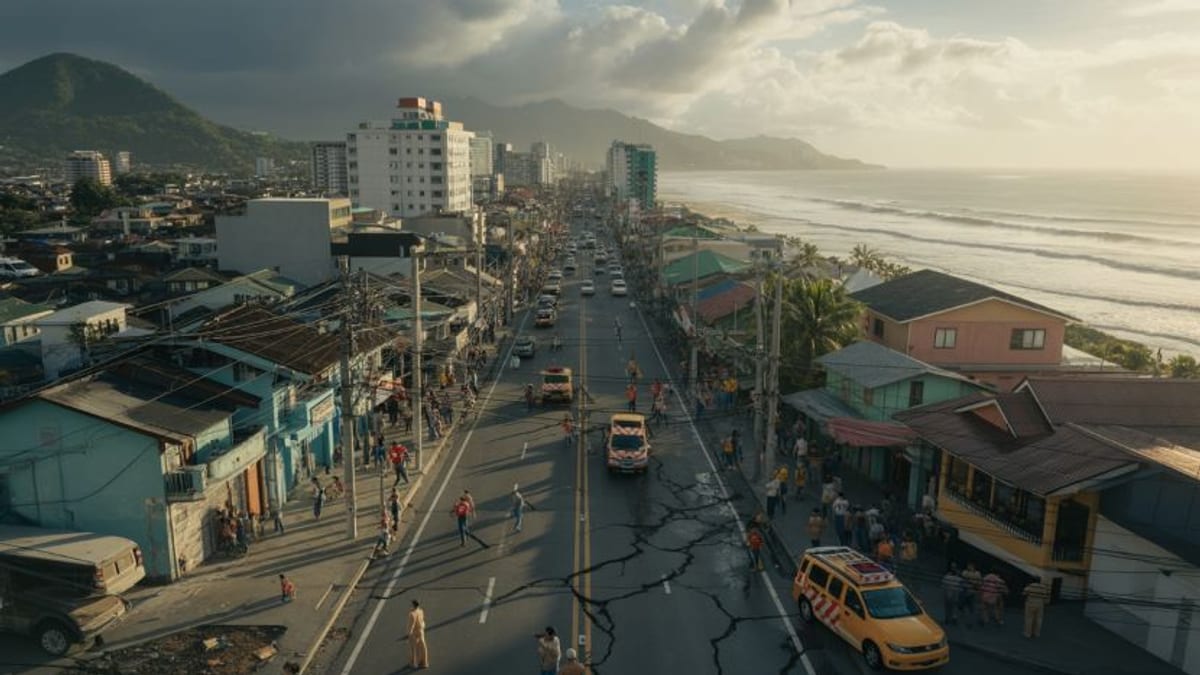
Image by Global Travel Alerts, Advisories, International Travel Alerts
Shallow Quake Rattles Remote but Vulnerable Region
Initial readings from global seismic monitoring agencies indicate that the earthquake registered magnitude 5.9 with a relatively shallow focus beneath West Papua, a sparsely populated yet strategically important province in eastern Indonesia. The tremor was felt across parts of the Bird’s Head Peninsula and nearby coastal districts, where many communities live close to the shoreline and rely on basic infrastructure.
Reports from regional monitoring centers describe the event as shallow, a category often associated with stronger shaking at the surface compared with deeper earthquakes of similar magnitude. Local observers noted that the jolt was sharp and brief, followed by a series of lighter tremors that kept residents on edge.
Early situation updates circulating through national media and disaster dashboards did not immediately point to large-scale damage, but assessments in remote highland and coastal settlements can take hours to emerge. Publicly available information highlights the challenges of communication in West Papua, where rugged terrain, patchy mobile coverage, and weather conditions can delay the flow of data from affected areas.
Seismologists note that even moderate events like this one can have outsized effects in regions where buildings are not consistently designed to withstand significant shaking. As officials compile field reports, attention is focusing on hillside communities, older riverbank structures, and informal housing clusters that are particularly exposed to ground motion and landslide risk.
Fresh Tremors Underscore Ongoing Seismic Activity
Following the main 5.9 shock, regional monitoring networks detected a number of smaller tremors in the broader Papua sector of the Sunda and New Guinea plate boundary. While aftershocks are a common part of earthquake sequences, their occurrence has reinforced a sense of unease among residents and raised questions about the possibility of further significant events.
Data from international earthquake catalogues show that eastern Indonesia and neighboring Papua New Guinea routinely experience earthquakes of magnitude 5 and above, reflecting the intense interaction of tectonic plates in this corner of the Pacific. Recent years have seen a succession of notable quakes across the wider region, including damaging events in northern Papua New Guinea and eastern Indonesia, underscoring the persistent nature of the hazard.
Current seismic readings do not indicate an immediate escalation into a larger regional crisis, but the clustering of tremors has prompted local disaster agencies and community groups to re‑examine preparedness levels. Public messaging in Indonesian-language outlets has been emphasizing the need for residents to stay alert to official advisories, review evacuation routes, and pay attention to updated hazard maps.
Experts caution that earthquake sequences can evolve unpredictably. While many moderate quakes gradually taper off through diminishing aftershocks, some episodes have historically led to subsequent significant events along neighboring fault segments. This uncertainty is reinforcing calls for a steady focus on readiness rather than reliance on short-term reassurance.
Indonesia’s Eastern Arc and Tectonic Setting
Indonesia sits astride the boundary between the Australian, Pacific, and Eurasian plates, and West Papua lies close to several complex microplate boundaries. Publicly available geological studies describe the area as a transition zone where the Australian Plate collides with smaller plates and fragments, generating frequent crustal deformation and shallow earthquakes.
In contrast to the more widely known Sunda subduction zone off Java and Sumatra, the tectonics of eastern Indonesia and Papua involve a mixture of subduction, strike‑slip motion, and crustal shortening. This mosaic of active structures creates a dense pattern of seismicity that extends from Sulawesi across the Maluku Islands and into Papua and New Guinea.
Historical earthquake records compiled by international agencies show that the Papua region has endured numerous moderate to strong shocks over the past several decades, some associated with tsunamis, landslides, and liquefaction. While the latest 5.9 quake appears to fall at the lower end of that damaging spectrum, specialists stress that it is part of a longer seismic narrative rather than an isolated incident.
Scientific reviews also highlight that shallow events, such as the latest West Papua earthquake, tend to concentrate their energy close to the surface. This characteristic can increase shaking intensity for communities directly above the rupture zone, even when the overall magnitude is below the threshold of the most destructive global events.
Infrastructure, Remote Communities, and Safety Concerns
The new tremors are drawing attention to the resilience of infrastructure in West Papua, where rapid development coexists with long‑standing gaps in building standards and public services. Roads, bridges, and government buildings in major centers have seen gradual upgrades, but many schools, clinics, and homes in outlying districts remain vulnerable to strong shaking.
Disaster preparedness reports on Indonesia have repeatedly noted disparities between urban and rural regions, especially in the east of the archipelago. In some parts of West Papua, residents rely on wooden or semi‑permanent structures built on soft soils or steep slopes, conditions that can amplify shaking and increase the risk of structural failure, rockfall, or landslides during earthquakes.
Access constraints complicate emergency response. Many villages are reachable only by narrow mountain roads, small boats, or short airstrips, limiting the speed at which detailed damage assessments and humanitarian support can be delivered. These factors mean that even a moderate earthquake demands close monitoring for delayed impacts, such as damaged hillside paths, disrupted river transport, or compromised water systems.
Publicly available policy documents from Indonesian disaster management agencies stress the importance of early warning, evacuation drills, and community‑led preparedness initiatives. The latest tremors in West Papua are expected to add urgency to efforts to expand earthquake education campaigns, encourage safer construction techniques, and integrate seismic risk more fully into local development plans.
Regional and National Preparedness Under Renewed Scrutiny
The West Papua earthquake arrives at a time when Indonesia is already engaged in a broad review of disaster readiness in light of recurring events across the archipelago. From large offshore megathrust quakes to inland crustal ruptures, the country faces a spectrum of seismic threats that require sustained investment in monitoring networks, public communication, and resilient infrastructure.
Recent nationwide drills and contingency planning exercises have aimed to refine coordination among national and provincial agencies, the military, and civil society organizations. The latest sequence of tremors in West Papua is likely to be examined as a real‑world test of how effectively warning messages reached remote populations and how quickly local teams were able to gather information on damage and needs.
Analysts following Indonesia’s disaster management efforts point to encouraging improvements in seismic instrumentation, mobile alert platforms, and hazard mapping, while also highlighting persistent challenges in funding, enforcement of building regulations, and long‑term community engagement. The West Papua quake is expected to feature in upcoming technical reviews as a case study in managing risk in remote, geologically complex regions.
As updated impact reports emerge, observers anticipate renewed debate over how to balance economic development, resource extraction, and infrastructure expansion in West Papua with the realities of living atop one of the planet’s most active tectonic frontiers.