

The Lone Star Hiking Trail, winding for more than 120 miles through Sam Houston National Forest, has become a popular winter and shoulder-season adventure for hikers from across Texas and beyond. Its reputation as a relatively flat, approachable long-distance trail can be misleading, though.
Between long dry stretches, hunting-season rules, swampy lowlands, and complicated logistics, first-time hikers often discover the “easy Texas trail” is anything but simple. Understanding the most common mistakes others make can help you avoid trouble and enjoy the quiet pine woods, boardwalks, and creek corridors that define this uniquely Gulf Coast hike.
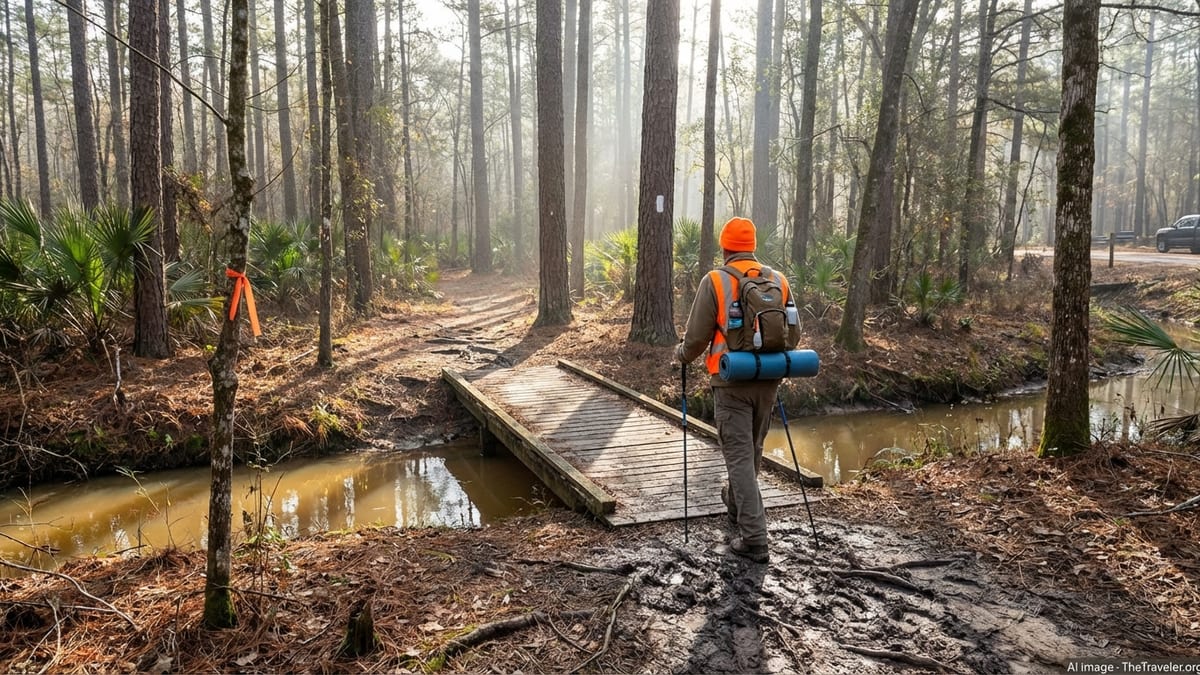
Underestimating the Trail’s Logistics and Terrain
On paper, the Lone Star Hiking Trail looks straightforward: modest elevation, well-marked blazes, and multiple road access points. That profile tempts newcomers to assume it will feel like an extended day hike. In reality, logistics are often more challenging than the terrain itself. Road walks, confusing spur trails, seasonal closures, and limited services mean you must plan more carefully than the low elevation suggests.
Assuming “Flat” Means “Easy”
Many first-timers equate low elevation with low effort. Along the Lone Star Hiking Trail, the challenge comes less from climbing and more from repetition. Long, flat miles through pine forest can feel monotonous and mentally draining, especially on a full thru-hike where many hikers complete 15 to 20 miles per day. Roots, mud, and slick boardwalks also demand constant attention, which wears down concentration over time.
The trail’s surface varies from firm pine duff to ankle-deep mud after heavy rain. In places, you may encounter submerged sections, churned-up horse tracks where other routes intersect, and narrow levees beside creeks. None of this qualifies as technical mountaineering, but it does require balance, patience, and a steady pace that many first-time visitors fail to anticipate.
Overlooking Road Walks and Access Gaps
The Lone Star Hiking Trail is not a single uninterrupted path of forest tread. Several segments require walking on paved or gravel roads, including long stretches around the Big Woods and Phelps sections where hikers share skinny shoulders with vehicle traffic. First-timers often fail to factor this into their daily mileage, only to discover that road walking with a full pack feels far harder on feet and joints than soft forest trail.
Access points can also be spaced farther apart than new hikers expect. Not every trailhead has clear signage, large parking areas, or obvious room for shuttle vehicles to turn around. Those details matter if you are planning section hikes, carpools, or pickup times, and they can become serious problems when a ride is waiting at the wrong forest road junction.
Failing to Plan Entry and Exit Points
Many hikers decide they will “just hike until they are tired” and then call a ride. Cell coverage across Sam Houston National Forest is inconsistent at best. Between patchy reception, confusing forest service road networks, and the length of the trail itself, this improvisational style can leave first-timers stranded, exhausted, or forced to walk many extra miles to reach a recognizable pickup spot.
A better approach is to identify firm start and end trailheads for each day or section, plan off-ramps where you could safely exit early if needed, and share those plans with any shuttle driver or friend meeting you. Having specific waypoints in mind reduces anxiety, especially for first-time long-distance hikers who are still finding their pace.
Mismanaging Water and Resupply
Ask experienced Lone Star hikers what surprised them most, and many will mention water. The trail crosses numerous creeks, ponds, and drainages, but that does not mean water is always abundant or clean. During dry spells, some listed sources become stagnant, shallow, or disappear altogether. New hikers often misread guidebook notes, overestimate how much they can “stretch” their water, or underestimate how silty and tannin-stained some sources can be.
Trusting Every Water Symbol on the Map
One of the biggest mistakes is assuming every blue line or pond icon on a printed or digital map represents usable water. On the Lone Star Hiking Trail, many mapped sources are intermittent, seasonal, or reduced to muddy puddles during drought. Hikers frequently arrive at a “creek” symbol and find only damp sand or stagnant pools thick with leaves and algae.
Up-to-date trail resources often use a rating system to describe reliability, but newcomers sometimes skip those details or do not understand that a low rating can translate to “essentially dry outside of recent heavy rain.” Before committing to a thru-hike or long section, hikers should study the most current trail guides and club updates to understand where the long dry gaps actually fall and plan their daily mileage around them.
Carrying Too Little Water Capacity
Because Texas can be hot and humid even in cooler seasons, water demand is high. A common novice mistake is heading out with only two standard bottles or a single small bladder, assuming they will refill frequently along the way. On sections with extended dry stretches, that simply is not enough. Once you factor in cooking, hygiene, and a safety margin, many hikers discover they should be capable of carrying three to four liters at a minimum, and more in very dry conditions.
Additional capacity does not have to mean carrying more water all the time, but it gives you the flexibility to top off before uncertain stretches, avoid risky marginal sources, and camp where the terrain is best rather than where the last puddle happened to appear. Without that flexibility, first-time hikers sometimes find themselves rationing sips under a heavy pack in warm weather, which can quickly deteriorate into heat stress.
Underestimating Filtration and Silt Problems
The Lone Star Hiking Trail is notorious for silty, tannin-rich water in certain areas. New backpackers who have used the same filter successfully on clear mountain streams are often surprised when their devices clog quickly in Texas pine-forest ponds and slow-moving creeks. Without pre-filtering through a bandana or other fabric, some filters can become nearly unusable in a day.
First-timers also miscalculate how long filtration will take at the end of a big mileage day. Processing multiple liters from a shallow, leaf-filled pond can turn into a half-hour chore, just when you are most tired and least patient. Some hikers fail to bring backup purification tablets or a secondary method, leaving them vulnerable to gear failure far from the nearest trailhead.
Neglecting Food and Resupply Strategy
Although the Lone Star Hiking Trail passes near a few developed campgrounds and small towns, it is not lined with convenience stores or full-service camp shops. First-timers sometimes assume they can resupply on the fly, only to discover that seasonal stores are closed or that the nearest gas station requires a multi-mile road walk they did not budget for.
A safer strategy is to plan to be self-sufficient with food for the full stretch you intend to hike, whether that is three days or a full thru. Some hikers stage food and water caches at key trailheads, clearly labeled and carefully placed so they do not become litter or wildlife magnets. Others arrange shuttles or support from friends. What rarely works well is leaving resupply entirely to chance.
Ignoring Hunting Season, Regulations, and Safety
The Lone Star Hiking Trail passes through an actively managed national forest where hunting is common in the fall and early winter. Regulations about camping locations, clothing, and behavior change significantly during this period. First-time hikers who arrive without understanding these rules often find their plans colliding with hunting seasons, campground restrictions, and basic safety realities.
Overlooking Seasonal Camping Restrictions
From late September through early January, camping along the trail is typically restricted to designated sites, hunter camps, and a few established campgrounds. Outside of that period, dispersed camping is widely allowed on national forest land with some exceptions. New hikers frequently plan their trip using generalized blogs or secondhand advice and only discover the restrictions when a sign at the trailhead informs them that their flexible campsite plans are no longer valid.
That oversight can force last-minute changes to daily mileage, pushing hikers to reach official sites that may be farther than they are comfortable hiking. It can also create conflicts with forest regulations if campers decide to set up in prohibited zones out of fatigue or confusion. Careful pre-trip research on seasonal rules, combined with a clear list of legal campsites, helps prevent this problem.
Not Wearing High-Visibility Clothing During Hunting Seasons
During active hunting periods, many experienced hikers along the Lone Star Trail wear blaze orange vests, hats, or pack covers to stand out clearly against the forest backdrop. New visitors sometimes underestimate just how common hunting is in this region or assume staying close to the trail will keep them safe without additional visibility measures.
In reality, wearing bright colors is a simple and highly effective precaution. First-timers who stick to muted natural tones for aesthetic or wildlife-viewing reasons can inadvertently blend into the undergrowth, especially in low light. A small investment in high-visibility gear greatly reduces risk and also reassures hunters who may encounter you near popular access points and camps.
Misunderstanding Where Private Land Begins
The Lone Star Hiking Trail crosses a patchwork of national forest, easements, and road rights-of-way. Hikers are expected to respect property boundaries, stick to the signed route, and avoid camping on private land. Newcomers unfamiliar with the local landownership mosaic occasionally wander off-trail to find a campsite or shortcut a bend, only to discover later that they had inadvertently crossed onto private property.
Beyond the courtesy and legal considerations, this kind of mistake can threaten long-term access if landowners lose patience with trespassing hikers. Sticking to marked corridors, using current maps, and being willing to walk a bit farther to find legal camping spots are simple ways to help preserve the trail’s reputation and your own peace of mind.
Packing Poorly for Gulf Coast Forest Conditions
Because the Lone Star Hiking Trail lacks the high alpine passes or dramatic desert expanses of other long routes, first-time hikers sometimes treat their packing lists casually. That approach can backfire quickly. Shallow soils, dense forest, frequent mud, and Gulf Coast weather create a specific set of conditions that reward thoughtful gear choices and punish oversights.
Overpacking Heavy, Underused Gear
On a relatively low-elevation trail, every extra pound feels unnecessary by the end of the day. Many first-timers bring multiple changes of clothing, bulky cookware, or large comfort items such as camp chairs and heavy lanterns, assuming that a flatter route will make hauling them easy. After a few days of repetitive steps on soft, sometimes muddy tread, those items begin to feel like anchors.
Trimming your load does not mean abandoning all comfort, but it does call for honest evaluation. If an item does not serve multiple functions or address a specific known challenge on this trail, consider leaving it behind. A lighter pack makes it easier to navigate slick log crossings, to move quickly in stormy weather, and to adjust daily mileage if water or campsite plans change.
Underestimating Mud, Wet Feet, and Humidity
Sections of the Lone Star Hiking Trail can stay saturated for days after heavy rain. First-time hikers often arrive with a single pair of trail shoes and cotton socks, assuming they will stay mostly dry. Instead, they find themselves slogging through standing water, skirting swampy edges, and slipping along muddy embankments where drainage is poor.
Cotton socks stay damp and cold, increasing the risk of blisters and trench-foot-like skin issues. Shoes without decent drainage simply hold muddy water against your skin. Savvy hikers bring multiple pairs of synthetic or wool socks, lightweight camp shoes to let their feet breathe at night, and small items such as foot balm and tape to manage hot spots before they become debilitating.
Skipping Insect and Sun Protection
Sam Houston National Forest offers generous shade in many stretches, but that does not eliminate sun exposure, particularly on road walks, in logged areas, and around lakes. First-time hikers sometimes leave hats, sunglasses, or sunscreen at home, expecting the tree canopy to do all the work. Over multiple days, even intermittent sun exposure can produce burns and dehydration.
Insect pressure varies by season and recent rainfall, but mosquitoes, ticks, and biting flies are regular companions in warmer months. New hikers who forget repellents or protective clothing quickly discover just how draining constant swatting and scratching can be. Long, lightweight layers and a small bottle of repellent often make the difference between a pleasant camp evening and a miserable one.
Choosing the Wrong Shelter for Local Conditions
Texas hikers sometimes default to hammocks, counting on abundant trees and a desire to remain above mud and standing water. While hammocks work wonderfully for many along the Lone Star Trail, they require careful selection of tree spacing and forethought about underquilts or pads on cool nights. First-timers with minimalist hammock setups can end up cold, damp, and short on suitable hanging sites along some segments.
Tent users, meanwhile, must be ready to pitch on wet or uneven ground. Bringing a robust groundsheet, extra tent stakes for sandy soil, and a willingness to walk a little farther to find elevated sites can help keep you dry in overnight storms. Whichever shelter you choose, testing it before your trip and practicing quick, efficient setup will pay off when afternoon thunderstorms arrive without warning.
Neglecting Navigation, Timing, and Weather Windows
The Lone Star Hiking Trail is generally well blazed, with white markers and mileage plates, but that does not mean navigation takes care of itself. Vegetation growth, reroutes, storm damage, and seasonal flooding can complicate route-finding, especially in less-frequented segments. New hikers also underestimate how quickly weather can swing from cool and pleasant to hot, humid, or stormy in East Texas.
Relying Solely on One Navigation Tool
Many first-timers depend entirely on a single phone app or GPS track for navigation. While digital tools are valuable, batteries die, screens crack, and reception can be poor under dense canopy or during storms. A dedicated long-distance guide, printed overview maps, or at least screenshots of key sections provide crucial backup if your primary device fails.
Another subtle navigation mistake involves ignoring small details in guide notes, such as references to confusing intersections, unmarked road crossings, or short reroutes around flooded zones. Those lines exist because hikers have gone wrong there before. Reading them carefully before you reach each segment can spare you unnecessary miles and frustration.
Starting at the Wrong Time of Year
The Lone Star Hiking Trail is often marketed as a great winter or shoulder-season hike, which it is, but timing still matters greatly. First-time hikers sometimes set out in the hottest periods of late spring or early fall, not realizing how punishing the combination of high humidity, warm temperatures, and limited breezes can be under the pines.
Even in cooler months, rapid swings between fronts can bring heavy rain and severe thunderstorms. New visitors may plan fixed mileage without allowing room for zero or low-mile days to wait out dangerous weather. Building flexibility into your schedule, including a buffer day and alternate exit points, can be the difference between a rewarding trip and a forced early bail-out in hazardous conditions.
Underestimating Creek Crossings and Flood-Prone Areas
Most of the time, creek crossings along the Lone Star Hiking Trail are straightforward, assisted by bridges, boardwalks, or shallow fords. After major storms, though, some drainages expand significantly, flooding low-lying sections of trail and turning side channels into boot-deep or higher wades. Novice hikers may push ahead into swollen creeks without realizing how unstable the footing becomes under fast, turbid water.
Patience and prudence are crucial here. Waiting a few hours for water to subside, detouring via road connectors described in current guides, or backtracking to higher ground can be frustrating in the moment but far safer in the long run. Bringing trekking poles and footwear that provide grip on slick wood and mud reduces the risk of falls when crossings are merely challenging rather than impassable.
Overlooking Mental Preparation and Solo Safety
Perhaps the most insidious mistakes new Lone Star hikers make are psychological rather than physical. The trail can feel isolated, particularly on weekdays or in less-traveled segments, and the combination of monotonous scenery, long distances between services, and uncertain weather tests mental resilience. Solo hikers in particular must prepare for stretches of deep quiet and small but compounding stressors.
Expecting Constant Cell Service and Quick Rescue
First-time hikers who are used to metropolitan parks assume that help is always a phone call away. On the Lone Star Hiking Trail, you may go hours without a signal. Even when you do connect, communicating your exact position on a forest road network can be challenging if you have not noted nearby trailhead numbers or road names.
A basic safety routine should include telling a trusted person your route and daily itinerary, checking in from known coverage points when possible, and agreeing on what that person should do if you fail to make contact by a certain time. Carrying a whistle, basic first-aid kit, and familiarity with self-rescue techniques helps as well. For longer or winter trips, some hikers choose to bring a satellite communicator, which is not essential but offers peace of mind.
Underestimating the Psychological Challenge of Repetition
The forest beauty of the Lone Star Hiking Trail is subtle rather than dramatic. You will pass through variations of pine, hardwood, and baygall forest again and again, with occasional lakes, creeks, and small vistas. For hikers expecting sweeping mountain views, this quieter landscape can feel repetitive, leading to boredom or dips in motivation.
Some first-timers misread that boredom as a failure on their part or as evidence that they are “not cut out” for long-distance hiking. In reality, monotony is a common psychological hurdle on many trails. Strategies such as breaking the day into short segments, using audio entertainment responsibly, and consciously looking for small details in the flora and fauna can help keep your mind engaged. Hiking with a partner can also ease the long, quiet miles, but solo hikers often find their rhythm after a day or two.
Ignoring Solo and Group Dynamics
The Lone Star Hiking Trail is well suited both to solo and small-group trips, but each style introduces its own pitfalls. Solo hikers who push too far beyond their comfort zone in terms of mileage or terrain may hesitate to turn back without another voice to validate that decision. Group hikers, meanwhile, can fall into the trap of hiking at the pace of the fastest member, leading others to fatigue and potential injury.
Open communication before and during the trip is essential. If you are hiking with others, set clear expectations about daily mileage, break frequency, and decision-making when conditions deteriorate. If you are hiking solo, commit in advance to conservative turnaround rules, such as never pushing deeper into a storm or darkness simply to match a pre-trip mileage target. Respecting your own limits, rather than comparing yourself to other hikers’ online trip reports, is one of the most important preparations you can make.
The Takeaway
The Lone Star Hiking Trail rewards those who take it seriously. Its gentle grades and year-round accessibility conceal a network of logistical puzzles involving water, regulations, weather, and mental stamina. The most common mistakes first-time hikers make rarely involve dramatic mountaintop misadventures. Instead, they stem from small oversights that accumulate: one liter too little water, one key regulation unread, one extra pound of unnecessary gear, one assumption that the flat trail will be easy no matter the season.
By studying up on current water conditions, hunting-season rules, and campsite options; choosing gear tailored to Gulf Coast forests; and giving as much attention to mental preparation as to mileage goals, you can avoid those traps. In exchange, the trail offers long stretches of quiet pine woods, nighttime choirs of frogs, and the satisfaction of traversing one of the South’s longest continuous footpaths. With a bit of foresight, your first trip along the Lone Star Hiking Trail can feel less like a trial and more like the beginning of a long relationship with Texas’ signature long-distance hike.
FAQ
Q1: How long is the Lone Star Hiking Trail, and how many days should a first-time thru-hike take?
Most current sources place the Lone Star Hiking Trail at just over 120 miles, including major spurs and connectors. Many first-time thru-hikers plan between five and eight days, depending on fitness, pack weight, and how aggressively they want to cover miles. Planning closer to a week allows for shorter days at the start and some flexibility for weather or rest.
Q2: What is the best time of year for a first-time Lone Star Hiking Trail hike?
Late fall, winter, and early spring are generally the most comfortable times, with cooler temperatures, fewer insects, and less risk of extreme heat. Many hikers aim for a window between late October and early March, avoiding the hottest, most humid months. If you hike during peak hunting season within that range, make sure you understand camping restrictions and wear high-visibility clothing.
Q3: Do I need any special permits to hike or camp along the Lone Star Hiking Trail?
You do not generally need special backcountry permits just to hike the trail, but certain developed campgrounds charge fees, and camping rules change during hunting season. Always check current Sam Houston National Forest information before your trip so you know where camping is allowed, what fees apply at developed sites, and whether any temporary closures or fire restrictions are in place.
Q4: Is water really that difficult to find on the Lone Star Hiking Trail?
Water is usually available in some form, but reliability and quality vary widely. In wet periods, creeks and ponds are more abundant, while drought conditions can turn many of those into stagnant puddles or dry beds. Hikers should carry the capacity for at least three to four liters, use an effective filter or purifier, and study recent reports and guides that highlight the longest dry stretches so they can plan accordingly.
Q5: How well marked is the trail, and do I need a GPS device?
The trail is generally well marked with blazes and mileage plates, and most hikers can follow it with a combination of on-the-ground markers and a good guide. However, a GPS device or navigation app is very helpful at confusing junctions, after storms, or in areas where vegetation has obscured the path. Even if you rely on electronics, carrying basic printed information or offline screenshots is wise in case batteries fail or devices malfunction.
Q6: Is it safe to hike the Lone Star Hiking Trail alone?
Many people hike the Lone Star Trail solo without incident, but solo travel always requires extra caution. Tell a trusted person your itinerary, carry at least a basic first-aid kit and whistle, and be conservative with decisions about creek crossings, long dry stretches, and pushing mileage late in the day. Consider a satellite communicator for longer trips, and be mentally prepared for extended periods of solitude, especially on weekdays.
Q7: What kind of footwear is best for this trail?
Lightweight, quick-draining trail runners or light hikers paired with synthetic or wool socks work well for most people, especially given the frequent mud and standing water. Traditional heavy boots can stay wet longer and feel cumbersome on long, flat days. Whatever you choose, break your footwear in before your trip and bring supplies to manage hot spots and blisters, as constant moisture can be tough on your feet.
Q8: Are there bears or other dangerous animals on the Lone Star Hiking Trail?
Black bears are not a common concern along this trail. More typical wildlife encounters involve feral hogs, snakes, and smaller animals such as raccoons. Basic precautions include watching where you place your hands and feet, especially around logs and tall grass, storing food securely so animals are not attracted to camp, and staying alert at dawn and dusk when many animals are more active.
Q9: How crowded is the Lone Star Hiking Trail compared to more famous long-distance routes?
The Lone Star Hiking Trail is generally far less crowded than national headline trails. On weekends near popular access points you may see day hikers and local backpackers, but long stretches can still feel very quiet, especially on weekdays and in shoulder seasons. For many first-time long-distance hikers, that relative solitude is appealing, but it does increase the importance of self-reliance and careful planning.
Q10: What is the single most important preparation step for a first-time Lone Star Hiking Trail hiker?
If you had to prioritize one thing, it would be understanding and planning for the trail’s water situation. That means studying current resources, carrying adequate capacity, choosing a reliable filtration system suited to silty sources, and building your daily mileage plan around where good water is likely to be found. Once water is handled, you can more easily adapt to other challenges such as weather, terrain, and logistics.