

More news on this day
Across more than 5,000 aircraft, a handful of designs form the backbone of the United States Air Force, providing the bulk of its airlift, refueling, training and combat power around the world.
Get the latest news straight to your inbox!
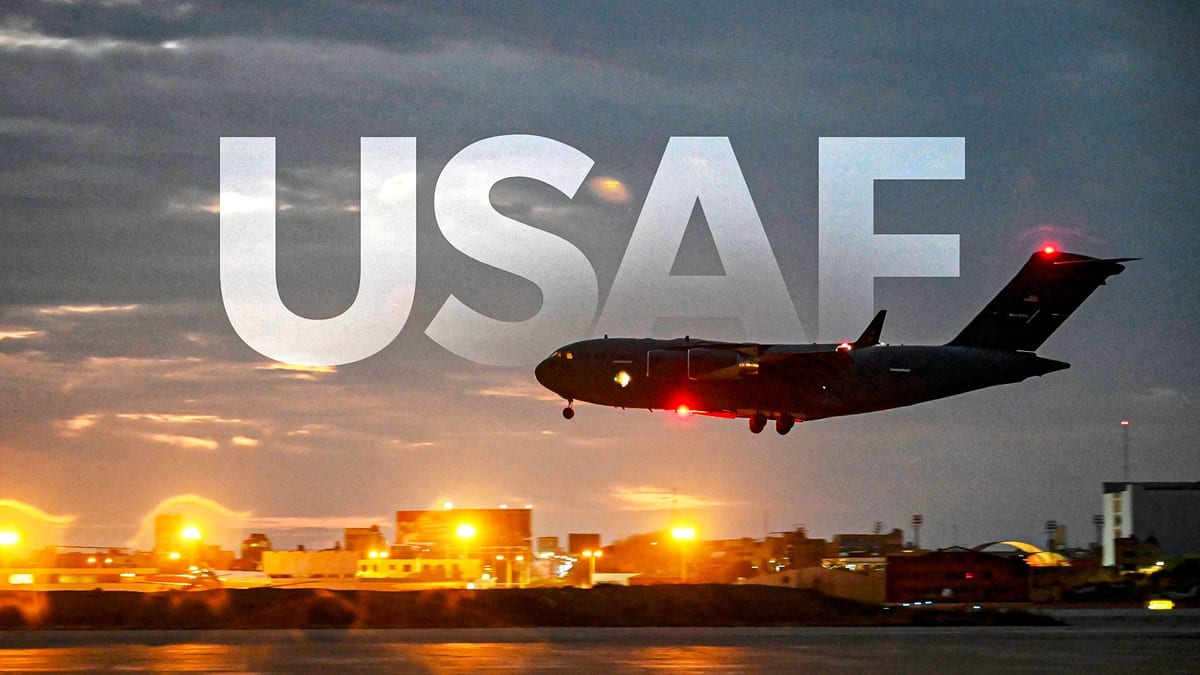
Image by Simple Flying
Data Snapshot: How Fleet Size Is Tracked
Recent inventories compiled in the 2025 Air & Space Forces Almanac and other open-source assessments indicate that the Air Force operates just over 5,000 crewed aircraft across the active force, Air National Guard and Air Force Reserve. These references categorize fleets by mission, such as airlift, tanker, trainer and combat, and list total aircraft inventory figures as of late 2024.
While exact numbers shift as aircraft retire, transfer to reserve units or complete depot maintenance, analysts consistently identify a small group of types as the largest fleets in Air Force service. Transport and training aircraft feature prominently, reflecting the scale of global logistics and pilot production, alongside long-serving fighters and tankers.
Based on converging figures from the 2025 Almanac and independent defense databases, the five largest fleets in service today are the C-130 Hercules airlifter, the F-16 Fighting Falcon multirole fighter, the T-6 Texan II primary trainer, the KC-135 Stratotanker, and the C-17 Globemaster III strategic transport.
These aircraft span generations of technology, from first deliveries in the late 1950s to modern digital trainers. Together they illustrate how the Air Force blends legacy platforms with newer designs as it transitions toward fifth-generation fighters and next-generation mobility fleets.
C-130 Hercules: The Tactical Airlift Workhorse
The C-130 Hercules family is widely assessed as the single largest aircraft fleet in the Air Force, with total numbers typically cited in the mid-200s when active-duty, Guard and Reserve aircraft are combined. Publicly available planning documents have described a target of around 255 C-130s, split between newer C-130J models and upgraded older H variants.
First flown in the 1950s, the C-130 continues to anchor tactical airlift, hauling troops, vehicles and supplies into short or austere runways that larger transports cannot use. The worldwide C-130J fleet, including Air Force and allied operators, has accumulated millions of flight hours, underscoring the platform’s enduring relevance in both combat and humanitarian roles.
Within the United States Air Force, Hercules variants support everything from airborne assault and medical evacuation to special operations and weather reconnaissance. The aircraft’s versatility, with configurations ranging from basic transport to gunship and electronic warfare platforms, helps explain why the fleet remains both large and heavily tasked.
Current modernization efforts focus on cockpit upgrades, avionics standardization and propulsion improvements intended to keep the C-130 in front-line service well into the 2030s while a new generation of tactical airlifters is evaluated.
F-16 Fighting Falcon: Aging, But Still The Most Numerous Fighter
The F-16 Fighting Falcon, often referred to as the Viper within the Air Force, remains the most numerous fighter in the inventory. Recent official fact sheets list an Air Force inventory of roughly 900 F-16s when active units and the Air National Guard are counted together, making it one of the largest single-type fleets in the service.
Introduced in the late 1970s as a lightweight day fighter, the F-16 evolved into a highly capable multirole platform. It performs air defense, close air support, precision strike and suppression of enemy air defenses, and has seen continuous combat use from the Gulf War to more recent operations in the Middle East.
Although the Air Force is shifting its long-term combat fleet toward the F-35A and a smaller number of F-15EX aircraft, the F-16 is being modernized to remain viable through the 2030s. Public information highlights life-extension programs that strengthen the airframe, add modern radar and mission computers, and support advanced weapons, enabling the large fleet to continue filling day-to-day taskings worldwide.
Analysts note that the size of the F-16 fleet gives the Air Force flexibility in balancing homeland air defense, overseas rotations and training commitments as fifth-generation jets gradually take on a larger share of combat duties.
T-6 Texan II: Quietly One of the Biggest Fleets
Less visible to the traveling public but central to the Air Force’s future is the T-6 Texan II primary trainer. Open-source fleet summaries show several hundred T-6 aircraft in service across the Air Force, making it one of the largest single-type fleets operated by the service despite its training role.
The turboprop T-6 introduces new pilots to military flying, covering basic maneuvers, aerobatics, instrument procedures and formation flight. Its large numbers reflect the continuous throughput required to keep the pilot pipeline filled for fighters, bombers, mobility aircraft and special operations platforms.
Because the T-6 is used by both the Air Force and Navy in a joint training enterprise, the scale of operations around bases in Texas, Mississippi and Oklahoma is substantial. The aircraft’s relatively low operating cost and modern avionics make it well suited to high-tempo training, which can generate more flight hours per airframe than many front-line combat jets.
Fleet-wide improvements, including avionics updates and attention to maintenance issues reported in recent years, are intended to ensure that this large training fleet remains reliable as the Air Force introduces follow-on systems such as the T-7A advanced trainer.
KC-135 Stratotanker: A Large but Aging Refueling Backbone
The KC-135 Stratotanker, first delivered in the late 1950s, still forms the bulk of the Air Force’s aerial refueling capacity. Publicly available tallies typically place the KC-135 fleet in the mid-300s, making it one of the largest aircraft types in service and by far the largest dedicated tanker fleet.
Over decades of service, the KC-135 has supported fighter patrols, bomber missions and cargo flights over every major theater. Its ability to refuel multiple aircraft types in flight effectively multiplies the range and endurance of other fleets, from the F-16 and F-35 to the B-52 and C-17.
Despite its age, the KC-135 has undergone multiple avionics and structural modernization programs. Contemporary budget documents indicate a gradual drawdown as KC-46A Pegasus tankers enter service, but the tanker community still relies heavily on the Stratotanker to meet daily refueling requirements in Europe, the Middle East and the Indo-Pacific.
The size of the KC-135 fleet reflects how central aerial refueling is to American airpower. Even as new tankers arrive, the Air Force is expected to operate substantial numbers of KC-135s through the coming decade to avoid a gap in global reach.
C-17 Globemaster III: Heavy Lift At Global Scale
Rounding out the five largest fleets is the C-17 Globemaster III, the Air Force’s primary long-range strategic transport. Official and industry references consistently attribute around 220 to 225 C-17s to the United States, the majority operated by the Air Force with a small number assigned to allied partners through joint arrangements.
The C-17 fleet enables rapid deployment of troops, armored vehicles and outsized cargo from the continental United States to distant theaters. Its combination of intercontinental range and the ability to operate from relatively short, semi-prepared airstrips makes it central to contemporary concepts of expeditionary warfare and humanitarian response.
From large-scale operations in Iraq and Afghanistan to disaster relief flights after earthquakes and hurricanes, the C-17 has become a familiar sight at major hubs and remote airfields alike. The fleet’s size allows the Air Force to sustain simultaneous missions, including support to NATO allies, Indo-Pacific logistics and domestic contingency operations.
With production of the C-17 line complete, the Air Force is focused on keeping its existing aircraft viable through avionics upgrades and structural maintenance. The substantial size of the fleet ensures that the aircraft will remain a cornerstone of US global mobility for many years, even as planners study future heavy-lift concepts.