

More news on this day
As demand grows for smaller ships that linger longer in port, Azamara is leaning into its hallmark “destination immersion” with itineraries that reach characterful harbors, historic old towns, and dramatic coastlines that many big vessels simply sail past.
Get the latest news straight to your inbox!
Dalmatian Coast Gems: Dubrovnik, Split and Hvar
Along Croatia’s Dalmatian Coast, Azamara’s focus on smaller ports and longer calls is evident in itineraries that link Dubrovnik, Split and the island of Hvar. Recent schedules for Azamara Onward and other ships show multiple 2026 sailings dedicated to Croatia and Montenegro, often paired with nearby Italian and Slovenian ports. Publicly available itineraries highlight overnight or late-night stays in key ports, giving travelers time to navigate Dubrovnik’s medieval city walls after day-trippers have left or to dine along Split’s Riva promenade at sunset.
In Dubrovnik, Azamara’s relatively compact ships allow closer access to the Old Town experience that has turned the city into a fixture on Adriatic wish lists. Split, by contrast, combines resort ambience with the Roman-era architecture of Diocletian’s Palace, which functions as a living neighborhood as much as an archaeological site. Hvar adds a more relaxed island dimension, with stone-fronted squares, vineyards and coves that appeal to travelers seeking quieter coastal scenery.
Many Croatia-intensive routes also touch less-visited ports such as Zadar, Šibenik or Korčula, spreading visitor traffic beyond the best-known cities. Industry coverage indicates that lines like Azamara are positioning these itineraries for repeat Mediterranean cruisers who want more time in port and a broader range of harbors than typical seven-night standard routes.
Because Azamara often designs its voyages around clusters of nearby ports rather than long stretches at sea, guests can experience multiple Dalmatian destinations in a single trip without sacrificing hours to open-ocean transits. For travelers focused on culture, food and scenery ashore, that route design is a significant draw.
Greek Islands and Aegean Classics
Recent deployment documents for summer 2026 show Azamara assigning substantial capacity to Greece and the wider Aegean, with Azamara Onward and sister ships operating weeklong and longer cruises from Athens and Istanbul. These voyages connect marquee islands such as Santorini, Mykonos and Crete with lesser-known stops including Patmos, Syros or Chios, and they frequently feature late departures designed to capture evenings ashore.
In Santorini, a late-night call can mean time to explore Oia’s cliffside lanes, then watch the caldera fade into dusk without the pressure of afternoon tender deadlines. On Mykonos, later sailings give guests the option to experience harbor-side tavernas and the island’s nightlife, while those who prefer quieter corners can seek out nearby beaches after day visitors have departed. Crete adds archaeological and culinary depth, from the ruins near Heraklion to seaside towns such as Agios Nikolaos.
According to cruise industry reports, Azamara’s Greek itineraries increasingly emphasize multi-country combinations, adding Turkish ports like Kusadasi and Istanbul or Northern Aegean gateways such as Thessaloniki. The result is a mix of big-name highlights and secondary harbors that align with the brand’s small-ship positioning.
For travelers comparing Mediterranean options, these Aegean routes showcase how Azamara uses longer port days, later sailing times and a slower pace to frame familiar islands in a different light. Instead of racing from one postcard view to the next, guests can linger over evening views, local restaurants and coastal walks.
Norwegian Fjords and the North Cape
In Northern Europe, Azamara’s itineraries for Azamara Quest and other vessels feature extended voyages along the Norwegian coast, often marketed as “intensive” fjord cruises. Current schedules highlight calls at ports such as Alesund, Olden, Tromsø and destinations near the North Cape, combining recognizable fjords with smaller coastal communities.
These sailings typically run longer than a week, reflecting the distances involved and the emphasis on scenic cruising. Travelers may wake to steep-sided fjords one day and arrive at an Arctic Circle town the next, with daylight hours stretching long in summer. Morning arrivals into fjord ports, coupled with evening departures, give ample time for shore excursions and independent exploration of waterfront promenades and hiking trails.
Publicly available information on forthcoming itineraries indicates that Azamara is framing Norway as a showcase for small-ship advantages: the ability to enter tighter fjord systems, stop in compact towns and schedule scenic cruising segments that are a central part of the experience rather than a brief detour. For travelers seeking cooler-weather cruises and dramatic landscapes, these routes provide a contrast to warm-water regions where beaches are the primary draw.
With climate-conscious travelers paying closer attention to overtourism, smaller-ship visits spread across a broader set of Norwegian ports may also appeal to guests who want to balance iconic sights with less-crowded anchorages. That balance is increasingly a selling point in Northern Europe.
South Africa Intensive Voyages from Cape Town
Azamara’s South Africa programs, primarily operated by Azamara Journey, are another example of the line’s “country intensive” concept. Recent winter-season materials highlight round-trip sailings from Cape Town that call at ports including Durban, Richards Bay, Port Elizabeth and others, sometimes combined with Indian Ocean destinations such as Madagascar and Mauritius.
These itineraries favor overnight stays or extended hours in Cape Town, allowing guests to explore Table Mountain, the V&A Waterfront and nearby winelands at a less hurried pace. Further along the coast, ports like Richards Bay and Durban offer access to wildlife reserves, beaches and cultural excursions that distinguish these voyages from more familiar Mediterranean or Caribbean routes.
Industry coverage notes that South Africa has become a focal point for smaller lines looking to diversify beyond traditional winter sun destinations. Azamara positions these cruises as an opportunity to see multiple regions of the country on one trip, while still returning to a familiar ship between day tours and overland experiences.
Because sailings in this region are often longer and operate in a narrower seasonal window, they tend to attract travelers willing to dedicate more vacation time and budget to a single, in-depth itinerary. For those guests, the ability to unpack once and follow the coastline over two weeks or more is a significant advantage.
Best of the Western Mediterranean: Italy, France and Spain
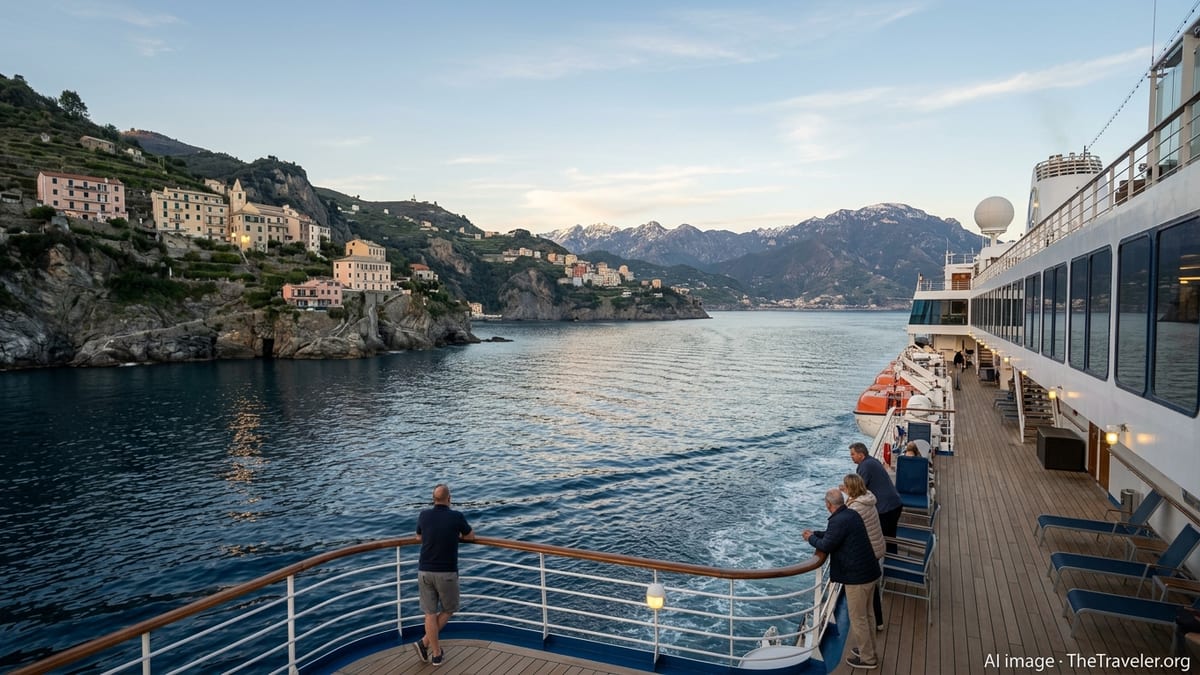
Closer to home for many European travelers, Azamara maintains a strong presence in the Western Mediterranean, with 2026 and 2027 deployment highlights featuring combinations of Italy, France and Spain. Schedules point to routes linking Barcelona, Rome, Nice, Marseille and smaller ports such as Portofino, Sorrento and Palamós, often with extended evening calls.
These cruises are designed to appeal both to first-time Mediterranean visitors and to experienced cruisers who want to revisit the region without repeating standard itineraries. For example, a single voyage might pair Barcelona’s urban energy with the cliffside charm of Sorrento, the Riviera ambience of Sanary-sur-Mer and lesser-known harbors along the Costa Brava or Ligurian coast.
Reports from trade publications indicate that Azamara is leaning into shoulder-season departures in this region, taking advantage of cooler temperatures and fewer crowds in spring and autumn. Smaller ports, where infrastructure can be stretched at peak times, may be better suited to ships of Azamara’s size outside the height of summer.
For travelers who prioritize food, wine and cultural sightseeing, these Western Mediterranean sailings provide dense clusters of experiences within relatively short sailing distances. With late stays in key ports and a focus on walkable historic centers, they illustrate how Azamara uses its fleet to turn classic cruise regions into deeper, slower-paced journeys.