

Minnesota rewards curious travelers who are willing to connect its vibrant cities with its quiet lakes and wild shoreline. This 5 to 7 day itinerary links Minneapolis, Duluth, and classic lake country for a trip that balances art and breweries with harbor views, pine forests, and evenings by the fire. Use it as a flexible framework, adding or trimming days depending on how much time you have and how deep you want to go in each region.
How to Use This Minnesota Itinerary
This route is designed as a loop starting and ending in Minneapolis, which typically offers the best flight options and rental car choices. If you are driving from another state, you can simply pick up the itinerary where it makes the most sense geographically and follow it in either direction.
In 5 full days you can sample Minneapolis, Duluth, and one lake country hub. With 6 or 7 days you can slow down, add side trips along Lake Superior’s North Shore or through state parks, and build in a genuine day of doing very little by the water.
The driving distances are moderate by United States standards. Minneapolis to Duluth is about 2.5 hours by car in normal conditions, while Duluth to the Brainerd Lakes area or similar lake country hubs typically takes around 2.5 to 3 hours. That means you can travel between bases in the morning and still have meaningful time left for hikes, museums, or an unhurried dinner.
This itinerary is written with late spring through early fall in mind, roughly May through early October. Winters in Minnesota are long and intense, and while each destination remains interesting in the cold months, driving conditions and activity options change significantly. If you plan to travel between November and April, expect short daylight hours and check local forecasts and road reports regularly before committing to any long drives.
When to Go and What to Expect
Summer is the classic season for this trip. From roughly June through August, Minneapolis fills its parks and patios, Duluth’s harbor is busy with ore ships and tour boats, and lake country resorts are in full swing with swimming, paddling, and fishing. Daytime highs typically land somewhere in the 70s or 80s Fahrenheit, though heat waves are possible, and evenings by the water can feel cooler than the city.
Late spring and early fall can be equally appealing, especially if you prefer fewer crowds and slightly lower prices. In May and early June, expect greening forests, cool lake breezes, and some lingering chill on Lake Superior. Late September and early October often bring impressive fall color in Duluth and along the North Shore, particularly around high overlooks and ridge-top drives such as Skyline Parkway and nearby state parks.
Summer weekends and major holidays, especially around Independence Day and mid July festivals in Minneapolis and popular events in Duluth, can book up fast. Lake country destinations like the Brainerd Lakes area also see heavy weekend demand. It is wise to reserve lodging several months ahead for peak dates, and to secure rental cars early if you plan to fly into Minneapolis.
Weather on Lake Superior can change quickly even in midsummer. Foggy mornings can lift into bright sunshine, and temperatures at the shoreline may feel noticeably cooler than inland. Pack layers, a light rain jacket, comfortable walking shoes, and something warmer for evenings by the water. Mosquitoes are a fact of life near lakes and wetlands in late spring and summer, so bring repellent and consider long sleeves and pants for dusk and dawn.
Days 1–2: Minneapolis Neighborhoods, Parks, and Culture
Plan to spend at least one full day and night in Minneapolis at the beginning of your trip. With two days you can both see the major attractions and get a feel for the neighborhoods that give the city its character. Base yourself near the downtown riverfront, the North Loop, or one of the lively districts that ring the central city, and rely on a mix of walking, light rail, and short drives.
Start with the Mississippi Riverfront, which has been transformed into a broad ribbon of parkland. Mississippi Gorge Regional Park lines the river through much of Minneapolis and neighboring Saint Paul, with paved paths for walking and cycling along tree topped bluffs and side trails leading down to sandy river edges. Historic mill ruins and the dramatic Stone Arch Bridge frame views of the downtown skyline, and on summer evenings you often find people gathered to watch the changing light on the water.
From the river, spend time in the Chain of Lakes district on the southwest side of the city, where paved paths circle urban lakes busy with walkers, runners, and paddlers. In peak summer the beaches are active and rental stands offer kayaks and stand up paddleboards. This area connects to a wider loop of trails and parkways that make up the Grand Rounds National Scenic Byway, a system that links parkland all across the city and gives Minneapolis its reputation for abundant urban green space.
Round out your Minneapolis stay with time in at least one arts district or historic neighborhood. Converted warehouses in the North Loop now hold restaurants, coffee shops, and galleries, while the Northeast Arts District offers studios and small breweries in a more industrial setting. Cultural institutions such as major modern art museums, university galleries, and performance spaces add to the mix, and many visitors plan their nights around locally focused dining and the city’s well known beer scene.
Day 3: Scenic Drive from Minneapolis to Duluth
On day three, pick up your rental car early and make the 150 mile drive north to Duluth. The most direct route follows Interstate 35, climbing gradually out of the Twin Cities metro area into a mix of rolling farmland and forest. If you drove in the day you arrived or prefer to split the distance, you can stop in smaller river towns or at roadside state parks on the way.
One rewarding detour between Minneapolis and Duluth is Jay Cooke State Park, just southwest of Duluth near the town of Carlton. Here the Saint Louis River plunges through a rocky gorge, creating fast moving rapids framed by forests and historic stone structures built by New Deal era crews. Suspension bridges and riverside trails offer close up views of the churning water. The park is one of Minnesota’s most visited state parks and gives a taste of North Woods scenery even before you reach Lake Superior.
If you are traveling in summer or early fall, consider packing a picnic to enjoy at Jay Cooke or at one of the scenic overlooks along the way. The Willard Munger State Trail, a paved rail trail, links Hinckley and Duluth through forests and small towns; if you are keen on cycling, you can build a side trip around part of this route, then continue your drive north in the afternoon.
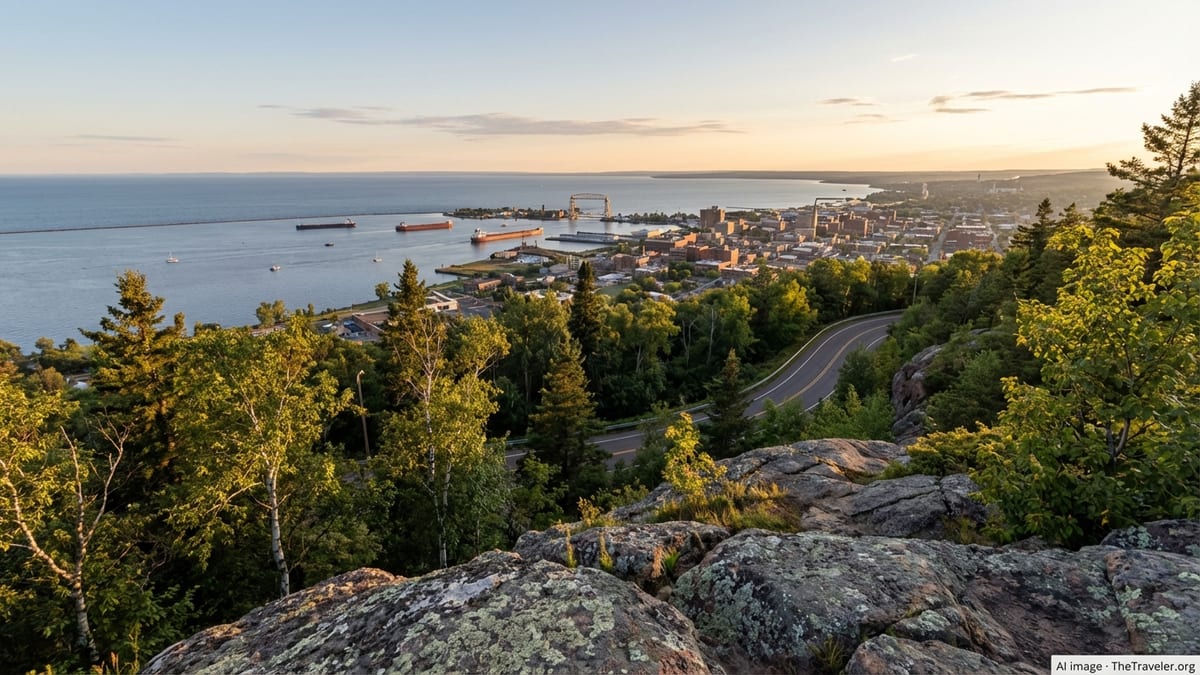
As you approach Duluth the highway suddenly crests a ridge and drops toward Lake Superior, revealing an expansive view of the harbor, the city’s steep hillside neighborhoods, and the open lake beyond. This dramatic arrival sets the tone for your stay. Aim to check into a hotel or vacation rental by midafternoon so you can spend the evening on the waterfront, watching ships pass under the Aerial Lift Bridge and sampling Duluth’s growing roster of local breweries and harbor facing restaurants.
Days 4–5: Duluth, Lake Superior, and the North Shore
Duluth merits at least one full day, and ideally two, especially if you plan to explore part of the North Shore of Lake Superior. The compact Canal Park district puts you close to the water, the Lakewalk, and the Aerial Lift Bridge, while hillside neighborhoods deliver broader views and quieter streets. Wherever you stay, you will likely spend much of your time moving between the harbor, the lakeshore, and elevated viewpoints that take in the whole sweep of water and forest.
Start a full day in Duluth with a walk along the Lakewalk, a paved multi use path that follows the shoreline for several miles. To the east you reach a manicured rose garden at Leif Erikson Park, where the combination of lake views and formal plantings makes a tranquil morning stop. To the west, the harbor district is livelier, with tour boats, shipping traffic, and a constant stream of people heading out to piers and breakwaters for photographs and lake watching.
From the water’s edge, make time to explore Duluth’s high ground. Skyline Parkway stretches roughly 28 miles along the hillside behind town, following an ancient lakeshore terrace that now serves as a natural scenic drive. Pullouts along the way frame wide angle views of Lake Superior, the Twin Ports of Duluth and Superior, and the Saint Louis River estuary. Short hikes lead to rocky overlooks and forested picnic areas, and in autumn the surrounding hills glow with birch and maple color.
If you have at least one extra day to spare, dedicate it to the North Shore. Driving northeast along Highway 61 from Duluth quickly brings you into a landscape of rocky headlands, inland ridges, and small harbor towns. Popular state parks include Gooseberry Falls, known for easily accessible waterfalls, and Split Rock Lighthouse State Park, which protects a scenic headland crowned by a historic lighthouse. Trails at Split Rock range from shoreline scrambles to segments of the longer Superior Hiking Trail, and several small beaches offer access to the cold, clear water of Lake Superior.
Days 6–7: Minnesota Lake Country Retreat
After several days on Lake Superior, the final leg of your itinerary takes you inland to Minnesota’s classic lake country. The Brainerd Lakes area is a convenient choice that links hundreds of lakes, resort communities such as Nisswa, Crosslake, and Pequot Lakes, and a wide range of lodging from rustic cabins to full service resorts. From Duluth the drive typically takes around 2.5 to 3 hours, depending on your route and stops.
Lake country days are best approached with a slower pace. Many travelers book a resort or cabin for two or three nights and let the setting shape the schedule. Mornings might start with coffee on a dock as loons call across the water, followed by a few hours of paddling, swimming, or fishing. Afternoons can be as relaxed or active as you like, from lounging in a lakeside chair with a book to teeing off at area golf courses or exploring nearby small towns with their mix of boutiques, cafes, and occasional live music on patios.
The Brainerd Lakes region in particular has built its identity around variety. Family focused resorts may offer water parks, kids’ activity programs, and equipment rentals, while quieter properties near less developed lakes emphasize quiet woods, simple cabins, and campfires under the stars. Spa treatments, zip line tours, and dining that ranges from fish fry suppers to chef driven seasonal menus all fit into a single day’s possibilities, especially in peak summer.
If you have only one extra day beyond Minneapolis and Duluth, you can still get a taste of lake country by spending a single night at a resort within a few hours’ drive of either city. However, two nights is usually the minimum for this portion of the itinerary to feel restful rather than rushed. Many visitors who follow this route once choose to return later for a dedicated week in lake country alone.
Practical Planning Tips and Driving Logistics
Booking your flights into and out of Minneapolis simplifies logistics. Most major United States carriers and several regional airlines serve Minneapolis Saint Paul International Airport with frequent daily connections. Rental car agencies operate at the terminal, but supplies can tighten on summer weekends and around large events, so reserve well ahead if you plan to travel during peak periods.
Driving conditions on the main routes between Minneapolis, Duluth, and the Brainerd Lakes area are generally straightforward in late spring through early fall. Interstate and state highways are regularly maintained, and services such as fuel and convenience stores are frequent along the way. In midsummer, allow a bit of extra time for road construction zones or holiday weekend traffic, especially when leaving or returning to the metro area on Friday and Sunday afternoons.
For lodging, aim to secure a mix of experiences. In Minneapolis, a centrally located hotel or apartment style rental can make it easy to explore on foot and by transit. In Duluth, staying near Canal Park or in hillside neighborhoods gives you contrasting perspectives on the city and lake. For lake country, consider booking well in advance at popular resorts, particularly if you are targeting mid June through late August or local school holiday periods.
Budget wise, Minnesota can be relatively good value compared with some coastal destinations, but prices fluctuate. City lodging rates in summer often peak around major events, while resort rates can rise for prime weekends. If your schedule is flexible, traveling midweek can help keep costs down and reduce crowds, especially in Duluth and lake country towns.
The Takeaway
A 5 to 7 day itinerary that connects Minneapolis, Duluth, and Minnesota’s lake country offers a concise yet varied introduction to the state. You move from riverfront parks and vibrant neighborhoods to a working Great Lakes port city, and finally to quiet docks and pine framed lakes, all without marathon drives.
This route is intentionally flexible. Travelers focused on food and culture may want an extra night in Minneapolis, while hikers and scenery seekers might add more time for Duluth’s ridgeline parks and the North Shore. Families often prioritize a longer lake country stay, anchoring the trip around swimming, paddling, and campfires. In each case, the same core loop still works.
What makes this itinerary satisfying is the contrast between its three main stops and the continuity provided by water. You follow the Mississippi River through Minneapolis, watch ore ships move through Duluth’s harbor, and end your days looking out over quiet inland lakes. It is a reminder that Minnesota’s urban and natural landscapes are more connected than they first appear, and that a week here can feel both energizing and restorative.
FAQ
Q1. How many days do I need for this Minnesota itinerary?
Most travelers find 6 or 7 days ideal, with at least 1 to 2 nights in Minneapolis, 2 nights in Duluth, and 2 or more nights in lake country.
Q2. Is it better to visit in summer or fall?
Summer offers the fullest range of lake and outdoor activities, while late September and early October provide cooler weather and impressive fall color, especially around Duluth and the North Shore.
Q3. Do I need a rental car for this trip?
Yes. While Minneapolis has good transit options, the drives to Duluth, the North Shore, and lake country hubs are not practical without a car.
Q4. Is the driving between Minneapolis, Duluth, and lake country difficult?
From late spring through early fall, highways are generally straightforward, with moderate distances and frequent services. Winter driving can be challenging due to snow and ice.
Q5. Can I swim in Lake Superior during summer?
Some people do, but the water remains very cold even in midsummer. Many visitors prefer to swim in inland lakes and simply wade or sit by Lake Superior.
Q6. How far in advance should I book lodging?
For peak summer weekends or fall color periods, booking several months ahead is wise, especially for Duluth waterfront hotels and popular lake country resorts.
Q7. Is this itinerary suitable for families with children?
Yes. Urban parks in Minneapolis, harbor activities in Duluth, and lakeside resorts with beaches and simple outdoor fun work well for a wide range of ages.
Q8. What should I pack for a July or August trip?
Bring light clothing for warm days, a few layers for cooler evenings, a rain jacket, comfortable walking shoes, swimwear, and insect repellent for lake country.
Q9. Can I add more time on the North Shore of Lake Superior?
If you have extra days, adding one or two nights at a lodge or campground along Highway 61 between Duluth and Grand Marais is an excellent extension.
Q10. Is this itinerary possible without staying in a resort area?
Yes. You can substitute smaller motels, cabin rentals, or campgrounds near lakes instead of large resorts, while still enjoying access to water and outdoor activities.