

Wisconsin’s food culture is as distinctive as its rolling dairy farms and Great Lakes shorelines. This is a state where Friday night fish fries fill community halls, frozen custard stands light up summer evenings, and a humble Danish pastry has become a point of statewide pride. If you are planning a visit or simply curious about what locals really eat, these five classic Wisconsin foods and specialties belong at the top of your must-try list.
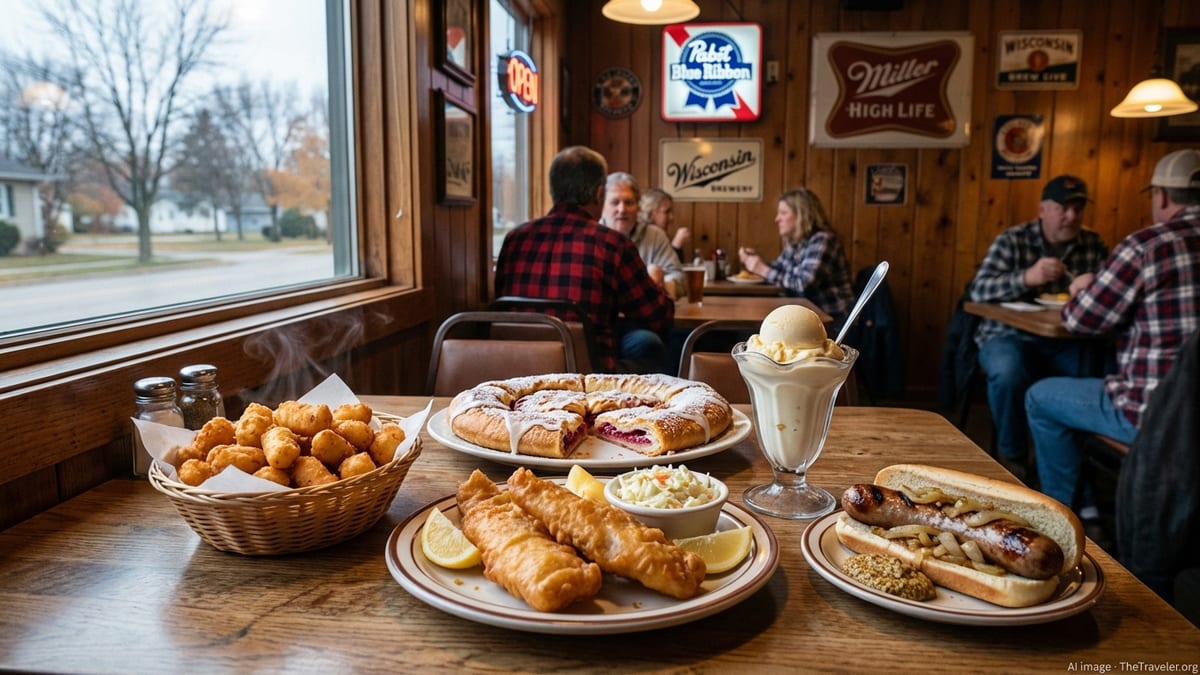
Cheese Curds: The Sound of Wisconsin
Cheese may be synonymous with Wisconsin, but cheese curds are the state in its purest, freshest form. These springy, bite-size pieces are essentially young cheddar that never made it into a mold, sold within hours or days of production. The hallmark of a proper curd is the unmistakable “squeak” against your teeth, a sign that the protein structure is still tight and fresh. Visitors quickly learn that locals judge curds not only by flavor but by volume of squeak.
You will find cheese curds in two main styles across the state: fresh and fried. Fresh curds are often sold in plastic bags on the counter of creameries, farm stands, and gas stations, sometimes still warm from the vat. They are lightly salted and best enjoyed the same day, though many Wisconsinites insist on giving the bag a quick shake and warming the curds slightly so the squeak returns. The texture is both elastic and tender, making them an ideal road-trip snack.
Fried cheese curds are a bar and festival staple, turning the same fresh curds into something entirely different. Coated in a light batter or breading and plunged into hot oil, they come out with a crisp, golden exterior and a molten, stretchy interior. Ranch dressing is the classic dipping sauce, though you will also find marinara, spicy mayo, and even beer cheese dips on menus around the state. At many taverns, a shared basket of curds is as much a social ritual as an appetizer.
To taste cheese curds where they begin, consider stopping at a working creamery or cheese factory, many of which host viewing windows into the production room. Staff are usually happy to explain how fresh milk turns into curds within a matter of hours. Even if your itinerary keeps you in cities like Madison, Milwaukee, or Green Bay, local markets and taprooms often stock curds from small Wisconsin cheesemakers, giving you a direct link to the state’s dairy heritage.
Friday Night Fish Fry: A Statewide Tradition
In Wisconsin, Friday night is not simply another evening of the week. Especially from late winter into spring, it is closely associated with the Friday fish fry, a meal so culturally important that state and local leaders have formally recognized it as an iconic Wisconsin tradition. In February 2026, local coverage highlighted how fish fry season once again filled restaurants and taverns as Lent began, underscoring how this ritual continues to draw crowds across generations.
The typical Wisconsin fish fry centers on battered or breaded fish, most often cod, perch, walleye, or pollock. Fillets are dipped in a seasoned coating, frequently featuring local beer in the batter, then fried until crisp. The fish is usually served with coleslaw, rye bread or a soft dinner roll, tartar sauce, and a choice of sides such as french fries, potato pancakes, or baked potatoes. While the dishes are simple, regulars will debate favorite spots in almost reverent tones, rating everything from batter thickness to how flaky the fish is when it arrives at the table.
What sets the Wisconsin fish fry apart is its social atmosphere and wide range of venues. You will find them at corner taverns, church basements, golf course clubhouses, and classic supper clubs lining highways and lakeshores. During Lent, some operators report that fish orders at least triple as families, retirees, and groups of friends crowd in early to secure tables. For many communities, the weekly fry is part fundraiser, part reunion, and part comfort-food ritual that helps break up long Midwestern winters.
For travelers, joining a Friday fish fry is one of the most authentic ways to meet locals. Arrive hungry and unhurried, be prepared to wait at busy spots, and soak in the details: the trays of rye bread, the bustle of volunteer servers at church events, and the casual conversations at the bar while you wait for your number to be called. If you are near Milwaukee or along Lake Michigan, ask for recommendations at your hotel or a local coffee shop. Nearly everyone will have a favorite fish fry and a story to go with it.
Kringle: Wisconsin’s Official State Pastry
Kringle may sound unfamiliar at first, but in Wisconsin it is a beloved emblem of local heritage. This ring-shaped, laminated pastry traces its roots to Danish bakers who settled in Racine along Lake Michigan in the late 1800s. Over time, those bakers adapted traditional recipes into the oval-shaped kringle that is now widely associated with the city. Layers of buttery dough are rolled, rested overnight, filled with everything from almond paste to fruit or cream cheese, then baked and iced to form a tender, flaky pastry with a sweet filling.
The pastry’s importance is more than nostalgic. Kringle was named the official state pastry of Wisconsin in 2013, a recognition that cemented Racine’s reputation as the unofficial kringle capital of the United States. Several family-owned bakeries that began in the 1930s and 1940s still handcraft kringles today, shipping them around the country for holidays and special occasions. Their products have appeared in national food magazines and on television, and seasonal flavors often sell out quickly through mail-order catalogues.
Recently, kringle has found a new audience far beyond Wisconsin through national grocery chains. Food publications have reported on how a Racine bakery supplies specialty kringles to supermarkets, including limited seasonal flavors such as pumpkin caramel or cream cheesecake. Another article in 2025 noted how a similar kringle from a Racine producer was snapped up quickly at discount grocers during Easter season. These stories mirror what Wisconsinites have known for decades: once people taste kringle, they want it again.
If you are visiting Wisconsin, Racine is the ideal place to experience kringle close to its source. Bakeries often showcase dozens of flavors at once, from classic almond and pecan to cherry, raspberry, and various cream cheese combinations. Slices are usually served at room temperature, though many locals enjoy warming their portion slightly to release the aroma of butter and spices. Enjoy kringle with coffee at breakfast, as an afternoon treat, or as a dessert shared among friends. One pastry typically serves several people, making it a perfect souvenir to bring back to your lodging or share with new acquaintances on the road.
Frozen Custard: Milwaukee’s Creamy Obsession
While ice cream is familiar everywhere, frozen custard occupies a special place in Wisconsin, and particularly in Milwaukee. The city’s longstanding custard stands date back to the 1930s and 1940s, with family-run drive-ins where bright neon signs and stainless-steel counters still set the scene. Compared with standard ice cream, frozen custard relies on egg yolks and a slower churning process that incorporates less air, creating a dense, luxuriously smooth texture.
Several of Milwaukee’s most famous custard stands opened in the mid-20th century and have remained local landmarks ever since. One historic stand traces its origins to 1938 and is recognized as one of the first frozen custard stands in the country. Another family-owned drive-in, established in 1942, continues to serve a core trio of flavors and has influenced other operators around the region. By the 1950s, yet another stand popularized the idea of a daily “flavor of the day,” a concept that quickly became a fixture at custard shops throughout southeastern Wisconsin.
For visitors, part of the fun lies in the ritual of choosing flavors and timing your visit. Traditional options such as vanilla, chocolate, and butter pecan are widely available, but the flavor of the day could be anything from maple nut to caramel cashew, brownie avalanche, or seasonal fruit combinations. On warm summer nights, locals line up under glowing marquees for cones, sundaes, and “concretes” blended with toppings, often pairing them with jumbo burgers, fries, and onion rings for a complete drive-in meal.
Experiencing frozen custard in Wisconsin is as much about atmosphere as taste. Many stands are open-air or semi-outdoor, so you might balance a dripping cone while leaning on the hood of your car under string lights, surrounded by families and teenagers. In colder months, some shops operate with walk-up windows or indoor counters, and hardier locals happily eat custard in winter coats. Wherever you go, take your time, ask staff about their specialties, and check the day’s posted flavors before you order. A single visit often turns into a nightly habit.
Bratwurst and Tailgate Culture
Bratwurst is more than a sausage in Wisconsin. It is integral to the state’s sports culture, backyard gatherings, and warm-weather festivals. Influenced by waves of German immigration, brats are commonly made from pork or a pork and beef blend, seasoned with spices such as marjoram, and encased in a natural casing that gives a satisfying snap. In Wisconsin, the word “brat” almost automatically implies grilling, with smoky aromas drifting across neighborhoods from spring through late autumn.
Nowhere is the brat more closely tied to local identity than at a Green Bay football tailgate or a summer baseball game. In stadium parking lots, fans set up grills hours before kickoff, simmering brats in beer and onions before finishing them over hot coals. The classic serving style is simple: nestle the sausage in a sturdy roll or bun and top it with yellow or brown mustard, chopped onions, and sometimes sauerkraut or pickles. At community festivals and county fairs, lines for brat stands can rival those for live music or rides.
Brats also appear at church picnics, charity fundraisers, and brewery beer gardens, where they pair naturally with local lagers and ales. Many meat markets and grocery stores across Wisconsin make their own house-branded brats, often offering multiple flavors such as jalapeño cheddar, beer brats, or Italian-seasoned versions. Visitors can sample them hot off the grill at in-store events or purchase frozen packs to cook later at a campsite or vacation rental.
If you are unfamiliar with bratwurst, do not hesitate to ask vendors or fellow customers how they prepare theirs at home. Wisconsinites are quick to share opinions on whether brats should be parboiled in beer before grilling, whether charcoal or gas produces superior flavor, and which mustards belong on the table. Sampling one at a tailgate or summer festival offers a window into a distinctly local kind of hospitality where sharing food is part of cheering for the home team.
Butter Burgers and Supper Club Comfort
Butter burgers capture another aspect of Wisconsin’s love affair with dairy. As the name suggests, these burgers feature generous butter, either seared into the bun, melted over the patty, or both. The concept is widely associated with Wisconsin-based chains and independent diners, and while recipes vary, the goal is the same: a rich, juicy burger with a toasted, butter-brushed bun that absorbs every bit of flavor.
Many travelers encounter butter burgers in casual roadside restaurants or drive-ins, often alongside frozen custard, making it easy to sample two regional specialties in a single stop. The patties are typically smashed or pressed on a hot griddle, producing crisp, browned edges and a tender interior. Shortly before serving, cooks may place a pat of butter on the patty and cover it briefly so it melts into the meat. The bun is often toasted in butter as well, delivering a subtle crunch and a distinctly dairy-forward aroma when the burger arrives.
Butter burgers also harmonize naturally with Wisconsin’s supper club culture, where indulgent comfort food is part of the draw. While supper clubs are best known for prime rib, relish trays, and Old Fashioned cocktails, many include burgers and sandwiches on their menus for a more casual meal. In these settings, a butter burger might come with local cheese, fried onions, and a choice of sides such as coleslaw, salad, or a baked potato, turning a simple sandwich into a full Midwestern dinner.
For visitors looking to try this specialty, keep an eye out for local recommendations and daily specials. Ask staff whether the restaurant considers its burger a butter burger and how it is prepared. Some places lavish butter on the bun while others highlight a specific local butter or cheese that makes their version distinctive. As with so many Wisconsin dishes, the details matter, and the best examples tend to come from spots that have been perfecting the same recipe for years.
The Takeaway
Sampling Wisconsin’s signature foods offers a direct line into the state’s history and everyday life. Fresh cheese curds connect you to the dairy farms and cheesemakers that built the region’s reputation. Friday fish fries mirror the rhythms of community gatherings and longstanding religious traditions. Kringle reflects the imprint of Danish immigrants and the way a single pastry can become a point of statewide pride.
Frozen custard stands and butter-slicked burgers showcase Wisconsin’s affection for rich, comforting fare, while bratwurst at tailgates and picnics bring sports fans and families together around the grill. None of these foods is formal or fussy, yet each is prepared with care, often by small businesses that have passed recipes down through multiple generations. To eat as Wisconsinites do is to slow down, share a plate, and appreciate the way food can anchor a sense of place.
Whether your itinerary takes you to Milwaukee’s urban neighborhoods, Madison’s lakes and campuses, or small towns dotted among cornfields and forests, leave room for these five specialties. Look for the crowded custard stand, the church parking lot full of cars on a Friday evening, or the handwritten sign in a bakery window announcing the day’s kringle flavors. Those are often your best clues that something authentically Wisconsin is being served inside.
FAQ
Q1. What makes Wisconsin cheese curds different from regular cheese?
Wisconsin cheese curds are extremely fresh pieces of young cheese, usually cheddar, sold soon after production. Their signature squeak and springy texture set them apart from aged, packaged cheese.
Q2. Do I have to visit during Lent to experience a Friday fish fry?
No. While fish fries are especially busy during Lent, many Wisconsin restaurants, taverns, and supper clubs serve them every Friday year-round, so you can enjoy one in any season.
Q3. Where is the best place to try kringle in Wisconsin?
Racine is widely considered the heart of Wisconsin kringle, with several long-running family bakeries specializing in the pastry. You can also find kringle in cafes, markets, and some grocery stores across the state.
Q4. How is frozen custard different from ice cream?
Frozen custard includes egg yolks and is churned more slowly than most ice cream, which results in a denser, smoother, and creamier texture with less air incorporated.
Q5. Are butter burgers very heavy, and can I request a lighter version?
Butter burgers are indulgent by design, but many restaurants will adjust the amount of butter or toast the bun dry if you ask. Portions also vary, so you can opt for a smaller patty or share.
Q6. Is bratwurst in Wisconsin usually spicy?
Traditional Wisconsin bratwurst is more savory than spicy, seasoned with herbs like marjoram rather than hot chilies. Some markets offer spicier varieties, but classic brats are mild.
Q7. Can vegetarians enjoy any of these Wisconsin food traditions?
Yes. While many specialties are meat-focused, some fish fry venues offer vegetarian plates, and you can enjoy kringle, cheese curds, frozen custard, and meatless sides at supper clubs and diners.
Q8. Are these foods easy to find outside major cities like Milwaukee or Madison?
Absolutely. Small towns often have their own fish fries, custard stands, or bakeries selling kringle and cheese curds. Asking locals is one of the best ways to find hidden gems.
Q9. Can I bring Wisconsin specialties home with me?
Many creameries, bakeries, and meat markets offer vacuum-packed cheese, frozen brats, and kringles designed for travel. Some will pack items with ice or dry ice if you are flying.
Q10. Do I need reservations to experience a classic fish fry or supper club meal?
Policies vary. Some supper clubs accept reservations, especially on weekends, while many tavern-style fish fries operate on a first-come, first-served basis. When in doubt, call ahead or arrive early.