

Alabama is a state made for day tripping. Within a few hours of most major cities, you can be standing at the edge of a deep sandstone canyon, watching pelicans glide above the Gulf, or wandering brick-lined streets in revitalized downtowns. These six destinations showcase some of the best one-day escapes in the state, balancing natural beauty, historic sites, and relaxed local flavor.
Little River Canyon National Preserve
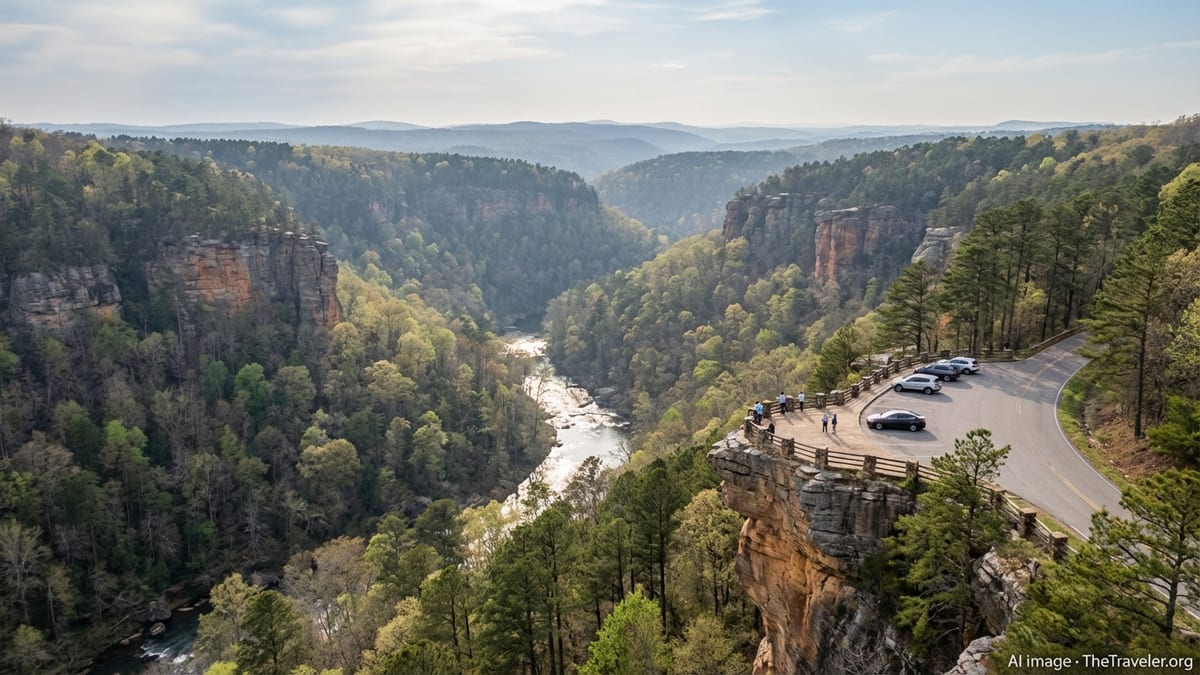
Carved into the top of Lookout Mountain in northeast Alabama, Little River Canyon National Preserve delivers some of the state’s most dramatic scenery within a manageable day trip. The Little River has been described as one of the longest mountaintop rivers in the country, cutting a deep sandstone gorge that feels unexpectedly wild compared with the nearby interstate. The preserve covers more than 15,000 acres near Fort Payne and rewards even casual visitors with sweeping canyon vistas within a short walk of their car.
The easiest way to experience the preserve in a single day is to follow the rim drive, a scenic parkway that traces the canyon edge and connects a series of signed overlooks. Each stop offers a different perspective, from wide, open views of the river far below to close-up looks at sheer rock walls and seasonal waterfalls. Many overlooks have short, maintained paths and railings, making them accessible to a wide range of visitors. In cooler months, clear air and thinner foliage reveal even more of the canyon’s contours.
For a more active visit, marked trails allow hikers to descend into the gorge or follow the river along the rim. Paths can be rocky and steep in places, so sturdy footwear and a cautious pace are important. Swimming holes and cascades draw crowds on hot days, and water levels and currents can change quickly, so visitors should pay close attention to posted safety guidance from the National Park Service. A stop at the nearby visitor center is useful for up-to-date information on conditions, closures, and recommended routes that match your time and ability.
Facilities around the preserve are relatively limited, another reason to plan ahead. Restrooms and picnic areas are clustered near popular overlooks and at designated day-use areas, but food, fuel, and lodging are mainly found in and around Fort Payne. Many travelers combine a canyon drive with a short detour to nearby mountain communities, creating a full but relaxed day in the northeast corner of the state.
DeSoto State Park and Mentone
Just north of Little River Canyon, DeSoto State Park and the small mountain town of Mentone can easily fill a stand-alone day trip or extend a visit to the preserve. DeSoto State Park spreads across more than 3,500 acres on Lookout Mountain, with dense forests, rocky bluffs, and a network of hiking and biking trails that showcase smaller cascades and quiet stretches of the Little River. The park is a popular destination in all seasons, from wildflower walks in spring to colorful foliage in autumn.
One of the highlights of the area is DeSoto Falls, often cited as one of Alabama’s tallest and most photogenic waterfalls. Located a short drive from the main park, the falls plunge into a deep, cliff-lined basin and are easily viewed from designated overlooks. Water levels vary by season and rainfall, but the combination of turquoise pool, stone cliffs, and surrounding evergreens remains striking throughout much of the year. Families and less experienced hikers appreciate that the primary viewpoints require only minimal walking on paved or improved paths.
Back in the main section of DeSoto State Park, a mix of loop and out-and-back trails allow visitors to tailor their activity level. Short interpretive walks lead through rhododendron thickets and past small streams, while longer routes combine rocky outcrops and occasional views across the valley. The park has a long history tied to the Civilian Conservation Corps, and several stone structures and the lodge reflect that New Deal era legacy. Campgrounds and cabins support overnight stays, but day trippers will find ample picnic areas and trailheads close to parking areas.
Just up the road, Mentone offers a quieter counterpoint to the rugged landscapes. This compact mountaintop community is known for its relaxed pace, craft galleries, and small cafés. A short stroll through town introduces visitors to historic architecture and independent shops, many housed in older cottages and storefronts. On cool days, low clouds can drift across Lookout Mountain, giving the town a cozy, almost alpine feel. Together, DeSoto State Park and Mentone make a rewarding day trip for travelers who want mountain scenery with the option of gentle walks, scenic drives, and a lingering lunch in a small town.
Dauphin Island and Alabama’s Gulf Edge
On Alabama’s southwestern corner, Dauphin Island offers a very different kind of day trip. This barrier island sits at the mouth of Mobile Bay, with the open Gulf of Mexico on one side and quieter back-bay waters on the other. Reached by a long bridge from the mainland, the island has an easygoing, weathered character that contrasts with some of the more built-up stretches of Gulf Coast further east. Wide, sandy beaches, an Audubon bird sanctuary, and historic Fort Gaines combine to make it an appealing one-day escape for coastal scenery and soft adventure.
Many visitors begin their day at the island’s public beach areas, which provide ample room for walking, shelling, or simply watching the changing light on the water. Conditions vary seasonally, but even on busier weekends it is often possible to find a relatively quiet stretch of sand, especially if you are willing to walk a bit further from access points. The Gulf side typically features more surf, while the bay side tends to be calmer, which can be more comfortable for younger children or those who prefer gentler water.
Nature enthusiasts are drawn to the Audubon Bird Sanctuary, more than 160 acres of maritime forest, dunes, and freshwater ponds crisscrossed by boardwalks and natural-surface trails. The island is an important stopover point for migratory birds, particularly during spring and fall, and sightings can be impressive during peak migration. The shaded paths also offer respite from the coastal sun during warmer months, with chances to spot wading birds, songbirds, and other wildlife amid the pines and palmettos.
History layers into the experience at Fort Gaines, which guards the entrance to Mobile Bay and played a role in Civil War naval battles. The fort’s brick walls, ramparts, and gun emplacements sit within sight of modern shipping lanes and offshore platforms, underscoring the continuing strategic importance of the bay. Self-guided visits typically take a couple of hours and pair well with a beach walk or sanctuary visit in a single day. Services on the island include a small selection of restaurants and convenience-focused shops, but choices are more limited than in larger beach communities, so many day trippers bring snacks and sun protection to maximize their time on the sand and trails.
Lake Guntersville and North Alabama’s Water Playground
In north Alabama, Lake Guntersville stretches for miles along a dammed section of the Tennessee River, creating one of the state’s signature day-trip destinations for boating, fishing, and scenic drives. The lake’s irregular shoreline forms countless small coves and peninsulas, many backed by rolling hills and hardwood forests that glow with color in autumn. Lake Guntersville State Park sits on a bluff above the water, offering panoramic views from overlooks, picnic areas, and a lodge that has become a regional landmark.
For day visitors, the park is a convenient hub. A network of trails ranges from short, relatively flat walks to more moderate routes that climb ridges and descend toward the water. Birdlife is a major draw, with wintering bald eagles often spotted around the lake and interpretive programs offered seasonally. Fishing is another enduring attraction, with the broader Lake Guntersville area long recognized as a destination for bass anglers. Even for those who never pick up a rod, marinas and public boat ramps provide a lively sense of the region’s connection to the lake.
The town of Guntersville itself has leaned into its setting, with a growing selection of locally run restaurants, small shops, and lakeside parks that make it easy to fill a day without venturing far. A stroll along the waterfront might include views of sailboats, fishermen returning to docks, and long, open vistas across the water to forested hills. Several public green spaces offer playgrounds and shaded picnic tables, making this an appealing option for families looking for a relaxed outing with room for children to run.
Those with extra time can extend their day along regional scenic routes that link Lake Guntersville to other natural areas in north Alabama. Nearby state and wildlife areas provide additional opportunities for hiking, paddling, and birding, while small communities in the surrounding counties showcase historic downtowns and traditional events. For many travelers, though, simply parking at one of the lakeside overlooks to watch late-afternoon light settle over the water is reason enough to make the trip.
Montgomery: Civil Rights History in a Day
Not every memorable Alabama day trip centers on outdoor scenery. The state capital, Montgomery, offers a powerful, compact immersion into key chapters of United States history, with a particular focus on the Civil Rights Movement. Within a relatively small downtown area, visitors can walk between churches, courthouses, museums, and memorials that together trace a story from the era of slavery through Reconstruction to the mid twentieth century and beyond.
Many visitors begin near the state capitol building, where landscaped grounds and monuments set the stage for understanding Montgomery’s political and cultural role. From there, walking routes link to sites associated with the Montgomery bus boycott, including churches that played central roles in organizing the protest. Museums in the city center present exhibits on civil rights leaders, landmark legal cases, and the everyday individuals who took personal risks to push for change. Several institutions use multimedia presentations and carefully curated artifacts to help visitors connect abstract events to specific human stories.
A newer layer of interpretation comes from memorials that confront the legacy of racial violence and injustice. Thoughtfully designed spaces invite quiet reflection, often pairing stark physical forms with extensive written context. Many travelers describe these visits as emotionally demanding but essential for understanding not only Alabama’s past but also broader national conversations about race and equality. Staff and interpretive materials generally encourage visitors to take their time, process what they are seeing, and consider follow-up reading or discussion.
Beyond its historical focus, Montgomery offers modern amenities that make it an easy day trip from other parts of the state. Revitalized districts feature restaurants, cafés, and cultural venues within a short drive or walk of major sites, allowing visitors to break up heavier museum visits with relaxed meals or a stroll along the riverfront. Parking, signage, and wayfinding have improved in recent years, but it still pays to consult current visitor information for opening hours, security protocols, and any special exhibits or temporary closures that might shape your day.
Mobile’s Historic Districts and Bayfront
On Alabama’s central Gulf Coast, Mobile combines port-city energy, layered history, and live-oak-shaded neighborhoods into a compelling day trip. The downtown core showcases a mix of restored nineteenth century buildings and newer construction, with cast-iron balconies, brick facades, and narrow side streets contributing to a sense of place. In a single day, visitors can walk through historic squares, explore museums highlighting everything from maritime history to local Mardi Gras traditions, and sample Gulf seafood in locally owned restaurants.
The city’s historic districts offer some of the most rewarding walking. Mature oaks draped in Spanish moss shade sidewalks and frame carefully maintained homes that reflect a blend of architectural influences. Several guided and self-guided routes highlight distinctive houses, churches, and public buildings, often with interpretive signs or brochures available from visitor centers. In spring, blooming azaleas and other ornamental plantings add color to already photogenic streetscapes.
Down by the water, Mobile’s identity as a working port is unmistakable. Large vessels move along the river channel, and industrial infrastructure lines parts of the waterfront. At the same time, developed sections of the bayfront offer promenades, parks, and viewing spots where locals and visitors gather to watch sunsets over the water. The contrast between active maritime commerce and leisure spaces gives the city a distinctive character that differs from purely resort-focused coastal towns.
For families and history enthusiasts, a short drive from downtown leads to additional sites, including historic military installations and nature areas at the edge of Mobile Bay. Many travelers pair a walking tour of the historic core with a bayfront visit and a meal before driving back to their base elsewhere in the state. Traffic and weather can both influence timing along the Gulf Coast, so flexible plans and an eye on local forecasts help ensure that a single day in Mobile feels relaxed rather than rushed.
FAQ
Q1. What is the best time of year for day trips in Alabama?
The most comfortable months are typically spring and fall, when temperatures are milder and humidity is lower than in peak summer.
Q2. Do I need advance reservations for these day trips?
Most outdoor sites do not require reservations for day use, but museums and special exhibits in cities like Montgomery or Mobile may use timed entry during busy periods.
Q3. Are Alabama’s state parks and preserves suitable for beginners?
Yes. Places like DeSoto State Park, Little River Canyon, and Lake Guntersville offer well-marked, shorter trails and overlooks that work well for first-time visitors.
Q4. How much driving should I expect in one of these day trips?
Driving times vary, but many of these destinations are two to three hours from major Alabama cities, so it is wise to plan for several hours in the car round trip.
Q5. Is swimming allowed at Little River Canyon and Dauphin Island?
Swimming is allowed in designated areas, but conditions change with weather and water levels. Always follow posted guidance and check current safety information before entering the water.
Q6. Can I visit Little River Canyon and DeSoto State Park in the same day?
Yes, they are close enough to combine, but you will only sample each one. Many travelers focus on the canyon rim drive plus a short waterfall visit at DeSoto Falls.
Q7. Are these destinations family friendly?
Generally yes. State parks and beaches offer open space and simple activities, while cities like Montgomery and Mobile have museums and attractions that appeal to older children and teens.
Q8. What should I pack for an outdoor-focused Alabama day trip?
Comfortable walking shoes, sun protection, water, snacks, insect repellent in warmer months, and layers for cooler seasons are sensible basics almost year-round.
Q9. How accessible are these day trips for visitors with limited mobility?
Most destinations offer at least some paved paths, overlooks, or facilities that are easier to access, but trail conditions vary. It is best to consult current accessibility information before visiting.
Q10. Is it realistic to combine coastal and inland destinations in one day?
Travel distances between the Gulf Coast and places like Montgomery or north Alabama are significant. For a more relaxed experience, it is better to focus on one region per day trip.