

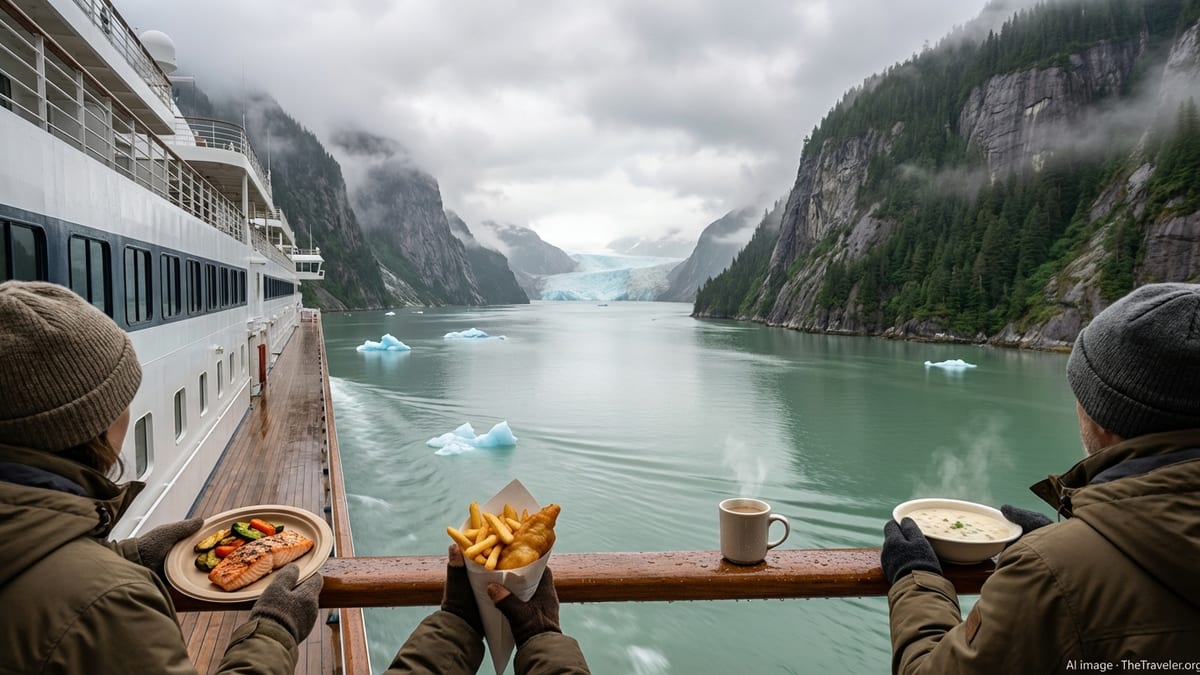
Gliding through Endicott Arm toward Dawes Glacier is one of the most memorable days on an Alaska cruise. Walls of granite rise on either side, waterfalls tumble from snowfields, and blue ice drifts silently past the hull. It is all drama and stillness at once. What many first-time cruisers do not realize is that glacier day is also one of the best chances to taste Alaska itself, from just-caught seafood to berry desserts inspired by the northern summer. Whether you are wrapped in a blanket on deck or lingering in a warm dining room with floor-to-ceiling windows, these are six foods to look for when your itinerary includes Endicott Arm.
Why Food Matters on an Endicott Arm Cruise Day
Endicott Arm is not a typical sea day. The ship slows as it enters the fjord, temperatures drop, and passengers crowd the railings to watch ivory icebergs and distant waterfalls. Cruise lines increasingly treat this as a showcase moment, pairing the scenery with menus that highlight regional ingredients from Alaska and the broader Pacific Northwest. You are not just passing through a landscape. You are tasting a place that still relies heavily on fishing, small farms and seasonal harvests.
Dining teams prepare for scenic cruising days differently from regular port days. Breakfast is often served earlier, with extended hours so guests can eat between trips outside to the decks. Some ships introduce special brunches or themed buffets while in the fjord, leaning into seafood, game and hearty comfort dishes that feel right for the brisk air. Others keep the main dining rooms open through late morning and early afternoon, encouraging guests to drift in and out between photo sessions at the rails.
The result is a kind of moving food festival framed by mountains and ice. While every cruise line puts its own spin on the experience, certain dishes appear again and again because they align so naturally with Alaska’s identity. These six foods will help you recognize those regional touches and decide what to prioritize when menus and buffets feel overwhelming.
Crucially, you do not have to be a devoted seafood fan to eat well on an Endicott Arm day. Most ships balance the local specialties with familiar options, and there are usually vegetarian choices that still incorporate Alaskan produce, breads or berries. Think of the following foods as anchor points: flavors that tie your glacier viewing to the waters and forests just beyond the ship’s wake.
Wild Alaska Salmon: The Essential Taste of the Inside Passage
If there is one food that defines an Alaska cruise, it is wild salmon. Alaska’s rivers and coastal waters support several salmon species, from buttery king to vibrant sockeye, and these fish underpin both local cuisine and the broader ecosystem. On cruise ships, salmon often takes center stage on scenic days, when chefs highlight it in everything from simple grilled fillets to rich chowders and smoked platters. Many menus specifically note when salmon is wild-caught, a point of pride in a state that prohibits fish farming.
During an Endicott Arm sailing, you might encounter salmon at breakfast in the form of lox or smoked salmon alongside eggs, bagels and capers. By lunchtime, it could reappear as salmon burgers on deck, salmon tacos at a casual venue, or a creamy salmon and potato chowder that quickly becomes a favorite in the chilly breeze. In the main dining room, expect at least one salmon entree that pairs the fish with local-inspired sides such as roasted root vegetables, wild rice or a bright citrus glaze.
For many cruisers, the most memorable salmon dish is a salmon bake, served outdoors when weather allows. Some big-ship lines set up temporary grills at the aft buffet terrace on glacier days, offering cedar-plank salmon or simply seasoned fillets alongside corn, salads and fresh bread. Eating wild salmon while watching icebergs drift close enough to hear them crackle has a way of cementing Alaska in your memory. If your itinerary lists a “salmon bake” or seafood barbecue on the Endicott Arm day, plan your deck time around it rather than treating it as an afterthought.
If you are new to salmon or wary of strong seafood flavors, do not let that deter you. Ask your server which preparation is mildest, or choose a sauce that feels familiar, such as a light lemon butter. The freshness of the fish in Alaska, even when it has been frozen at sea, often surprises people who are used to farmed salmon farther south. This is the place to give it a fair chance.
Halibut in Many Guises: From Chowder Bowls to Fish and Chips
Halibut is the quiet star of many Alaska menus. This lean, white-fleshed fish has a delicate flavor and firm texture that appeals even to travelers who are cautious about seafood. In cruise ship galleys, chefs appreciate its versatility. They can batter and fry it for classic fish and chips, poach it gently for refined plated dinners, or fold it into thick chowders that warm passengers returning from the wind on deck.
On an Endicott Arm day, you might first encounter halibut at a midmorning brunch that coincides with the slow approach to Dawes Glacier. Some contemporary Alaska brunch menus feature halibut and salmon cakes, or halibut chowder finished with cream and local herbs. Later, casual venues by the pool or at the aft of the ship often offer halibut fish and chips in paper-lined baskets that are easy to carry outside. Eating a crisp piece of halibut while the ship threads past ice floes turns a simple lunch into a sensory snapshot.
In the main dining room at dinner, halibut frequently appears on “regional inspirations” menus that celebrate Alaska. Preparations might include roasted Bering Sea halibut with peas and potato cakes, pan-seared halibut served over sautéed greens, or halibut cheeks presented almost like scallops, prized for their tenderness. The sauces are usually restrained so the mild fish is not overwhelmed, relying on lemon, white wine or light herb creams rather than heavy reductions.
If you see halibut offered more than once during your cruise, consider trying it in different forms. Enjoy a casual basket of fish and chips at lunch in the fjord, then order the more elaborate plated version at dinner to appreciate how the same ingredient can feel both humble and sophisticated. For non-seafood eaters at your table, halibut can be a gentle bridge dish, a way into Alaska’s waters without a steep learning curve.
Alaskan King Crab and Other Local Shellfish
Few foods signal you are in Alaska as decisively as a pile of king crab legs. Images of diners in bibs wielding crab mallets are plastered across brochures and portside restaurant boards in Juneau and Skagway. While the most famous crab shacks sit on the docks, cruise ships also weave king crab into onboard menus, particularly on gala evenings and scenic cruising days when the kitchen aims to impress.
On an Endicott Arm itinerary, you might encounter king crab in several ways. Appetizers of chilled crab legs with lemon and drawn butter are common on upscale lines, while others favor creamy king crab bisque served in warmed bowls as passengers thaw out from time on deck. Some ships offer crab cakes at brunch or lunch, combining crab with salmon or cod for a richer patty. Buffet spreads sometimes feature crab clusters on ice or in hot pans, though the availability and quality can vary between cruise lines and sailings.
Even when true king crab is not the star, Alaska’s coastal waters supply other shellfish that can make a glacier day feel special. Dungeness crab with its sweet meat, local shrimp, and occasionally spot prawns or razor clams find their way into seafood stews, pasta dishes and chowders. A simple bowl of mixed seafood chowder, eaten indoors while watching bergy bits slide past the window, captures the link between the cold green water and your plate.
If you care about sustainability or have concerns about overfishing, do not hesitate to ask ship staff where their crab and shellfish are sourced, and whether any alternatives are available. Fishing regulations in Alaska are strict and seasons can fluctuate, which means menus may shift from year to year. When king crab is highlighted as a special, it is usually worth trying at least a small portion, if only to compare it with the crab you know from elsewhere.
Reindeer Sausage and Other Hearty Game Dishes
Beyond seafood, Alaska is known for game meats that reflect its northern landscapes. Reindeer sausage has become a kind of informal signature, often served at casual stands in Anchorage and in some cruise port restaurants. Cruise lines have taken notice and increasingly feature reindeer sausage, venison and other hearty meats in breakfasts, brunches and regional tasting menus, particularly on sailings that emphasize local flavor.
On Endicott Arm days, you may see reindeer sausage appear on buffet lines at breakfast alongside scrambled eggs, hash browns and pancakes. Some ships work it into biscuits and gravy plates or skillet-style brunch dishes that bring together potatoes, eggs and sausage in one cast-iron pan. The flavor is usually slightly smoky and mildly sweet, often blended with pork to keep the texture juicy. It feels fitting in the keen morning air of a glacier fjord.
At lunch, outdoor grills sometimes trade their usual hot dogs for sausages with more regional character, including reindeer or other game links. Imagine wrapping cold fingers around a warm bun filled with grilled reindeer sausage topped with onions while you stand at the aft rail watching the ship pivot in front of Dawes Glacier. It is a small but satisfying way to connect your meal to the region without leaving the ship.
Not everyone eats meat, and not every cruiser will be comfortable with game, especially from animals closely associated with northern wildlife. Cruise lines typically balance this by offering turkey or pork sausages as alternatives, and by keeping game clearly labeled rather than hiding it in mixed dishes. If you are curious but hesitant, ask for a small slice to taste before committing to a full portion. Tasting reindeer sausage in Alaska, even once, gives you a story to bring home, but it is never mandatory to enjoy the journey.
Fry Bread, Sourdough and Comfort Baked Goods
Cold days invite comfort food. In Alaska, that often takes the form of simple, filling breads that can be sweet or savory. Fry bread, sometimes associated with Indigenous and frontier traditions, shows up in cruise port bakeries and has started to appear more often on ships catering to Alaska-bound travelers. It is typically a disk of dough fried until crisp at the edges and soft in the center, then dusted with cinnamon sugar or served with berry jam, or topped with savory ingredients like shredded meat and cheese.
On an Endicott Arm cruise, you are more likely to find fry bread at a pop-up station, a themed buffet or a specialty cafe than as a daily staple. When it appears, it is worth sampling, especially if it comes with local berry jam or a drizzle of honey. The contrast between the crunchy exterior and pillowy center is satisfying in the cool air. Pair it with a mug of coffee or hot chocolate carried out to the open deck and you have an instant glacier-day ritual.
Sourdough has deep roots in Alaska’s Gold Rush history and remains a cultural reference point. Many bakeries and ship galleys maintain their own sourdough starters, using the dough for pancakes at breakfast, rustic breads at lunch and dinner, and sometimes even dessert bases. A plate of sourdough pancakes or waffles in the morning, eaten as the ship noses into the fjord, pays quiet tribute to miners and homesteaders who depended on similar starters through long winters.
The broader category of comfort baked goods also plays a role in how you experience Endicott Arm. Cinnamon rolls, sticky buns, and regional twists like blueberry coffee cake or cardamom buns often appear early on scenic days to entice guests out of bed and up to the observation decks. Grabbing a pastry and a hot drink before stepping outside into the wind can make the difference between staying out for ten minutes and lingering long enough to watch the ship turn in front of the glacier.
Alaska Berries and Glacier-Day Desserts
While Alaska is better known for seafood and game, its short, intense summers produce an abundance of berries. Blueberries, salmonberries, raspberries and other varieties flourish in long daylight hours, and chefs on land and sea seize the chance to incorporate them into desserts. On an Alaska cruise, berry-focused sweets often show up on menus that coincide with glacier viewing or special regional dinners, serving as a colorful counterpoint to the sleek whites and grays outside.
During an Endicott Arm sailing, look for berry cobblers, crisps and crumbles on the dessert list. Warm cobbler topped with vanilla ice cream is a perennial favorite, especially in the main dining room after a chilly afternoon on deck. Some ships offer blueberry or mixed-berry panna cotta, berry tarts or simple bowls of macerated fruit with cream. On certain lines, Alaska blueberry pancakes even appear on brunch menus that run late into the morning, bridging breakfast and lunch while the ship hovers near the glacier.
Beyond traditional plated desserts, berry flavors creep into more casual treats on glacier days. Coffee bars might offer berry muffins, scones or bars, while soft-serve stations experiment with berry sauces. Specialty venues occasionally serve bread puddings with berry components, or trifle-style desserts that layer sponge cake, custard and local jam. If you have a sweet tooth, this is a good day to keep one eye on the dessert boards in the buffet and cafes, since special items can disappear quickly once word spreads.
Because berry harvests are highly seasonal, what you see will depend on when you sail. Early-season cruises may feature more frozen or preserved berries, while late-summer sailings sometimes capitalize on fresh supplies from regional vendors. Regardless, berry desserts offer a sense of connection to the forests and tundra beyond the cruise corridor. A spoonful of warm blueberry cobbler tastes a little different when you are eating it within sight of snowfields that feed the very streams where those berries grow nearby.
Cocktails, Coffee and Warming Drinks With an Alaska Twist
Scenic glacier cruising is as much about what you sip as what you eat. Wrapped in a jacket on the top deck, watching the ship pick its way through floating ice, a hot drink can feel like a small luxury. Cruise lines recognize this and curate special beverage menus for Alaska sailings, particularly on days in fjords like Endicott Arm. Some focus on coffee drinks and hot chocolate, while others highlight regionally inspired cocktails that lean into spruce tips, local spirits or warming spice.
On a typical Endicott Arm morning, roaming beverage carts make their way along the outer decks, offering spiked coffee, hot cocoa with liqueur, or classic mimosas for those who want a celebratory feel. Indoors, bars and cafes may promote Alaska-themed cocktails such as berry-forward spritzes, riffs on whiskey sours with regional whiskey, or smoky takes on classics designed to echo the scent of campfires. A few lines collaborate with well-known bartenders to develop dedicated Alaska cocktail lists, complete with names that nod to glaciers, northern lights and historic ports.
Nonalcoholic options are just as important. Thermoses of plain coffee, tea and hot chocolate are often available around the clock on the lido deck, and some ships encourage guests to bring reusable mugs as part of their environmental policies. On glacier days, bartenders sometimes offer nonalcoholic versions of signature drinks, layering berry syrups, citrus and soda over ice or creating spiced apple and cranberry punches that are as photogenic as any cocktail.
When planning your Endicott Arm day, think about drinks strategically. A light breakfast paired with a strong coffee can fuel an early morning on deck, followed by a midmorning hot chocolate break when the wind picks up. Later, as the ship turns near Dawes Glacier and the mood on deck becomes hushed, a single celebratory cocktail or mocktail can mark the moment without pulling you away from the view. Remember that the most memorable beverage of the day might be the simplest: plain hot tea sipped silently as ice crackles against the ship’s hull.
How to Find These Foods on Your Specific Cruise
Every cruise line and ship treats Endicott Arm a little differently, and menus vary not only between companies but also between seasons and individual sailings. One line might spotlight an Alaska brunch with seafood, berries and game, while another leans into all-day buffets and outdoor barbecues built around salmon and sausages. Special events such as chef demonstrations, mixology classes or tasting menus sometimes cluster around glacier days precisely because passengers are more likely to stay on board.
Before your cruise, review any sample menus available through your line’s app or pre-cruise planner, paying special attention to items labeled as regional or Alaska-inspired. Once on board, check the daily program delivered to your stateroom or displayed in the app. Glacier days are often called out with notes about extended breakfast hours, outdoor grills, or special dishes such as salmon bakes and chowder bars. When in doubt, ask your dining room staff which meals or venues best capture local flavor while the ship is in Endicott Arm.
Do not overlook the casual and specialty options. Sushi lunches, Asian-fusion snacks, upscale seafood restaurants and even simple poolside grills often adapt their offerings to the Alaska setting, incorporating local fish or regional seasonings. For example, a Japanese restaurant on one Alaska sailing turned its vantage point over the fjord into an occasion, offering brunch with dumplings, ramen and sushi as the ship threaded through the ice. You may find that your most atmospheric meal is not in the main dining room at all, but in a smaller venue with large windows and a quieter crowd.
Finally, keep flexibility in mind. Weather and ice conditions sometimes require ships to choose between Tracy Arm and Endicott Arm, or to adjust the timing of the approach to Dawes Glacier. When schedules shift, dining teams often pivot as well. Rather than fixating on seeing a specific dish at a precise time, treat the six foods in this guide as a checklist for the duration of your cruise. With a bit of attention and curiosity, you are likely to encounter all of them somewhere between your first day on board and your last glimpse of Alaska’s rugged coast.
The Takeaway
An Endicott Arm cruise is spectacular on its own merits, even if you never step into a dining room. Granite cliffs, cascading waterfalls and the luminous blue of Dawes Glacier create a landscape that feels both immense and intimate. Yet food can deepen that experience, turning a day of sightseeing into a layered encounter with Alaska’s culture and resources. Wild salmon and halibut connect you directly to the cold waters under the keel. King crab and other shellfish remind you of the intricate web of life that thrives in these fjords. Game meats, hearty breads and berry desserts echo the region’s human history and seasonal rhythms.
You do not need to chase every themed menu or book every specialty restaurant to taste Alaska on your cruise. Instead, keep an eye out for six touchstone flavors: wild salmon, versatile halibut, crab and shellfish, reindeer sausage and other game dishes, comforting fry bread and sourdough, and bright berry desserts complemented by warming drinks. Seek them out on the day your ship glides into Endicott Arm, but remain open to finding them elsewhere on your route as well. When you later look back at photos of Dawes Glacier, you may find that particular meals rise in your memory alongside the ice, each bite a reminder of the day the ship carried you deep into Alaska’s frozen heart.
FAQ
Q1. Do Alaska cruises always visit Endicott Arm instead of Tracy Arm?
Not always. Captains choose between Tracy Arm and Endicott Arm based on ice and weather conditions, so your ship may switch at short notice for safety.
Q2. Will my cruise definitely serve local Alaska foods on Endicott Arm day?
Most mainstream lines now highlight Alaska dishes on scenic cruising days, but the exact items vary. Expect at least some regional seafood, breads or desserts.
Q3. I do not eat seafood. Can I still enjoy Alaska-inspired food on board?
Yes. Look for reindeer or other game sausages, sourdough breads, berry desserts and themed brunch dishes that draw on Alaska ingredients without relying on fish.
Q4. Are the salmon and halibut on cruise ships truly from Alaska?
Often they are, especially on itineraries that specifically mention Alaska sourcing, but supply can change. If you are curious, ask your server where a dish’s fish was caught.
Q5. Is king crab included in the cruise fare or an extra charge?
It depends on the line and venue. Sometimes crab appears on included menus, while premium portions or specialty restaurant offerings may carry a surcharge.
Q6. How can I find out which day will be Endicott Arm scenic cruising?
Your itinerary and daily program will list it, often calling it “Scenic Cruising Endicott Arm” or similar. Staff at guest services can also confirm the expected timing.
Q7. What should I wear to eat outside while viewing the glacier?
Dress in layers, including a windproof outer shell, hat and gloves. That way you can comfortably carry food or drinks out to the open decks without getting too cold.
Q8. Are there vegetarian or vegan options that still feel regional?
Common options include salads with local greens, vegetable-based chowders, berry desserts, and breads made with regional grains or sourdough starters. Ask staff for current choices.
Q9. Do I need reservations to enjoy special Alaska menus?
For main dining rooms and buffets, no. Specialty restaurants with Alaska-themed menus usually recommend or require reservations, especially on scenic days when demand is higher.
Q10. Can I bring Alaska foods like smoked salmon or berries home from the cruise?
Often you can, especially vacuum-packed smoked salmon from port shops, but you must comply with customs rules of your home country. Check current regulations before buying in bulk.