

Museum Ludwig is one of Europe’s leading museums for modern and contemporary art and an essential stop on any visit to Cologne. Sitting in a dramatic position between Cologne Cathedral and the Rhine, it combines a world-class collection of 20th century and contemporary works with striking architecture and a lively cultural program.
Whether you are an art aficionado or a casual visitor looking for an unforgettable cultural experience, there are compelling reasons this museum deserves a place at the top of your Cologne itinerary.
An Unmatched Collection of Modern and Contemporary Art
Museum Ludwig houses one of the most important collections of art from the 20th century to the present, making it a benchmark institution for modernism and contemporary practice. The breadth and depth of the holdings mean you can trace major artistic movements in a single visit, from Cubism and Russian avant-garde to Pop Art and post-1970 conceptual work. This is the foundation of why the museum is such a must-see: its collection is not only large, it is historically significant and exceptionally well presented.
A Landmark Collection of Pop Art
One of Museum Ludwig’s greatest claims to fame is its outstanding Pop Art collection. Peter and Irene Ludwig began collecting Pop Art early and ambitiously, and their donation formed the backbone of what is now the most important Pop Art collection outside the United States. Visitors can expect to see key works by Andy Warhol, Roy Lichtenstein, Claes Oldenburg, James Rosenquist and many of their contemporaries.
The museum presents Pop Art not simply as a colorful, consumer-friendly style but as a complex commentary on mass culture, media and politics. Large-scale canvases, sculptural works and installations are displayed in thoughtfully arranged galleries that allow you to understand how artists responded to advertising, celebrity and postwar consumerism. For many visitors, this section alone justifies the price of admission.
Exceptional Holdings of Picasso and Classic Modernism
Museum Ludwig also distinguishes itself with one of the most extensive collections of Pablo Picasso’s work in Germany. The collection covers multiple periods, from Cubist experiments to later, more personal pieces, giving a nuanced view of Picasso’s evolving style and interests. These works are shown alongside other pillars of classic modernism, including paintings and sculptures by artists such as Henri Matisse, Fernand Léger and the Expressionists.
What makes this particularly compelling is the way the museum contextualizes Picasso and his contemporaries within broader artistic currents. Works from different movements are placed in dialogue, helping visitors see the cross-currents that defined early 20th-century art: shifts in perspective, fragmentation of form, and a growing interest in abstraction and inner experience.
Rich Collections of German and European Postwar Art
For anyone interested in how Europe responded artistically to the devastation of the Second World War, Museum Ludwig is indispensable. The museum devotes substantial space to German and European postwar art, including important works from movements such as Zero, Fluxus and Neo-Expressionism.
You will encounter works by leading German artists who grappled with memory, reconstruction and the fraught legacy of nationalism, as well as international artists addressing similar questions from different vantage points. The result is a powerful narrative of how art became a space for critical reflection, experimentation and renewal in the second half of the 20th century.
Photography and New Media as Equal Partners
Unlike many traditional art museums, Museum Ludwig has long treated photography and new media as central components of its collection rather than as peripheral additions. Its photography holdings are substantial, spanning early experiments to contemporary conceptual work, and are frequently highlighted in dedicated exhibitions.
Video, film and installation art are also integral to the museum’s program. Specialized spaces and black-box galleries allow moving images and sound-based works to be shown to full effect, illustrating how artists have embraced technology to reimagine what art can be and how audiences can experience it.
Iconic Architecture in the Heart of Cologne
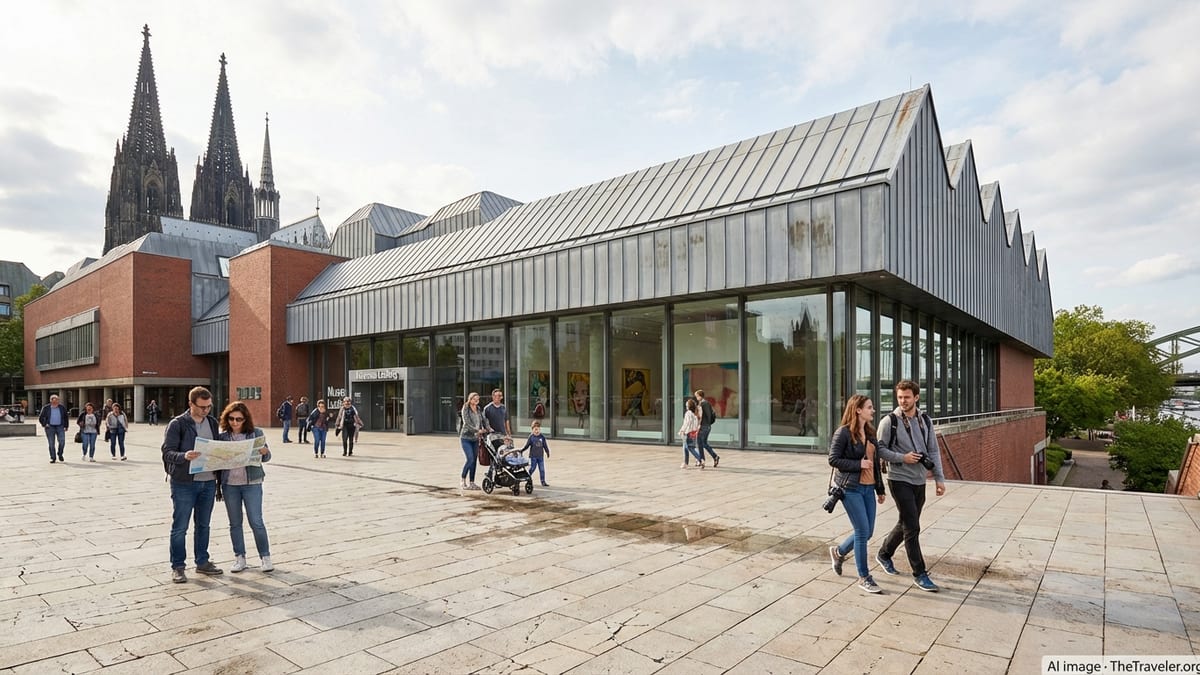
The building that houses Museum Ludwig is as noteworthy as the art inside. Designed by architects Peter Busmann and Godfrid Haberer and opened in the mid-1980s, the complex occupies a prime site between Cologne Cathedral, the main train station and the Rhine. It is both a cultural landmark and an architectural statement, integrating a major art museum, the Kölner Philharmonie concert hall and public spaces into a single ensemble.
A Cultural Hub beside Cologne Cathedral and the Rhine
Few museums in Europe enjoy such a dramatic setting. Museum Ludwig rises behind the soaring Gothic mass of Cologne Cathedral and overlooks the Rhine, with the Hohenzollern Bridge and the old town nearby. This central location makes it easy to combine a visit to the museum with other major sights, and it situates contemporary culture directly alongside Cologne’s medieval and Roman past.
The building opens onto Heinrich-Böll-Platz, a public square that serves as a kind of urban forecourt to both the museum and the concert hall. From here, you can appreciate how the stepped roofline and metallic surfaces echo industrial forms while remaining sensitive to the cathedral’s presence. The placement reinforces the idea that modern art is an essential part of the city’s identity, not an isolated enclave on its fringes.
An Interior Designed for Art and Discovery
Inside, the museum unfolds as a series of varied spaces connected by what the architects described as a “museum street.” From this central axis, side galleries branch off, creating a rhythm of large and small rooms that suit different types of works and allow for changing perspectives. High ceilings in some areas accommodate monumental pieces, while more intimate rooms invite close looking and reflection.
Throughout the building, strategically placed windows frame views of the Rhine, the cathedral and Cologne’s rooftops. These glimpses of the outside world provide visual relief during a long museum visit and subtly remind you of the interplay between the art on the walls and the living city around it. The overall effect is one of fluidity and choice: visitors can follow a suggested route or wander freely, discovering new corners and unexpected juxtapositions.
Shared Home with the Kölner Philharmonie
Another architectural reason to visit Museum Ludwig is its close relationship with the Kölner Philharmonie, Cologne’s main concert hall, which forms part of the same complex. The Philharmonie is located beneath Heinrich-Böll-Platz, with its auditorium nestled into the slope of the site. This unusual configuration has even shaped how the square above is used, as walking on the plaza is restricted during concerts to avoid disturbing the acoustics below.
For visitors, this integration means you can, in principle, combine an afternoon at the museum with an evening of symphonic music without changing venues. It also underscores the broader cultural mission of the complex: art, music and public space come together in a single architectural statement that celebrates the role of culture in urban life.
A Living Museum: Exhibitions, Events and Programs
Museum Ludwig is far more than a static repository of masterpieces. It functions as a dynamic cultural institution with a busy calendar of special exhibitions, educational programs and public events. This constant activity ensures that every visit feels fresh, even if you have been before, and that the museum engages actively with contemporary debates and artistic developments.
Ambitious Temporary Exhibitions
The museum’s program of special exhibitions is a major draw in its own right. Large-scale retrospectives of canonical figures sit alongside shows that highlight emerging artists, under-recognized movements or timely themes such as identity, technology or the environment. Recent and upcoming programs have included internationally known names that attract visitors from across Europe and beyond.
These exhibitions are carefully curated, often incorporating loans from other institutions as well as works from the museum’s own holdings. Interpretive materials, wall texts and catalogues provide deeper context, making them accessible even to visitors who may not be familiar with the artists beforehand. For travelers planning a trip to Cologne, it is worth checking the museum’s exhibition schedule in advance and building time into the itinerary specifically for these shows.
Late Night Thursday and Special Events
One of the most popular recurring events at Museum Ludwig is its “Late Night Thursday” program. On the first Thursday of every month, the museum extends its opening hours into the evening and offers a varied program of talks, tours, performances and other activities. Admission is reduced for many visitors, and residents of Cologne enjoy particularly attractive conditions, making the museum a lively after-work or evening destination.
In addition to Late Night Thursday, the museum regularly hosts lectures, conversations with artists, film screenings in its auditorium and collaborative events with local partners. These programs create opportunities to engage more deeply with specific exhibitions or topics and to experience the museum as a social, as well as a contemplative, space.
Workshops, Dialogue Programs and Family Activities
Museum Ludwig has invested significantly in education and outreach, ensuring that visitors of all ages and backgrounds can connect with its collection. Studios and workshop spaces host creative sessions for children, teenagers and adults, ranging from introductory art activities to more in-depth programs inspired by current exhibitions.
Interactive formats such as “Kunst:Dialoge” invite young people to act as mediators, discussing works with visitors and fostering conversation rather than one-way instruction. Families will find dedicated offerings on weekends and during school holidays, often combining short tours with hands-on activities. These programs make the museum an appealing option not just for solo travelers and couples but also for parents looking for meaningful cultural experiences with children.
Film, Performance and Interdisciplinary Projects
The presence of an auditorium and strong ties to film and performance communities mean that Museum Ludwig frequently ventures beyond traditional exhibition formats. Collaborations with Filmforum NRW and other partners bring experimental cinema, documentary programs and historical retrospectives into the museum’s orbit.
Interdisciplinary projects that blend visual art with music, dance or theater further expand the institution’s profile. For visitors, this means that the calendar is never limited to static displays; instead, the museum stages art as something that can be heard, watched, debated and collectively experienced.
Visitor-Friendly Experience and Practical Advantages
Even the most impressive collection can be overshadowed by poor visitor services or inconvenient logistics. Museum Ludwig excels here as well. Clear information, thoughtful amenities and a central, easily accessible location make it remarkably straightforward to plan and enjoy a visit, whether you are in Cologne for a few hours or several days.
Central Location Next to the Main Station
The museum could hardly be better placed for travelers. It sits just steps from Cologne’s main train station, with regional, national and international rail connections, as well as local S-Bahn, U-Bahn and tram lines. If you are arriving in Cologne by train, you can be at the museum within minutes, and if you are staying elsewhere in the city, virtually every transit option brings you close to its doors.
For those arriving by car, several parking garages are located in the immediate vicinity. This ease of access reduces the friction of a museum visit and makes it simple to pair Museum Ludwig with other activities, such as a stroll along the Rhine promenade or a visit to the historic old town.
Regular Hours, Special Evening Access and Timed Tickets
Museum Ludwig is typically open from morning through late afternoon or early evening, with extended hours on select days such as the first Thursday of every month. This consistent schedule offers flexibility for planning. During particularly popular exhibitions, the museum uses timed tickets to manage visitor flow, improving the overall experience by preventing overcrowding in specific galleries.
For travelers, timed entry has an additional advantage: it allows you to plan the rest of your day with confidence. You know exactly when you will access the special exhibition and can arrange lunch, a cathedral visit or a river cruise around that slot. It is advisable to check current hours and any special arrangements before your visit, especially during major blockbuster exhibitions or holidays when demand is highest.
Accessibility, Amenities and Comfortable Spaces
The museum building is designed to be accessible for visitors using wheelchairs or strollers, with elevators and ramps serving all exhibition levels. Clear signage in multiple languages, staffed information desks and free Wi-Fi in the galleries further support an easy, self-directed visit.
Additional amenities include a café and restaurant for coffee, snacks or meals before or after your tour of the collections. A museum shop offers exhibition catalogues, art books and design objects that make thoughtful souvenirs. Lockers or cloakroom facilities allow you to store bags and coats, so you can move freely through the galleries without encumbrance.
A Deep Connection to Cologne’s Cultural Identity
To understand Cologne as a contemporary European city, it is not enough to admire its cathedral and Roman remains. Museum Ludwig reveals another crucial facet: the city’s long-standing engagement with modern and avant-garde culture. Visiting the museum helps you place Cologne on the map not only as a historical city but also as a forward-looking center for the arts.
The Legacy of Peter and Irene Ludwig
The story of Museum Ludwig is inseparable from the collecting passion of Peter and Irene Ludwig, who amassed one of the most significant private collections of modern art in Europe. In the 1970s, they agreed to donate hundreds of major works to Cologne, on the condition that the city build a dedicated museum for art created after 1900. This agreement laid the foundation for the institution that exists today.
The Ludwigs’ commitment exemplifies how private initiative and public investment can together shape a city’s cultural landscape. Their donation not only enriched Cologne’s holdings but also signaled that the city was serious about engaging with the art of its own time. As a visitor, you are benefiting from this decades-long partnership every time you walk through the museum’s galleries.
Dialogue with Other Cologne Museums and Venues
Museum Ludwig does not stand alone. It forms part of a network of municipal museums that includes institutions dedicated to medieval art, Roman history and applied arts, among others. Joint ticket options and coordinated programs encourage visitors to experience multiple facets of Cologne’s museum landscape, broadening their sense of the city’s heritage and contemporary culture.
The museum also works with universities, cultural organizations and independent spaces, strengthening its ties to local communities and international networks alike. This web of relationships means that Museum Ludwig is constantly in conversation with broader artistic and intellectual currents, keeping its programming relevant and its outlook expansive.
A Place Where the Past and Present Meet
One of the most memorable aspects of a visit to Museum Ludwig is the way it stages encounters between different times and perspectives. From the roof terrace and select windows, you can view Cologne Cathedral’s Gothic towers while standing among works of radical modernism. Inside, early 20th-century paintings, postwar sculptures and cutting-edge multimedia installations appear within a single itinerary.
This layering of eras captures something essential about Cologne itself: a city repeatedly rebuilt, always negotiating between deep historical roots and an openness to new ideas. By spending a few hours in Museum Ludwig, you are not only seeing great art; you are also experiencing a distilled version of the city’s own story of resilience, transformation and cultural ambition.
The Takeaway
Museum Ludwig is a must-see in Cologne for reasons that go far beyond its enviable location next to the cathedral. Its extraordinary collection of modern and contemporary art, from unrivalled Pop Art holdings and key Picasso works to rich German postwar and photographic collections, makes it one of Europe’s premier destinations for 20th and 21st century art. The distinctive architecture, integrated with the Kölner Philharmonie and framed by views of the Rhine, turns a visit into an architectural as well as an artistic experience.
A dynamic program of special exhibitions, evening events and educational initiatives ensures that the museum is always evolving, offering new perspectives with each visit. Practical advantages such as central accessibility, visitor-friendly services and thoughtful amenities make it easy to incorporate into any trip to Cologne. Finally, the museum’s deep ties to the city’s history, its patrons and its cultural ecosystem reveal a side of Cologne that many travelers overlook: a modern, creative metropolis with a long-standing commitment to the cutting edge.
Whether you are in town for a few hours or several days, setting aside time for Museum Ludwig will enrich your understanding of both modern art and modern Cologne. It is not just another museum on the itinerary; it is a lens through which the city and the 20th century itself come sharply into focus.
FAQ
Q1. Where is Museum Ludwig located in Cologne?
It is situated at Heinrich-Böll-Platz in the very heart of Cologne, directly beside Cologne Cathedral and across from the main train station, with the Rhine and the old town just a short walk away.
Q2. What type of art does Museum Ludwig focus on?
The museum specializes in modern and contemporary art, primarily from 1900 to the present, including major holdings of Pop Art, classic modernism, German and European postwar art, photography and new media.
Q3. Why is the Pop Art collection at Museum Ludwig so famous?
Peter and Irene Ludwig collected Pop Art early and extensively, donating a large number of key works. As a result, the museum holds one of the most important Pop Art collections outside the United States, with iconic pieces by Warhol, Lichtenstein and others.
Q4. Does the museum have works by Picasso?
Yes, Museum Ludwig owns one of the largest Picasso collections in Germany, spanning several phases of his career and offering a broad view of his evolving style and themes.
Q5. How easy is it to get to Museum Ludwig by public transport?
It is extremely convenient to reach, as it stands right next to Cologne’s main train station, which is served by long-distance trains, regional services, S-Bahn and U-Bahn lines, as well as several tram and bus routes.
Q6. Are there special events or late openings I should know about?
On the first Thursday of each month, the museum typically offers extended evening hours as part of its “Late Night Thursday” program, with reduced admission for many visitors and a varied schedule of tours, talks and activities.
Q7. Is Museum Ludwig suitable for families with children?
Yes, the museum offers family-friendly programs, workshops and creative studios for children and teenagers, along with activities that combine short tours with hands-on art-making, making it a good choice for family visits.
Q8. What amenities are available on-site for visitors?
The museum provides free Wi-Fi, a café and restaurant, a shop with books and design objects, cloakroom or locker facilities, and accessible routes for visitors using wheelchairs or strollers.
Q9. How much time should I plan for a visit?
To see both highlights of the permanent collection and at least one temporary exhibition, plan on spending between two and three hours. Art enthusiasts who wish to explore more thoroughly may want to allocate a half day.
Q10. Why should I prioritize Museum Ludwig over other museums in Cologne if my time is limited?
If you can visit only one major museum, Museum Ludwig offers the most comprehensive introduction to modern and contemporary art in the city, set within a striking architectural complex next to Cologne’s most famous landmark, making it both culturally and logistically the strongest single choice.