

More news on this day
United Airlines is quietly turning its economy cabins into test beds for new technology and design, introducing a series of upgrades that aim to make long hours in coach feel a little less punishing for the growing number of travelers packing its routes.
Get the latest news straight to your inbox!
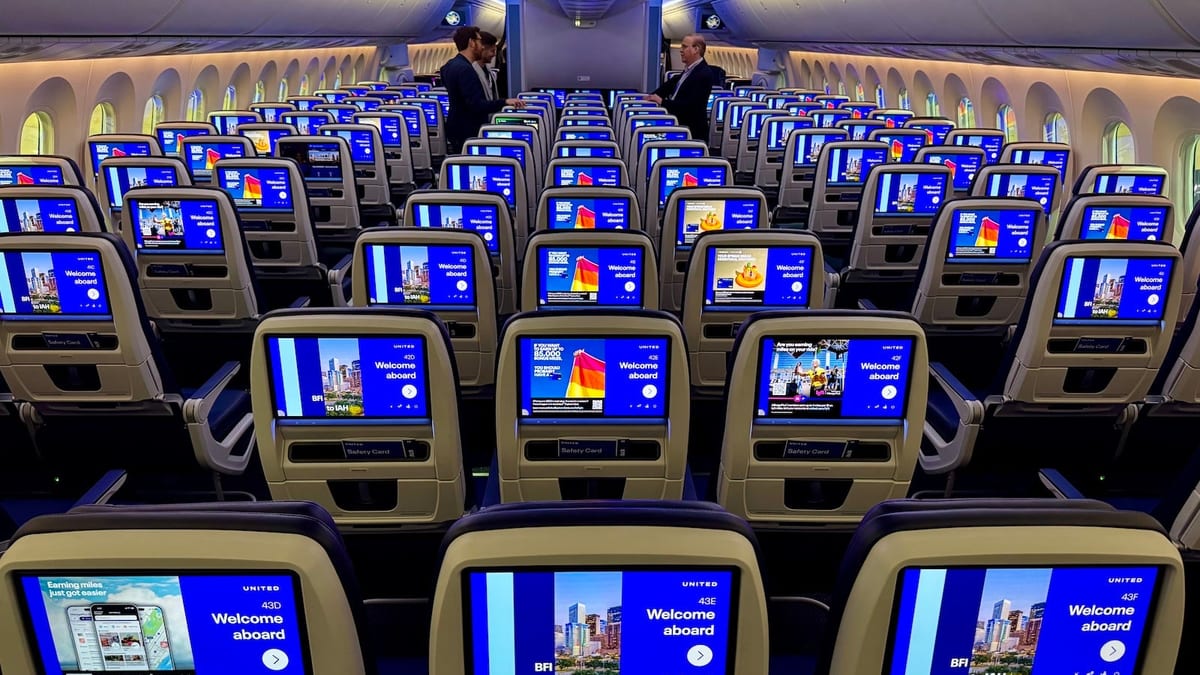
Image by The Points Guy Articles
Bigger, Sharper Seatback Screens for Every Passenger
United’s multiyear cabin refresh program is centered on putting a high-resolution seatback screen at every seat, including in standard economy. Publicly available information on the airline’s "United Next" initiative shows that new and retrofitted aircraft are being delivered with 4K-capable displays, replacing the mix of older monitors and bring-your-own-device streaming that has defined many cabins in recent years.
On United’s newest Boeing 787-9 Dreamliners, the economy cabin is being fitted with 13-inch 4K screens, which some aviation outlets note are among the largest in any economy class globally. Earlier announcements about United’s partnership with Panasonic Avionics indicate that similar screens are planned across a wide range of narrow-body and wide-body aircraft as the retrofit program accelerates through the middle of the decade.
For travelers in coach, the shift is significant. Larger, brighter displays are easier to view from awkward angles, can be navigated more like a tablet and reduce the need to juggle personal devices for entertainment, particularly on long international flights or red-eye services where saving phone or laptop battery has become part of the travel routine.
Reports on the upgrade program also highlight a focus on accessibility and personalization, with simplified menus, improved language support and more intuitive controls expected to roll out alongside the new hardware. Taken together, the changes are designed to make inflight entertainment in the back of the plane feel closer to the experience in premium cabins.
Bluetooth Audio Lets Headphones Finally Go Wireless
One of the most talked-about changes for coach passengers is Bluetooth audio pairing built directly into the seatback screens. United began drawing attention to its Bluetooth-enabled aircraft in 2023, and subsequent coverage indicates that the feature is expanding as more aircraft receive the new interior, allowing travelers to pair wireless earbuds and noise-canceling headphones without extra adapters.
Industry reports describe a simple on-screen flow: passengers tap a Bluetooth icon on the seatback display, place their headphones in pairing mode and select the device name from a list. Once connected, audio from movies, television shows and music apps plays through the traveler’s own headphones instead of the wired units typically handed out on board.
The move addresses one of the most persistent frustrations in economy, where tangled cords, mismatched jacks and flimsy complimentary headsets are common complaints. It also reflects the reality that many passengers now rely exclusively on wireless audio devices, particularly popular models from major tech brands that no longer support wired connections.
As more of United’s fleet is equipped with the new systems, Bluetooth connectivity is likely to become an expectation rather than a novelty, narrowing the gap between personal streaming and airline-provided entertainment and making it easier for passengers to stay in their own audio ecosystem from gate to gate.
Smarter Cabins With Power at Every Seat
Beyond screens and audio, United is working to turn its cabins into what some analysts describe as “smart cabins,” where power, charging and storage are integrated into nearly every seat. Documentation on the airline’s latest interior concepts points to standard power outlets and USB-C charging ports throughout the economy cabin on new and refurbished aircraft.
These upgrades are part of the same broader program that brings the new seatback systems on board, and they respond directly to traveler behavior. Passengers increasingly carry multiple devices, from phones and tablets to laptops and gaming consoles, and rely on those devices not just for entertainment, but also for work and trip planning during long flights.
Additional design tweaks are aimed at making the cabin feel less chaotic during boarding and deplaning. Updated overhead bins, introduced across several fleets in recent years, are being sized to hold a standard roll-aboard for each passenger in a typical economy row, helping reduce last-minute bag checks and easing congestion in the aisle. Observers note that this should particularly benefit travelers in the mid and aft sections of the plane, who are often the first to be asked to gate-check their carry-ons when bins fill up.
Combined with more consistent power access, these hardware changes give coach passengers a better chance of arriving with fully charged devices and without the stress that has long come with securing overhead space on busy routes.
Expanded Streaming Partnerships and Personalized Content
United is also reshaping what plays on those larger screens. In 2025, the airline began adding full seasons of popular Apple TV+ series to its inflight entertainment library, expanding on earlier deals that brought a mix of films, television box sets and music services into the cabin. Aviation and technology publications report that titles from streaming platforms are now a prominent part of the catalog displayed to passengers across tens of thousands of screens each day.
The airline has also partnered with major audio brands to integrate curated playlists and podcasts directly into its interface, mirroring the experience of using popular music apps on the ground. These collaborations sit on top of United’s existing library of movies, children’s programming and international content, giving economy passengers a broader selection without requiring a paid internet connection.
Looking ahead, United’s in-house media and advertising platform, launched in 2024, is expected to make the inflight experience more personalized. Coverage of the initiative suggests that the system uses travel patterns and route information to surface tailored offers, destination content and branded experiences on seatback screens. For travelers in coach, that could mean recommendations for activities and services relevant to their specific flight, rather than generic pre-roll advertisements and static maps.
While some flyers may be wary of more targeted marketing on board, analysts note that the same infrastructure can also be used to highlight real-time flight information, connection details and airport guidance, potentially turning the screen in front of each economy seat into a more helpful trip companion.
Comfort Touches and New Food and Snack Options
Technology is only part of the story. United has been gradually layering in comfort and service improvements that extend beyond its premium Polaris cabins and into the main economy section. Carrier communications and industry coverage point to upgraded cabin lighting, refreshed color schemes and redesigned textiles in the newest interiors, changes that aim to make the space feel brighter and less cramped without altering seat pitch.
United has also been investing heavily in food and beverage offerings, with hundreds of millions of dollars reportedly committed to upgraded menus and premium options across the network. While many of the headline-grabbing changes focus on business class, reports indicate that economy passengers are seeing a broader mix of snacks and buy-on-board items, particularly on longer domestic and transcontinental flights.
In addition, the next generation of narrow-body aircraft joining the fleet, including models destined for transatlantic services, is expected to feature redesigned galley and service areas that support self-serve snack and beverage setups for economy travelers on longer routes. Early renderings and industry commentary suggest that dedicated snack zones in the rear of the cabin could become a standard feature on some upcoming aircraft types, offering coach passengers more flexibility between scheduled trolley runs.
None of these changes overcome the fundamental realities of high-density seating, but taken together they reflect a strategic decision to make economy feel less bare-bones. In the competitive North American market, where travelers have more tools to compare experiences than ever before, United’s latest wave of coach-cabin innovations appears designed to keep tech-savvy flyers in the fold even when they are not sitting in the pointy end of the plane.