

More news on this day
A powerful magnitude 7.5 earthquake struck deep beneath the South Pacific near Samoa on March 24, shaking a wide swath of islands including Fiji, Tonga and Niue and prompting short-lived tsunami alerts that sent coastal residents scrambling to higher ground before the threat was later eased.
Get the latest news straight to your inbox!
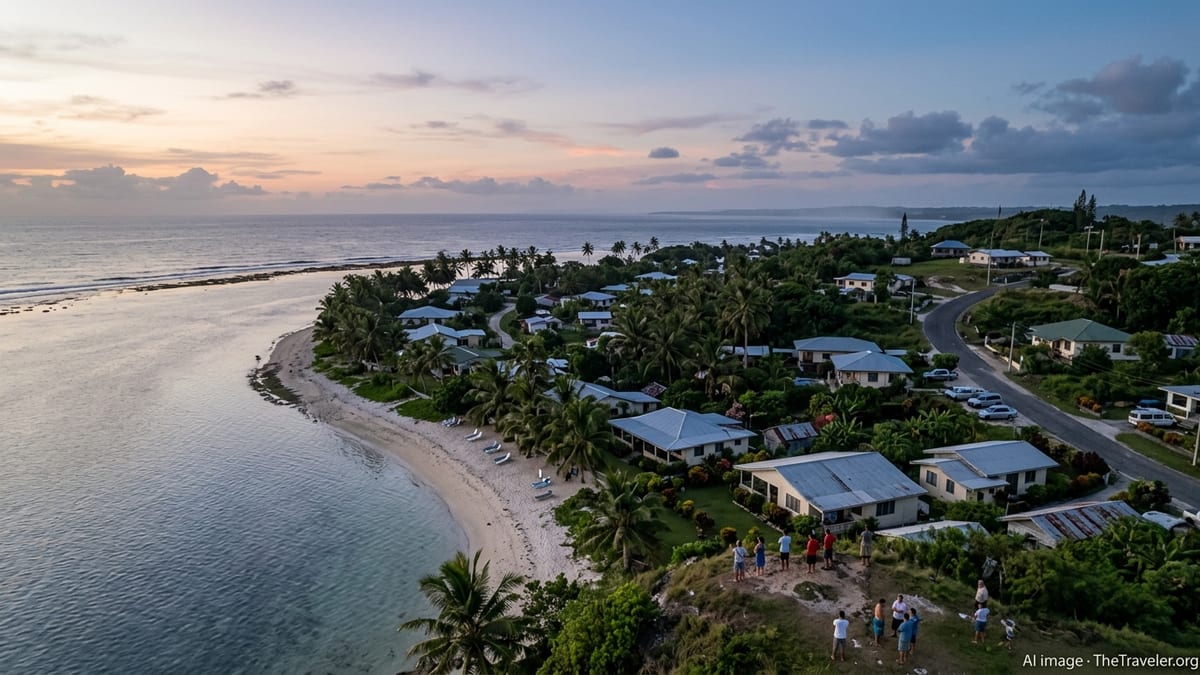
Strong Deep-Focus Quake Jolts the Samoa Region
Seismological data from global monitoring agencies indicate that the earthquake occurred offshore in the broader Samoa and Tonga region at a depth of more than 200 kilometers, classifying it as a deep-focus event. The epicenter was located in the complex subduction zone where the Pacific Plate is driven beneath the Australian Plate, an area that frequently produces powerful but often distant quakes.
Preliminary assessments list the magnitude at 7.5 on the moment magnitude scale, making it one of the stronger earthquakes recorded in the South Pacific so far in 2026. Because of the depth, shaking was widely felt across multiple island nations but tended to be sharp and brief rather than strongly damaging near the epicenter.
Published bulletins show that the quake struck in the early evening local time, when many residents were at home or along waterfront areas. Reports from the region describe swaying buildings, rattling windows and a sudden loss of balance indoors, with some communities experiencing multiple aftershocks and additional regional tremors in the hours that followed.
Despite the strength of the event, early indications suggest limited structural damage on land, a pattern consistent with deep-focus earthquakes that release large amounts of energy but dissipate much of it before it can severely impact the surface.
Tsunami Alerts Trigger Rapid Coastal Evacuations
In the tense minutes after the quake, tsunami monitoring centers across the Pacific analyzed incoming data to assess whether dangerous waves had been generated. Publicly available warning messages show an initial concern for hazardous tsunami potential in parts of the central South Pacific, including low-lying islands in Tonga, Samoa, Niue and nearby archipelagos.
National disaster offices and local broadcasters relayed alerts urging people in exposed coastal areas to move inland or to higher ground, avoid beaches and harbors, and stay tuned to official channels. Social media posts from several islands described warning sirens, loudspeaker announcements and hurried evacuations as communities reacted to the possibility of incoming waves.
As tide-gauge and deep-ocean sensor readings were reviewed, regional tsunami centers refined their assessments and indicated that any tsunami generated by the deep earthquake was likely to be small and localized. Monitoring networks did not detect basin-wide destructive waves, leading several countries to scale back their alerts.
By later in the evening local time, updated bulletins indicated that the tsunami threat had eased for much of the region, with some jurisdictions cancelling warnings and advisories while maintaining guidance for residents to remain cautious around the shoreline until official all-clear messages were issued.
Fiji, Tonga and Niue Report Strong Shaking but Limited Damage
The depth and location of the quake allowed its seismic waves to travel efficiently through the mantle, so the event was felt over a broad area that included Fiji, Tonga and Niue. Residents in major population centers such as Suva and Nukuʻalofa described strong but relatively short-lived shaking, with some items falling from shelves and people rushing outdoors.
Early information from local media and regional broadcasters points to only minor damage reports, including superficial cracks, small rockfalls and brief power interruptions in some communities. Airports, ports and key tourism hubs across the three nations appeared to remain operational, though inspections were carried out on runways, wharves and critical infrastructure as a precaution.
In Tonga, where memories remain vivid from the devastating 2022 volcanic eruption and tsunami, the sound of warning sirens and earthquake alerts sparked heightened anxiety. Community accounts describe quick self-evacuations from waterfront areas and elevated concern among residents living in low-lying coastal villages.
On Niue, a raised coral island with steep coastal cliffs, the main concern centered on the potential for unusual sea-level changes in coves and reef passages rather than widespread inundation of inland areas. Publicly shared tide observations later in the evening suggested only modest fluctuations in sea level without reports of destructive run-up.
Travel Disruptions and Safety Guidance for Visitors
The South Pacific’s tourism-dependent economies are particularly sensitive to major natural hazards, and the strong quake immediately raised questions for travelers bound for Samoa, Fiji, Tonga and Niue. As of the latest public information, flights and inter-island ferry services appeared to continue with only isolated delays as operators conducted safety checks and awaited updated risk assessments.
International airlines serving the region generally review runway conditions and terminal facilities after significant seismic events, while shipping and cruise operators assess port structures, navigation channels and harbor depths for any sudden changes. Available information from regional travel and aviation coverage suggests that no large-scale cancellations had been reported in the hours following the quake.
Travelers already in the region were advised through tourism boards, hotel notices and online advisories to follow local emergency instructions, stay away from seawalls and beaches during any ongoing tsunami watches, and keep essential items such as identification, medication and water ready in case of temporary relocation. Visitors in coastal resorts were also encouraged to familiarize themselves with posted evacuation routes and assembly points.
Looking ahead, specialists cited in regional hazard briefings emphasize that deep quakes of this kind can be followed by additional seismic activity, even if most aftershocks are smaller. Travelers planning trips to the central South Pacific in the coming days are encouraged to monitor aviation and tourism updates, along with official hazard information, while expecting most leisure activities to resume as local authorities complete inspections.
Living With Seismic Risk Along the Pacific Ring of Fire
The Samoa and Tonga region lies along the Pacific Ring of Fire, a vast arc of tectonic plate boundaries responsible for many of the world’s strongest earthquakes and volcanic eruptions. The deep subduction processes that generated the latest 7.5 event have shaped the islands’ dramatic undersea trenches, volcanic chains and rugged topography over millions of years.
For Pacific Island communities, seismic risk is a constant backdrop to daily life. Regional initiatives led by scientific agencies and international organizations have sought to improve early warning capabilities, expand sea-level monitoring networks and strengthen coastal evacuation planning. Exercises and public drills held in recent years have aimed to ensure that residents recognize natural warning signs such as prolonged strong shaking and rapidly retreating shorelines.
Tourism infrastructure has also increasingly incorporated seismic and tsunami considerations, from elevated accommodation blocks and reinforced foundations to clearly marked escape routes and staff training on emergency procedures. While these measures cannot eliminate risk, they can reduce casualties and disruption when powerful earthquakes occur offshore.
The latest quake near Samoa serves as a reminder that even deep events in the central Pacific can cause widespread alarm and trigger swift tsunami alerts. For travelers and residents alike, awareness of local hazard plans, a basic understanding of the region’s tectonic setting and readiness to respond quickly remain central to staying safe in one of the world’s most seismically active ocean basins.