

Alaska is famous for weeklong cruises and rugged backcountry expeditions, but you do not need a month off and mountaineering skills to feel like a real explorer here. Scattered along the road and ferry network are day trips that pack in tidewater glaciers, empty tundra ridges, iceberg-filled lakes, and wildlife-rich fjords, all reachable in a single long day from the state’s main hubs. Think of them as mini expeditions: big landscapes, real wilderness, and tangible adventure, sized for a vacation schedule.
Kenai Fjords Day Cruise: Glaciers and Wildlife in One Sweep
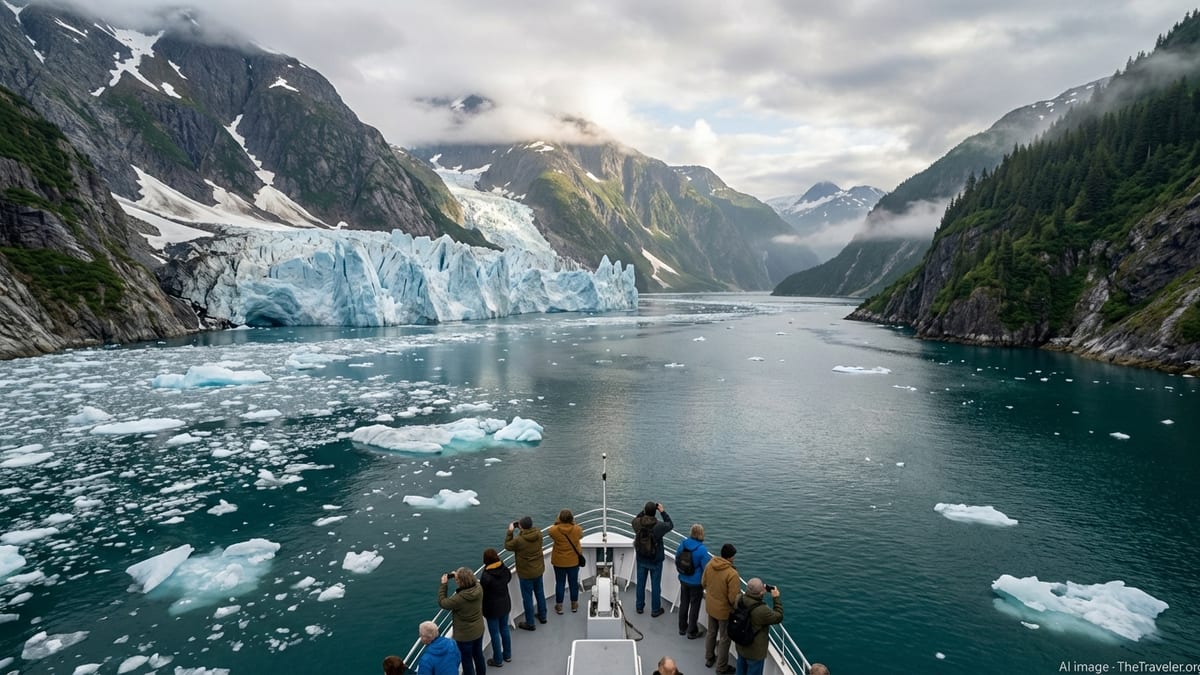
For many travelers, the ultimate Alaska day trip is a boat ride into Kenai Fjords National Park from the small harbor town of Seward. Full-day cruises typically spend six to nine hours exploring Resurrection Bay and the deeper fjords, tracing a coastline where steep mountains plunge straight into the sea and hanging glaciers cling to dark rock. Boats thread past sea stacks and headlands before pushing into narrow inlets where tidewater glaciers meet the ocean in towering blue walls.
Out on the water, the experience feels very much like an approachable expedition. Captains constantly scan for wildlife, and it is common to see sea otters rolling in the swells, Steller sea lions sprawled on rocky haul-outs, and puffins beating low over the waves. In summer, humpback whales and orcas are often spotted feeding or traveling along the coast. The air cools noticeably as the vessel nears the glacier face, and the soundscape shifts to crackling ice and the distant thunder of calving icefalls.
Despite the remote feel, this is a logistically straightforward adventure. Seward is connected to Anchorage by road and summer rail, and many visitors make the cruise as a long but doable day trip from the city. Operators generally include a simple lunch, heated interior seating, and naturalist narration about the park’s geology and wildlife. Seas can be choppy beyond the bay, so motion sickness precautions are wise, but the payoff is a genuine big-ship expedition atmosphere contained in a single day on a relatively small vessel.
Spencer Glacier Whistle Stop: Rail-Only Iceberg Country
Few experiences capture the sense of traveling beyond the road system as neatly as the trip to Spencer Glacier, a backcountry pocket in Chugach National Forest that is accessible only by train. In summer, the Alaska Railroad’s Glacier Discovery Train departs Anchorage and follows Turnagain Arm before turning inland to a dedicated whistle stop in a valley of mountains, hanging ice, and braided rivers. Stepping down from the train onto the gravel platform, with no town or road in sight, feels like arriving at a tented base camp for the day.
From the whistle stop, an easy, well-marked trail leads roughly a mile to an overlook above Spencer Lake, where icebergs drift in front of the glacier’s low, curving face. For many travelers, that hike alone is enough to supply the sense of being deep in Alaska’s wilderness, especially when clouds snag on the peaks and the wind carries the chill of the glacier. Those looking for a touch more adventure can book guided trips that add rafting or paddling among the icebergs and then floating down the milky Placer River, with the train making a special stop on the riverbank to collect guests.
What makes this outing feel like a mini expedition is the combination of isolation and simplicity. There are basic facilities at the whistle stop, but no shops or services, and visitors are expected to bring their own layers, food, and water unless they are on a guided package. The terrain is big and dramatic yet forgiving, ideal for families or first-time Alaska travelers who want the feeling of having gone somewhere that only a few people reach each day, and who are back at a city hotel by nightfall.
Prince William Sound from Whittier: Icefields, Fjords, and Quiet Water
Prince William Sound offers some of Alaska’s highest concentrations of tidewater glaciers and calm, protected seas, and day cruises from the small port of Whittier are one of the easiest ways to experience it. Whittier sits at the mouth of a deep fjord, accessed by a mountain tunnel that alternates one-way traffic between road vehicles and trains. Emerging from that tunnel into a sheltered harbor ringed by mountains already gives the impression of entering a separate world, and boarding a glacier cruise boat amplifies that feeling.
Once clear of the harbor, boats fan out into passages lined with steep forested slopes and waterfalls. On longer itineraries, captains navigate toward glacier-filled bays where the ice flows from the massive Prince William Sound icefields down to the water. The vessels typically idle at a safe distance while passengers watch for calving events, listen to guides explain the ice formations, and scan for harbor seals resting on floes. Sea otters, bald eagles, and occasional porpoises add to the sense of exploring a rich coastal ecosystem.
Compared with open-ocean areas, the waters in Prince William Sound are often relatively smooth, which makes this an appealing mini expedition for travelers wary of rough seas. Many cruises can be paired with rail travel on the Glacier Discovery Train or with a road trip from Anchorage, turning the day into a layered journey that includes a tunneling mountain passage, a remote-feeling harbor, and hours amid glaciers and islands. The combination of big ice, protected water, and quiet fjords creates a more contemplative version of the classic Alaska marine adventure.
Talkeetna Flightseeing: Flying the Flanks of Denali
North of Anchorage, the riverside town of Talkeetna serves as a historic staging point for climbers heading toward Denali, North America’s tallest peak. Today, that expedition legacy is most visible in the flightseeing operations that use small ski- and wheel-equipped planes to explore the mountain’s enormous massif. For visitors, booking a flightseeing tour from Talkeetna is about as close as you can get to the feel of a climbing expedition in a single afternoon.
Typical flights trace braided glacial rivers out of town before climbing along the massive Alaska Range, weaving between ridges and over crevasses that would otherwise take days to reach on foot. On clear days, Denali towers above everything, with pilots circling near the summit or along neighboring peaks so passengers can appreciate the scale of the ice and rock. Many tours include the option to land on a glacier, stepping out onto snow and ice with views of surrounding ridgelines and icefalls that place you directly in the domain of expedition climbers.
Despite the remote scenery, the logistics are straightforward: Talkeetna is reachable by road and rail, and flightseeing companies provide boots for glacier landings, headsets, and safety briefings. Weather is the main variable, and schedules often shift around clouds and wind, so flexibility is important. When conditions align, though, the sense of immersion in the high mountains is profound. You return to town and possibly to Anchorage the same evening, yet carry the memory of having flown among the peaks that define classic images of Alaska’s wild heart.
Denali Park Road Adventure: Tundra, Wildlife, and Distant Peaks
While Denali’s summit often hides in cloud, its surrounding tundra and river valleys are some of the most accessible big-country landscapes in Alaska. In summer, park-authorized buses travel along the Denali Park Road beyond the private-vehicle checkpoint, following a gravel ribbon that curves over passes and across broad valleys for many miles. A full-length transit or tour bus ride can easily fill a long day, especially for visitors based in the Denali area or making a side trip from Fairbanks or Anchorage.
The feeling here is less about adrenaline and more about the scale of wilderness. From the bus windows, you look out over open hillsides where caribou and grizzly bears sometimes move slowly across the tundra. Dall sheep cluster on distant cliffs, and moose occasionally appear in willow thickets or along ponds. The road itself clings to slopes in a way that often prompts travelers to lean unconsciously away from the drop-offs, which adds a subtle edge of adventure.
Because access is managed and services are limited once you are on the park road, the day requires some planning. You bring your own food and water, dress in layers for sun and wind, and accept that restroom breaks are confined to designated stops. That self-sufficient rhythm, combined with the hours spent moving steadily deeper into a largely roadless national park, gives this outing the feel of a classic overland expedition compressed into a single long day. Even if clouds hide the summit, the immersion in open, wildlife-rich country is memorable.
Juneau’s Mendenhall Glacier and Coastal Trails
Alaska’s capital, Juneau, is tucked between steep mountains and the broad expanse of the Inside Passage, and it offers adventure that begins almost at the city’s edge. One of the most popular day excursions is a visit to Mendenhall Glacier, a valley glacier that spills down toward a lake just a short drive from downtown. Trails near the visitor area lead to viewpoints where you can see the glacier’s blue ice, nearby waterfalls, and floating icebergs, all while staying within a managed recreation zone.
For a deeper sense of exploration, visitors often pair time at the glacier with hiking on surrounding trails or with guided paddling on the lake, when conditions and regulations allow. Even moderate walks offer views of subalpine meadows, dense rainforest, and the evolving landscape left behind by the glacier’s retreat. Eagles, bears feeding on seasonal salmon runs, and other wildlife may appear, reminding you that this is still very much a functioning ecosystem, not a static scenic overlook.
The proximity to town keeps this day trip accessible. Public transportation, shuttles, and tour operators regularly move visitors between Juneau’s waterfront and the glacier area during the main season. Yet the combination of live ice, dynamic waterways, and rugged peaks makes the experience feel far removed from city life. With some planning around weather and trail conditions, an active day at Mendenhall can feel like a compact field expedition focused on glacial change and coastal ecology.
Hatcher Pass: High Country Hiking Near Anchorage
Just a couple of hours from Anchorage by road, Hatcher Pass delivers an unexpectedly wild slice of alpine terrain. The winding access road climbs out of forest into open tundra, passing the historic Independence Mine complex and then continuing toward a broad, treeless saddle flanked by rocky peaks. In summer, the landscape here is a patchwork of green slopes, boulder fields, and lingering snow patches, with small tarns reflecting the constantly shifting sky.
Day visitors can choose from short, steep hikes to overlooks or longer rambles along ridgelines that link summit bumps and saddles. Even modest elevation gains quickly open up views across the Talkeetna Mountains and down into glacial valleys carved long ago. Because weather can change quickly at these elevations, hikers typically travel with layers, rain gear, and navigation tools, adopting the mindset of light expedition trekking even if they are only a short drive from town.
Facilities are limited once you leave the parking areas, and cell coverage can be spotty, which reinforces the sense of being temporarily off the grid. On quiet weekdays, you may share a ridge with only a handful of other hikers or a distant flock of ptarmigan. As clouds slide over the peaks or sunlight pours across the tundra, it is easy to forget that a comfortable Anchorage hotel room awaits that night, and to feel instead as if you are on a self-contained alpine journey.
The Takeaway
Alaska’s scale and mystique can make it seem like a destination reserved for expedition cruise ships and seasoned backcountry travelers. Yet the state’s rail lines, harbors, and park roads quietly unlock a surprising number of day trips that deliver much of the same emotion: the silence of glacier-carved valleys, the sudden appearance of wildlife, the sound of ice collapsing into cold sea, and the perspective that comes from moving through big country under your own power.
By choosing outings such as a Kenai Fjords cruise, a rail journey to Spencer Glacier, a day in Prince William Sound, or high-country hiking at Hatcher Pass, you can thread genuine adventure into a broader Alaska itinerary without committing to lengthy expeditions. The key is to approach these trips with the same respect you would give a longer journey: watch the weather, layer up, travel with reputable operators when appropriate, and leave room in your schedule for the unexpected. Do that, and each of these day trips can feel not like a quick excursion, but like a compact chapter in your own Alaska expedition story.
FAQ
Q1. Are these Alaska day trips suitable for first-time visitors?
Yes. All seven options are designed for travelers who may be new to Alaska, with established operators, clear routes, and varying activity levels so you can match your comfort and experience.
Q2. When is the best season to plan these mini expeditions?
Most of these day trips operate from late May through early or mid-September, when rail services, glacier cruises, and high-country roads are running and weather is generally more stable.
Q3. Do I need specialized gear for these experiences?
In most cases, no. Layered clothing, waterproof outerwear, sturdy footwear, and a small daypack are usually sufficient, while tour operators typically provide technical items like life jackets or glacier boots when needed.
Q4. How far in advance should I book tours like cruises or flightseeing?
For peak summer travel, it is wise to reserve key tours weeks or even a few months ahead, especially Kenai Fjords cruises, Prince William Sound trips, and Talkeetna flightseeing, which can sell out on popular dates.
Q5. Can I do these day trips without renting a car?
Some can be done car-free using rail, shuttles, or local tour transportation, particularly Spencer Glacier, Prince William Sound from Whittier, Kenai Fjords day cruises, and Mendenhall Glacier from Juneau’s waterfront.
Q6. What weather conditions should I expect on these outings?
Even in midsummer, conditions can shift quickly from sun to rain and wind, with cooler temperatures near glaciers and at higher elevations, so packing layers and windproof, waterproof shells is important.
Q7. Are these trips appropriate for children and older travelers?
Yes, many are family friendly, particularly the Kenai Fjords and Prince William Sound cruises, Spencer Glacier rail-based outings, and Mendenhall visits, though very young children or those with mobility issues may need extra support.
Q8. How can I minimize my impact on Alaska’s fragile environments?
Stay on established trails, follow local wildlife viewing guidelines, pack out all trash, use refillable water bottles, and travel with reputable operators who prioritize safety and environmental stewardship.
Q9. What if weather cancels a flightseeing tour or boat trip?
Operators commonly adjust departure times or routes for safety, and if a trip is fully canceled due to weather, they typically offer rebooking options or refunds according to their stated policies.
Q10. How should I prioritize these day trips with limited time?
If you only have a few days, consider pairing one marine glacier experience, such as Kenai Fjords or Prince William Sound, with a land-based outing like Denali Park Road, Hatcher Pass, or Mendenhall for a balanced snapshot of Alaska.