

Turkey rewards even the briefest escape from its major cities. Within a few hours of Istanbul, Izmir, Antalya or Denizli, you can wander ancient marble streets, float in thermal pools, or hike through storybook canyons punctuated by cave churches and vineyards. These seven day trips combine practical feasibility with the kind of scenery and historic depth that stays with you long after your return ride home.
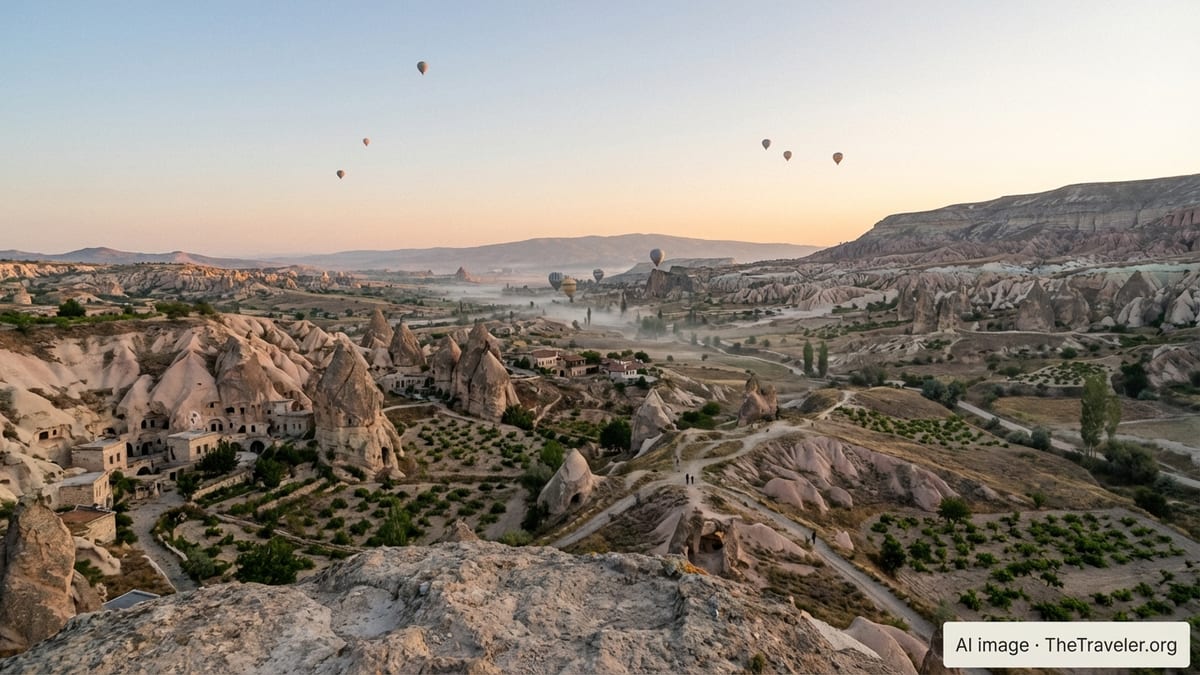
Cappadocia: Fairy Chimneys and Underground Cities in a Day
Cappadocia looks almost unreal at first glance, a plateau of soft volcanic rock sculpted into pillars, cones and valleys that shimmer in pastel shades at sunrise. Although many travelers dedicate several days here, a focused day trip is entirely possible thanks to frequent domestic flights connecting Cappadocia with Istanbul and other major hubs. With an early departure and late return, you can sample the region’s headline experiences while still sleeping back in the city you started from.
Most day itineraries revolve around either the northern “Red” circuit or the southern “Green” route. The Red route usually includes the Göreme Open Air Museum, where rock cut churches and chapels still carry Byzantine frescoes in surprisingly vivid color, along with viewpoints over Rose Valley and visits to old villages like Çavuşin. The Green route tends to reach further, adding an underground city such as Derinkuyu or Kaymaklı, where early Christian communities burrowed deep into the earth to hide from invasions and persecution.
Even with limited time, it is worth pausing between stops to absorb Cappadocia’s subtler details. Vineyards cling to valley floors, apricot trees bloom in spring, and stone houses climb the slopes of towns like Uçhisar, crowned by a natural rock citadel. Many organized day tours include a traditional lunch in a family run restaurant, where clay pot stews and local wines give a sense of the region’s agricultural heritage. If your timing allows, consider arranging a pre dawn arrival to join a hot air balloon flight, still one of Turkey’s most sought after travel experiences.
Because Cappadocia’s weather can swing quickly from bright sunshine to wind and dust, pack layers, sturdy walking shoes and a small daypack. Distances between sights are modest but the terrain involves slopes, steps and rocky paths, which can be tiring if you are racing to catch an evening flight. Planning ahead with a reputable local operator and confirming your flight schedules helps transform what might sound ambitious into a seamless, unforgettable day.
Pamukkale and Hierapolis: Thermal Terraces above the Meander Valley
Pamukkale, near the modern town of Denizli, is one of Turkey’s most distinctive natural wonders. Cascading white travertine terraces spill down a hillside, fed by mineral rich hot springs that have been flowing for thousands of years. From a distance the slope resembles a frozen waterfall or a snowfield glowing under the Aegean sun. Close up, the pools reveal delicate ripples of stone filled with aquamarine water that stays pleasantly warm most of the year.
Above the terraces lies the ancient city of Hierapolis, a Roman spa settlement that grew up around the same thermal sources. Here, visitors wander along a colonnaded ancient street, past the remains of a theater with sweeping views and a vast necropolis lined with sarcophagi. One of the most atmospheric experiences is swimming in the so called Antique Pool, where submerged columns and carved stones from a collapsed Roman structure lie under the warm, clear water. The combination of archaeology and natural spectacle makes Pamukkale and Hierapolis a compelling pairing for a full day excursion.
Day trips usually start from Denizli, Kusadası or even Istanbul via an early flight, with onward road transfers taking you directly to the entrance. Expect to spend several hours walking barefoot along designated sections of the travertines, as shoes are restricted to protect the fragile formations. Bringing a small towel, a swimsuit and a bag for wet items allows you to enjoy both the pools and the archaeological site comfortably while keeping your main belongings dry.
Visitor numbers can be high during peak months, so quieter experiences often come early in the morning or toward late afternoon, when the light softens and the terraces take on shades of gold and pink. Local guides can help you navigate lesser used paths, point out details of Hierapolis that are easy to overlook and share context about the ongoing conservation work that keeps this UNESCO site open to travelers.
Ephesus and the Aegean Coast: Walking Through a Marble City
Few ancient sites in the Mediterranean feel as complete or immersive as Ephesus, the once bustling port city near today’s Selçuk on the Aegean coast. A well planned day trip here lets you walk along marble streets worn smooth by centuries of traffic, past townhouses, temples and public buildings that illustrate the sophistication of Roman urban life. The most iconic sight is the façade of the Library of Celsus, an intricately carved two story structure that has become a symbol of classical Turkey.
Most travelers base themselves in Izmir, Kusadası or even arrive by cruise ship, joining day tours that bundle Ephesus with nearby attractions. Within the site itself, highlights include the Great Theater, which once seated tens of thousands for performances and gatherings, and the Terrace Houses, where patterned mosaics and wall paintings reveal how wealthy citizens lived. Slightly outside the main archaeological zone, places such as the House of the Virgin Mary and the remains of the Temple of Artemis are often included, adding layers of religious and historical interest.
Despite its popularity, Ephesus still offers quieter corners when you step away from the main artery near the library. Side streets lead to smaller baths and shops, while overlooks from the upper city deliver wide views across the valley. The site can be hot and exposed by midday, so hats, sunscreen and water are essential. Comfortable shoes matter too, since the polished stones become slippery, especially after rain.
Many organized excursions add a traditional lunch in nearby villages and a short stop in Selçuk to visit the local museum, which houses statues and artifacts recovered from Ephesus. These museum collections help bring context to the ruins outside, from finely carved reliefs to everyday household items. With logistics handled in advance, a day at Ephesus can feel both unhurried and richly layered, blending the grandeur of antiquity with the relaxed pace of the Aegean coast.
Gallipoli Peninsula: Remembrance on the Dardanelles
The Gallipoli Peninsula, guarding the narrow strait of the Dardanelles, is one of Turkey’s most significant landscapes of memory. For visitors from Australia, New Zealand and other countries involved in the First World War campaign here, a day trip to Gallipoli is often a pilgrimage. Even for those with no direct connection to the battlefields, the combination of pine covered hills, quiet coves and carefully tended cemeteries creates a contemplative experience that contrasts sharply with the bustle of Istanbul.
Day tours generally depart early from Istanbul, crossing the European side of the Marmara region before reaching the ferry to the Gallipoli Peninsula. Over the course of the day you can expect to visit key sites such as Anzac Cove, Lone Pine Cemetery and Chunuk Bair, along with memorials to Turkish soldiers who defended the peninsula. Guides usually share accounts from both sides, explaining how the campaign unfolded and why it occupies such an important place in national narratives.
Walking trails lead between some of the memorials and preserved trenches, allowing visitors to picture the steep slopes and difficult terrain that shaped the fighting. Simple visitor centers and small museums provide maps, timelines and personal stories, from letters home to photographs taken by soldiers. The mood at these sites tends to be respectful rather than theatrical, and visitors are encouraged to keep voices low and behavior considerate.
The journey time from Istanbul means that a Gallipoli day trip is a long one, but rest stops and a lunch break along the way help to break up the drive. Spring and autumn often provide the most comfortable weather, as summer heat can make walking in exposed areas challenging. With good planning, this is a powerful day excursion that links geography with history in a direct and moving way.
Bursa: Ottoman Foundations beneath Uludağ
South of Istanbul across the Sea of Marmara lies Bursa, the first major capital of the Ottoman Empire and still one of Turkey’s most atmospheric cities. Thanks to modern highways and regular ferries, Bursa has become an appealing day trip for travelers starting from Istanbul who want to explore early Ottoman architecture, classic markets and local cuisine. The city sits at the foot of Uludağ Mountain, which rises steeply behind the skyline and adds a dramatic natural backdrop.
Historic Bursa concentrates many of its sights within walking distance. The Ulu Camii, or Grand Mosque, is a forest of stone pillars and domes topped with stained glass, while the Green Mosque and Green Tomb complex showcase refined tile work in deep turquoise shades. Nearby, the Koza Han caravanserai once anchored the silk trade and today hosts a shaded courtyard filled with teahouses and small shops selling textiles. Wandering through these quarters offers a glimpse of a city that prospered long before the Ottomans moved their capital to Edirne and later to Istanbul.
Beyond the monuments, Bursa is famous for its food, and tasting the local version of İskender kebab has become almost a rite of passage for visitors. The dish layers tender grilled meat over pieces of flatbread, then covers it with tomato sauce and melted butter, usually accompanied by yogurt. Sweet shops in the center of town serve candied chestnuts, another local specialty, and traditional bakeries display trays of freshly baked pide and pastries.
Depending on the season and your interests, some day trips combine the city with a ride on the Uludağ cable car, which climbs to alpine meadows that turn into a ski area in winter. Even a short journey up the slopes reveals cooler air and broad views back toward Bursa and the plains beyond. Whether you stay in the historic core or head for the mountain, the city offers a satisfying mix of culture, landscape and everyday Turkish life within easy reach of Istanbul.
Princes’ Islands: Car Free Retreat on the Sea of Marmara
For a gentler escape that feels far removed from Istanbul’s traffic and noise, the Princes’ Islands provide a classic day out. This small archipelago in the Sea of Marmara is reachable by public ferry in roughly one to one and a half hours from central piers on both the European and Asian sides of the city. The islands are car free, with electric shuttles, bicycles and walking paths replacing private vehicles, which creates a quiet, almost village like atmosphere.
Büyükada, the largest and busiest island, tends to be the main focus for first time visitors. Its waterfront promenade is lined with seafood restaurants and cafes, while back streets reveal wooden mansions with wide balconies and well tended gardens. Many day trippers rent bicycles to circle the island or climb toward Aya Yorgi Church on a hilltop, where the reward is a sweeping view over the Marmara Sea and, on clear days, back to the silhouettes of Istanbul’s minarets and towers.
Smaller islands such as Heybeliada and Burgazada offer a more low key charm, with pine scented walking trails, small beaches and local bakeries serving simit and pastries fresh from the oven. In warmer months, swimming spots along the rocky shoreline attract residents who escape the mainland heat for an afternoon. Ferries operate throughout the day, making it easy to tailor your visit: you might linger over a late lunch on one island and hop another ferry back at sunset.
Because the Princes’ Islands are a beloved outing for Istanbul locals, weekends and public holidays can become crowded, especially in late spring and summer. If your schedule allows, a weekday visit offers a calmer experience and more space on ferries. Bringing a light jacket, even in summer, is wise, as breezes on the water can be cool. With minimal planning and a modest budget, the islands deliver one of the simplest and most satisfying day trips in Turkey.
Perge, Aspendos and Side: Antiquity on Antalya’s Turquoise Coast
Antalya, on Turkey’s southern Mediterranean shore, is best known for its beaches and resort hotels, yet the surrounding region holds some of the country’s most impressive classical ruins. A single well structured day trip can take in the ancient cities of Perge and Side along with the remarkably preserved theater of Aspendos. Together they offer a vivid survey of Greco Roman urban planning, religious life and entertainment, all within easy driving distance of Antalya’s modern center.
Perge, set inland on a fertile plain, introduces visitors to the layout of a Roman city with its colonnaded main street, baths, agora and stadium. Much of the architectural decoration now resides in Antalya’s museum, but on site you can still see column bases, paving stones and the remains of a monumental gate. From there, many itineraries continue to Aspendos, whose hillside theater is among the best preserved in the ancient world. The steep tiers of seats and high stage building allow you to appreciate how sound would have carried across performances centuries ago.
Side, on a small peninsula east of Antalya, combines ruins with a lively seaside town. Its ancient theater, temple columns and city walls sit alongside cafes, guesthouses and small beaches, making it an appealing final stop where you can relax after a day of exploration. Narrow streets lead toward a harbor lined with boats, and at sunset the remaining columns of the Temple of Apollo frame views over the Mediterranean in soft, warm light.
Because the three sites lie relatively close together, this loop works well as a full day outing that balances walking, sightseeing and rest. Summer temperatures on the coast can be high, so lightweight clothing, hats and plenty of water are important. Many visitors choose to join organized excursions that handle transport and guiding, while independent travelers can rent a car and navigate at their own pace, using Antalya as an easy base for classical day trips.
The Takeaway
Turkey’s geography and transport links make it unusually friendly to ambitious day trips. Highways, domestic flights and coastal roads connect dense clusters of historical sites and landscapes that might demand multi day journeys in other countries. Whether you are drawn to Cappadocia’s sculpted valleys, the shimmering terraces of Pamukkale, the marble streets of Ephesus or the maritime calm of the Princes’ Islands, each of these excursions offers a strong sense of place in a single, concentrated dose.
Choosing the right day trip often comes down to where you are starting from and what kind of experiences you value most. History focused travelers might prioritize Gallipoli or Ephesus, while those seeking scenery and gentle walking lean toward Cappadocia, Pamukkale or Antalya’s ancient coastal sites. Urban explorers looking for a softer counterpoint to Istanbul’s intensity will find it in Bursa’s historic quarters or the car free lanes of the Princes’ Islands.
Whatever combination you select, planning around daylight, seasonal weather and your own pace is key. Booking with established local operators, confirming schedules in advance and leaving a small buffer for delays can turn a long but rewarding outing into a smooth highlight of your time in Turkey. With thoughtful preparation, these seven day trips do more than fill an extra day on your itinerary. They open windows onto the country’s many layers, from empire and trade routes to quiet coves and mountain foothills, and leave you with a richer understanding of modern Turkey’s deep roots.
FAQ
Q1. Can I really visit Cappadocia as a day trip from Istanbul?
It is possible with an early outbound flight and a late return, usually as part of an organized tour that includes airport transfers and a focused sightseeing route.
Q2. Which day trip is best if I am most interested in ancient history?
Ephesus is often the top choice for classical history, while Gallipoli appeals to those interested in twentieth century military history and remembrance.
Q3. Do I need to book Pamukkale and Hierapolis tours in advance?
Advance booking is recommended in busy seasons, especially if you are flying in for the day, as it helps secure transfers, a guide and adequate time at the terraces.
Q4. Are the Princes’ Islands suitable for families with children?
Yes, the car free streets, short ferry ride and relaxed pace work well for families, though parents should keep an eye on younger children near the water and on bicycles.
Q5. How long is the journey from Istanbul to Gallipoli for a day trip?
Including road transfers and a short ferry crossing, the one way trip typically takes about four to five hours, making it a long but manageable day.
Q6. Is Bursa worth visiting outside the winter ski season?
Absolutely. Bursa’s mosques, markets, historic inns and food scene make it rewarding year round, with Uludağ providing cooler air and views even in summer.
Q7. Can I swim at Pamukkale’s travertine pools?
Certain sections are open for wading, and you can fully swim in the nearby Antique Pool, where warm spring water flows among ancient stone fragments.
Q8. What should I wear when visiting mosques in Bursa or elsewhere in Turkey?
Modest clothing that covers shoulders and knees is appropriate, and women are usually asked to cover their hair with a scarf inside prayer areas.
Q9. Is it better to rent a car or join a tour for the Antalya region ruins?
Confident drivers may enjoy the flexibility of a rental car, while many visitors prefer guided tours for ease of navigation, parking and historical explanation.
Q10. Are these day trips suitable for winter travel?
Most are possible in winter, though Cappadocia and Bursa can see snow and colder temperatures, so warm layers and weather checks become especially important.