

Manitoba stretches from busy prairie cities to the icy shoreline of Hudson Bay, offering visitors a rare mix of culture, big-sky scenery and true Arctic wildlife encounters. Whether you are drawn north by polar bears and beluga whales, or south by lakeside national parks and thriving food scenes in Winnipeg, the province rewards curiosity with experiences that feel both grounded and surprising. These eight highlights showcase the best of Manitoba today, from classic summer road trips to once-in-a-lifetime tundra safaris.
Explore Winnipeg’s Creative Capital Energy
Winnipeg is the natural starting point for most trips to Manitoba and has evolved into a destination in its own right. The downtown core blends handsome early 20th century architecture with new cultural spaces, while neighbourhoods just beyond the centre are packed with independent restaurants, cafes and galleries. Even a short stay introduces you to a city that feels proudly local, with a strong arts scene and a calendar of festivals that runs nearly year-round despite the long winters.
Visitors often begin in the Exchange District, where former warehouses now host studios, design shops and eateries. Walking the compact streets, you can admire ornate brick facades and corner towers, then duck into contemporary galleries or small theatres. In colder months, Winnipeg’s extensive skywalk network links many downtown buildings, letting you wander between shops and cultural venues without stepping outdoors for every block.
Beyond the core, districts such as Osborne Village and Corydon Avenue showcase the city’s social side. Patios fill in summer, serving Manitoba craft beer and locally inspired cuisine, while independent boutiques and record stores underscore the city’s creative streak. Along the Red River, parks and cycling paths give you a quieter angle on Winnipeg life, especially in late spring and early autumn when foliage along the riverbank is at its brightest.
Plan to spend at least a full day or two in Winnipeg at the start or end of your Manitoba journey. It not only offers the province’s best range of accommodations and dining, but also serves as a practical base for organizing flights or train journeys north and car rentals for road trips into lake country and national parks.
Meet Polar Bears on the Tundra in Churchill
Few experiences in travel compare with seeing a wild polar bear on open tundra, and Churchill on the shore of Hudson Bay remains one of the world’s best places to do it. Each autumn, as the bay begins to freeze, polar bears gather near the coast waiting for the sea ice that allows them to hunt seals. Specialized tundra vehicles and guided tours give visitors the chance to observe these powerful animals at relatively close range, in conditions that still put safety and respect for wildlife first.
The prime polar bear viewing season typically runs from mid October through November, a short window when ice is forming but most bears have not yet moved fully onto the bay. During this period, operators report frequent sightings across the open expanses outside town, sometimes of multiple bears in a single outing. The low, golden light of late autumn and the contrast of fresh snow on the tundra create striking conditions for photography, but temperatures can be sharply below freezing with strong winds, so layered clothing and serious cold-weather gear are essential.
Getting to Churchill is part of the adventure. There are no roads connecting the town with the rest of Manitoba, so most visitors arrive via regional flights from Winnipeg or by a long-distance train journey that crosses boreal forest and subarctic landscapes. Once in Churchill, you can join day tours in tundra vehicles, or opt for multi-day lodge-based packages that include guided excursions, meals and sometimes workshops with wildlife photographers or naturalists.
Because capacity is limited and demand remains high, especially in the peak bear weeks, you should plan and book many months ahead. Operators can help you choose dates that balance bear activity, daylight hours and your own tolerance for cold. Regardless of the exact timing, seeing a polar bear in its natural environment, nose lifted to scent the air or ambling across the ice, is an experience that tends to stay with travelers long after they have left the Arctic coast.
Witness Beluga Whales and Summer Wildlife on Hudson Bay
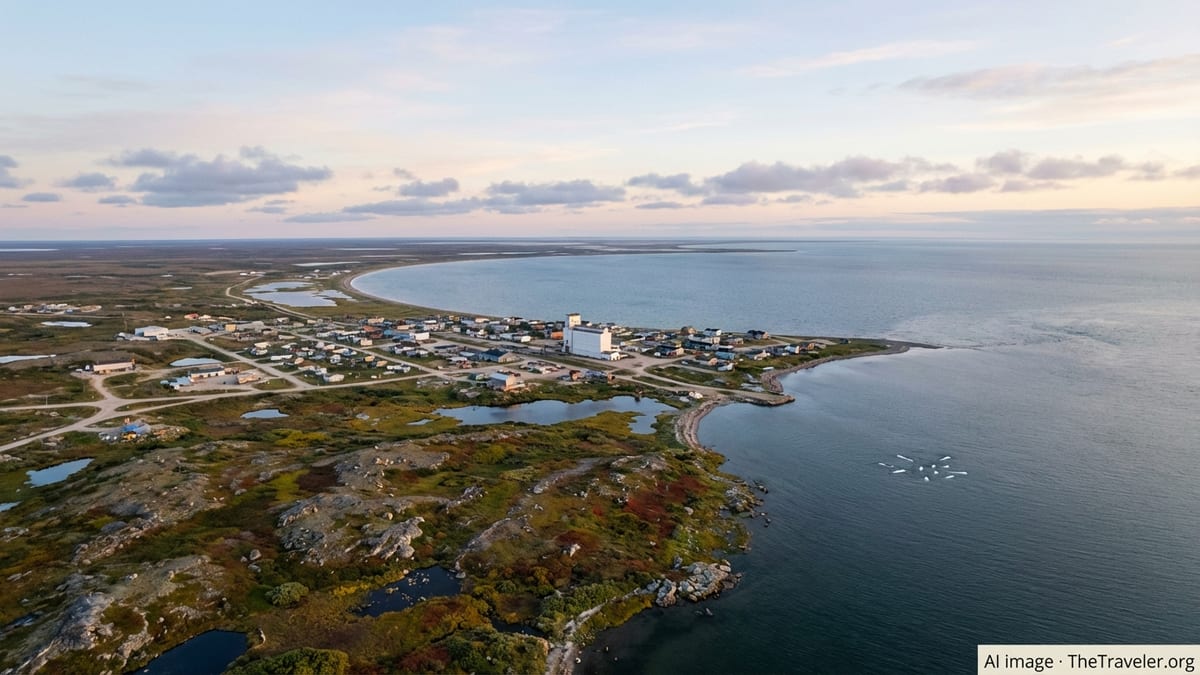
Churchill is not only a destination for polar bears. In mid summer, the estuaries around the town host one of the world’s largest seasonal gatherings of beluga whales. From roughly July through late August, thousands of belugas migrate into the relatively shallow, slightly warmer waters where the Churchill River meets Hudson Bay to feed, socialize and calve. For visitors, this offers a very different, softer side of the subarctic, with long daylight hours and far milder temperatures than in late autumn.
Tour operators in Churchill run a variety of beluga-focused excursions, including boat tours, zodiac outings and kayak trips. On the water, you may hear the whales’ high-pitched calls even before you see them, then watch as pale grey juveniles and bright white adults surface and roll beside the vessel. Some tours use hydrophones to let passengers listen to the whales’ vocalizations, highlighting how active and social these animals are beneath the surface. Conditions vary with the tides and weather, but operators generally aim to keep respectful distances while still providing clear viewing opportunities.
Many travelers choose to combine beluga excursions with opportunities to see other northern wildlife and landscapes. In summer, the tundra around Churchill is dotted with wildflowers and birdlife, and it is sometimes possible to spot polar bears along the coast or on offshore islands, although sightings are less predictable than in autumn. Guided hikes and cultural tours with local Indigenous guides help you understand how people have lived with and learned from this land and sea for generations.
Compared with autumn, summer in Churchill offers more flexibility and slightly lower pressure on bookings, but it still makes sense to plan ahead, particularly for accommodations and popular tour departures. If you prefer long daylight, a mix of marine and terrestrial wildlife, and the chance to experience the subarctic without the full force of winter conditions, this season along Hudson Bay can be an excellent fit.
Unwind in Riding Mountain National Park
South of Churchill and northwest of Winnipeg, Riding Mountain National Park delivers a classic Canadian park experience on the edge of the prairies. The protected area blends forests, rolling hills, lakes and meadows, creating a surprising pocket of varied terrain rising above the surrounding farmland. It is an easy road trip from Winnipeg, yet it feels worlds away, with clear night skies, extensive trail systems and a relaxed resort village on the shores of Clear Lake.
Outdoor activities are available through all four seasons. In summer, visitors hike a network of routes that range from short family friendly loops to more demanding day hikes and backcountry options. Trails lead through mixed boreal forest, along lakeshores and across open meadows where elk and white tailed deer often graze. The lake itself is a hub for paddling, swimming and boating, with sandy beaches drawing families and casual strollers on warm days.
Wildlife viewing is a major draw. The park is home to black bears, moose, wolves and a managed bison herd, among other species. Early morning and evening drives on quieter roads sometimes reward patient visitors with sightings of larger mammals, while bird watchers find plenty to track in the varied habitats. As with any wild area, it is important to follow Parks Canada guidance on keeping safe distances from animals and storing food properly in campgrounds.
In winter, Riding Mountain transforms into a destination for cross country skiing, snowshoeing and fat biking on groomed trails. The village of Wasagaming takes on a quieter charm, with far fewer visitors but crisp, star filled nights and the possibility of northern lights during clear cold spells. Whether you come for a long weekend or a week-long stay, the park offers a manageable, family friendly way to experience Manitoba’s natural side without committing to remote travel in the far north.
Swim and Sun at Grand Beach on Lake Winnipeg
For many Manitobans, summer is synonymous with weekends at the lake, and Grand Beach Provincial Park on Lake Winnipeg is among the province’s best known warm weather escapes. Located on the lake’s eastern shore, the park is famous for its long sweep of soft, pale sand backed by dunes and jack pine forest. On hot July and August days, the main beach area can feel almost resort like, with families picnicking, swimmers in the shallows and casual games of beach volleyball playing out along the shore.
Despite its popularity, Grand Beach retains a natural setting, particularly once you walk beyond the busiest areas. Boardwalks and paths lead over and between the dunes, giving views of the lake and the changing light on the water. The lake itself is large enough to produce small waves that keep paddlers and swimmers refreshed on still days, while sunsets often stretch in soft tones across the wide horizon. The park infrastructure includes campgrounds, picnic areas and basic services, making it a straightforward addition to a Manitoba road trip.
Visiting outside of peak holiday weekends allows you to experience a quieter side of Grand Beach. In late spring and early autumn, the air and water are cooler, but there is more space to walk the shoreline, look for shorebirds and appreciate the scale of Lake Winnipeg without the same level of crowding. Even on busier days, arriving early or staying into the evening can give you calmer windows around the edges of peak daytime use.
If you are driving from Winnipeg, allow time to explore small communities and other lakeside stops along the way. The region around Lake Winnipeg has long served as a cottage and recreation area for residents, and experiencing that slower rhythm of days shaped by the weather and the water is part of the appeal for visitors as well.
Trace Prairie and Immigrant Stories in Southern Manitoba
Beyond well known parks and the northern coast, Manitoba’s smaller towns and cultural sites help tell a broader story of settlement, migration and the shaping of prairie life. In southern communities, museums and heritage centres explore the experiences of Indigenous peoples, early European settlers and later waves of immigrants who farmed and built towns across what was then a very remote region.
Open air heritage villages are a particular highlight. At these sites, historic buildings have been preserved or reconstructed and furnished to reflect life in different eras, from log houses and churches to schools, blacksmith shops and windmills. Interpreters often demonstrate traditional crafts, agriculture techniques and domestic skills, offering a tangible sense of daily routines on the prairies. Visiting during summer events or seasonal festivals can add food, music and local markets to the experience.
Driving between these communities, you will cross landscapes that at first seem repetitive, but which reveal their own character over time. Grain elevators, shelterbelts of trees and vast fields under enormous skies form the backdrop for small towns with busy main streets and quiet residential blocks. Stopping for coffee, a bakery visit or a local diner meal can create unscripted encounters and conversations that bring Manitoba’s contemporary rural culture into focus.
These southern routes pair well with visits to provincial parks in the Pembina Valley and other pockets of more rugged terrain. Here, river valleys cut through the farmland, providing hiking trails, scenic lookouts and campgrounds sheltered by forested slopes. Combining cultural stops with time outdoors makes for a satisfying, low key itinerary that balances driving days with moments of stillness in nature.
Chase Northern Lights Across Clear Skies
Manitoba’s broad skies and relatively low levels of light pollution make it a strong destination for aurora viewing in the right conditions. While the most dramatic northern lights displays are typically associated with high latitude communities such as Churchill, visitors can sometimes see shimmering curtains of green and occasional hints of other colors from darker sites across the province. Success depends on a combination of solar activity, clear skies and a willingness to be outside late at night in cold temperatures.
In Churchill, aurora viewing often pairs naturally with wildlife trips, particularly in late autumn and winter when nights are longest. Local operators watch forecasts and cloud cover, then take guests to locations away from town lights to maximize the chances of seeing the aurora if it appears. On especially active nights, the lights may stretch from horizon to horizon, changing form over minutes or even seconds, and can be bright enough to cast faint shadows on snow.
Further south, travelers staying in Riding Mountain National Park, lakeside cabins or rural lodges may occasionally witness aurora as well. While displays here are generally lower on the horizon and somewhat less frequent, they can still be memorable, especially when reflected in still water or framed by silhouetted trees. Checking short term aurora forecasts, choosing accommodations away from city centers and keeping a flexible schedule on clear nights can all improve your odds.
Whenever and wherever you search for northern lights, preparation matters. Winter nights across Manitoba can be extremely cold, so warm boots, insulated layers and windproof outerwear are critical. Bring a tripod if you hope to photograph the aurora, and consider simply taking time to watch without a camera too. Standing in a quiet landscape under shifting light is as much about the sensation of place as it is about capturing an image.
The Takeaway
From the street life of Winnipeg to the bear traveled shores of Hudson Bay, Manitoba offers a wider range of experiences than its modest profile on many travel maps might suggest. The province manages to feel both accessible and remote, with road trips to lakes and national parks easily combined with more ambitious journeys to encounter polar bears, belugas and winter skies glowing with northern lights.
Planning is essential, particularly for peak seasons in Churchill and popular summer weeks at parks and beaches. Yet there is still room for spontaneity in the form of unscheduled stops in prairie towns, extra nights beside a quiet lake or an unplanned late evening spent watching stars gather overhead. If you arrive ready for shifting weather, long distances and the modest pace of many rural communities, Manitoba tends to reward that flexibility.
Whether your priority is a single, once in a lifetime wildlife encounter or a broader exploration of prairie culture and landscapes, the province offers enough variety to fill more than one trip. Taken together, these eight experiences trace a path from urban creativity to deep wilderness, inviting you to see how life unfolds along the vast heart of central Canada.
FAQ
Q1. When is the best time to see polar bears in Churchill?
The most reliable time to see polar bears near Churchill is typically from mid October to late November, when the animals gather along Hudson Bay waiting for sea ice to form.
Q2. Can I see both beluga whales and polar bears on the same trip?
It is possible, but timing is tight. July and August are best for belugas, while prime polar bear viewing comes later in autumn. Some summer visitors may see a few bears along the coast, but sightings are less predictable than in October and November.
Q3. How many days should I spend in Winnipeg?
Plan at least two full days to explore Winnipeg’s main neighbourhoods, museums and riverfront paths. Longer stays give you time to enjoy the food scene, local festivals and day trips to nearby parks or beaches.
Q4. Do I need a car to visit Riding Mountain National Park and Grand Beach?
A car is the most practical way to reach both Riding Mountain and Grand Beach from Winnipeg, as public transport options are limited and attractions within the parks are spread out.
Q5. How far in advance should I book a Churchill wildlife trip?
For peak polar bear season, aim to book tours, flights and accommodation six to twelve months in advance. Summer beluga trips may offer a bit more flexibility, but early planning still helps secure preferred dates.
Q6. Is Manitoba suitable for family travel?
Yes. Parks such as Riding Mountain and Grand Beach offer family friendly trails, beaches and campgrounds, while Winnipeg provides urban amenities, interactive museums and diverse dining suitable for children.
Q7. What kind of clothing should I pack for autumn in Churchill?
Pack serious cold weather gear, including insulated boots, thermal base layers, a warm mid layer, a windproof outer shell, hat, gloves and a scarf or neck gaiter. Temperatures can fall well below freezing with strong windchill.
Q8. Can I drive to Churchill from southern Manitoba?
No. There is no road connecting Churchill to the southern road network. Visitors typically reach the town by air from Winnipeg or by train from other Manitoba communities.
Q9. Are northern lights guaranteed during a winter visit?
No aurora sighting is guaranteed. Manitoba sits under a favourable auroral zone, but clear skies and sufficient solar activity are required. Multi night stays improve your chances.
Q10. Is it safe to view wildlife in Manitoba’s parks and tundra areas?
Wildlife viewing is generally safe when you follow local guidance, maintain recommended distances, join reputable guided tours and store food properly in campgrounds and lodges.