

Moose Jaw may be small on the map, but this Saskatchewan city delivers a surprising mix of historic intrigue, prairie charm and easygoing indulgence. Visitors come for the infamous tunnels and stay for the mineral-rich hot pools, riverside trails, outdoor art and aviation heritage that give the "Notorious City" its distinct personality. Whether you are road-tripping along the Trans-Canada Highway or planning a weekend escape from Regina or Saskatoon, these seven standout experiences will show you the best of Moose Jaw.
Explore the Legendary Tunnels of Moose Jaw
If there is one experience that defines Moose Jaw for many visitors, it is a tour through the Tunnels of Moose Jaw. Beneath the sidewalks of downtown, a network of basements and passageways has been transformed into theatrical guided tours that blend performance and local history. You descend from busy Main Street into dimly lit corridors and re-created rooms, following costumed interpreters who draw you into stories of gambling, prohibition and early immigrant life.
Three main tours bring different chapters of Canadian history to life. Chicago Connection focuses on Moose Jaw’s rumoured links to American gangsters during the Prohibition era, placing you in the middle of bootlegging operations and cross-border smuggling tales. Passage to Fortune shifts the spotlight to Chinese immigrants, exploring the hardships, racism and resilience that shaped their lives on the Prairies in the early 1900s. Bunker 24, set in 1958, drops you into a Cold War scenario in an underground "command centre," using props and staging to explore tensions and technological change after the Second World War.
The result is not a traditional museum visit but something closer to immersive theatre. The sets are detailed, lighting and sound add tension, and guests are often enlisted as characters in the story. While the tours lean into spectacle and legend, they also invite reflection on how myth and history intertwine in a railway town that once sat at the crossroads of national trade. Booking ahead is recommended, especially in summer and on weekends, when tour times often sell out.
Allow at least a couple of hours for your visit so you can check in, browse the gift shop and linger downtown afterward. The tunnels are located in the heart of Moose Jaw, so it is easy to pair your tour with coffee, a meal or a stroll past nearby heritage buildings and murals.
Soak in Geothermal Waters at Temple Gardens Mineral Spa
After a day of exploring, Moose Jaw’s most relaxing attraction awaits just a short walk from the tunnels. Temple Gardens Mineral Spa is a downtown resort complex built around naturally heated mineral water drawn from a geothermal source discovered in the early 20th century. That water, piped from a well field outside the core, feeds large indoor and outdoor pools where temperatures hover comfortably warm year-round.
The experience is simple but memorable. Guests step from an indoor pool through a water passage into an outdoor rooftop-style basin, steam rising against the prairie sky in winter and warm summer air in July and August. The minerals in the water give it a gentle buoyancy and a faint, distinctive scent, and many visitors report that a long soak eases muscle tension after driving or walking long distances. Seating ledges allow you to sit partially submerged, and quieter corners invite conversation or quiet contemplation above the city streets.
The adjoining spa offers a full slate of treatments, including massage, body wraps and facials, which can be paired with access to the pools. Even if you are not staying overnight in the hotel, you can typically purchase day access to the mineral pools, subject to capacity. Families, couples and solo travelers are all common here, and the atmosphere is generally calm and unhurried, especially on weekday mornings and outside peak holiday periods.
Because Temple Gardens is a popular regional getaway, it is wise to check current hours and any maintenance closures before you arrive. If you are planning a weekend retreat, consider building your itinerary around an evening soak, when the ambient lighting and cooler air make the warm mineral water feel especially luxurious.
Meet Mac the Moose and Discover Moose Jaw’s Murals
At the edge of town near the visitor information centre, a towering steel and concrete moose keeps quiet watch over the Trans-Canada Highway. Mac the Moose stands more than ten metres high, making it one of the largest moose sculptures in the world and a beloved symbol of the city. For many travelers, a quick stop here is their first introduction to Moose Jaw, and it is a natural place to stretch your legs, pick up local maps and grab a fun photo.
Mac’s story includes a friendly rivalry with a Norwegian town over the title of tallest moose statue, which spurred Moose Jaw to upgrade Mac’s antlers to reclaim the record. Today the sculpture remains an unabashedly quirky landmark, complete with weathered textures and visible structural details that underline its 1980s origins. The surrounding grounds offer space to wander, and information boards at the visitor centre help you plan what to see next.
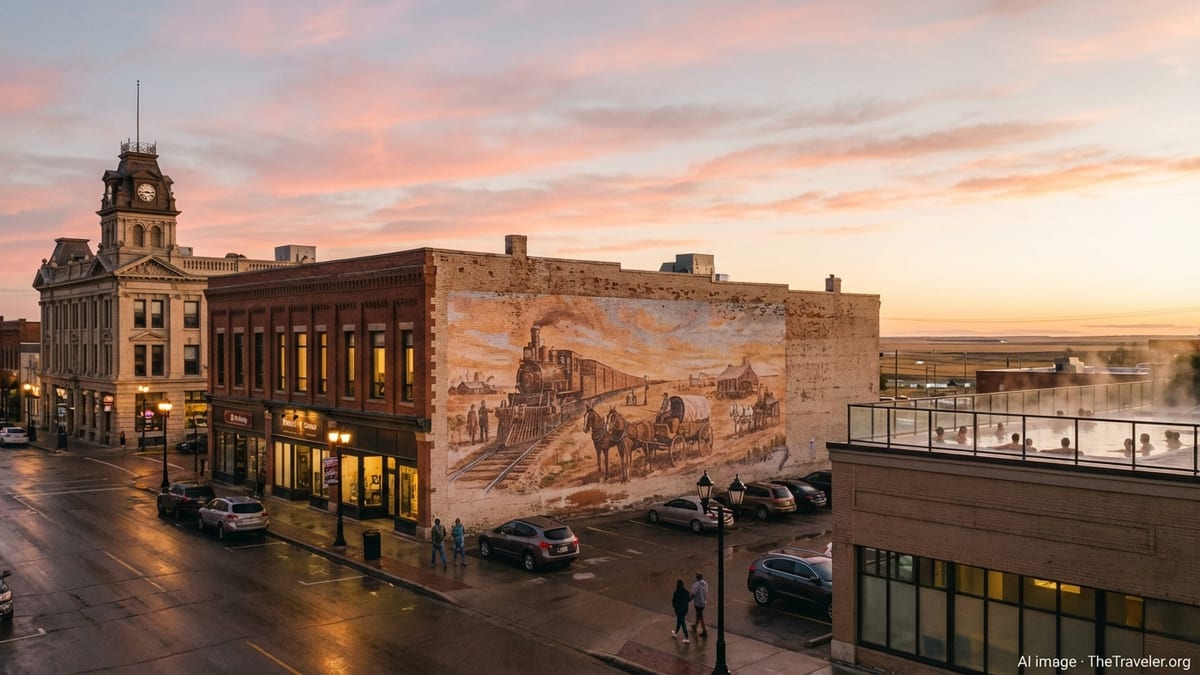
Back downtown, Moose Jaw’s love of large-scale art continues across brick walls and alleyways. The city has more than 40 outdoor murals scattered through the historic core, each depicting scenes from local history, agriculture, transportation or prairie life. Some portray steam locomotives and early streetscapes, while others highlight Indigenous stories, aviation, or the city’s reputation as "Notorious Moose Jaw." Together, they turn a simple walk around the block into an open-air gallery.
The murals are easy to explore on a self-guided walk using printed maps available from Tourism Moose Jaw or from many hotels. You can also join a narrated tour on the vintage Moose Jaw trolley in warmer months, which provides context about the artists and the events depicted. Whichever method you choose, give yourself time to slow down, notice the details and watch how the murals interact with the businesses, homes and people that now surround them.
Stroll, Cycle and Paddle in Wakamow Valley
For a change of pace from downtown streets, head to Wakamow Valley, a green corridor along the Moose Jaw River that feels far from the city despite being only minutes from Main Street. Spanning several kilometres and encompassing hundreds of acres, this urban park system is threaded with trails, picnic areas, lookouts and river access points. It is one of the best places in Moose Jaw to connect with the prairie landscape and, depending on the season, to watch the river shift between ice and open water.
In summer, visitors come to walk and cycle along paved and gravel paths that wind through cottonwoods and open meadows. Birdlife is abundant, with ducks, geese and songbirds crowding the riverbanks and marshy side channels. Families spread picnic blankets in grassy clearings, while more adventurous travelers rent canoes or kayaks from local operators to explore from the water. Even short outings offer plenty of opportunities to photograph reflections, wildflowers and the long, low horizon that defines this part of Saskatchewan.
Winter brings a different kind of recreation. Sections of Wakamow Valley are groomed for cross-country skiing and snowshoeing, and a skating oval often appears when conditions allow. The bare trees and crisp air create a stark, beautiful landscape, and it is common to see locals using the trails daily, underscoring how much the valley functions as Moose Jaw’s backyard. Dress in layers, as prairie wind can make temperatures feel colder than the forecast suggests.
Because the park is large and somewhat fragmented, it helps to review a map and choose one or two trailheads to focus on during your visit. Many routes are relatively flat and family friendly, but spring melt can make some sections muddy. As always, pack out any litter and respect posted signs to help protect fragile riverbank ecosystems.
Step Into Prairie History at WDM Moose Jaw and Sukanen Ship Village
Moose Jaw’s role as a transportation hub and prairie town comes into sharp focus at the Western Development Museum in Moose Jaw, one of four branches in Saskatchewan dedicated to telling the province’s story. Here the theme is transportation, and the collection ranges from vintage automobiles and railway equipment to aircraft that illustrate the evolution of travel across vast distances. Exhibits highlight both everyday ingenuity and larger-than-life projects, from early road building to the development of Medicare and modern infrastructure.
A particular point of pride is the museum’s connection to aviation and the Snowbirds, Canada’s military aerobatic team based just south of the city. Displays of aircraft and memorabilia illuminate how Moose Jaw’s clear skies and training facilities helped shape generations of pilots. Interpretive panels, films and interactive elements make the museum engaging for families, while detailed signage appeals to visitors with a deeper interest in engineering and design.
Just south of the city along Highway 2, the Sukanen Ship Pioneer Village and Museum adds another layer to this historical picture. This open-air site recreates a small prairie town from the early 1900s to the 1930s by relocating historic buildings such as homes, shops, a church and a towering grain elevator. Wandering the gravel streets gives a sense of how isolated yet self-sufficient these communities once were, long before paved highways and digital connections.
The museum’s namesake is Tom Sukanen, a Finnish immigrant who famously constructed a large steel ship on the prairies in hopes of returning to his homeland by river and sea. His partially realized vessel, now preserved on site, has become a symbol of determination, eccentricity and the dreams that settlers carried with them. The broader collection includes tractors, cars, tools and domestic artifacts, many restored by volunteers. Depending on the season, special events and demonstrations bring additional life to the village, making it an absorbing half-day excursion for anyone curious about prairie history.
Savour Historic Downtown and Crescent Park
At street level, Moose Jaw’s character reveals itself most clearly in its compact downtown. Many early 20th-century buildings survive here, some with ornate brickwork and stone detailing that reflect the optimism of a growing railway city. Walking down Main Street and its cross streets, you will find a mix of independent boutiques, cafes, bakeries, pubs and small galleries, many housed in heritage storefronts that have been adapted for modern use.
Look up as you wander. The clock tower of City Hall and the dignified facade of the historic courthouse both provide architectural focal points and reminders of civic life stretching back more than a century. Elsewhere, old fire halls, warehouse buildings and converted stations hint at the era when rail lines and grain elevators were economic lifelines. The effect is not museum-like; instead, contemporary businesses and public art keep the area lively, especially during festivals and summer events.
A short walk away, Crescent Park offers a leafier counterpoint to the brick and stone of downtown. This central green space includes walking paths, mature trees, gardens and a large ornamental fountain, along with the Moose Jaw Public Library and an art museum on its edges. Locals use the park as a daily escape, and visitors quickly adopt it as a place to sit with a coffee, read on a bench or watch children play.
The park’s layout reflects an era when designed urban green spaces were seen as essential to public health and civic pride. Today it remains a natural gathering spot and a practical way to add a dose of calm to your itinerary. If you are visiting in summer, bring a blanket and a snack and let yourself linger; in autumn, the foliage puts on a show that contrasts beautifully with the surrounding prairie.
Try Your Luck and Take in Nightlife at Casino Moose Jaw
As the sun sets, Moose Jaw does not exactly turn into a late-night metropolis, but there is enough evening activity to round out a day of sightseeing. A central anchor is Casino Moose Jaw, located downtown and physically connected to Temple Gardens Mineral Spa. The casino’s design nods to the city’s roaring 1920s reputation, with decor that references jazz-age glamour and the bootlegging history celebrated in the tunnels below the streets.
Inside, you will find a mix of slot machines and table games such as blackjack and roulette, along with food and drink options that make it easy to settle in for a few hours. The atmosphere is casual and friendly rather than overwhelming, which suits Moose Jaw’s overall scale. Some visitors stop in for an hour after dinner or a soak at the spa, while others plan a full casino evening, pairing gaming with nearby pubs or live music when available.
Even if casinos are not your primary interest, the area around Casino Moose Jaw can be lively on weekends and during special events. Street-level windows, signage and lighting contribute to a sense of energy in the core, and it is a convenient base for exploring downtown restaurants within a short walk. As always, plan transportation in advance and set a budget for gaming so that your night remains enjoyable and stress free.
For a quieter evening, consider timing a stroll through downtown and Crescent Park around sunset, when the light softens the brick facades and the sky often stretches out in bands of pink and gold. In a city this compact, it is simple to tailor your nightlife to your mood, whether that means bright lights at the casino or a quiet bench under mature elms.
The Takeaway
Moose Jaw’s appeal lies in its contrasts. Underground tunnels tell stories of smuggling, discrimination and Cold War anxiety, while above ground mineral pools invite restorative soaking and parks open onto sky-filled horizons. A giant moose statue playfully welcomes highway travelers, yet serious museums and heritage sites delve into settlement, transportation and aviation history with care.
In practical terms, the city is compact enough that you can experience its top highlights in a weekend, especially if you base yourself downtown near Temple Gardens. Start with the Tunnels of Moose Jaw and a walking loop of the murals and heritage buildings, then branch out to Wakamow Valley, the Western Development Museum and Sukanen Ship. Build in unscheduled time to sit in Crescent Park, browse small shops and, if the evening calls for it, try your luck at the casino.
What often surprises visitors most is the sense of local pride and storytelling that threads these experiences together. From guides in character beneath the streets to volunteers maintaining pioneer artifacts, people here are keen to share the city’s past and present. Come with curiosity, and Moose Jaw will reward you with a blend of history, relaxation and prairie atmosphere that lingers long after you rejoin the highway.
FAQ
Q1. How many days do I need to see the best of Moose Jaw?
Most visitors find that two full days is enough to experience the key attractions, including the tunnels, Temple Gardens, downtown murals and a few museums, while three days allows for a slower pace and extra time in Wakamow Valley or at Sukanen Ship.
Q2. Are the Tunnels of Moose Jaw suitable for children?
The tunnels are generally family friendly, but some younger children may find the darker spaces, sound effects and dramatic scenes intense. It is wise for parents to review tour descriptions in advance and choose the experience that best matches their child’s age and comfort level.
Q3. Do I need to book Temple Gardens Mineral Spa in advance?
While same-day access is sometimes available, advance reservations are strongly recommended for overnight stays and spa treatments, especially on weekends, holidays and during peak summer months, when demand is higher and capacity can be limited.
Q4. Can I visit Mac the Moose without a car?
Mac the Moose stands near the visitor centre by the Trans-Canada Highway, which is easiest to reach by car or taxi. Very determined walkers or cyclists can get there from downtown, but distances, traffic and weather make motorized transport the more practical choice for most travelers.
Q5. What is the best season to visit Moose Jaw?
Summer offers the warmest weather, full operation of the trolley and peak access to outdoor activities in Wakamow Valley and nearby parks, while shoulder seasons such as late spring and early autumn provide milder temperatures and fewer crowds. Winter visits are quieter but can be rewarding if you enjoy snowy landscapes and hot mineral pools.
Q6. Is Wakamow Valley accessible in winter?
Yes, portions of Wakamow Valley remain accessible year-round, with opportunities for walking, cross-country skiing and snowshoeing when conditions allow. Some facilities and trails may be seasonally closed or less maintained, so it is important to check local conditions before heading out.
Q7. Do I need a guided tour to see Moose Jaw’s murals and historic buildings?
No, it is easy to explore the murals and heritage architecture on your own using maps from Tourism Moose Jaw, but guided walking tours and the seasonal trolley provide additional context and stories that many visitors find enriching.
Q8. Is Sukanen Ship Pioneer Village open all year?
Sukanen Ship Pioneer Village typically operates seasonally, with most activity in the warmer months. Because hours and opening dates can vary from year to year, checking the latest schedule with local tourism information before you travel is advisable.
Q9. Can I combine a visit to the Western Development Museum with other attractions in one day?
Yes, many travelers visit the Western Development Museum in the morning and spend the afternoon exploring downtown, the tunnels or Wakamow Valley. The museum can be comfortably enjoyed in a few hours, leaving time for additional activities.
Q10. Is Moose Jaw a good stop on a Trans-Canada Highway road trip?
Moose Jaw makes an excellent overnight or two-night stop, offering a mix of distinctive attractions, comfortable accommodations and easy highway access. Many road-trippers appreciate the chance to trade a straightforward fuel stop for tunnels, hot pools and local character.