

Scattered off the tip of Wisconsin’s Bayfield Peninsula, the Apostle Islands are a wild pocket of Lake Superior where sandstone cliffs, wave-carved caves, historic lighthouses, and quiet beaches come together in one compact national lakeshore. Whether you come for a few hours or a few days, planning around a handful of signature experiences will help you see the best of this island chain while staying safe in Superior’s famously unpredictable conditions.
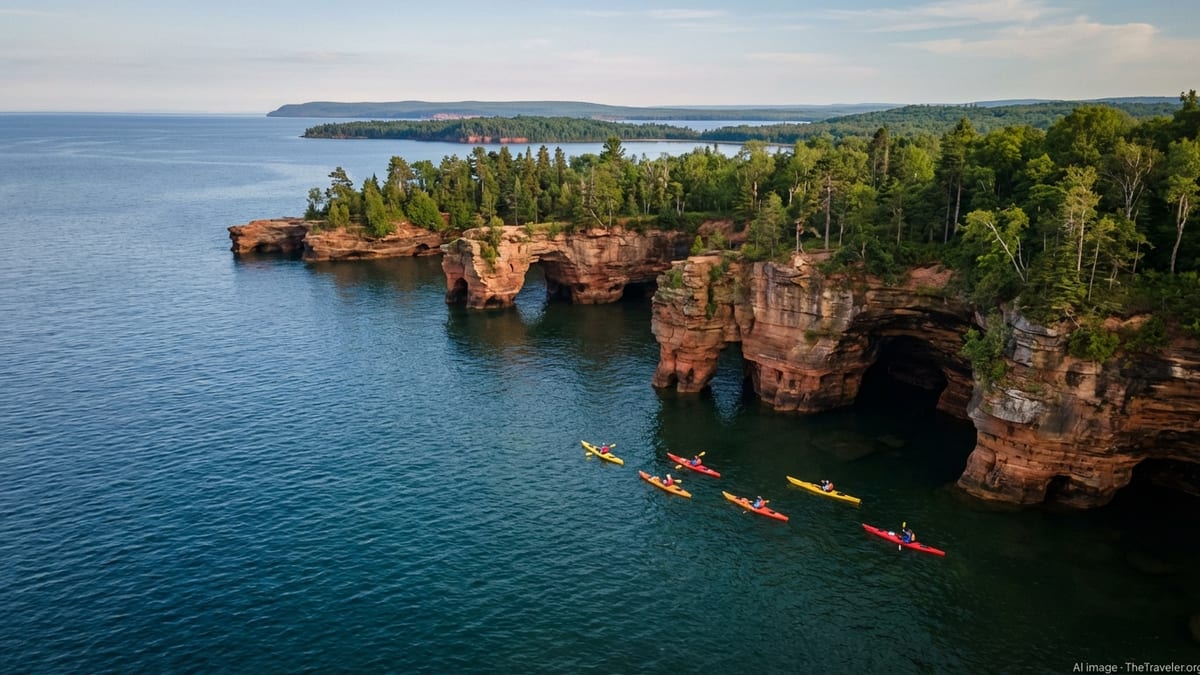
Paddle the Famous Sea Caves by Kayak
For many visitors, paddling into the Apostle Islands sea caves is the defining memory of their trip. Along the mainland near Meyers Beach and around islands such as Devils and Sand, centuries of pounding waves have carved arches, tunnels, and vaulted caverns into the reddish sandstone. On calm days you can glide directly beneath dripping ceilings, hear your voice echo off the rock, and watch sunlight refract through the clear green water against the sculpted walls. It is an intimate way to experience a coastline that feels both fragile and immense.
Kayaking here requires respect for Lake Superior’s power. The National Park Service stresses that conditions can shift quickly and that small open boats and casual recreational kayaks are not appropriate for exposed crossings. Guided outfitters use 16-foot or longer sea kayaks, provide wetsuits and spray skirts, and make conservative calls about wave height before heading into the caves. Even in midsummer, the lake is cold enough that an unexpected swim can be dangerous, so visitors should treat sea cave tours as a true backcountry experience, not a casual beach paddle.
First-time paddlers are often surprised at how variable conditions can be from one side of the peninsula to the other. West-facing locations such as Meyers Beach, Romans Point, Sand Island, and Devils Island are home to some of the largest caves but also see more frequent waves that can exceed safe limits. On a day when tours are canceled there, guides may reroute to more protected areas in Chequamegon Bay or near Houghton Point, where islands like Long and Madeline help break the swell. Flexibility in your itinerary will dramatically increase your chances of getting on the water.
If you prefer to go without a guide, be realistic about your experience and equipment. Launch sites at Meyers Beach and Little Sand Bay give direct access to mainland caves, but paddlers should monitor marine forecasts, carry proper safety gear, and be capable of self-rescue. Many local companies require renters to pass a basic safety class before sending them onto Superior. When in doubt, book a guided trip; it not only improves safety but also allows you to focus on the scenery rather than constant route-finding and weather checks.
Take a Scenic Cruise Around the Islands
Not everyone wants to paddle for hours, and some of the most dramatic sections of the Apostle Islands shoreline are best appreciated from the deck of a boat. Narrated sightseeing cruises operate from late spring through fall out of Bayfield, tracing routes that thread between islands, past rock formations, and below historic lighthouses. On a typical two and a half to three hour circuit, you may pass towering cliffs, forested shorelines, and networks of sea caves that are too exposed for many small craft, all while a local guide interprets the natural and cultural history of the park.
These cruises are one of the most accessible ways to understand the scale of the archipelago. From water level you can see how narrow passages separate some islands and how others rise abruptly from the lake in sheer walls. On clear days the views stretch for miles, with the darker blue of deep Superior contrasting against pale sandstone ledges and dense green forest. You may also spot bald eagles, cormorants, or occasional gray seals and otters in the water, especially during quieter morning and evening departures.
Cruise companies operate under contract with the National Park Service and typically use enclosed or partially enclosed vessels with open decks. That makes them a good option in the region’s changeable weather. Reservations are highly recommended in peak season from late June through August, when departures often sell out. If photography is a priority, ask in advance which route focuses most on sea caves or lighthouses, and consider a later afternoon sailing when angled light brings out more texture in the rock.
In addition to general sightseeing, some operators run specialized trips that combine cruising with shorter guided hikes or beach stops on select islands. Others offer boat-supported kayaking in which you travel by tour boat to a more remote section of coastline, then launch in sea kayaks for a two-hour paddle before returning to the mother ship. These hybrid outings are an efficient way to experience spots like Devils Island’s outer caves without a long open-water crossing in a small craft.
Explore Historic Lighthouses and Maritime Heritage
The Apostle Islands were shaped as much by human navigation as by wind and waves, and their string of historic lighthouses reflects that long relationship with Lake Superior shipping routes. Structures on islands such as Devils, Raspberry, Outer, Michigan, Sand, and Long once guided freighters and passenger vessels through fog and storms. Today, several are preserved as part of Apostle Islands National Lakeshore, and summer tours offer a glimpse into the isolated lives of keepers and their families.
Reaching a lighthouse usually involves a combination of sightseeing boat and short island hike. Paths tend to be well marked and only moderately steep, but visitors should wear sturdy shoes. Inside, you may find original Fresnel lenses, period furnishings, and interpretive displays that explain how keepers maintained beacons through brutal winters and intense storms. Climbing a lighthouse tower, where allowed, rewards you with sweeping views across the lake and neighboring islands, with the horizon dropping away in every direction.
Even if you do not set foot in a tower, simply seeing the lighthouses from the water gives context to the region’s maritime story. Many stand on rocky headlands that catch the full force of Superior’s waves, their painted brick or steel contrasting sharply against the forest behind them. From the deck of a cruise boat, it is easy to imagine schooners and steamers relying on these beacons in an era before GPS. Interpretive signage in Bayfield and at park visitor centers fills in further details about shipwrecks, fishing communities, and tribal canoe routes that have long woven through these waters.
Because lighthouse access varies by season, staffing, and lake conditions, it is wise to check current tour offerings before you arrive in Bayfield. Some islands may be open only on certain days of the week or for limited hours. Weather can also force last-minute route changes or dock closures. Building a degree of flexibility into your plans will increase your odds of standing beneath one of the archipelago’s classic white towers and hearing its story from a ranger or local historian.
Hike Island Trails and Quiet Forests
Although the Apostle Islands are best known for their water, the landscapes away from the shoreline are just as rewarding. Many of the 21 islands protected within Apostle Islands National Lakeshore have maintained trail systems that weave through mature northern forest, past wetlands and inland lakes, and across sandy spits where you can hear the rhythmic crash of surf from both sides. On a day when waves or wind make paddling less appealing, catching a shuttle or water taxi to a trailhead offers a different way to explore.
Routes vary from short, easy walks to all-day hikes. Some follow old logging roads through maple and birch, where spring wildflowers dot the ground and fall colors can be particularly vivid. Others climb gently to overlooks with filtered views of Lake Superior between spruce and pine. Sections of trail cross low areas on boardwalks, which helps protect sensitive plant communities while keeping your feet dry. The overall feel is one of quiet immersion; once the boat engine noise fades, you may hear little more than wind in the canopy and the distant call of loons.
Because these islands are relatively remote, hikers should treat even modest outings as backcountry trips. There are few if any services beyond basic campground infrastructure, and cell coverage is inconsistent. Carry layers, rain protection, and more water and snacks than you think you will need. In summer, insect repellent is useful, particularly near wetlands at dawn and dusk. As always, following Leave No Trace principles is essential. Staying on marked trails, packing out trash, and respecting wildlife help preserve the fragile island ecosystems that make the Apostle Islands special.
For those with more time, combining hiking with an overnight stay opens up dawn and dusk hours when the islands are at their most atmospheric. Early mornings can bring low fog hugging the surface of the lake, while evenings often produce long pastel sunsets reflecting off quiet bays. With fewer boats moving between islands outside of midday, you may feel as if you have an entire shoreline or forest ridge to yourself.
Camp on Lake Superior’s Edge
Camping in the Apostle Islands brings you as close as possible to Lake Superior’s rhythms. Designated sites dot many of the islands and a few mainland locations, often just a short walk from the shore. At night you can fall asleep to the crash or gentle slap of waves and wake to the sound of gulls and songbirds. On clear evenings the lack of urban lighting reveals a sky full of stars, with the Milky Way sometimes visible as a pale arc overhead. For many visitors, this simple, immersive experience is the highlight of a trip.
All camping within Apostle Islands National Lakeshore requires advance reservations and a permit, and sites range from individual tent clearings tucked into trees to group areas suitable for larger parties. Some spots are accessible only to paddlers or private boats, while others can be reached via shuttle from Bayfield and a short hike. Basic amenities typically include fire rings and bear-proof food storage where needed. Potable water is not guaranteed everywhere, so campers should be prepared to filter lake water or carry sufficient supplies.
Because conditions on Lake Superior can change quickly, trip planning deserves careful attention. It is wise to create an itinerary that allows for windbound days when paddling between islands might not be safe. Some kayakers arrange for boat shuttles or water taxis that can move both paddlers and gear in less favorable weather, reducing the risk of being stranded. Checking marine forecasts, leaving a detailed float plan with a trusted contact on shore, and carrying appropriate navigation tools are all standard practice in this environment.
Campers should also be prepared for temperature swings. Even in mid-summer, nights can feel cool due to the lake’s influence, and fog or wind can drop perceived temperatures further. A quality three-season tent, warm sleeping bag, and extra insulating layers are worthwhile. Following park guidelines for food storage and waste disposal protects both wildlife and future visitors. Done thoughtfully, a camping trip in the Apostle Islands is not just a getaway but a lesson in how to coexist with a powerful freshwater ecosystem.
Relax on Beaches and Explore Madeline Island
Amid all the talk of sea caves, cruises, and backcountry campsites, it is easy to overlook one of the simplest joys of the Apostle Islands region: spending a slow day near the water. While many islands have narrow cobble or sand beaches, the broader region around Bayfield and Madeline Island offers more expansive stretches where you can swim in summer, walk the shoreline, or simply sit and watch freighters move along the horizon. On warm, calm afternoons, the usually bracing waters of Superior can feel almost inviting, especially in protected bays.
Madeline Island, which lies just outside the boundaries of the national lakeshore but is closely associated with the Apostle Islands, makes an appealing base for visitors who prefer a mix of amenities and natural scenery. Reached by ferry from the mainland, it offers lodging, restaurants, and shops along with public beaches and lakeside parks. From there you can join guided kayak tours in more sheltered water, take short hikes to quiet viewpoints, or rent bicycles to explore local roads at a relaxed pace. The combination of small-town atmosphere and broad lake vistas feels very different from more built-up coastal resort areas.
Families in particular may appreciate Madeline Island’s balance of comfort and access to nature. Young children can play in the sand while older kids try beginner-friendly paddling excursions along calmer sections of shoreline. When the wind comes up or storms roll across the lake, you still have indoor options and easy access back to the mainland. That flexibility is valuable in a destination where weather truly drives the day’s agenda.
Even if you are staying elsewhere, it is worth setting aside at least a few hours during your Apostle Islands trip purely for unstructured time by the water. Walk a pier in Bayfield at sunrise, watch the sky change above the islands at sunset, or linger along the lakeshore after a cruise. These quiet, in-between moments often become as memorable as the headline adventures.
Experience the Mainland Ice Caves in Exceptional Winters
In some winters, when conditions align just right, the same mainland cliffs that host summer kayak tours transform into a frozen world of arches, pillars, and translucent curtains of ice. The Apostle Islands mainland ice caves, accessed from the shoreline near Meyers Beach, have become famous in recent years for their otherworldly beauty. Visitors hike out over solid lake ice to stand beneath overhanging cliffs where waves and seepage have built thick formations in shades of white, blue, and amber.
These ice caves are a rare treat. National Park Service records show that stable ice strong enough to permit public access has been present on only a small fraction of days over the past couple of decades. Extended periods of subfreezing temperatures, low wind, and widespread ice coverage on Lake Superior all need to coincide. As a result, some winters pass without the caves opening at all, while in others they may be accessible for only a short window of days or weeks.
When conditions do cooperate, the experience requires preparation and respect. The hike to the caves involves several miles of travel on uneven lake ice with no shelter, services, or reliable cell coverage. Visitors must dress for intense cold, wear traction devices on waterproof boots, and be ready for highly variable surface conditions. Park staff monitor ice thickness and structural stability, post daily status updates, and may close access at short notice if winds, cracks, or warm spells compromise safety.
Because the ice caves attract significant crowds during the limited openings, planning your visit for early or late in the day can help avoid congestion at the most photogenic spots. Even then, it is important to stay aware of your surroundings and avoid lingering directly under heavy icicles or overhangs. For many people though, the effort is well worth it. Standing inside a naturally formed ice cathedral on the vast frozen surface of Lake Superior is an experience that few other destinations can match.
The Takeaway
The Apostle Islands reward visitors who balance ambition with humility toward Lake Superior. Here, the most celebrated activities, from threading a kayak through echoing sea caves to climbing a lighthouse tower above the waves, unfold against a backdrop of powerful weather and cold, deep water. Planning your trip around a mix of paddling, cruising, hiking, and simply watching the lake allows you to adapt as conditions change while still experiencing the essence of this national lakeshore.
By working with local guides when appropriate, honoring park safety guidance, and giving yourself time for both adventure and quiet reflection, you can discover why this corner of northern Wisconsin inspires such loyalty among repeat visitors. Whether your lasting memory is the hushed glow of an ice cave in a rare cold winter, a fiery sunset over Madeline Island, or the steady beam of a lighthouse sweeping across the night, the Apostle Islands have a way of staying with you long after you leave.
FAQ
Q1. When is the best time of year to visit the Apostle Islands?
The main season for cruises, guided kayaking, and island access typically runs from late May into October, with the warmest conditions and most frequent services from late June through August. Shoulder seasons in spring and fall bring fewer crowds and vivid scenery but cooler air and water, which require more preparation.
Q2. Do I need previous kayaking experience to see the sea caves?
Many outfitters welcome beginners on guided sea cave tours and provide stable tandem sea kayaks, wetsuits, and basic instruction. However, you should be comfortable on the water, able to follow directions, and prepared for the possibility of waves and wind. Those with no experience often do best on shorter, more protected routes rather than the most exposed cave systems.
Q3. How dangerous is Lake Superior for small boats and kayaks?
Lake Superior can be hazardous because of rapid weather changes, cold water, and reflected waves near cliffs. The National Park Service recommends true sea kayaks at least 16 feet long, proper cold-water clothing, and strong self-rescue skills for paddlers venturing beyond protected bays. Joining a guided trip and carefully watching marine forecasts helps reduce risk.
Q4. Can I visit the Apostle Islands without a car?
It is possible, but more complex. Bayfield is reachable by regional bus or shuttle services from larger Wisconsin cities, and once there you can walk to the cruise docks and some lodging. However, a car or rental vehicle makes it far easier to reach kayak outfitters, trailheads, and ferry terminals, especially in shoulder seasons when local transport options are limited.
Q5. Are reservations necessary for cruises and tours?
In peak summer and on popular holiday weekends, advance reservations are strongly recommended for sightseeing cruises, guided kayak tours, and camping permits. Same-day spots may be available in shoulder seasons or on less popular time slots, but planning ahead provides more choice of departure times and routes.
Q6. What kind of clothing should I pack for a summer visit?
Even in midsummer, conditions can feel cool on the water because of Lake Superior’s low temperatures. Pack quick-drying layers, a waterproof outer shell, a warm fleece or sweater, and a hat and gloves for boat trips. Sturdy shoes for hiking, water shoes or sandals that can get wet, and sun protection are also important.
Q7. How do I know if the mainland ice caves are open in winter?
Access to the ice caves depends entirely on ice stability and is evaluated by the National Park Service. During cold winters, the park typically issues public announcements when conditions first allow safe access and provides regular updates as weather changes. Travelers should check official information shortly before visiting and be prepared for sudden closures.
Q8. Is swimming common in the Apostle Islands?
People do swim from beaches and campground shorelines in summer, particularly in protected bays and on warmer afternoons. However, Lake Superior remains cold, and even brief immersion can be uncomfortable. It is wise to wade in gradually, stay close to shore, and be cautious with children or anyone unaccustomed to cold water.
Q9. Are there services like restaurants and shops on the islands?
Most islands within Apostle Islands National Lakeshore have very limited or no commercial services. Visitors should plan to bring all food, water purification methods, and essential gear with them. The town of Bayfield and nearby communities, as well as Madeline Island, offer restaurants, groceries, and outfitters before and after island excursions.
Q10. Do I need a permit to camp or kayak in the park?
Campsites within Apostle Islands National Lakeshore require reservations and permits, which can be arranged in advance. Day visitors paddling or hiking do not usually need special permits, but guided commercial trips operate under separate authorizations. Always review current regulations before your trip, as procedures and fees can change over time.