

Alabama’s food story is written in smoke, seafood, and generations of home kitchens. From tangy white barbecue sauce in the north to Gulf shrimp on the coast, the state’s classic dishes reflect its Black, Indigenous, and immigrant roots, as well as its deep agricultural and coastal traditions. For travelers, eating your way through Alabama is one of the most vivid ways to understand where you are. These 10 dishes form a reliable roadmap for what to order, ask about, and remember long after the trip is over.
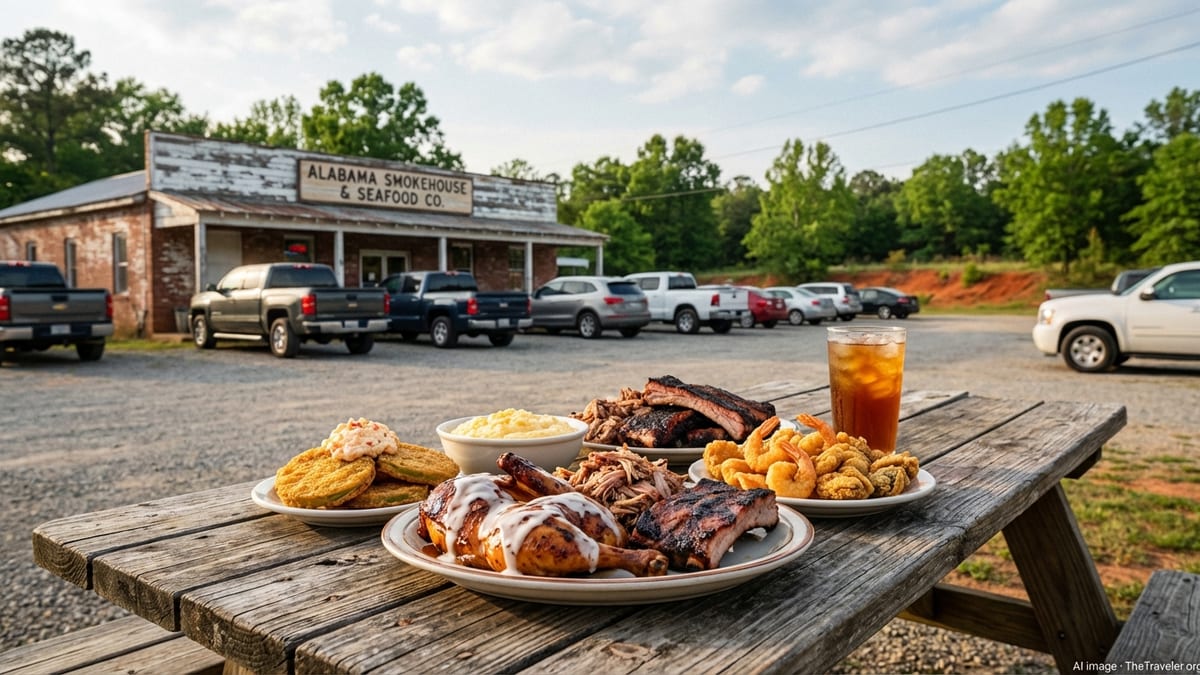
Alabama White Barbecue Sauce & Hickory-Smoked Chicken
If Alabama has a single signature flavor, it is the sharp, creamy tang of white barbecue sauce. Created in 1925 by pitmaster Robert “Big Bob” Gibson in Decatur, this mayonnaise and vinegar based sauce was originally designed to keep whole chickens moist as they smoked for hours over local hickory wood. Today, North Alabama diners grow up assuming barbecue sauce is white, and it remains the state’s most recognizable contribution to America’s regional barbecue map.
Traditional white sauce leans heavily on mayonnaise, distilled vinegar, and black pepper, with some cooks adding lemon juice, apple juice, horseradish, cayenne, or a pinch of sugar for balance. It is thinner and more pourable than most tomato based barbecue sauces, and the flavor is bright and peppery rather than sweet. At long-running institutions like Big Bob Gibson Bar-B-Q in Decatur and Miss Myra’s Pit Bar-B-Q near Birmingham, smoked chicken comes off the pit and is dunked straight into vats of the sauce before serving, a ritual that locals sometimes describe as a baptism.
Travelers should seek out white sauce with pit-cooked chicken or smoked turkey, ideally in a place where you can see or at least smell the wood fire. It is often served on the side, which lets you taste the bird on its own before dragging it through the sauce. You will find versions across the state, from small-town roadside shacks to larger chains, but the flavor balance can vary. The most memorable examples are those where the smoke, fat, and vinegar come together in one clean, lingering bite.
Do not be surprised to see white sauce beyond barbecue plates. Alabama cooks increasingly use it on wings, as a dressing for slaw and potato salad, or as a dip for everything from fries to raw vegetables. Trying it in a few different contexts during your trip is a good way to appreciate how a backyard experiment from the 1920s became a modern statewide staple.
Pulled Pork, Ribs, and the Alabama Barbecue Tradition
While white sauce gets most of the headlines, Alabama is also a serious barbecue state in the more classic sense. Hickory-smoked pork shoulder and ribs are common across the state, particularly in the central belt around Birmingham, Tuscaloosa, and the Black Belt. Here, the style reflects both Deep South and borderland influences, with vinegar and tomato based sauces existing side by side with the famous white version.
In many long-standing barbecue restaurants, pork shoulder is slow-smoked over hickory for 10 to 14 hours until it is tender enough to pull into shreds. The meat is usually chopped or pulled and served on a platter with sliced white bread and pickles, or piled into a soft bun as a sandwich. Ribs tend to be spare ribs or St. Louis style, cooked until they have a gentle tug rather than falling completely off the bone, a point of pride among pitmasters who value texture as much as tenderness.
Sauce preferences vary by region and even by restaurant. You may find thin, sharp vinegar sauces more reminiscent of North Carolina traditions, thicker tomato and molasses sauces closer to what people associate with Memphis or Kansas City, and hybrid versions unique to each cook. Many local diners order sauce “on the side” to taste the smoke first, then add just enough to brighten each bite. Asking your server how the house sauce is used and what wood they smoke with is a reliable way to spark a conversation and get more context about the local barbecue culture.
For travelers, an Alabama barbecue stop is as much about atmosphere as food. Look for hand-painted signs, smoke-stained brick pits, and mixed crowds of regulars, families, and road-trippers. If banana pudding is on the dessert board and white bread is stacked in plastic bags along the counter, you are in the right kind of place.
Meat-and-Three: The Everyday Plate of Alabama
Beyond barbecue, the most common Alabama meal might be the “meat-and-three.” This classic Southern plate, popular in mill town diners and small-city cafes across the state, lets you choose one meat and three side dishes from a daily chalkboard or printed menu. It remains a lunchtime ritual, particularly in Birmingham, Montgomery, Huntsville, and countless smaller county seats where courthouse workers, teachers, and delivery drivers sit down to the same style of meal.
Typical meat choices include fried or baked chicken, country-fried steak with gravy, pork chops, meatloaf, or sliced ham. Seafood appears in coastal and river towns in the form of fried catfish or shrimp. The sides are where regional character really shows: creamy macaroni and cheese, slow-simmered collard or turnip greens, stewed okra and tomatoes, butter beans, black-eyed peas, candied yams, squash casserole, and a wide array of congealed and mayonnaise based salads.
Most meat-and-three plates come with cornbread or a soft roll, and sweet tea is the default drink. Portions tend to be generous, but the pricing remains aimed at working locals rather than tourists, making this one of the best values for travelers who want to eat like residents do. Veterans of the scene often have strong opinions about which places season their vegetables properly, which keep a light touch on sugar in the yams, and where the fried chicken crust is reliably crisp even during the late lunch rush.
When you visit, pay attention to the daily specials, which often highlight dishes that travel poorly but define Alabama home cooking, such as chicken and dressing, turkey and gravy, or vegetable plates during peak summer produce season. A meat-and-three line, with servers calling out orders in a practiced rhythm and locals catching up at the register, offers a small but telling window into everyday Alabama life.
Fried Green Tomatoes and Other Garden Classics
Fried green tomatoes have become almost shorthand for Southern cooking, and Alabama has played a particular role in their popular image. The state’s long growing season and deep tradition of backyard gardens mean that cooks have long looked for ways to use unripe tomatoes, which are firmer and more tart than their red counterparts. Slicing them, dredging them in cornmeal or a flour mixture, and frying them in hot oil creates a snack or side dish that is crunchy on the outside and pleasantly tangy within.
In many Alabama restaurants today, fried green tomatoes appear as an appetizer, often stacked with pimento cheese, drizzled with remoulade, or served alongside Gulf shrimp. The contrast of textures and temperatures is part of the appeal. The dish can feel almost delicate when done well, with a thin, shattering crust that does not overwhelm the tomato. Travelers who have only tasted heavier or soggy versions elsewhere often find that a skilled Alabama kitchen can change their mind about the dish entirely.
Fried green tomatoes are only one expression of the state’s vegetable traditions. You will see peas and beans slowly simmered with bits of pork, okra fried or stewed, and summer squash baked into casseroles with cheese and cracker crumbs. Many of these plates trace back to resourceful home cooks who needed to stretch garden produce and pantry staples to feed large families. In regions with strong African American culinary traditions, techniques like long braising of greens and okra appear again and again.
Seasonal timing matters. Ordering fried green tomatoes in late spring or early summer, when local farmers’ markets are overflowing, will give you the best sense of what the dish can be. Even in larger cities, many chefs now source directly from nearby farms, and menus will often call out the origin of their produce, a quiet sign of how seriously Alabama now takes its agricultural heritage.
Gulf Shrimp, Oysters, and Coastal Seafood
Head south toward Mobile Bay and the beaches of Gulf Shores and Orange Beach, and Alabama’s cuisine shifts toward the water. Here, fresh Gulf shrimp, oysters, crab, and finfish dominate menus from casual bayside shacks to more formal dining rooms. Seafood has long been central to life along the Mobile-Tensaw Delta and the Gulf Coast, where fishing communities and processing plants anchor the local economy and supply much of the state.
Shrimp, in particular, appears in countless forms. You will find it boiled with Old Bay style seasonings, fried in cornmeal crusts and tucked into po’boy sandwiches, sautéed in garlicky butter sauces, and tossed with creamy grits as a coastal twist on a dish often associated with the Carolinas and Georgia. Oysters are served raw on the half shell, charbroiled with butter and herbs, or fried and piled onto sandwiches. At older seafood houses around Mobile and on the Causeway, combination platters with a mix of shrimp, oysters, and fish remain a nostalgic favorite.
Responsible operators on the Alabama coast now emphasize local sourcing, often identifying their catch as wild-caught Gulf seafood. Travelers who want a deeper connection can time their visits to coincide with seafood festivals or wander through markets where shrimp boats unload and crews sort the day’s haul. The smell of salt and diesel, the sound of gulls, and the sight of nets drying in the sun all underscore how central the Gulf is to Alabama’s culinary identity.
Because of seasonal and environmental factors, availability and prices can fluctuate, and not every place will serve the same species year-round. Asking which items are most local and in season is good practice. A simple plate of just-fried shrimp with lemon and hot sauce, eaten at a weathered picnic table overlooking the water, can be as memorable as any more elaborate dish.
Cheese Grits, Biscuits, and Southern Breakfast Traditions
Mornings in Alabama often start with a plate that combines comfort and practicality. Stone-ground corn grits, slow-cooked in water or stock until tender, are one of the most enduring staples. Many kitchens enrich them with sharp cheddar or other cheeses, transforming them into creamy cheese grits that are substantial enough to anchor a breakfast on their own. In coastal areas, shrimp and grits has become an almost obligatory menu item, with local shrimp nestled over a bed of buttered, peppery grits.
Alongside grits, biscuits are the state’s other iconic breakfast item. Made with soft wheat flour and buttermilk, they should be tall, tender, and just crisped on top. Travelers will encounter them split and stuffed with sausage patties, sliced country ham, or fried chicken, or simply served with butter, jam, or sorghum syrup. At older cafes and country stores, you may still find red-eye gravy, made from coffee and ham drippings, as an option to spoon over biscuits, a throwback to leaner times when nothing in the kitchen could be wasted.
In urban areas like Birmingham and Huntsville, a new generation of chefs has embraced breakfast and brunch, applying restaurant techniques to classic flavors. You might see skillet baked biscuits, heirloom corn grits with seasonal toppings, or brunch plates that layer poached eggs over local sausage and greens. Yet on the interstate exits and in small-town main streets, you can still walk into a counter-service spot at dawn and watch line cooks pressing out biscuit dough and tending to pots of grits for regulars who have been stopping in for years.
For travelers, planning at least one full Alabama breakfast is worthwhile. Try to sit at the counter if there is one, order coffee and a biscuit while you decide on the rest, and listen to the easy conversation between staff and regulars. It is one of the most relaxed and revealing windows onto local culture you will find.
Lane Cake, Banana Pudding, and Classic Alabama Desserts
Alabama’s sweet tooth shows up in both bakery cases and barbecue dessert menus. Perhaps the most celebrated homegrown dessert is Lane cake, a layered white cake filled with a rich mixture of egg yolks, butter, sugar, coconut, and often raisins and pecans soaked in bourbon or other spirits. Created by Emma Rylander Lane of Clayton in the late 19th century, the cake gained wider fame in the 20th century and has since been embraced as a sort of unofficial state dessert. It remains a fixture at holidays and special occasions, though you are more likely to encounter it in bakeries and specialty cafes than in everyday diners.
Banana pudding, on the other hand, is deeply woven into the fabric of casual dining. Nearly every long-running barbecue joint and meat-and-three seems to have a pan of it chilling in the refrigerator. The basic formula layers vanilla wafers, sliced bananas, and vanilla pudding or custard, often topped with whipped cream or meringue. What distinguishes a great version is usually texture and restraint: the wafers softened but not mushy, the banana flavor present but not overpoweringly artificial, and a topping that balances the sweetness rather than adding a cloying layer.
Other familiar Southern sweets appear across Alabama, from pecan pie and chess pie to hand pies and seasonal fruit cobblers. Along the coast and in regions with strong citrus connections, you may see lemon and orange desserts more frequently. In communities with strong African American and church-based traditions, bake sales and fellowship hall spreads are still where many of the most family-guarded recipes surface, even if there is now a parallel world of modern patisseries and dessert bars in larger cities.
Visitors who want to understand Alabama through its desserts should not be shy about ordering the “dessert of the day” or asking which items are made in-house. A slice of Lane cake or a Styrofoam cup of still-cool banana pudding, eaten at the end of a long barbecue meal, offers a satisfying final chapter to the flavors of the state.
The Takeaway
Alabama’s classic dishes are not museum pieces. White barbecue sauce continues to evolve, seafood menus change with the tides, and meat-and-three plates adjust to new dietary needs while keeping their essential character. What links all of these foods is a sense of place and continuity. Recipes travel from backyard pits in Decatur to restaurants across the country, from church cookbooks in the Wiregrass to chef-driven kitchens in Birmingham, yet they still feel unmistakably rooted in Alabama soil and water.
For travelers, the most rewarding approach is to treat these 10 dishes as a starting point rather than a checklist. Use them to guide conversations with servers, pitmasters, and home cooks you meet along the way. Ask where they like to eat on their days off, which vegetables taste best in which month, and how their grandparents prepared the same dish. You will likely come away with more than just good meals. You will gather stories that reveal how Alabamians think about hospitality, resourcefulness, and pride in their local traditions.
Whether you find yourself in a white-tablecloth dining room in Birmingham, a shrimp shack overlooking the Gulf, or a no-frills barbecue joint beside a rural highway, the flavors of Alabama offer a consistent message. This is a place where food is practical and unpretentious, yet deeply meaningful. Taste widely, listen carefully, and let the state’s classic dishes help you understand the landscape and the people who call it home.
FAQ
Q1. What is the one Alabama dish I should try if I am short on time?
Alabama white barbecue sauce on hickory-smoked chicken is the most distinctive single bite, especially in North Alabama where this tangy, peppery sauce originated.
Q2. Are Alabama’s classic dishes suitable for vegetarians?
Many traditional dishes center on meat, but meat-and-three cafes often offer vegetable plates with sides like greens, beans, okra, yams, and mac and cheese that can be vegetarian if you ask about seasoning.
Q3. When is the best time of year to enjoy Alabama seafood?
Wild Gulf shrimp and oysters are available much of the year, but late spring through early fall typically offers the widest selection and the most reliable coastal weather for dining by the water.
Q4. Is Lane cake easy to find in everyday restaurants?
Lane cake is more common at bakeries, specialty cafes, and during holidays or special events, so you may need to seek it out rather than expecting it on every dessert menu.
Q5. Do barbecue restaurants across Alabama all serve white sauce?
White sauce is most closely associated with North and Central Alabama; many places offer it, but some focus on tomato or vinegar based sauces, so it is worth checking menus or asking ahead.
Q6. What is the difference between Alabama cheese grits and plain grits?
Plain grits are cooked in water or stock, while cheese grits are enriched with cheddar or other cheeses, making them creamier, richer, and often served as a centerpiece rather than a simple side.
Q7. Are meat-and-three restaurants only open at lunchtime?
Many meat-and-three spots focus on weekday lunches, but some also open for breakfast or early dinner; hours vary by town, so checking ahead helps avoid disappointment.
Q8. Can I find good fried green tomatoes outside peak summer?
Some restaurants serve them year-round using shipped or greenhouse produce, but the most flavorful versions usually appear in late spring and summer when local tomatoes are abundant.
Q9. How spicy are traditional Alabama dishes?
Most classic Alabama foods are more about smoke, tang, and richness than intense heat, with hot sauce or peppers offered on the side so diners can adjust the spice level.
Q10. Is tipping customary in Alabama restaurants that serve these dishes?
Yes, standard American tipping practices apply, and most diners leave around 18 to 20 percent in sit-down restaurants and barbecue joints when service is good.