

Austria rewards curious, well prepared travelers with alpine panoramas, elegant cities, and a deep sense of culture. It is also a place where unspoken rules matter, public systems run on trust, and the landscape can turn serious very quickly. Avoiding a few common mistakes will help you experience the country at its best, from Vienna’s coffeehouses to Tyrolean ski slopes, without unnecessary stress or awkward missteps.
Misreading Austrian Etiquette and Formality
Many visitors arrive in Austria expecting the same relaxed social codes they might find in beach resorts or backpacker hubs. Instead, they discover a culture that values politeness, formality, and a certain quiet order. Failing to recognize this difference is one of the most common mistakes travelers make. You will notice it the moment you step into a bakery and locals greet the room with a cheerful “Grüß Gott” or “Guten Tag.” Ignoring these small rituals can come across as brusque rather than shy or efficient.
Austrians tend to place importance on titles and surnames, especially in more traditional regions and in business settings. Addressing someone as Herr or Frau followed by their family name, when you know it, is a sign of respect. Jumping immediately to first names or using overly casual language can feel presumptuous. This does not mean interactions are stiff or unfriendly, but that warmth usually follows politeness, not the other way around.
Noise levels are another cultural fault line that can surprise visitors. Speaking loudly on public transport, in stairwells, or in your accommodation late at night is frowned upon. Many residential buildings have posted quiet hours, commonly after 10 p.m., and neighbors will expect them to be observed. Getting into an argument, raising your voice at staff, or expressing frustration dramatically in public will not earn you sympathy, only disapproval. A calm, firm tone is far more effective when something goes wrong.
A simple way to avoid missteps is to watch what locals do and mirror their behavior. Notice how people queue, how they greet bus drivers or shop staff, and how they keep conversations low in trams and trains. A handful of basic German phrases, delivered with patience and a smile, will soften any rough edges of culture shock and show that you are at least trying to meet Austria on its own terms.
Underestimating Public Transport Rules and Tickets
Austria’s public transport network is one of its great travel advantages, yet it is also a common source of avoidable problems. Visitors often assume that because trains, trams, and buses feel relaxed and efficient, enforcement must be equally casual. Traveling without a valid ticket, failing to validate it when required, or misunderstanding zones and passes can lead to on the spot fines that are expensive and rarely negotiable.
In major cities like Vienna, Salzburg, and Graz, ticket machines are straightforward, but the responsibility is on you to understand how they work. On some systems tickets must be time stamped in small validation machines before boarding or immediately after. If inspectors find you with an unvalidated ticket, they typically treat it as if you have no ticket at all. Claiming confusion or being a tourist rarely changes the outcome. Taking a minute to read the instructions at the platform or asking a local for help is a worthwhile investment.
Another mistake is ignoring the value of day or multi day passes. Buying single tickets for every short hop across Vienna, for example, can quickly add up to more than the cost of a 24 hour or 72 hour pass. Travelers who only calculate point to point fares often overlook that they will make several trips in one day, especially when switching between tram, subway, and bus to sightsee. A pass not only saves money but simplifies your day, since you can step onto any vehicle within your zone without stopping at a machine each time.
Finally, do not mistake the absence of ticket barriers for a lack of rules. Austria’s system relies heavily on trust and random inspections. Treating it as an invitation to skip payment not only risks a fine but also undermines a system that locals value and pay for. Consider the cost of a weekly pass or regional rail card a fair exchange for reliable, comfortable transport through some of Europe’s most picturesque landscapes.
Getting Alpine Safety Wrong in a Serious Mountain Country
Austria’s mountains exert a powerful pull, from casual hikers to seasoned skiers. Yet the same peaks that look gentle in summer photos or polished resort brochures demand real respect. A frequent mistake is treating an alpine excursion like a casual countryside walk, not a venture into a high mountain environment. Weather can change quickly, trails can become challenging, and in winter avalanches are a real concern away from groomed pistes.
Travelers occasionally underestimate how prepared they need to be for a simple day hike. Setting off with city shoes, no layers, and only a small bottle of water might feel spontaneous, but it leaves little margin for error if fog rolls in or a path proves steeper than expected. Even on popular routes near Innsbruck or Salzburg, you should carry basic essentials such as appropriate footwear with grip, extra clothing, sun protection, water, and at least a downloaded map or offline navigation.
In winter, the stakes rise. Ski resorts in Tyrol, Vorarlberg, and Salzburg maintain groomed slopes securely, but venturing off piste or into backcountry terrain without the right skills and avalanche awareness is dangerous. Visitors sometimes follow tracks into fresh snow, assuming that if others went that way it must be safe. In reality, avalanche risk depends on recent weather, snowpack conditions, and terrain features that are not obvious to untrained eyes. Hiring local guides for serious touring or off piste adventures is not an indulgence; it is a safety measure.
Respect local advice, trail closures, and warning signs. If lifts or certain routes are shut due to wind, avalanche risk, or storms, it is not a suggestion you can safely ignore. Check forecasts, ask at tourist offices or mountain huts about conditions, and be willing to change plans. The reward for that caution is the freedom to enjoy Austria’s alpine playground confidently, from lakeside strolls near Hallstatt to panoramic ridges above the Arlberg.
Misunderstanding Money, Tipping, and Opening Hours
While Austria shares the euro and many norms with its neighbors, visitors still stumble over local money habits and expectations. One recurring issue involves tipping. Service charges are typically included in restaurant and hotel prices, but it is customary to leave a small extra amount for good service. Rounding up the bill or adding roughly five to ten percent is common in bars, cafes, taxis, and sit down restaurants. Leaving nothing at all when the service has been satisfactory can feel abrupt, even if it is not a formal obligation.
The way you tip also matters. Rather than leaving coins on the table and walking away, Austrians often tell the server the total they wish to pay as they hand over cash or a card. For example, if your bill is 18 euros and you want to leave 2 euros as a tip, you would say 20 euros. This habit can be unfamiliar to visitors who are used to adding a tip line on a printed receipt, but it keeps the interaction clear and polite.
Another area where travelers are caught off guard is the mix of cash and cards. In the big cities, contactless payments and credit cards are widely accepted, especially in hotels, chain stores, and larger restaurants. However, smaller establishments, market stalls, rural guesthouses, and mountain huts may still prefer cash. Relying solely on a digital wallet or one credit card can leave you stuck when a charming countryside inn only accepts cash for your lunch. Keeping some euros on hand, including coins, makes everyday life smoother.
Finally, do not assume shops keep extended hours every day of the week. In many Austrian towns, standard opening times run from morning to late afternoon or early evening, and Sunday remains a largely quiet day with most shops closed. Supermarkets may operate a bit longer in cities, but last minute Sunday shopping is much more limited than in many other countries. Planning ahead for groceries, pharmacy needs, or train snacks can save you from scrambling around empty streets with a suitcase and an empty stomach.
Overlooking Quiet Culture, Bike Lanes, and Local Space
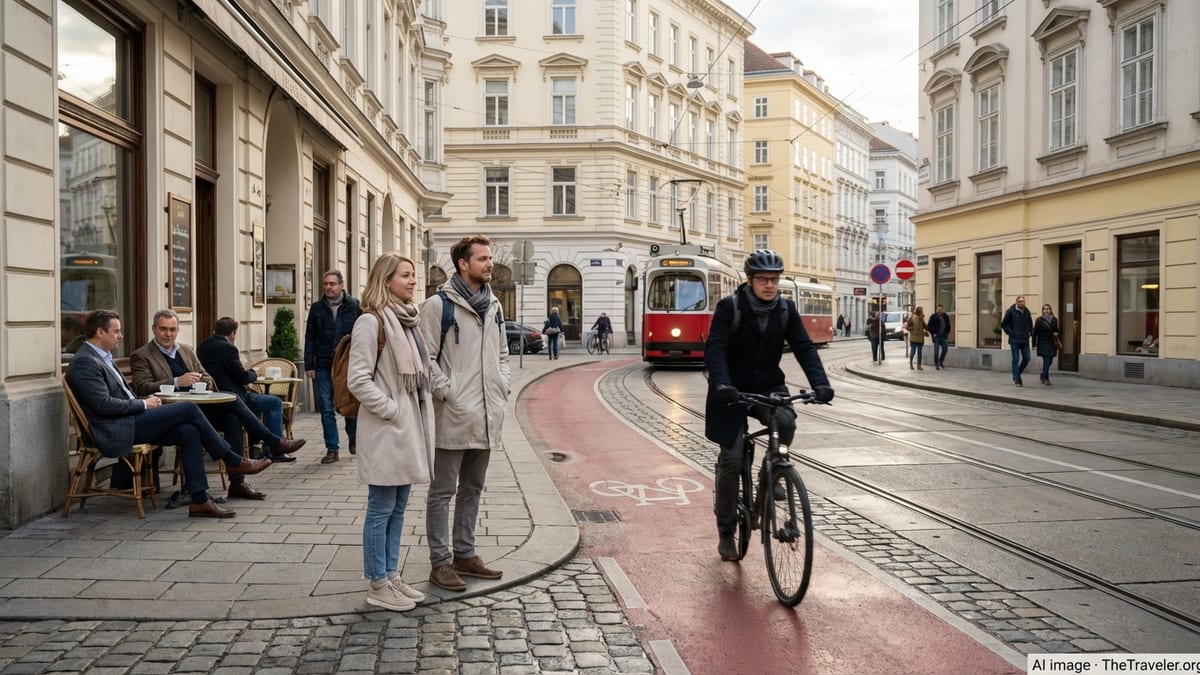
Austria’s cities are among Europe’s most livable partly because they manage space thoughtfully. Visitors who miss these subtle rules may find themselves scolded by cyclists, shushed on trams, or glared at by neighbors. Walking in clearly marked bike lanes, for instance, is a small but frequent mistake. In Vienna, Graz, and other urban centers, red or separated bike paths can run parallel to sidewalks. Stepping into them to take photos or dragging suitcases along them forces cyclists to brake sharply, which is both irritating and risky.
Public spaces also come with unwritten expectations about noise. While plazas and beer gardens can be lively, residential courtyards, stairwells, and shared gardens are treated more like private extensions of the home. Loud phone calls on speaker, music echoing after dark, or rowdy gatherings on balconies quickly wear out the patience of local residents. Respect posted quiet hours and remember that what feels like holiday freedom to you is still everyday life for those who live there year round.
On public transport, seats reserved for older passengers, people with disabilities, or those with small children should be given up promptly when needed. Blocking doors, putting bags on adjacent seats when the carriage is crowded, or eating messy food on trains are small irritations that shape how locals perceive tourists. A bit of consideration in these details goes a long way toward a more pleasant journey for everyone.
Even in tourist hotspots, it is wise to remain aware of your surroundings. Narrow medieval lanes in towns like Salzburg or Innsbruck can clog easily when groups stop abruptly in archways or at the top of staircases. Moving a few steps aside before consulting your phone or map keeps traffic flowing and shows that you recognize you are sharing the space, not renting it.
Rushing the Itinerary and Chasing Too Many Highlights
Another frequent misstep in Austria is trying to cram too much into too few days. On a map, Vienna, Salzburg, Hallstatt, Innsbruck, and the alpine resorts seem temptingly close. High speed trains and efficient motorways create the illusion that you can tick them all off in a quick circuit. In practice, constant packing, checking out, and boarding the next train or bus erodes the pleasure of traveling and leaves little room for unplanned discoveries.
Austria rewards slower travel. Vienna alone can easily absorb four or five days, from imperial palaces and world class museums to hidden courtyards and neighborhood heuriger wine taverns. Salzburg deserves at least two nights if you want to move beyond a quick old town snapshot and feel the rhythm of the city in the evening. Mountain areas, whether in Tyrol, Salzburg’s lake district, or Vorarlberg, really shine when you give yourself time for both active days and relaxed afternoons in a spa or on a sun terrace.
The problem with an overpacked itinerary is not just fatigue. When every day is rigidly scheduled, any disruption, such as a delayed train, sudden storm in the mountains, or a museum closure, forces a domino effect of compromises. You may arrive in a charming village only to spend your entire brief visit checking train times and hunting luggage storage, instead of sitting by the lake or wandering quiet back streets.
Building in rest days and leaving blank space for serendipity is a gift to yourself. It allows you to linger in a coffeehouse, accept a last minute concert ticket, or extend your stay in a place you love. Austria’s charm often lies in the small details, from the way light hits a baroque façade at dusk to a spontaneous chat with a market vendor. Those moments rarely happen when you are sprinting between attractions.
Packing Poorly for Seasons, Weather, and Terrain
Austria experiences distinct seasons, and travelers who pack as if every European capital shared the same mild, predictable climate often struggle. In winter, especially in the Alps and higher elevation cities like Innsbruck, cold can be sharp and sidewalks icy. Arriving with fashionable but smooth soled boots, no hat, and a lightweight city coat might be enough for a short dash between taxis, but not for walking tours, Christmas markets, or train platform waits. Even if you plan to spend most of your time in Vienna, day trips to snowy surroundings quickly expose inadequate gear.
Summer brings nearly the opposite issue. Alpine valleys can become hot, and cities like Vienna and Graz sometimes feel humid. Packing only heavy hiking gear or thick jeans can make sightseeing uncomfortable. At the same time, evenings in the mountains may still be cool, and sudden thunderstorms are not unusual. Travelers who assume that warm daytime temperatures remove the need for a light jacket or waterproof layer can get caught in a chilly downpour on a ridge or during an outdoor concert.
Footwear is where many visitors make their biggest packing error. Slick sneakers might suffice for museum days but are less suitable on cobbled historic centers or gravel mountain paths. For urban stays, comfortable shoes with decent support and grip are essential. If you intend to hike, even modestly, bring or rent shoes designed for uneven ground. Your ankles and knees will thank you, and you will be less likely to shy away from scenic viewpoints that require a short but steep path.
Finally, consider how your luggage will move through Austria. Compact bags are easier to stow on trains, lift up steps in older pensions without elevators, and wheel along narrow pavements or snow dusted streets. Overpacking with large, heavy suitcases can turn what should be a simple short walk from the station to your hotel into a tiring obstacle course, especially if cobblestones or slush are involved.
The Takeaway
Austria combines refined urban culture with rugged mountain landscapes, efficient modern infrastructure, and deeply held traditions. Traveling here comfortably is less about memorizing a long list of rules and more about tuning into a few underlying themes: respect for shared spaces, attention to safety in the outdoors, and an appreciation for quiet, orderly daily life. Avoiding common mistakes such as ignoring ticket rules, underestimating the weather, or rushing across half the country in a handful of days will not just save you money or embarrassment. It will open the door to a more relaxed, immersive experience.
If you arrive ready to greet people politely, move through public spaces considerately, and adapt your plans to local conditions, you will find Austria welcoming and rewarding. The trains will carry you smoothly from opera halls to mountain valleys, the coffee will be strong, and the landscapes will invite you to linger. With a little forethought and cultural curiosity, your trip can feel less like a checklist and more like a series of well earned, memorable encounters with one of Europe’s most distinctive countries.
FAQ
Q1. Do I need to speak German to travel comfortably in Austria?
English is widely spoken in major cities and tourist areas, but learning a few basic German phrases for greetings, thanks, and simple requests will make daily interactions smoother and is appreciated by locals.
Q2. How strict are ticket inspections on Austrian public transport?
Inspections are random but serious. If you are found without a valid or properly validated ticket, you can be fined on the spot, and claiming confusion as a visitor usually does not cancel the penalty.
Q3. What is the usual tipping practice in Austrian restaurants and cafes?
Service is typically included, but it is customary to round up the bill or add roughly five to ten percent for good service, telling the server the total amount you wish to pay.
Q4. Are Austrian mountains safe for casual hikers without special gear?
Many marked trails are suitable for beginners, but you should still wear sturdy footwear, carry layers, water, and sun protection, and always check the weather and local advice before heading out.
Q5. How many destinations can I realistically visit on a one week trip?
For a week, focusing on one major city such as Vienna plus one additional region, like Salzburg or a nearby alpine area, usually provides a better experience than trying to cover the entire country.
Q6. Do shops and supermarkets really close on Sundays?
Yes, in much of Austria Sunday is still a quiet day, with most regular shops closed. Some train station or tourist area supermarkets stay open, but options are limited compared with weekdays.
Q7. Can I rely on cards and mobile payments everywhere?
Cards and contactless payments are common in cities and larger venues, but small shops, rural guesthouses, and mountain huts may prefer cash, so carrying some euros is wise.
Q8. Is it acceptable to walk or stand in bike lanes in Austrian cities?
No, bike lanes are considered active traffic lanes. Walking or standing in them is unsafe and frustrates cyclists, so stay on sidewalks and step aside when you stop.
Q9. What should I pack for a winter visit that includes both cities and ski resorts?
Bring a warm, weatherproof coat, hat, gloves, scarf, and footwear with good grip, along with layers you can adjust indoors and on trains. If you plan to ski, you can rent technical equipment locally.
Q10. How can I avoid annoying locals while enjoying nightlife or late dinners?
Keep noise low when leaving bars or restaurants in residential streets, respect building quiet hours, and choose venues that are clearly oriented toward nightlife rather than disturbing apartment courtyards.