

Churchill, the tiny subarctic town on the shores of Hudson Bay, is better known for polar bears and belugas than for its restaurants. Yet in recent years this remote community has quietly developed a reputation as a rewarding place to eat, where inventive chefs work with northern ingredients, foraged berries, and greenhouse-grown greens to create meals that feel deeply rooted in place. From simple bowls of hot soup after a day on the tundra to multi-course dinners served under the northern lights, dining in Churchill is an essential part of the experience, not an afterthought.
Understanding Churchill’s Northern Food Culture
Churchill sits at the meeting point of boreal forest, tundra, river, and sea. That geography shapes what appears on the plate. Menus often highlight cold-water fish such as Arctic char, game meats like bison and elk sourced from Manitoba producers, and a changing cast of local berries. At the same time, almost everything else has to be shipped or flown in, which means chefs are used to working creatively with limited supplies and changing availability.
Rather than a long checklist of specialty restaurants, Churchill offers a small cluster of cafés, pubs, hotel dining rooms, and lodge kitchens that punch above their weight. You are unlikely to find elaborate tasting menus in town, but you will encounter hearty, flavour-forward dishes that feel right in a place where winter dominates much of the year. Expect filling portions, unfussy plating, and a focus on warmth and comfort.
Visitors are sometimes surprised by how international the crowd feels during peak seasons, with wildlife photographers, northern lights chasers, researchers, and expedition groups all sharing the same few dining rooms. That mix has helped push local kitchens to evolve. Today it is common to see vegetarian boreal burgers alongside elk meatloaf, or greenhouse salads paired with pan-seared Arctic char, reflecting both changing tastes and a desire to showcase northern ingredients in inclusive ways.
Because Churchill is small and supply lines are long, flexibility is part of the dining culture. Dishes featuring Arctic char or particular game meats may appear as specials or only at certain times of year. When you see something you are keen to try, it is wise to order it then and there, rather than assuming it will still be available the next night.
Lazy Bear Café: Classic Tundra Comfort Food
Attached to Lazy Bear Lodge, Lazy Bear Café has become one of Churchill’s signature dining rooms. The building itself is part of the experience, constructed from hand-hewn logs with a big stone fireplace anchoring the room. On a chilly evening, stepping inside feels like entering a northern cabin, complete with the hum of conversation from guides, photographers, and visitors comparing notes from the day on the water or tundra.
The kitchen leans into what it calls tundra cuisine, often featuring ingredients such as Manitoba bison, elk, Arctic char, and wild berries when available. You might encounter braised, peppered elk served with root vegetables, bison paired with a berry reduction, or baked Arctic char with a crisp skin and rich, buttery flesh. Portions are generous and aimed at guests who have spent hours in the cold, whether on a beluga-watching cruise in summer or a wildlife excursion in autumn.
One of the reasons Lazy Bear Café has become a favourite is its emphasis on scratch cooking and fresh produce in a town where that is not guaranteed. A greenhouse operation helps supply herbs and vegetables, which means salads and sides tend to be brighter and more flavourful than you might expect this far north. The result is food that feels both hearty and surprisingly fresh, a welcome combination after days of travel to reach Churchill.
The café does not operate year-round, typically opening in the busier summer and autumn seasons. If your visit aligns with those months, it is worth planning at least one meal here. Reservations or advance planning are sensible in peak times, since capacity is limited and many tour packages include group meals at the café.
Tundra Inn Pub & Ptarmigan: Social Hubs With a Northern Twist
On chilly evenings, the Tundra Inn Pub and its companion restaurant, Ptarmigan, function as Churchill’s unofficial living rooms. These venues combine familiar pub or bistro comfort food with northern accents, making them easy places to unwind after a day of dog sledding, tundra touring, or aurora watching. Expect a mix of locals, seasonal workers, and visitors sharing tables and swapping stories.
The Tundra Inn Pub is known for hearty portions and a menu that often threads regional ingredients into recognizable dishes. Depending on the season and supply, you may find elk mains, bison burgers, or Arctic char prepared simply and served alongside pub classics. Vegetarian and vegan travellers often seek out options like the house boreal-inspired burger or salads built around greenhouse greens and roasted vegetables, which show how far Churchill’s food scene has evolved from the purely meat-and-potatoes era.
Next door, Ptarmigan presents itself as a more polished dining experience while remaining relaxed. Here, chefs often spotlight Arctic char in seared or roasted preparations, plate bison with carefully composed sides, and lean on locally inspired garnishes, from berry compotes to herb oils. The atmosphere is cozy rather than formal, with an emphasis on friendly service and lingering over conversations rather than rushing through courses.
Live music and open mic nights are a semi-regular feature at the pub, particularly in busier months. That adds another layer to the dining experience, turning a simple meal of ribs or char into an evening of local culture. If you are visiting on a tight schedule, check in town when you arrive to see which nights are liveliest and plan at least one dinner accordingly.
The Reef and Hotel Dining Rooms: Reliable Comfort in a Remote Town
In a community as small and isolated as Churchill, hotel dining rooms do important work. They serve residents through the long winter, feed tour groups on tight timeframes, and provide travellers with reliable meals when weather disrupts flight schedules or excursions. While they may not be as overtly culinary as some other venues, they are central to the town’s food landscape.
The Reef Restaurant and coffee shop at the Seaport Hotel is a year-round staple. Visitors speak highly of its house specialty ribs, slow-cooked in a Jack Daniels glaze until the meat is tender and sticky. The atmosphere is casual, with a mix of locals and visitors, and the menu features classic Canadian diner-style fare. Think hearty breakfasts, sandwiches, burgers, and comforting mains, all designed to satisfy appetites sharpened by cold air and outdoor activity.
The restaurant at the Churchill Hotel offers similarly straightforward dishes, with daily specials reflecting ingredient availability and the season. Breakfasts are particularly appreciated by travellers heading out early for tours, while evening service provides a dependable option when other venues are full or closed. Staff are accustomed to accommodating dietary restrictions where possible, although advance notice always helps in a town that cannot easily source niche ingredients at short notice.
Churchill’s hotel restaurants also serve as informal information hubs. Guides and drivers drop in between outings, pilots and researchers grab quick meals during weather delays, and visitors learn about changing wildlife conditions or aurora forecasts over plates of hot food. Sitting at the counter or a shared table, you quickly gain a sense of how closely tied food, logistics, and community are in this far-north settlement.
Dan’s Diner & Tundra Buggy Meals: Dining on the Edge of the Arctic
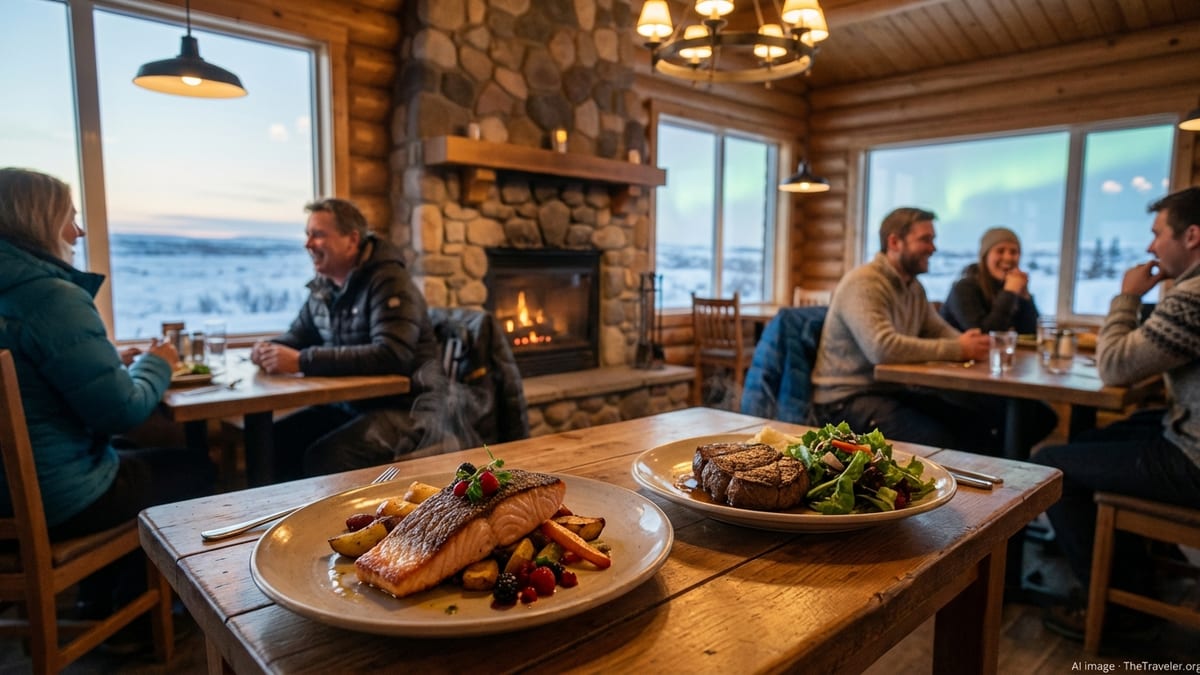
For many travellers, the most unforgettable meal in Churchill happens far outside town. Dan’s Diner, created by Frontiers North Adventures, is a seasonal pop-up restaurant set across the frozen Churchill River, accessible by Tundra Buggy. Running on select dates in mid-winter, it pairs a multi-course, set menu with one of the world’s best natural light shows: the aurora borealis shimmering overhead when conditions cooperate.
Inside the purpose-built dining space, panoramic windows and overhead skylights frame the surrounding snow fields and sky. The menu is designed to showcase regional and local fare, often featuring Arctic char, game meats, and ingredients sourced from within Manitoba or the broader Canadian North. Courses tend to be small but flavour-intensive, building from lighter bites to richer mains and desserts, with carefully considered non-alcoholic pairings and cocktails that sometimes incorporate northern flavours such as spruce tip syrups or local berries.
While dishes change from season to season, the emphasis remains on a sense of place. A piece of perfectly cooked char might be served atop root vegetables scented with herbs, while a dessert could feature wild cranberries or cloudberries. Behind the scenes, the logistics are complex: ingredients must be transported into Churchill, then out onto the river in winter conditions. For guests, that effort translates into a meal that feels improbable and deeply memorable, a restaurant experience that could only exist here.
Even outside this special event, many tundra tours and lodge stays incorporate dining into the overall adventure. Meals served in Tundra Buggy vehicles during polar bear-viewing excursions might be simpler than a Dan’s Diner tasting menu, but the context is similarly extraordinary. Eating hot soup or a freshly baked dessert while watching a polar bear roam the snow, or taking a break from photographing northern lights to share a warm meal with fellow travellers, turns food into part of the narrative of the trip rather than just fuel.
Remote Lodges & Tundra-Inspired Cuisine
Staying at a remote wildlife lodge near Churchill is as much a culinary experience as a wildlife one. Operators in the region have worked for decades to develop a style of tundra-inspired cuisine that makes the most of local ingredients, greenhouse produce, and recipes honed through long northern winters. Guests often arrive expecting simple camp food and leave talking as much about the baking and desserts as they do about polar bears.
Some lodge kitchens build their menus around organic, locally sourced meats and fish, supplemented by produce from gardens and partner orchards farther south in Manitoba. Cooks take obvious pride in their work, turning out fresh bread, slow-simmered stews, and desserts that showcase wild berries such as blueberries, cranberries, and cloudberries when the season allows. A single slice of warm Arctic cranberry cake or a breakfast of sour cream pancakes topped with just-picked berries can linger in memory long after the trip ends.
A distinctive feature of these operations is the way recipes are intertwined with storytelling. Many dishes are based on cookbooks created specifically for northern lodges, and guides or staff will often share the origin of a particular soup, spice blend, or dessert as it is served. That narrative element turns meals into a cultural exchange, offering a glimpse into how people have learned to cook creatively in this demanding climate over decades.
Because lodge stays are typically all-inclusive, guests share every meal with the same small group, which builds a sense of community around the table. By the final night, it is common for travellers who were strangers at arrival to push tables together for a communal feast, swapping photos and stories over second helpings of dessert. In a setting where there are no other restaurants for many kilometres, the dining room becomes the social heart of the experience.
Signature Churchill Flavours: From Arctic Char to Wild Berries
Across Churchill’s cafés, pubs, hotel dining rooms, and lodges, a few ingredients surface again and again. Chief among them is Arctic char, a cold-water fish related to salmon and trout that thrives in northern rivers and coastal waters. With its firm, rich flesh and mild flavour, char is versatile enough to appear in everything from delicate seared fillets to heartier baked preparations. In Churchill you are most likely to encounter it pan-seared with crisp skin, baked with herbs, folded into chowders, or occasionally smoked and served as an appetizer.
Game meats are another hallmark. While regulations and ethical sourcing limit how wild game is obtained and served, bison and elk from Manitoba producers frequently appear on menus. Bison burgers, bison meatballs, and slow-braised bison mains are common, often paired with root vegetables or berries. Elk might show up as meatloaf, braised steaks, or in tacos at certain restaurants, giving visitors a chance to sample lean, flavourful meats that fit the northern setting.
Wild berries provide a bright counterpoint to these rich proteins. In late summer and early autumn, the tundra around Churchill produces blueberries, cranberries, gooseberries, cloudberries, and other small fruits. Local kitchens use them in jams and jellies, as dessert toppings, or folded into cakes and breakfast dishes. A dollop of cranberry compote on a slice of cake or a smear of cloudberry jam on fresh bannock can be as evocative of the region as any main course.
Cocktails and non-alcoholic drinks sometimes echo the landscape as well. Spruce tip syrups, tundra herbs, and berry reductions have made their way into specialty drinks in recent years, particularly at venues focused on regional cuisine. Even if you do not drink alcohol, asking about locally inspired mocktails or house-made sodas can be a subtle way to experience Churchill’s flavours in a glass.
Practical Tips for Eating Well in Churchill
Because Churchill is so remote, a bit of advance planning goes a long way toward a smooth dining experience. The town’s restaurants and cafés are few in number and many are small, so capacity can be limited when tour groups are in town. If your schedule is flexible, consider planning main meals slightly earlier or later than standard times, or ask your accommodation for recommendations on when particular venues are least busy.
Seasonality plays a major role. Some restaurants, including certain cafés closely tied to tour operators, open only during the main visitor seasons of summer and autumn, while others operate year-round. Menus also shift with ingredient availability, so a dish you have read about might appear only as an occasional special. It is worth checking current hours and seasonal operations shortly before your trip, as these can change from year to year based on demand and logistics.
Travellers with dietary restrictions should communicate needs as early as possible. Many operators and restaurants can accommodate vegetarian, vegan, and gluten-free diets within reasonable limits, but they must bring in appropriate ingredients via the same narrow supply routes that serve the rest of the town. Informing tour companies, lodges, and hotels weeks rather than days in advance improves the odds of satisfying, varied meals throughout your stay.
Finally, remember that dining in Churchill is as much about context as cuisine. A bowl of soup in a hotel dining room after a blizzard-induced flight delay, a burger eaten in a noisy pub after a successful day of polar bear watching, or a carefully plated char fillet enjoyed under subtle aurora can all be equally memorable. Approaching meals with flexibility and curiosity will help you appreciate how much care goes into feeding visitors at the edge of the Arctic.
The Takeaway
Churchill’s culinary scene may be small, but it is far from an afterthought. Local chefs, lodge cooks, and tour operators have crafted a food culture that reflects the realities of life on the subarctic frontier while still surprising visitors with thoughtful flavours and warm hospitality. From greenhouse-fresh salads and pan-seared Arctic char to rib-sticking bison mains and berry-laden desserts, the town’s kitchens consistently deliver far more than most travellers expect when they first step off the plane.
What makes eating in Churchill special is not just any single restaurant or signature dish, but the way meals weave into the larger story of a visit here. You may find yourself tasting wild berries that grew on the tundra you crossed earlier that day, or sharing dessert with fellow travellers as the aurora starts to glow outside. In a place where winter nights are long and supply chains are fragile, every hot meal is a minor triumph. Lean into the experience, seek out local ingredients when they appear on the menu, and let Churchill’s flavours become part of your memories of Canada’s North.
FAQ
Q1. What local foods should I prioritize trying in Churchill?
Arctic char and Manitoba game meats such as bison and elk are among the most distinctive local offerings, along with desserts and jams made from wild northern berries when they are in season.
Q2. Is Churchill suitable for vegetarian or vegan travellers?
Options are more limited than in large cities, but several venues now offer vegetarian and some vegan dishes, especially in summer and autumn. Inform restaurants and tour operators of your needs in advance for the best experience.
Q3. Do I need restaurant reservations in Churchill?
Reservations or at least calling ahead are strongly recommended during peak seasons, particularly for popular spots like Lazy Bear Café and evenings at the Tundra Inn Pub or Ptarmigan, as seating can be limited.
Q4. When is Dan’s Diner operating, and how do I book it?
Dan’s Diner usually runs on select dates in mid-winter as part of northern lights tour packages. Availability and exact timing vary by year, so you need to book through a tour operator that includes the experience.
Q5. Can I find fresh produce this far north?
Yes, to a degree. Some restaurants and lodges supplement shipped ingredients with greenhouse or garden-grown herbs and vegetables, offering fresher salads and sides than you might expect in a subarctic town.
Q6. Are there traditional Indigenous dishes available in Churchill?
Menus sometimes draw on Indigenous food traditions by featuring ingredients such as bannock, wild game, fish, and berries. Availability varies by venue and season, so ask staff about dishes rooted in local food culture.
Q7. How expensive is dining in Churchill?
Prices tend to be higher than in many southern Canadian towns because most supplies are flown or shipped in, and the operating season for some venues is short. Budget accordingly for restaurant meals and lodge stays.
Q8. What are meal times like when staying at a remote lodge?
At wilderness lodges, meals are typically served at set times and included in your stay. Guests and guides eat together family-style, and menus change daily based on available ingredients and planned activities.
Q9. Will restaurants accommodate food allergies?
Most kitchens can adapt dishes or plan alternative meals if they know in advance. Because replacement ingredients are not easy to source, it is important to communicate allergies clearly when booking tours and accommodation.
Q10. Is it possible to self-cater in Churchill?
Yes. Churchill has a general store that carries groceries and ready-to-eat items, and some accommodations offer kitchenettes. Self-catering can help manage costs or specific dietary needs, especially on longer stays.