

More news on this day
Ultra long-haul flying is entering a new phase in 2026, with airlines leaning on next-generation aircraft to link distant cities on nonstop routes that routinely exceed 16 hours in the air.
Get the latest news straight to your inbox!
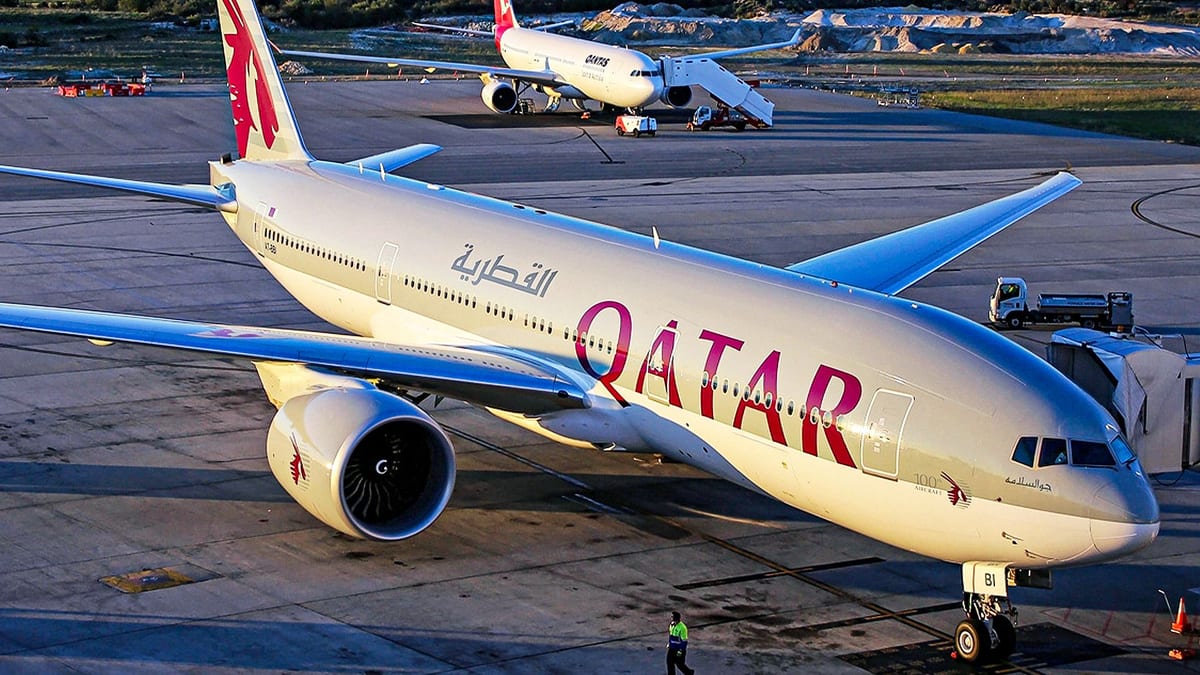
Image by Simple Flying
How Airlines Measure the Longest Nonstop Flights
Rankings of the world’s longest flights typically rely on great-circle distance, the shortest path between two points on the globe. Published data for 2025 and 2026 shows a tight cluster of ultra long-haul routes around the 15,000 kilometre mark, with scheduled block times pushing past 18 hours on some city pairs.
Aircraft technology is central to this trend. The Airbus A350-900ULR and other long-range variants of the A350 family, along with the Boeing 787-9, are designed to carry relatively light passenger loads with increased fuel capacity, allowing airlines to cover almost any two points on the planet in a single hop. Publicly available information for 2026 schedules indicates that these types dominate the very longest sectors.
While exact durations can vary with winds and routing on the day, airlines publish indicative block times that provide a consistent basis for comparison. On that basis, industry trackers and aviation media broadly agree that a handful of routes spearheaded by Singapore Airlines and a mix of Middle Eastern, Australasian and North American carriers form the top tier of the longest nonstop flights in 2026.
Singapore – New York: The Benchmark Ultra Long-Haul
Singapore Airlines’ nonstop link between Singapore Changi and New York John F. Kennedy remains the flagship of ultra long-haul travel in 2026. Publicly available schedules and airline documentation describe the service as the longest regularly scheduled nonstop passenger flight in the world by both distance and duration, covering roughly 9,500 miles and routinely blocking at about 18 and a half hours.
The route is operated by the Airbus A350-900ULR, a specially configured version of the A350 with increased fuel capacity and a lower-density cabin designed to maximise comfort over extreme distances. Reports indicate that the cabin layout prioritises premium economy and business class seating, reflecting demand from business travellers and high-yield leisure passengers willing to pay for more space on a flight that spans nearly an entire day.
A companion service between Singapore and the New York area using Newark Liberty International Airport has operated in past years and continues to appear in long-haul rankings, though the JFK service is widely cited as marginally longer. Together, the two routes cement Singapore’s status in 2026 as the primary operator of the world’s longest scheduled passenger flights.
Doha – Auckland and Other Gulf–Pacific Giants
Qatar Airways’ Doha to Auckland route remains one of the most demanding legs in commercial aviation in 2026. Public data from airline and airport sources places the sector at more than 9,000 miles, with scheduled times stretching toward 17 and a half to 18 hours depending on direction and season. Operated by long-range variants such as the Boeing 777-200LR or similar widebody aircraft, the flight connects a major Gulf hub with the far reaches of the South Pacific without a stop.
Industry roundups of the longest flights in 2025 and 2026 consistently include this route in the global top tier, often ranking it just behind the Singapore–New York pairing by distance. Reports highlight the operational complexity of flying almost the entire length of the Indian Ocean and crossing multiple climate zones in one leg, demanding careful fuel and crew planning.
Doha’s role as a global transfer point means the Auckland flight feeds an extensive network across Europe, Africa and the Middle East. For passengers, it transforms what once required at least one intermediate stop into a single, continuous journey, underscoring how Gulf carriers continue to shape ultra long-haul travel patterns in 2026.
North America – Asia Links Pushing Past 17 Hours
Several nonstop routes between North America and Asia remain among the world’s longest flights in 2026, led by city pairs that stretch to or beyond 8,000 nautical miles. Singapore Airlines’ connections from Singapore to the United States West Coast and central hubs, such as San Francisco and Los Angeles, continue to feature prominently in distance-based rankings, with flight times often around 16 to 17 hours.
Other airlines also maintain extreme long-haul links across the Pacific. Publicly available route data shows carriers such as United Airlines and Cathay Pacific operating high-latitude transpacific sectors between North American gateways and Asian megacities that approach or exceed 15 hours in the air. These flights may not match the Singapore–New York marathon for absolute duration, but they consistently appear within the top ten globally by distance.
Industry commentary for 2026 indicates that demand for these flights is buoyed by corporate travel and resilient leisure flows, particularly on routes linking US technology and financial centres with major Asian business hubs. Schedules suggest that airlines are fine-tuning departure times to capture overnight windows in both directions, allowing passengers to sleep for much of the journey despite the extreme length.
Europe – Pacific Nonstops and the Project Sunrise Effect
On the Europe to Pacific front, carriers are increasingly targeting nonstop links that once required a transfer in Asia or the Middle East. Publicly available rankings of the longest flights highlight connections such as Perth to London and other Europe–Australia city pairs that hover around the 9,000 mile threshold. These routes generally schedule flight times between 16 and 17 hours and are routinely listed among the top ten longest commercial flights by distance.
The most closely watched development in this space for 2026 is Qantas’s long-planned ultra long-haul programme often referred to in industry coverage as Project Sunrise. The airline has ordered Airbus A350-1000 aircraft configured for flights such as Sydney to London and Sydney to New York, routes that would exceed 19 hours and set new benchmarks for scheduled passenger services. Aviation media reports through late 2025 describe these as slated to begin around the middle of 2026, though exact start dates and schedules remain subject to final regulatory and commercial decisions.
Even as those landmark services progress toward launch, existing Europe–Australia nonstops already demonstrate what is technically feasible. They also hint at how passenger expectations are changing, with airlines promoting upgraded cabins, wellness-focused inflight services and careful attention to meal timing and lighting to ease the effects of such prolonged travel.
South America’s Entry into the Ultra Long-Haul Club
While many of the longest flights have traditionally linked Asia, the Middle East, Europe and North America, South America is emerging as a new frontier for extreme range operations. Aviation community discussions and media coverage in 2025 highlighted proposed services such as Shanghai to Buenos Aires, with suggested block times approaching or exceeding 20 hours. Although such a sector would rank among the longest commercial flights ever operated, plans remain indicative and subject to change as airlines weigh aircraft availability, demand and regulatory approvals.
Even without those record-chasing proposals, carriers in 2026 continue to expand nonstop connectivity between South America and long-haul markets in Europe, North America and Asia. Some of these routes already sit near the upper end of long-haul distance tables, particularly flights from southern South American hubs to Middle Eastern and European gateways.
Taken together, these developments signal that ultra long-haul flying is no longer confined to a small number of flagship Asia–US or Europe–Australia routes. Instead, network maps published for 2026 show a growing web of flights that push the limits of range and endurance, as airlines bet that passengers will trade a lengthy single leg for the convenience of skipping a connection.