

Manitoba’s food scene is shaped by clear northern lakes, sweeping prairie grasslands, and a cultural mix that blends Indigenous traditions with Ukrainian, Mennonite, Métis, and modern Canadian influences. In Winnipeg and beyond, you will find dishes that rarely appear on menus elsewhere in Canada, yet are everyday cravings for locals. From lake fish and bison to a legendary dipping sauce and an old‑school torte, these seven Manitoba specialties will give you a genuine taste of the province.
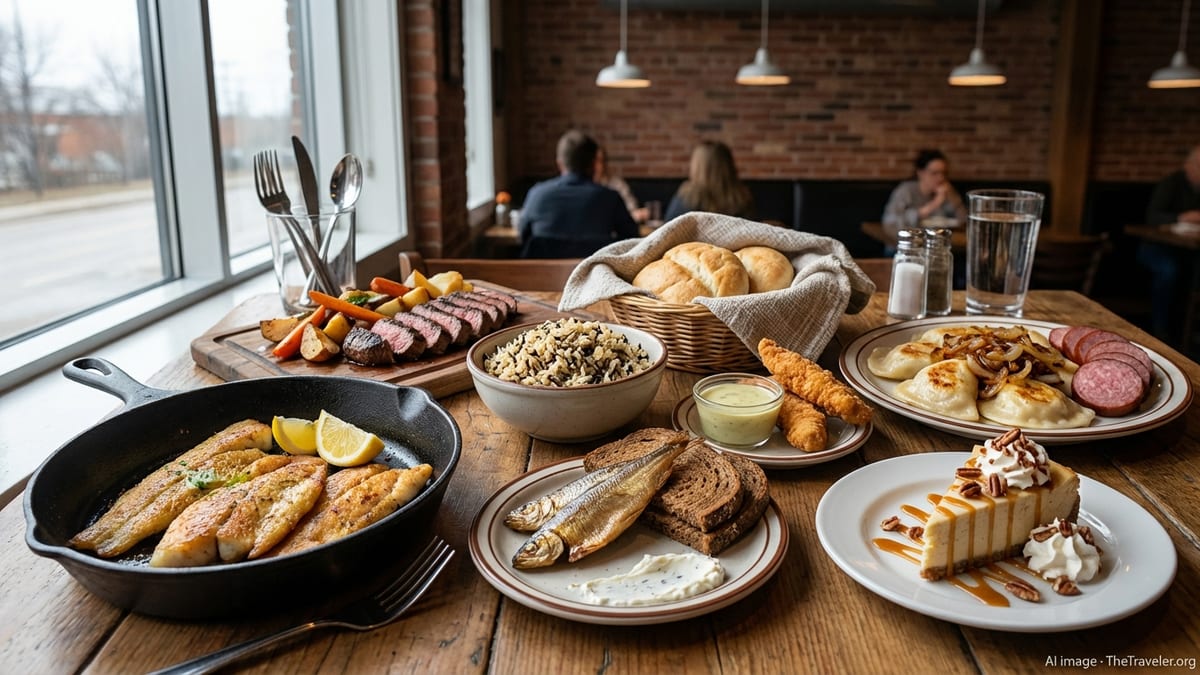
Pickerel and Lake Fish from Manitoba Waters
If there is one ingredient that defines Manitoba menus, it is pickerel, the local name for walleye pulled from the province’s cold, clean lakes. In Winnipeg, this freshwater fish shows up everywhere from casual diners to white‑tablecloth restaurants, usually prepared simply to let the delicate flavor and flaky texture shine. Pan fried fillets with lemon and a light coating of flour are a staple, while cheeks, considered the most tender part of the fish, are treated as a quiet local luxury.
Smoked fish is another hallmark of Manitoba, particularly goldeye, a small, fatty fish that develops a rich, pronounced flavor when hot smoked. In fish shops and markets, you will see its burnished, reddish skin displayed whole, ready to be eaten with crackers, cream cheese, or rye bread. Smoked goldeye is closely associated with Winnipeg and surrounding lake communities, and many visitors are surprised by how strongly locals identify with this particular fish.
Beyond pickerel and goldeye, other lake species such as whitefish and tullibee are still common in provincial fish markets and community fish fries. They tell the story of a province where lakes and rivers have long provided food for Indigenous communities, commercial fishers, and cottage owners alike. Ordering the lake fish of the day, wherever you are in Manitoba, is one of the most direct ways to taste the landscape.
To experience pickerel and other lake fish at their best, seek out places that emphasize local sourcing and simple techniques. Whether you are biting into golden, battered fillets at a market counter or sampling refined plates that pair fish with wild rice or seasonal vegetables, you will quickly understand why Manitobans talk so proudly about what comes out of their waters.
Bison and Prairie Game with Indigenous Roots
Long before Manitoba became a province, bison were central to the lives of Plains Indigenous nations and Métis communities, providing meat, hides, and fat that could sustain families through harsh winters. Modern chefs across Manitoba are revisiting those traditions by putting bison at the center of their menus, often in partnership with local ranchers who raise herds on open prairie. Compared with beef, bison is leaner and has a slightly deeper, more mineral flavor that pairs naturally with berries, grains, and root vegetables.
In Winnipeg, it is common to see bison served as grilled steaks, braised short ribs, burgers, or hearty chilis at restaurants with an Indigenous or prairie focus. Some kitchens craft contemporary dishes such as bison ragus over house‑made pasta or bison burgers on bannock buns, while others lean into comfort food, serving slow cooked bison with mashed potatoes and pan gravy. The emphasis is usually on respecting the whole animal and highlighting local ingredients rather than turning bison into a novelty.
Bison also connects back to pemmican and rubaboo, historic foods that combined dried meat, fat, berries, and grains into nutrient‑dense staples for voyageurs and Métis families. While you are less likely to see those dishes in their original form on mainstream menus, some Indigenous‑led restaurants and food trucks in Manitoba reinterpret them as modern stews, tartares, or grain bowls. When you order bison in Manitoba, you are not only tasting a distinctive regional meat but also engaging with a deeper story of land, migration, and resilience.
Because of its richness, bison is often served in modest portions, with chefs focusing on balance rather than excess. It is a smart choice if you want to taste something deeply connected to the prairie ecosystem while still enjoying a refined restaurant experience.
Bannock and Wild Rice in Indigenous‑Inspired Cuisine
Bannock and wild rice are two staples that underpin much of Manitoba’s Indigenous food culture. Bannock, a simple flatbread, appears in many forms across the province: fried into puffy disks, baked as a loaf, or pressed into thin rounds used as the base for tacos and sandwiches. At Indigenous‑owned cafés and bistros, you might find bannock topped with chili, turned into pizza crust, or sliced and toasted for breakfast with jam made from local berries.
Wild rice, often known by the Anishinaabe word manoomin, is another key ingredient with deep cultural and spiritual significance. Harvested from lakes and wetlands, the slender, dark grains have a nutty flavor and pleasantly chewy texture that contrasts with softer side dishes. In Manitoba restaurants that focus on regional cuisine, wild rice often anchors salads, pilafs, or risottos, frequently paired with pickerel, trout, or bison to create plates that feel inherently of the prairies and boreal forest.
In recent years, a new wave of Indigenous chefs and restaurateurs in Winnipeg and smaller communities have been drawing on bannock and wild rice as starting points for inventive menus. You might encounter bannock tacos layered with bison chili and fresh vegetables, or wild rice combined with quinoa and roasted squash for a vibrant, plant‑forward main course. These dishes bridge traditional foodways with contemporary preferences, attracting both local regulars and curious travelers.
When you see bannock or wild rice on a menu, consider ordering at least one dish featuring them, particularly if it is at a restaurant that is Indigenous owned or led. The cooking is often deeply personal, informed by family recipes, community events, and a desire to share a more complete story of Manitoba’s original cuisines.
Honey Dill Sauce and the Manitoba Love of Dips
Ask almost any Manitoban what food they miss most when they travel, and honey dill sauce comes up quickly. This creamy, slightly sweet condiment made from mayonnaise, honey, and dried dill is widely regarded as a Winnipeg invention, popularized by a downtown chicken finger restaurant that experimented with sauces until it hit on a combination locals could not stop ordering. Today, honey dill is firmly entrenched as a provincial obsession.
In practical terms, honey dill is most often served alongside chicken fingers, where its tangy, herbal sweetness softens the crunch of breaded meat. Many restaurants also offer it with sweet potato fries, onion rings, or as an optional dip for fried pickerel. Supermarkets stock locally made jars so families can keep it on hand at home, and it is common for ex‑Winnipeggers to ask visiting friends to bring a bottle when they travel.
Part of the charm of honey dill lies in how local it still feels. While a few national brands have tried marketing it across Canada, demand remains strongest in Manitoba, where people grew up seeing it on cafeteria trays and sports arena snack counters. Recipes circulate in community cookbooks and online groups, but many diners insist that the house versions at their favorite neighborhood spots have a special balance of sweetness and dill that is hard to copy exactly.
If you want to understand how seriously Manitobans take this sauce, simply order chicken fingers in Winnipeg and watch what happens. In many places, honey dill arrives automatically, without you having to ask. Dip generously, then join the ongoing debate about which local producer or restaurant makes the best version. For visitors, it is a small but revealing way into everyday food culture.
Perogies, Kubasa, and the Eastern European Influence
Manitoba has one of the largest Ukrainian communities in Canada, and that heritage is woven into the province’s comfort food. Perogies, also known as varenyky, appear at church suppers, social halls, potlucks, and restaurants in Winnipeg and across rural towns. Typically filled with mashed potato and cheddar cheese, they are boiled or pan fried, then served with fried onions, sour cream, and sometimes crispy bacon or kubasa on the side.
Kubasa, a local term for smoked garlic sausage closely related to kielbasa, is another prairie favorite. Sliced and pan seared or grilled, it adds smoky, garlicky richness to perogy plates, breakfast spreads, and casual gatherings. In many communities, families still stock their freezers with sausage from small butcher shops, each with its own blend of seasoning, smoke, and texture. Sampling kubasa in Manitoba can feel like a tour of micro‑regional styles, even within a single city.
For travelers, perogy and kubasa dinners offer a window into Manitoba’s social life. Community centers and church basements host fundraising meals where long tables fill with families, seniors, and students, all lining up for plates loaded with dumplings and sausage. At the same time, newer restaurants and food trucks have begun playing with the format, stuffing perogies with unconventional fillings or serving kubasa in gourmet sandwiches, but the heart of the tradition remains unmistakably Ukrainian and prairie rooted.
When you see perogies and kubasa on a Manitoba menu, it is rarely a token gesture. These dishes reflect generations of home cooks who adapted Old World recipes to local ingredients and a harsh climate. Whether you discover them at a heritage festival, a humble diner, or a stylish modern eatery, they are among the most satisfying ways to eat like a local.
Schmoo Torte and Classic Prairie Desserts
Among Manitoba’s contributions to the Canadian dessert canon, schmoo torte stands out as both nostalgic and genuinely delicious. Created in Winnipeg in the late 1940s, this layered cake typically features airy sponge or angel food cake, thick whipped cream, caramel or brown sugar sauce, and plenty of chopped nuts, often pecans. The result is a dessert that feels indulgent but surprisingly light, a combination that has kept it on bakery counters and family tables for decades.
While schmoo torte has spread to other parts of Western Canada, it retains a particularly strong following in Manitoba, where many people associate it with birthdays, anniversaries, and holiday gatherings. Some bakeries offer individual slices, while others prepare whole cakes that quickly sell out on weekends. Home bakers debate the correct proportion of cream to cake, or whether the caramel should be thick and sticky or more of a pourable sauce, but everyone agrees that the toasted nuts are non‑negotiable.
Beyond schmoo torte, you will encounter other prairies sweets in Manitoba, from Saskatoon berry crisps and pies to butter tarts and dainties at social events. Many of these recipes come from Mennonite, Ukrainian, and Scottish backgrounds, adapted over time to make use of what was available in local pantries. Together, they contribute to a dessert culture that is rich but unfussy, designed to feed a crowd and withstand a long winter.
If your schedule allows, plan to end at least one Manitoba meal with schmoo torte. Even if you normally avoid big desserts, sharing a slice is an enjoyable way to participate in a tradition that has spanned generations in Winnipeg. Pair it with a cup of coffee, listen to the conversations at neighboring tables, and you will feel like you are part of the province’s ongoing story.
Winnipeg Rye, Local Grains, and Everyday Staples
Behind the scenes of Manitoba’s more famous specialties lies a quieter set of staples that shape daily eating. Winnipeg has long been associated with high quality bread, thanks in part to large grain terminals and milling operations that process prairie wheat and rye. Local bakeries have built on that foundation to produce loaves with real character, from light sandwich breads to dense rye with a sturdy crust and pronounced flavor.
Winnipeg style rye bread, in particular, holds a special place in the hearts of many residents. Sliced for sandwiches or served alongside bowls of soup and plates of smoked fish, it offers a balance of chew and softness that is hard to replicate elsewhere. Some bakers enrich their doughs with caraway seeds or a subtle sourness, while others keep things simple, relying on good flour and patient fermentation.
Grain culture in Manitoba extends beyond bread. Oats, barley, and wheat appear in hearty breakfast porridges, granolas, and baked goods at cafés and markets that emphasize local sourcing. Many of these businesses work directly with nearby farms and small mills, creating short supply chains that highlight the quality of prairie harvests. For travelers, ordering a loaf from a neighborhood bakery or enjoying a bowl of grain‑based porridge on a winter morning is an easy way to connect with this side of Manitoba food.
While rye bread may not sound as glamorous as bison or pickerel, it is woven into countless meals and memories. Paying attention to the bread basket or asking staff about their favorite local bakers can lead you to some of the most quietly satisfying bites of your trip.
The Takeaway
Manitoba’s food culture is not built on a single signature dish but on a collection of ingredients and recipes that reflect its lakes, prairies, and diverse communities. Pickerel and smoked goldeye speak to the importance of freshwater fishing, while bison and bannock connect directly to Indigenous foodways that long predate modern borders. Perogies, kubasa, and schmoo torte tell the story of immigration and adaptation, and honey dill sauce reveals how a simple, homegrown idea can become a province‑wide favorite.
As you explore Winnipeg and the wider province, try to seek out meals that are rooted in place rather than in generic international trends. Visit Indigenous‑owned restaurants, stop at small bakeries, order the lake fish special, and do not pass up a chance to sample honey dill with something crispy. In doing so, you will experience Manitoba not just as a destination on a map, but as a living food culture shaped by history, climate, and the creativity of the people who call it home.
FAQ
Q1. What food is Manitoba most famous for?
Manitoba is especially known for lake fish such as pickerel and smoked goldeye, as well as honey dill sauce, perogies, bison dishes, and schmoo torte.
Q2. Where can I try authentic honey dill sauce in Manitoba?
You will find honey dill sauce in many Winnipeg restaurants that serve chicken fingers or pub food; it is also widely available in local grocery stores.
Q3. Is pickerel the same as walleye?
In Manitoba, the term pickerel is commonly used for walleye, a freshwater fish with firm, mild flesh that is popular in local restaurants and fish markets.
Q4. Are Indigenous‑owned restaurants easy to find in Winnipeg?
Indigenous‑owned cafés, bistros, and food trucks are increasingly visible in Winnipeg; tourism offices, hotel staff, and local media often highlight current recommendations.
Q5. What is usually inside Manitoba perogies?
Classic Manitoba perogies are typically filled with mashed potato and cheddar cheese, sometimes with variations that include cottage cheese, sauerkraut, or seasonal vegetables.
Q6. How is bison different from beef in Manitoba dishes?
Bison is leaner and slightly more robust in flavor than beef, so chefs often prepare it as steaks, burgers, or slow cooked ragus that emphasize tenderness and rich taste.
Q7. Is schmoo torte very sweet?
Schmoo torte is certainly a dessert, with caramel and whipped cream, but the light sponge cake and nuts help keep it from feeling overwhelmingly sweet for most people.
Q8. What is bannock, and how is it served?
Bannock is a simple bread that can be baked or fried; in Manitoba it is served plain with jam, used as a base for tacos, or shaped into buns for burgers and sandwiches.
Q9. Can vegetarians eat well in Manitoba while still trying local specialties?
Yes, many restaurants offer vegetarian options that feature wild rice, local grains, seasonal vegetables, and sometimes meatless takes on perogies or bannock‑based dishes.
Q10. When is the best time to visit Manitoba for food experiences?
Summer and early autumn offer farmers’ markets, food trucks, and lake fish at their peak, while winter brings hearty comfort foods and cozy indoor dining.