

Ohio’s food scene is far richer than many travelers expect. Between immigrant-rooted comfort dishes, quirky regional inventions, and sweets that double as state symbols, the Buckeye State has carved out a distinctive culinary identity. Whether you are road-tripping between Cincinnati, Columbus, and Cleveland or detouring through lake towns and Amish country, these seven Ohio foods offer a delicious crash course in local flavor.
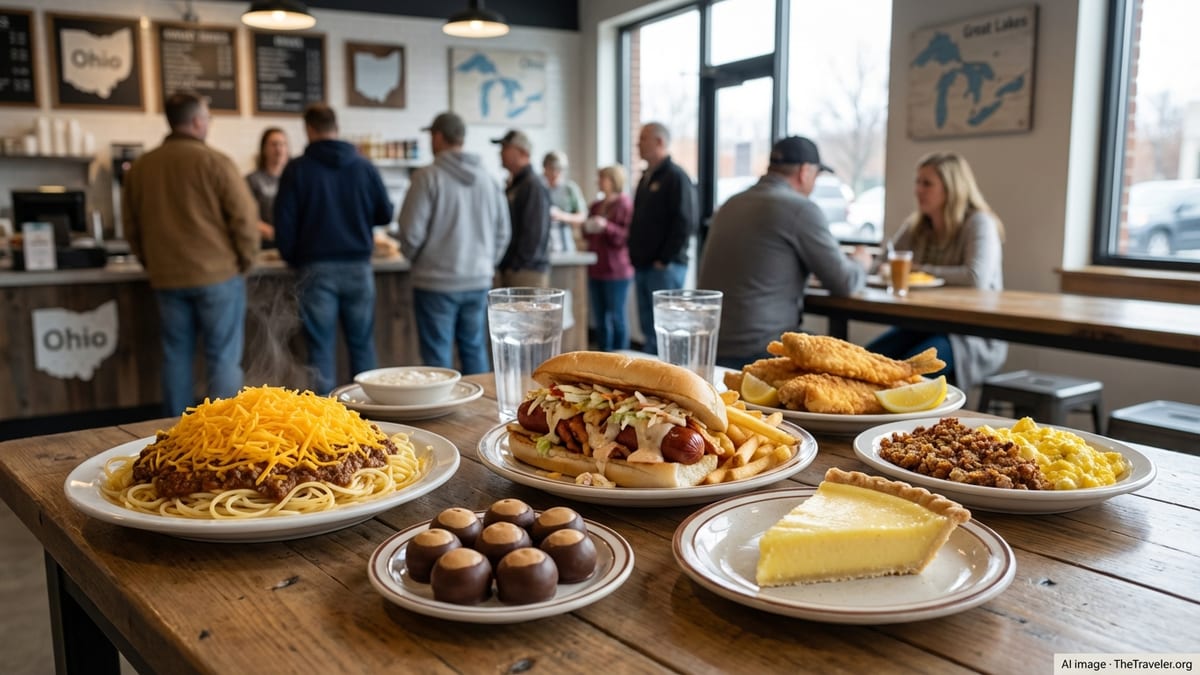
Cincinnati Chili: A Greek Twist on a Midwest Classic
If there is one dish that defines Ohio in the national imagination, it is Cincinnati chili. Unlike the chunky, tomato-heavy versions found in Texas or the Southwest, this chili is more of a finely textured meat sauce with a surprising spice profile. Influenced by Greek and Macedonian immigrants who settled along the Ohio River in the 1920s, the sauce often includes warming hints of cinnamon, allspice, cloves, and sometimes cocoa, layered over a base of ground beef and tomato.
The most classic way to experience Cincinnati chili is “two-way” or “three-way” over a plate of spaghetti, with the “ways” referring to the number of toppings. Spaghetti and chili form the foundation; a generous snowfall of finely shredded cheddar cheese earns it three-way status, while adding onions and kidney beans takes the order to four- or five-way. This signature ordering lingo is part of the ritual for locals who grow up debating the correct “way” to eat their chili.
For visitors, the rivalry between well-known chains such as Skyline and Gold Star has become part of the storytelling. Both draw long lines of loyal customers for plates of spaghetti buried under chili and cheese, as well as for chili-smothered coneys served in soft hot dog buns. Independent parlors around the Cincinnati area also serve their own versions, some slightly sweeter or more savory than others, but all firmly rooted in the same Greek-inspired style that sets Cincinnati chili apart.
Travelers curious about this regional specialty should arrive hungry and open-minded. The first forkful can be surprising, with the aromatic spices playing against the salty cheese and neutral pasta. Yet that unusual balance of sweet, savory, and tangy is precisely what keeps locals coming back and what turns many skeptics into fans after just one plate.
Buckeye Candy: The Bite-Size Symbol of the State
No survey of Ohio foods would be complete without buckeye candy, the peanut butter and chocolate confection that shares a name and appearance with the nut of Ohio’s state tree. Traditionally, the filling is a simple mixture of peanut butter, butter, and powdered sugar rolled into small balls. Each piece is then dipped in melted chocolate, leaving a circle of exposed peanut butter on top that mimics the look of a real buckeye.
Although recipes began circulating widely in Ohio kitchens in the 1960s and 1970s, buckeyes today feel timeless, woven into everything from holiday cookie trays to wedding dessert tables. Many families swear by closely guarded recipes, adjusting the ratio of peanut butter to sugar or the type of chocolate used. Others buy them from local confectioners and bakeries, where entire cases may be devoted to traditional and flavored versions, sometimes filled with extra-crunchy peanut butter or laced with sea salt.
For visitors, trying a buckeye is more than tasting a sweet; it is tapping into a deep well of state pride. The candies are ubiquitous at college football tailgates, where scarlet and gray-clad fans snack on tins of homemade buckeyes while cheering on their team. In cities such as Columbus, Dayton, and smaller college towns, chocolate shops and specialty food stores box them up as gifts for travelers to take home, spreading the Buckeye State’s signature flavor combination far beyond its borders.
Because buckeyes are dense and rich, a little goes a long way. Start with one or two pieces and savor the contrast between the crisp chocolate shell and the smooth, melt-in-your-mouth peanut butter center. For a deeper dive into the flavor, many Ohio ice cream shops now feature buckeye-inspired flavors, folding chunks of the candy into chocolate or peanut butter bases for an indulgent frozen tribute.
Goetta: Cincinnati’s Rustic Breakfast Staple
While Cincinnati is best known outside the state for its chili, locals will tell you that their true morning favorite is goetta. This hearty, sliceable sausage-loaf is a legacy of the city’s German immigrant community. Typically made from a mix of pork, and sometimes beef, blended with steel-cut or pinhead oats and spices, goetta was historically a thrifty way to stretch limited meat into multiple meals.
The magic of goetta lies in its transformation on the griddle. Slices are cut from a chilled loaf and pan-fried until the edges crisp and the oats and meat bind into a golden, almost hash-like patty. The interior stays soft and savory, perfumed by bay leaves, pepper, and other seasonings. Served alongside eggs, tucked into breakfast sandwiches, or crumbled into burritos and scrambles, goetta anchors many Cincinnati breakfasts with satisfying heft.
Today, local butcher shops and regional producers in and around Cincinnati keep the tradition alive, offering both classic and flavored versions. Summer festivals near the Ohio River even dedicate entire weekends to celebrating goetta in every conceivable form, from burgers and nachos to more experimental dishes. For travelers, ordering goetta at a neighborhood diner or family-run café offers an easy way to experience a deeply local taste that rarely appears on menus outside southern Ohio and northern Kentucky.
If you are tasting goetta for the first time, expect a texture somewhere between sausage and a very firm oatmeal cake, with a rich, savory flavor that pairs naturally with fried eggs and strong coffee. It is comfort food through and through, built for chilly Midwest mornings and long days of work along the river.
Polish Boy: Cleveland’s Messy, Magnificent Sandwich
Far to the north, Cleveland lays claim to one of Ohio’s most indulgent sandwiches: the Polish Boy. Born in the city’s Polish neighborhoods and popularized at casual grills and food stands, this sandwich stacks multiple comfort foods into a single, two-handed meal. At its core is a grilled or smoked kielbasa sausage tucked into a bun, already hearty enough on its own.
What makes a Polish Boy unforgettable is what goes on top. A mound of French fries joins the sausage, followed by creamy, tangy coleslaw and a generous pour of barbecue or hot sauce. The result is a chaotic but harmonious mix of textures and temperatures: snappy sausage, crispy potatoes, cool slaw, and warm sauce that soaks into the bun. Eating one is inevitably messy, which is part of its appeal for locals who grew up tackling these sandwiches over paper-lined trays.
Travel shows and food writers have helped spotlight the Polish Boy in recent years, but it remains, at heart, a neighborhood favorite. You will find versions at no-frills takeout windows, food trucks, and diners scattered across the Cleveland area, each with its own twist on the coleslaw seasoning or choice of sausage. Some spots pile the toppings sky-high, daring visitors to finish an entire sandwich in one sitting.
For travelers, sharing a Polish Boy is often the most practical option, especially if you plan to sample other local dishes the same day. Ask staff how they prefer to eat it, and they will often advise grabbing extra napkins and eating quickly while the fries are still hot and crisp. It is a sandwich that captures Cleveland’s blue-collar spirit in edible form: filling, unpretentious, and bursting with flavor.
Lake Erie Perch: A Taste of the Great Lakes
Ohio’s food culture is not all meat and sweets. Along the state’s northern edge, the shoreline of Lake Erie shapes another beloved staple: fried perch. Yellow perch from the lake has a delicate, mildly sweet flavor and a tender, flaky texture that stands up beautifully to a light breading and a hot skillet or deep fryer.
Fish fries are a long-standing tradition across northern Ohio, especially in coastal communities and island towns where charter boats and marinas are part of everyday life. During warmer months, many lakeside restaurants and seasonal stands highlight Lake Erie perch on their menus, serving it with tartar sauce, lemon wedges, and simple sides like coleslaw and fries. Bands may perform on outdoor patios as plates of crisp, golden fillets make their way from kitchen to picnic tables overlooking the water.
Perch dinners are particularly popular during Friday fish fries and community fundraisers, where recipes are often passed down through generations. Some cooks swear by ultra-thin coatings to let the fish shine, while others favor slightly thicker, more seasoned batters. Either way, the hallmark of a good Lake Erie perch plate is freshness: the best versions taste clean and light, with no heavy oiliness or lingering fishiness.
Travelers exploring the Lake Erie shoreline, from Toledo to Sandusky and east toward the Lake Erie islands, will find perch featured prominently. For a quintessential experience, seek out a family-run spot with a local crowd and a view of the water, then linger over your meal as fishing boats glide in and out of the harbor.
Shaker Lemon Pie: Whole-Lemon Brightness in Every Bite
Among Ohio’s many contributions to the dessert table, Shaker lemon pie stands out for its ingenuity. Developed by Shaker communities that settled in parts of the state in the nineteenth century, the pie was a thrifty solution to the challenge of transporting citrus long distances. Rather than wasting any part of the precious fruit, bakers used the entire lemon: rind, pith, and pulp.
Shaker lemon pie begins with thinly sliced lemons macerated in sugar until the peels soften and the juices mingle into a fragrant syrup. This mixture is then combined with eggs and poured into a pastry crust, creating a filling that bakes into a glossy, custard-like layer studded with translucent strips of peel. The result is a dessert that balances bright, almost floral citrus notes with a pleasant, slightly bitter edge from the rind, all supported by a flaky, buttery crust.
While not as omnipresent as buckeyes, Shaker lemon pie enjoys a loyal following in Ohio bakeries, farm cafés, and historic inns, especially in regions that celebrate Shaker heritage and traditional rural cooking. Home bakers continue to make it for special occasions, often tweaking sweetness levels or layering the filling with a bit of extra zest for more intensity.
Visitors who enjoy tart desserts will find Shaker lemon pie especially compelling. It pairs beautifully with hot tea or black coffee, and a small slice goes a long way thanks to its concentrated flavor. For many travelers, discovering this pie becomes an unexpected highlight, adding a dash of history and a burst of lemon to their Ohio itinerary.
Ohio Ice Cream Traditions: From Small-Batch Scoops to Buckeye Flavors
Ohio’s connection to ice cream runs deep, thanks to a combination of dairy farming heritage, family-owned creameries, and a statewide sweet tooth. Across cities and small towns, long-running ice cream parlors have spent decades perfecting slow-churned, high-butterfat recipes that feel both nostalgic and luxurious. For many locals, summer memories are tied to waiting in line at walk-up windows, balancing cones already melting in the humid air.
Signature regional flavors often reflect the state’s other favorite treats. Buckeye-inspired ice creams swirl peanut butter ribbons and chunks of buckeye candy through rich chocolate or vanilla bases, offering a frozen take on Ohio’s most famous confection. Seasonal flavors might incorporate local fruit or maple syrup, while year-round classics like black raspberry chip and butter pecan maintain loyal followings. Many creameries still produce ice cream in relatively small batches, which keeps textures dense and flavors vibrant.
Travelers can turn ice cream stops into a theme of their Ohio road trip, sampling different styles from city to city. In Cincinnati, historic parlors are known for French pot techniques that yield ultra-creamy scoops. In Columbus and other college towns, newer artisan shops experiment with inventive, rotating flavors. Lakefront communities add to the charm by serving cones just steps from sandy beaches and boardwalks, creating that quintessential summer-in-the-Midwest atmosphere.
Regardless of where you go, expect the local staff to have strong opinions about the best flavor combinations. Ask for recommendations, and do not be surprised if someone points you toward a house specialty that incorporates buckeyes or other Ohio-made candies. It is a delicious way to see how one state’s food traditions continually reinvent themselves in the freezer case.
The Takeaway
Tasting your way through Ohio reveals a state defined by comfort and creativity. From the distinctly spiced tangle of Cincinnati chili over spaghetti to the crisp snap of Lake Erie perch and the bright tang of Shaker lemon pie, each dish tells a story about immigration, industry, and local pride. Buckeye candies bridge sports fandom and home baking, while goetta and Polish Boys ground the state in hearty, working-class traditions that continue to thrive far beyond their original neighborhoods.
For travelers, the joy lies in seeking these foods out where they are most loved: neighborhood chili parlors, no-frills sandwich counters, lakeside fish shacks, and family-run bakeries. Along the way, you will encounter the Ohio habit of turning even simple ingredients into something memorably their own. Come hungry, ask questions, and leave room in your suitcase for a box of buckeyes. Long after you cross the state line, the flavors of the Buckeye State have a way of following you home.
FAQ
Q1. What is the difference between Cincinnati chili and regular chili?
Cincinnati chili is a thin, finely textured meat sauce seasoned with warm spices like cinnamon and allspice, usually served over spaghetti or hot dogs rather than in a bowl on its own.
Q2. Where can I try authentic Cincinnati chili as a first-time visitor?
Look for long-established chili parlors around Cincinnati, including well-known local chains and small independent shops, and order it “three-way” over spaghetti with cheese to experience the classic style.
Q3. Are buckeye candies available year-round in Ohio?
Yes, many candy shops and bakeries sell buckeyes throughout the year, although home cooks often make extra batches around major holidays and during football season.
Q4. Is goetta suitable for people who do not usually like sausage?
It can be, because the oats give goetta a milder, grain-forward texture and flavor. Trying a crisp-fried slice at a local diner is the best way to decide if you enjoy it.
Q5. How should I eat a Polish Boy sandwich without making a mess?
The honest answer is that you probably cannot avoid a bit of a mess. Most locals embrace it, using plenty of napkins and eating quickly while the fries are still hot and the bun holds together.
Q6. When is the best time of year to find fresh Lake Erie perch?
Perch appears on menus throughout the year, but availability and variety are often best during the warmer months, when lake fishing and outdoor dining are in full swing.
Q7. Is Shaker lemon pie very sour?
Shaker lemon pie is tangy, but the sugar and eggs create a sweet, custard-like filling that balances the citrus and slight bitterness from the lemon peel.
Q8. Can I bring Ohio foods like buckeyes or goetta home with me?
Yes, many shops package buckeyes and other sweets for travel. Goetta and similar products are often sold vacuum-sealed or frozen, but you should keep them chilled and check any airline restrictions.
Q9. Are there vegetarian options for these traditional Ohio dishes?
Some restaurants offer meatless versions of Cincinnati chili, goetta-style oat loaves, or polish-inspired sandwiches made with plant-based sausages, especially in larger cities like Columbus and Cleveland.
Q10. How many of these Ohio foods can I realistically try in one trip?
On a long weekend, you can easily sample Cincinnati chili, buckeyes, goetta, a Polish Boy, and local ice cream, then add Lake Erie perch or Shaker lemon pie if your route takes you near the lake or through small-town bakeries.