

Pretoria has a reputation as South Africa’s quiet administrative capital, a place of ministries and embassies rather than memorable travel experiences.
Spend a few days in the city, though, and a more intriguing picture emerges. Pretoria blends layered history, contemporary African creativity, generous green space and a surprisingly relaxed food and nightlife scene.
With new events, re-energised public spaces and easy access to nature, it offers far more interest than most first-time visitors expect.
A Capital With Character, Not Just Government Buildings
On paper, Pretoria can sound formal. It is home to the Union Buildings, the Presidency and many diplomatic missions. In reality, this is a compact, human-scale city where monumental architecture shares space with lively neighbourhoods, pavement cafés and student life. Exploring on foot, by rideshare or by Gautrain from Johannesburg, you quickly discover that the “official” face of the capital is only part of the story.
The Union Buildings and Their Panoramic Gardens
Most visitors start with the Union Buildings, the imposing sandstone complex that houses the offices of the South African President and overlooks the central city. Designed by British architect Sir Herbert Baker and completed in 1913, the structure sweeps along a natural ridge, giving it a ceremonial presence that still impresses today.
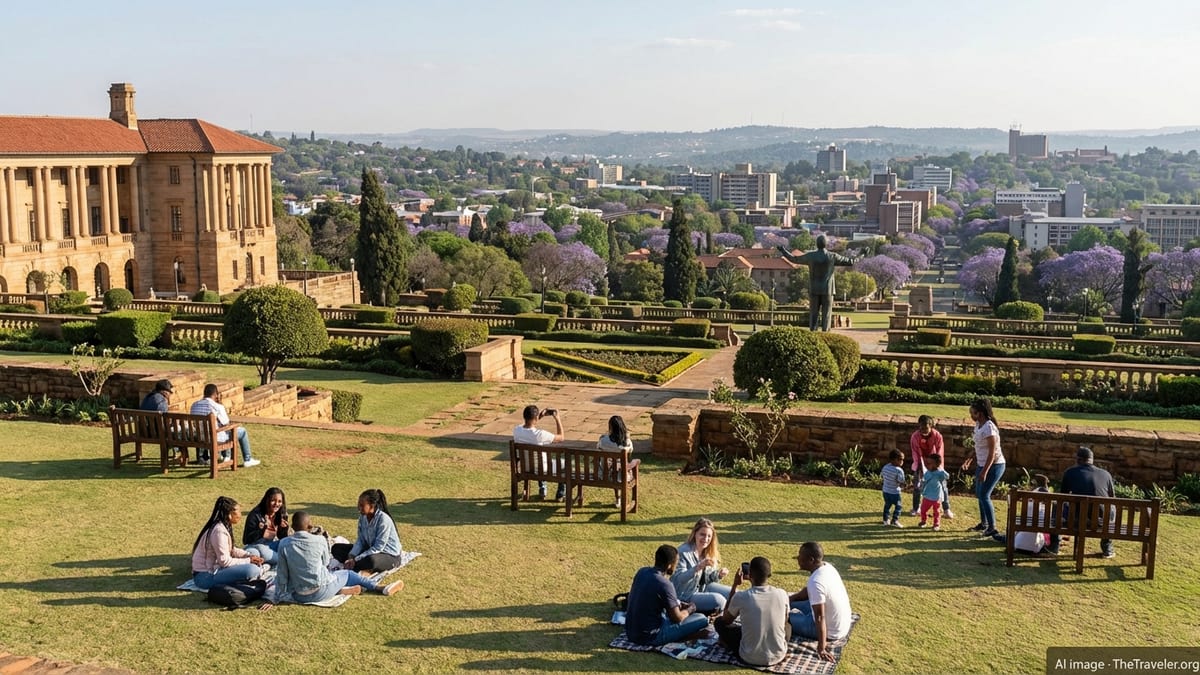
The terraced gardens below are where Pretoria’s gravitas gives way to leisure. Locals picnic on the lawns, couples pose for wedding photos and visitors take in a broad panorama of the city spread out below. Statues and memorials trace chapters of South African political history, including the large bronze of Nelson Mandela at the front. Even if politics is not your main interest, the Union Buildings offer a striking vantage point for understanding Pretoria’s shape and setting.
Historic Churches, Squares and Streetscapes
Beyond the Union Buildings, the central grid hides an eclectic mix of heritage architecture. Church Square, ringed by 19th and early 20th century buildings, remains the symbolic heart of the old city. Here you can admire the Palace of Justice and the Old Capitol Theatre, and picture Pretoria in its horse-drawn era.
Many façades date from the late Victorian and Edwardian periods, adapted to Highveld light with verandas, balconies and shaded arcades. Walking a few blocks in any direction reveals corner cafés in old houses, repurposed warehouses and remnants of tram lines. For travellers with an eye for urban detail, Pretoria’s centre is more visually rewarding than its bureaucratic image suggests.
A Manageable Capital That Feels Intimate
Part of Pretoria’s appeal lies in its scale. Compared with Johannesburg’s vast sprawl, Pretoria feels compact and navigable. You can move from the historic core to leafy suburbs, university districts and nature reserves in a single day without long transfers.
Embassies cluster in green residential areas, students congregate around the University of Pretoria in Hatfield and families head to suburban malls and markets in the east. This mix of roles gives Pretoria a layered personality: part capital city, part university town, part garden suburb. For visitors, that translates into diverse experiences within easy reach.
Unexpected Green Retreats Inside the City
What often surprises travellers most is just how green Pretoria is. Seen from any hillside, the city dissolves into a canopy of trees, with jacarandas a wash of purple in spring. Within the municipal boundaries are several nature reserves and one of South Africa’s key botanical gardens, putting hiking trails, wildlife and birding within minutes of downtown.
Pretoria National Botanical Garden
In the eastern suburbs, the Pretoria National Botanical Garden protects 76 hectares of indigenous Highveld vegetation and landscaped collections. A central rocky ridge divides the property into two distinct microclimates, allowing both warmer, drier and cooler, moister plant communities to thrive.
Visitors can wander themed areas dedicated to cycads, succulents, medicinal plants and wetlands, or follow quiet paths up the ridge for elevated views. On weekends the lawns fill with picnickers, and the garden periodically hosts outdoor concerts and cultural festivals, including heritage-focused events that showcase South African music and food. It is both a scientific institution and a leisurely city escape.
Groenkloof Nature Reserve
Just south of the centre, Groenkloof Nature Reserve offers a very different kind of green space. Proclaimed a game sanctuary in 1895, it is often cited as the first officially protected game reserve in Africa. Today its 600 hectares of rocky Highveld grassland are laced with hiking, mountain biking and 4x4 trails.
Giraffe, zebra, a variety of antelope and abundant birdlife move through the valleys and ridges, giving visitors the sense of a bush escape without leaving the city limits. Day visitors can choose between marked hiking circuits, bicycle routes and self-drive game viewing loops, with picnic sites for post-hike relaxation. For active travellers, Groenkloof demonstrates how quickly the capital city gives way to wild landscape.
Wonderboom Nature Reserve and Its Legendary Tree
To the north, Wonderboom Nature Reserve protects a section of the Magaliesberg range and one of South Africa’s most unusual trees. The “Wonderboom” itself is a vast fig that is believed to be around a thousand years old. Over centuries, its spreading branches have rooted themselves, creating multiple rings of “daughter” trees around the original trunk.
Raised walkways encircle the fig, allowing close-up views without damaging its roots, and hilltop trails lead up to the remains of Fort Wonderboompoort, one of a chain of late 19th century forts built around Pretoria. From the summit, you enjoy sweeping views across the northern suburbs, framed by cliffs and koppies. The combination of natural oddity, history and scenery makes Wonderboom an outing unlike any other in South Africa’s cities.
Nearby Reserves and Dams
Beyond these headline spots, Pretoria residents routinely escape to other conservation areas such as Rietvlei Nature Reserve, with its dam, wetlands and herds of antelope, or the cluster of reserves around Fort Klapperkop. For visitors with a car, it is easy to combine city sightseeing with a morning game drive or late-afternoon hike. Few national capitals offer that sort of wilderness access so close to the office towers.
A Living Classroom of South African History
Pretoria’s role in South African political life has given it a complex, sometimes contentious history. Rather than being hidden, that history is increasingly interpreted in museums, monuments and public sites that unpack both painful past and democratic transition. For travellers who want to understand South Africa beyond headlines, Pretoria functions as a powerful open-air classroom.
From Boer Capital to Democratic Seat of Government
Originally founded in the mid-19th century as the capital of the South African Republic, Pretoria was long associated with Afrikaner nationalism and, during the 20th century, with apartheid rule. Many of its monuments and street names reflect that legacy, from the grand Voortrekker Monument on a hill south of the centre to smaller plaques and statues scattered across the city.
Since 1994, the democratic era has brought a conscious effort to reinterpret or complement older memorials with new symbols. The towering Nelson Mandela statue at the Union Buildings, public art projects and recontextualised museum exhibits invite visitors to view Pretoria’s built environment through a more inclusive lens. Walking the city with a guide, you see how narratives have shifted in three short decades.
Voortrekker Monument and Freedom Park
South of the centre, the Voortrekker Monument is one of Pretoria’s most imposing landmarks. Completed in 1949, its granite bulk commemorates the 19th century Voortrekkers, Afrikaner settlers who moved inland from the Cape. Inside, marble friezes and a central cenotaph dramatise this chapter of South African history.
On an adjacent ridge, Freedom Park offers a different perspective. Its memorial gardens, museum and Wall of Names honour those who died in conflicts and struggles for freedom across South African history, from pre-colonial times through to the liberation struggle. Visiting both sites in one day can be a moving experience, confronting visitors with contrasting interpretations of sacrifice, identity and belonging.
Museums, Archives and the State Theatre
Several other institutions add nuance to Pretoria’s historical landscape. The Ditsong National Museum of Cultural History, the Kruger Museum and various archival collections present artefacts from archaeological finds to domestic interiors from earlier centuries. These are not dusty side trips but valuable windows into how people actually lived in and around the capital.
Culture is not only about the past. The South African State Theatre, one of the country’s flagship performance venues, sits in the heart of the city and programmes drama, dance, music and festivals that reflect contemporary voices. Time a visit for a major production or youth-focused festival and you will see Pretoria’s younger generations actively reshaping the stories told in the capital.
A Creative Scene That Flies Under the Radar
For many years, Pretoria’s cultural life was overshadowed by Johannesburg. That gap has narrowed significantly. The city’s universities, art schools and independent collectives have fostered a generation of artists, designers and performers who use the capital as a canvas. Their work is visible in galleries, public installations and recurring events that reward curious travellers.
Cool Capital and Guerrilla Urban Interventions
One emblem of Pretoria’s creative reinvention is the Cool Capital Biennale, a citywide art, architecture and design project that has taken place in recent years. Conceived as an uncurated, do-it-yourself event, it has encouraged residents to stage pop-up exhibitions, performances and urban interventions across the city.
Instead of concentrating art behind gallery doors, Cool Capital has placed sculptures along commuter routes, hosted film screenings in unexpected venues and organised tours of buildings that are usually off-limits. Even outside biennale years, the spirit of experimentation lingers in smaller projects: street art in former industrial areas, design markets and one-off performances in public squares. As a visitor, this translates into a sense that the city is in motion, not fixed in time.
Galleries, Studios and Design Districts
Pretoria’s gallery scene is smaller than Cape Town’s but offers serious work. Established spaces and newer, independent galleries promote painting, photography, sculpture and printmaking by both emerging and recognised artists. Some cluster near the university; others occupy stand-alone houses or renovated spaces in older suburbs.
Designers and makers have also staked out territory at creative markets and in shared studio spaces. Weekend events often mix fashion, ceramics, jewellery and graphic design with food and live music, giving travellers an easy way to engage with local creativity in a relaxed environment. For those interested in design, it is worth following listings to see what is on during your stay.
Live Music, Jazz and Theatre
Music fans often focus on Johannesburg’s clubs, but Pretoria has its own nightlife rhythm. Bars and venues in areas such as Hatfield, Brooklyn and Menlyn regularly host live bands, DJs and jazz sessions, drawing a mix of students, professionals and visiting artists. Genres range from amapiano and Afro-pop to rock and acoustic singer-songwriter sets.
The South African State Theatre anchors the performing arts calendar with formal productions, while smaller stages present everything from stand-up comedy to poetry evenings. For travellers willing to look beyond mainstream tourism brochures, Pretoria’s after-dark culture can be an unexpected highlight.
Neighbourhoods With Personality, Food and Nightlife
One reason Pretoria feels more interesting than many expect is the variety of its neighbourhoods. Rather than a single central entertainment strip, the city offers pockets of activity scattered across the map. Each has its own mix of restaurants, café culture, markets and bars, and together they form an appealing circuit for food-focused travellers.
Hatfield and the University District
Close to the University of Pretoria, Hatfield is the student heartland, with affordable eateries, casual bars and a high-energy atmosphere during term time. While some venues cater squarely to the student crowd, others offer surprisingly good coffee, breakfast and international cuisines at reasonable prices.
Hatfield’s proximity to the Gautrain station also makes it a practical base for travellers arriving from Johannesburg or OR Tambo International Airport. You can walk to campus, hop on a train, or ride-share to adjacent suburbs for dinner or nightlife, returning to a district that always feels awake.
Brooklyn, Menlyn and the Eastern Suburbs
South-east of the centre, Brooklyn and the surrounding suburbs present a more upmarket face of Pretoria. Tree-lined streets shelter embassies, law firms and well-established family homes, while shopping centres, independent restaurants and coffee shops serve a professional clientele.
Further east, the Menlyn node has evolved into a major commercial and entertainment hub, with large malls, cinemas, rooftop bars and destination restaurants. For visitors, these areas combine convenience with an array of dining choices, from contemporary South African cuisine to global chains and local favourites. They are also where you will find many of the city’s boutique hotels and serviced apartments.
Markets, Street Food and Pop-Up Events
Beyond permanent venues, Pretoria’s calendar is increasingly defined by markets and festivals. Events such as Market@theSheds in the inner city, seasonal food festivals and themed weekend gatherings bring together craft breweries, street food vendors, designers and performers.
Listings change through the year, with autumn and spring particularly active. Some festivals celebrate Mexican cuisine and tequila, others heritage cooking or live local music. Plan ahead and you may find your visit coinciding with a Sunday potjie (stew) market, a night-time food fair or an open-air concert in a botanical garden.
Family-Friendly Attractions and Gentle Urban Adventures
Pretoria is not only for history buffs and culture seekers. Many of its major attractions are well suited to families, from the national zoo to interactive museums and outdoor spaces that encourage children to run, explore and learn. Combined with relatively relaxed traffic and manageable distances, this makes the city a good choice for multi-generational trips.
The National Zoological Garden of South Africa
The National Zoological Garden of South Africa, commonly known as the Pretoria Zoo, occupies about 80 hectares near the city centre and is one of the largest zoos in the world by area. It houses thousands of animals across hundreds of species, from big cats and primates to an extensive collection of birds, reptiles and aquatic life.
Half the zoo lies on flat ground along the Apies River, while the other half climbs a hillside connected by a cable car. Families can stroll shaded pathways, rent golf carts or picnic by the water. Recent changes, including the relocation of the zoo’s last elephant to a wildlife reserve in 2024, reflect a broader shift toward updated animal welfare practices, which many visitors appreciate.
Interactive Museums and Educational Stops
Several of Pretoria’s museums and cultural centres build hands-on elements into their exhibits, making them engaging for younger visitors. Natural history collections, science displays and military museums provide opportunities to climb inside vehicles, handle replicas or experiment with simple mechanisms.
Combined with visits to the botanical garden, nature reserves and the zoo, these stops can form part of an informal educational itinerary. Children encounter South African biodiversity, archaeology and history not in textbooks, but through direct experience in spaces designed to spark curiosity.
Accessible Outdoor Activities
Families looking for active days out have plenty of options. Groenkloof and other reserves offer graded hiking trails suitable for different fitness levels, while municipal parks and dams around the city provide picnic spots, playgrounds and, in some cases, paddling or cycling opportunities.
Because these sites are close to the urban core, they require less planning than full-day safaris or long drives. Parents can schedule a morning walk or bike ride, return to the city for lunch and still have time for an afternoon museum or market visit, keeping days varied without exhausting younger travellers.
Strategic Base for Wider Exploration
One underappreciated advantage of visiting Pretoria is its position within Gauteng and relative proximity to other major attractions. While some travellers treat it as a day trip from Johannesburg, it can equally serve as a quieter base for wider exploration of the region.
Easy Connections by Gautrain and Road
The Gautrain rapid rail system links Pretoria to central Johannesburg, Sandton and OR Tambo International Airport, making transfers efficient and avoiding some of the region’s heavy traffic. From Pretoria’s stations, you can connect by taxi or rideshare to most parts of the city within minutes.
By road, key highways radiate out toward the North West, Limpopo and Mpumalanga provinces, leading to destinations such as Sun City, the Pilanesberg area and, further afield, the Lowveld gateways to the Kruger National Park. For travellers renting a car, starting and ending road trips in Pretoria often feels less frenetic than navigating Johannesburg’s busiest intersections.
A Calmer Overnight Option
Because Pretoria is the administrative capital rather than the main commercial hub, its rhythm can be slightly slower, particularly in residential suburbs. For some visitors, that is part of the attraction. Evenings may feel less intense than in Johannesburg, and green neighbourhoods lend themselves to walks, runs and café stops.
Choosing Pretoria as an overnight base can therefore balance access to big-city amenities with a more relaxed ambience. You still have restaurants, shopping and cultural events close at hand, but you return at night to quieter streets and tree-shaded guesthouses.
The Takeaway
Pretoria rarely tops bucket lists, yet those who skip it miss an unusually multifaceted South African city. This is a capital with striking architecture and a complex political legacy, but also one with thriving creative communities, surprisingly wild nature on its doorstep and a strong everyday culture of markets, music and outdoor living.
Stay more than a hurried afternoon and Pretoria begins to feel less like an administrative centre and more like a set of interconnected villages: student quarters, embassy enclaves, historic downtown, green belts and hilltop forts. Each adds a layer of interest. Whether you come for the history, the hiking, the food or simply to see a different side of urban South Africa, Pretoria is far more engaging than its formal image suggests.
FAQ
Q1: Is Pretoria safe for tourists?
Pretoria, like many large cities, has areas that are very safe and others where extra caution is required. Central and tourist-focused districts are generally fine during the day if you follow typical urban precautions, such as being aware of your belongings and avoiding displaying valuables. At night, stick to well-lit, busy areas, use reputable transport services and ask your accommodation for up-to-date local guidance.
Q2: How many days should I spend in Pretoria?
Two to three full days is enough to experience Pretoria’s main highlights, including the Union Buildings, Voortrekker Monument, Freedom Park, the botanical garden, a nature reserve and time in at least one lively neighbourhood. If you plan to use the city as a base for nearby day trips, adding an extra day or two can make the pace more relaxed.
Q3: What is the best time of year to visit Pretoria?
The shoulder seasons of spring and autumn are especially pleasant, with mild temperatures and generally clear skies. October and November are famous for blooming jacaranda trees, which turn many streets purple. Winter days, from June to August, are usually sunny and dry, although nights can be cold. Summer brings warmer temperatures and afternoon thunderstorms.
Q4: Do I need a car to get around Pretoria?
A car is helpful but not essential. The Gautrain links Pretoria to Johannesburg and the airport, and within the city you can use metered taxis or rideshare services to reach most attractions. Many central sights are a short drive apart. However, if you want to explore multiple nature reserves or make day trips into surrounding provinces, having a rental car offers more flexibility.
Q5: Is Pretoria very different from Johannesburg?
Yes. While the two cities are only about an hour apart, Johannesburg is larger, more commercially driven and more intense in pace. Pretoria feels smaller, greener and more residential, with a strong government and university presence. Many travellers appreciate Pretoria’s calmer rhythm and extensive green spaces as a contrast to Johannesburg’s bustle.
Q6: What should I not miss on a first visit?
First-time visitors should try to see the Union Buildings and their gardens, Church Square, the Voortrekker Monument and Freedom Park, at least one of the nature reserves such as Groenkloof or Wonderboom, the Pretoria National Botanical Garden and the National Zoological Garden if traveling with children. Exploring a neighbourhood like Hatfield or Brooklyn for food and nightlife rounds out the experience.
Q7: Are there good vegetarian or vegan options in Pretoria?
Yes. As in most major South African cities, Pretoria’s restaurant scene increasingly caters to vegetarian and vegan diners. Many cafés and modern eateries offer plant-based dishes, and markets often include stalls specialising in meat-free meals. It is still wise to check menus in advance and mention your dietary preferences when booking.
Q8: How expensive is Pretoria compared with other South African cities?
Pretoria is generally comparable in price to Johannesburg and slightly more affordable than Cape Town for many items, especially accommodation and some restaurant meals. Public attractions, nature reserves and transport are reasonably priced by international standards, although imported goods and high-end venues can be costly.
Q9: Can I combine a stay in Pretoria with a safari?
Yes. Pretoria is within driving distance of several game reserves, including destinations in the North West and Limpopo provinces and, with a longer drive, the gateway towns for Kruger National Park. Many travellers spend a few days in the city before or after a safari to experience both urban culture and wildlife during the same trip.
Q10: Is Pretoria suitable for families with children?
Pretoria works well for families. The zoo, botanical garden, nature reserves, parks and interactive museums provide a mix of fun and educational activities. Distances between attractions are relatively short, and many outdoor spaces have room for children to play. As always, families should observe standard safety practices and plan days with regular breaks.