

Travelers planning a trip to Vancouver Island often default to Victoria, Tofino or the Comox Valley as home base. Increasingly, though, in-the-know visitors are choosing Nanaimo instead.
With its central location, strong transport links, lower relative costs and a waterfront lifestyle that still feels authentically local, the so-called Harbour City quietly offers one of the best bases for exploring the island and nearby Gulf Islands.
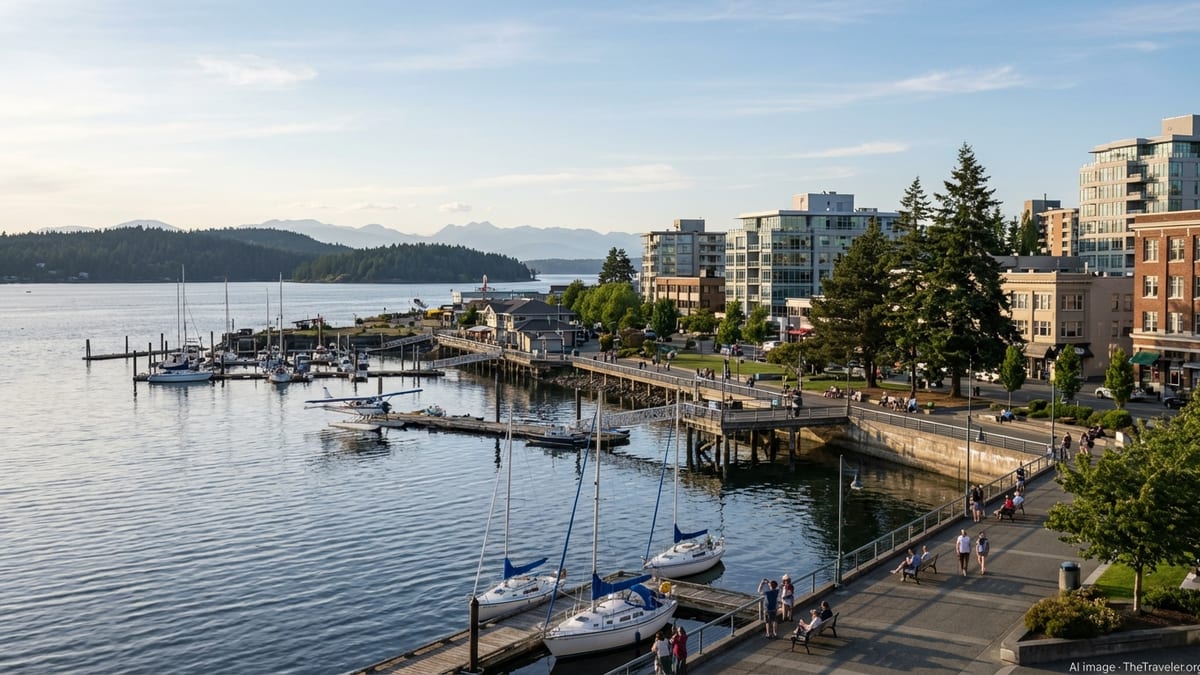
1. A Truly Central Launchpad on Vancouver Island
Nanaimo sits roughly midway down Vancouver Island’s east coast, and that geography is one of its biggest advantages. From here, travelers can fan out north toward Courtenay and Campbell River, west toward Tofino and Ucluelet, or south toward Victoria and the Cowichan Valley, often in two to three hours or less by car. For visitors who want to see more than one region without constantly changing hotels, Nanaimo’s location makes logistics noticeably easier.
Instead of committing to one corner of the island, you can structure your trip around flexible day and overnight excursions. A week based in Nanaimo might include coastal walks near Parksville and Qualicum Beach, a wine-tasting day in Cowichan, a culture-focused outing in Victoria and a scenic loop into Strathcona Provincial Park, all without long double-back drives.
2. Excellent Ferry, Flight and Fast-Ferry Connections
For many travelers, the point of entry to Vancouver Island can make or break an itinerary. Nanaimo is unusually well served by sea and air, which is one reason it has become such a practical base. It has two major BC Ferries vehicle terminals, a busy downtown passenger harbour, a fast passenger-only ferry to Vancouver, a regional airport and scheduled floatplane and helicopter links. This concentration of options gives visitors flexibility, especially in peak season when some routes book up early.
BC Ferries Gateways to the Mainland
Nanaimo’s role as a major ferry hub is central to its appeal. At Departure Bay, just north of downtown, large BC Ferries vessels connect to Horseshoe Bay in West Vancouver. At Duke Point, 15 minutes south of the city, another terminal links Nanaimo with Tsawwassen, the main terminal south of Vancouver that connects to the rest of the province. A smaller BC Ferries terminal in downtown Nanaimo serves Gabriola Island, one of the closest and most characterful of the Gulf Islands.
For travelers, this means multiple ways to arrive and depart. You might sail into Departure Bay from Horseshoe Bay, enjoy a few nights in Nanaimo, then continue out via Duke Point to Tsawwassen. It also simplifies mainland day trips; with an early start, some visitors even squeeze in a day in Vancouver or a drive into the Fraser Valley before returning to their Nanaimo base.
Fast Passenger Ferry and Floatplanes
On top of the traditional ferries, Nanaimo has seen the arrival of a modern passenger-only ferry connecting downtown Nanaimo with downtown Vancouver in roughly 70 minutes. Operating from Port Drive near the waterfront, the high-speed catamarans are geared to both commuters and visitors, turning what was once at least a half-day trip into a quick hop across the Salish Sea.
Several floatplane companies also operate frequent flights between Nanaimo’s harbour and both downtown Vancouver and Vancouver International Airport’s south terminal. Flight times are typically around 20 minutes, and aircraft land in the heart of the city, just steps from harbourfront hotels and the seawall promenade. For travelers mixing business and leisure, or those with limited time, this combination of fast-ferry and floatplane service can be a decisive factor in choosing Nanaimo over more remote island communities.
Regional Airport and Helicopter Service
Located about 18 kilometers south of downtown, Nanaimo Airport serves as a compact regional hub. Carriers such as Air Canada, WestJet and Pacific Coastal Airlines offer direct flights linking Nanaimo with Vancouver, Calgary and other Western Canadian cities, making it possible to connect from international flights with a short hop rather than a long drive.
Complementing these options is Helijet’s helicopter service between Nanaimo’s cruise terminal area and downtown Vancouver’s heliport. For those willing to splurge for speed and views, it offers one of the quickest and most scenic transits between the mainland and the island, landing you minutes from Nanaimo’s waterfront hotels.
3. More Affordable Than Victoria, With Solid Value
Vancouver Island’s rising popularity has pushed up accommodation and dining prices in many hot spots, particularly Victoria and Tofino. While Nanaimo is not a budget destination, visitors often find that it offers better value overall than the provincial capital and the island’s marquee surf towns. Independent cost-of-living comparisons suggest Nanaimo’s overall living costs sit noticeably below Victoria’s, with especially pronounced differences in housing and rent.
For travelers, this typically translates into more competitive nightly rates on midrange hotels, motels and vacation rentals, particularly outside of the absolute peak of summer and long holiday weekends. Savings on accommodation can free up budget for guided outdoor activities, local tours or a splurge meal, making a longer stay more feasible.
Range of Accommodation Options
Nanaimo’s role as a regional service center and convention host means it offers a broad spectrum of lodging. Downtown, travelers will find modern hotels tied to national chains, smaller independent inns and condominium-style suites with kitchenettes. Just beyond the core, there are waterfront motels, family-run bed-and-breakfasts and cabin-style stays tucked into forested edges of the city.
The city’s hotel inventory, spread between the downtown waterfront, the commercial corridors along the old Island Highway and residential neighborhoods, helps keep competition reasonably strong. For road-trippers and ferry travelers, there are also several properties located within short drives of Departure Bay and Duke Point, handy for very early or late sailings.
Everyday Costs and Dining
Visitors staying for a week or more quickly notice that everyday costs such as groceries, casual meals and fuel are comparable to or slightly lower than in Victoria, and well below those in resort towns where choice is limited. Downtown and in surrounding neighborhoods, locally owned cafes, pubs and ethnic restaurants provide numerous moderate-priced options, from seafood and West Coast cuisine to pho, tacos and plant-forward menus.
Farmers markets and independent grocers give self-catering travelers an alternative to eating every meal out. When paired with moderately priced lodging, these factors help stretch travel budgets, particularly for families and slow travelers who value a home-base style stay.
4. Easy Access to Day Trips in All Directions
One of the strongest arguments for basing in Nanaimo is how many classic Vancouver Island and Gulf Islands experiences can be reached on straightforward day trips. Rather than packing and unpacking with every new destination, travelers can wake up in the same bed, venture out in different directions and be back in time for a harbourfront stroll after dinner.
Driving times depend on traffic and season, but many of the island’s best-known spots fall comfortably into day-trip range, from sandy beaches and warm summer swimming to artsy island communities and small alpine lakes.
Beaches of Parksville and Qualicum
Just 30 to 45 minutes north by car, Parksville and Qualicum Beach are home to some of the island’s most family-friendly beaches, with expansive tidal flats that warm up in the sun and shallow waters ideal for wading. These communities offer classic holiday-town amenities: waterfront parks, mini-golf, ice cream stands and rental shops for kayaks, paddleboards and bikes.
Many travelers choose to spend an entire beach day here before driving back to Nanaimo in the evening, avoiding the need to relocate to a second hotel for a short coastal interlude. In shoulder seasons, quieter park trails and viewpoints replace sunbathing as the main activity, but the quick drive still makes spontaneous outings easy.
Gulf Islands and Gabriola
Nanaimo’s downtown ferry terminal to Gabriola Island effectively puts one of the Southern Gulf Islands in its backyard. The crossing is short enough for a relaxed half- or full-day excursion, with schedules that support both foot passengers and vehicles. On Gabriola, visitors find quiet coves, artists’ studios, small eateries and several provincial parks, along with striking sandstone formations on the shore.
Other Gulf Islands, such as Protection and Newcastle, lie even closer. Small passenger ferries and private charter boats connect travelers with these car-free islands, where forested trails, pocket beaches and picnic spots await just offshore. The ability to make multiple Gulf Islands outings from a single base is a distinctive perk of staying in Nanaimo.
South to Cowichan and Victoria, North to Courtenay
Heading south, wine country in the Cowichan Valley, farm-to-table restaurants and warm-water lakes can be comfortably explored in a day from Nanaimo. Farther on, Victoria’s museums, historic architecture and harborfront attractions are within feasible reach for those willing to devote a long day to the capital before returning to quieter lodgings.
To the north, the Comox Valley communities of Courtenay and Comox, and attractions like Mount Washington Alpine Resort, are close enough for seasonal skiing, boarding or alpine hiking day trips. While many travelers do opt for overnight stays in Tofino or on the west coast, some use Nanaimo as a staging point, breaking the drive with hikes in Cathedral Grove or visits to heritage sites en route.
5. A Working Harbour With Authentic Local Character
In contrast to more polished resort towns, Nanaimo retains the feel of a real working city, layered over a deep Indigenous and industrial history. Its waterfront is animated not only by pleasure craft and whale-watching boats but also by tugs, barges, floatplanes and fishing vessels. For many visitors, this blend of maritime bustle and scenic shoreline is part of the charm.
The downtown core, positioned on a hillside above the harbour, mixes restored historic buildings with newer construction. While the city has seen cycles of reinvention, the presence of local institutions and long-running small businesses gives it a sense of continuity that appeals to travelers seeking places that feel lived-in rather than purely curated for tourism.
Harbourfront Walkways and Parks
Nanaimo’s pedestrian-friendly waterfront is one of its most appealing assets as a base. A continuous harbourfront walkway stretches from near downtown through Maffeo Sutton Park and along to Departure Bay, offering views of the marina, floatplanes, Protection and Newcastle islands and, on clear days, the Coast Mountains across the Salish Sea.
Public art installations, playgrounds and small beaches punctuate the route, making it easy to build low-key days around simple pleasures such as strolling, people-watching and grabbing snacks from waterfront kiosks or nearby cafes. For families in particular, the ease of access to open space and playgrounds steps from central hotels is a significant advantage.
Cultural Venues and Local Events
As a regional center, Nanaimo supports a breadth of cultural venues unusual for a city of its size. The Port Theatre, an 800-seat performing arts venue on the waterfront, hosts everything from symphony performances and dance to touring music and comedy. Smaller galleries and studios showcase local artists, including members of nearby First Nations and the broader island creative community.
Seasonal festivals, night markets and community events add another layer of activity. Live music in pubs, small-scale food and drink festivals and downtown street gatherings take place throughout the year, though the summer schedule is typically the fullest. These happenings give travelers additional reasons to linger in town rather than simply using it as a transit point.
6. Gateway to Outdoor Adventure Without the Crowds
One of Nanaimo’s greatest strengths is proximity to a wide range of outdoor activities without the crowding found in some of British Columbia’s most famous parks. Within a short drive of downtown, visitors can hike to waterfalls, scramble through caves, bungee jump over a river canyon, mountain bike forested singletrack or paddle sheltered bays and channels.
Because many of these experiences are spread across a network of regional and provincial parks instead of concentrated in a single marquee destination, they tend to feel more relaxed, with easier parking and less pressure to book far in advance.
Hiking, Waterfalls and Caves
Just outside the city, several popular parks reward even short outings. Waterfall trails allow for easy half-day hikes, while nearby lakes entice swimmers and kayakers in the warmer months. A short drive north leads to a well-known network of caves where guided tours introduce visitors to underground passages and karst formations.
Within city limits, urban parks such as Bowen Park offer a surprisingly immersive dose of nature, with forested trails, a small waterfall, duck ponds and amenities for families. These green spaces provide accessible alternatives on days when travelers prefer to keep driving to a minimum.
Coastal Paddling and Island Hopping
Nanaimo’s sheltered harbour and the nearby channels between the city and adjacent islands make an inviting playground for paddlers. Rental shops and tour operators offer kayaks, stand-up paddleboards and guided tours suitable for both novices and more experienced visitors. Paddlers can explore calm coves, intertidal zones and shoreline cliffs, often with views back to downtown and the Coastal Mountains beyond.
For more ambitious outings, guided trips may include stops on small islets or beach landings for picnics and short hikes. Because waters here are generally more protected than on the island’s wild west coast, they offer a gentler but still rewarding introduction to coastal paddling.
Adventure Activities Close to Town
Thrill-seeking travelers also find reasons to base themselves in Nanaimo. A short drive inland leads to a river gorge where outfitters operate one of the region’s most distinctive bungee jumping operations, along with ziplining and other aerial adventures. Mountain bikers can access expanding networks of trails in the hills around the city, benefitting from local clubs’ ongoing trail-building work.
These activities sit within easy reach of downtown hotels, allowing visitors to spend the morning leaping off a bridge or riding technical singletrack and the afternoon relaxing over a harbourfront meal, all without a long transfer.
7. A Relaxed Pace and Emerging Food & Drink Scene
While Nanaimo will probably never chase the cosmopolitan polish of Vancouver or Victoria, its more relaxed, local-first ambiance is precisely what appeals to many travelers. The city is large enough to support a diverse food and drink scene, yet small enough that baristas, brewers and servers often recognize repeat visitors by the second or third day.
Over the past decade, a cadre of independent cafes, microbreweries, taprooms and small restaurants has taken root across the city, especially downtown and in formerly light-industrial or commercial areas. For travelers basing here, this translates into a satisfying range of evening options within a short walk or drive.
Cafes, Bakeries and the Famous Nanaimo Bar
Morning and mid-day rhythms in Nanaimo often revolve around coffee. Independent cafes serve local and regional roasts, with a mix of laptop-tapping regulars and visitors planning the day’s adventures over cappuccinos and breakfast sandwiches. Bakeries showcase classic Canadian treats alongside more contemporary pastries, and many proudly feature house-made takes on the city’s namesake dessert, the Nanaimo bar.
This layered, no-bake confection of chocolate, custard-flavored filling and coconut-graham base has become a minor culinary pilgrimage item. Visitors can follow informal “Nanaimo bar trails” that link cafes, bakeries and even ice-cream shops offering creative variations, from frozen versions to vegan reinterpretations.
Breweries, Cideries and Casual Dining
Nanaimo’s brewing scene has grown steadily, reflecting a wider craft beer and cider boom across British Columbia. Taprooms and brewpubs pour IPAs, lagers and seasonal specialties, often paired with pub-style menus that emphasize burgers, tacos, pizzas and share plates. Some venues host regular trivia nights, live music or community events, giving evenings a convivial tone.
The broader dining landscape includes seafood-focused restaurants, sushi bars, farm-to-table bistros, global street-food inspired kitchens and family-friendly chains. Many places emphasize locally sourced ingredients, from island-raised meats to produce from the Cowichan Valley and surrounding farms. For travelers returning to the same base each night, the variety makes it easy to try a different style of meal every evening without straying far.
The Takeaway
Nanaimo might not grab headlines like Victoria or Tofino, but that is precisely why so many travelers now choose it as their base on Vancouver Island. Its central location, dense network of ferry and flight connections, relative affordability, authentic working-harbour character, easy access to day trips and outdoor activities, and evolving food and drink scene all add up to a compelling proposition.
For visitors who value flexibility, value for money and a more local-feeling environment, Nanaimo offers a smart alternative to busier, more expensive island hubs. Use it as a springboard to explore beaches, islands and mountain landscapes in all directions, then return in the evenings to a waterfront city that moves at a quietly satisfying, West Coast pace.
FAQ
Q1. Is Nanaimo a good base for first-time visitors to Vancouver Island?
Yes. Nanaimo’s central location, strong ferry and flight links, and broad range of accommodation make it especially practical for first-time visitors who want to sample multiple regions without moving hotels every night.
Q2. How long should I stay in Nanaimo if I use it as a base?
A stay of four to seven nights works well for most travelers. That allows time for local exploring plus several day trips to nearby beaches, Gulf Islands, the Cowichan Valley or Victoria.
Q3. Is Nanaimo cheaper than Victoria for accommodation and everyday expenses?
In general, yes. While prices vary by season and property, many travelers find that lodging and some daily costs are lower in Nanaimo than in Victoria, especially outside peak summer.
Q4. Do I need a car if I am staying in Nanaimo?
For exploring beyond the city, a car is highly convenient and often essential. Within Nanaimo itself, you can walk much of the downtown and waterfront, supplementing with local buses and taxis or rideshares.
Q5. Can I visit Tofino or the west coast as a day trip from Nanaimo?
It is possible but long. Many travelers base in Nanaimo, then plan an overnight or two in Tofino or Ucluelet to avoid spending most of the day driving. Nanaimo is an excellent staging point for that loop.
Q6. What is the best time of year to use Nanaimo as a base?
Late spring through early fall offers the most reliable weather for hiking, paddling and beach days. Shoulder seasons, such as May–June and September, can provide fewer crowds and good value.
Q7. Is Nanaimo safe for solo travelers and families?
Like most Canadian cities, Nanaimo is generally safe, particularly in main visitor areas and during the day. As always, standard urban precautions apply, especially at night and in less busy parts of town.
Q8. How easy is it to get to Nanaimo from Vancouver without a car?
Very easy. You can choose from vehicle ferries as a foot passenger, a fast passenger-only ferry between downtowns, floatplanes from Vancouver’s harbour or airport south terminal, and helicopter services.
Q9. Are there good food options if I stay downtown?
Yes. Downtown Nanaimo has a growing mix of cafes, bakeries, pubs, taprooms and restaurants within walking distance of many hotels, offering everything from casual fare to more polished dining.
Q10. Is Nanaimo a good choice for remote work while traveling?
It can be. The city has reliable internet, laptop-friendly cafes, a range of longer-stay rentals and easy connections to Vancouver and elsewhere, making it attractive for remote workers who want a coastal base.